
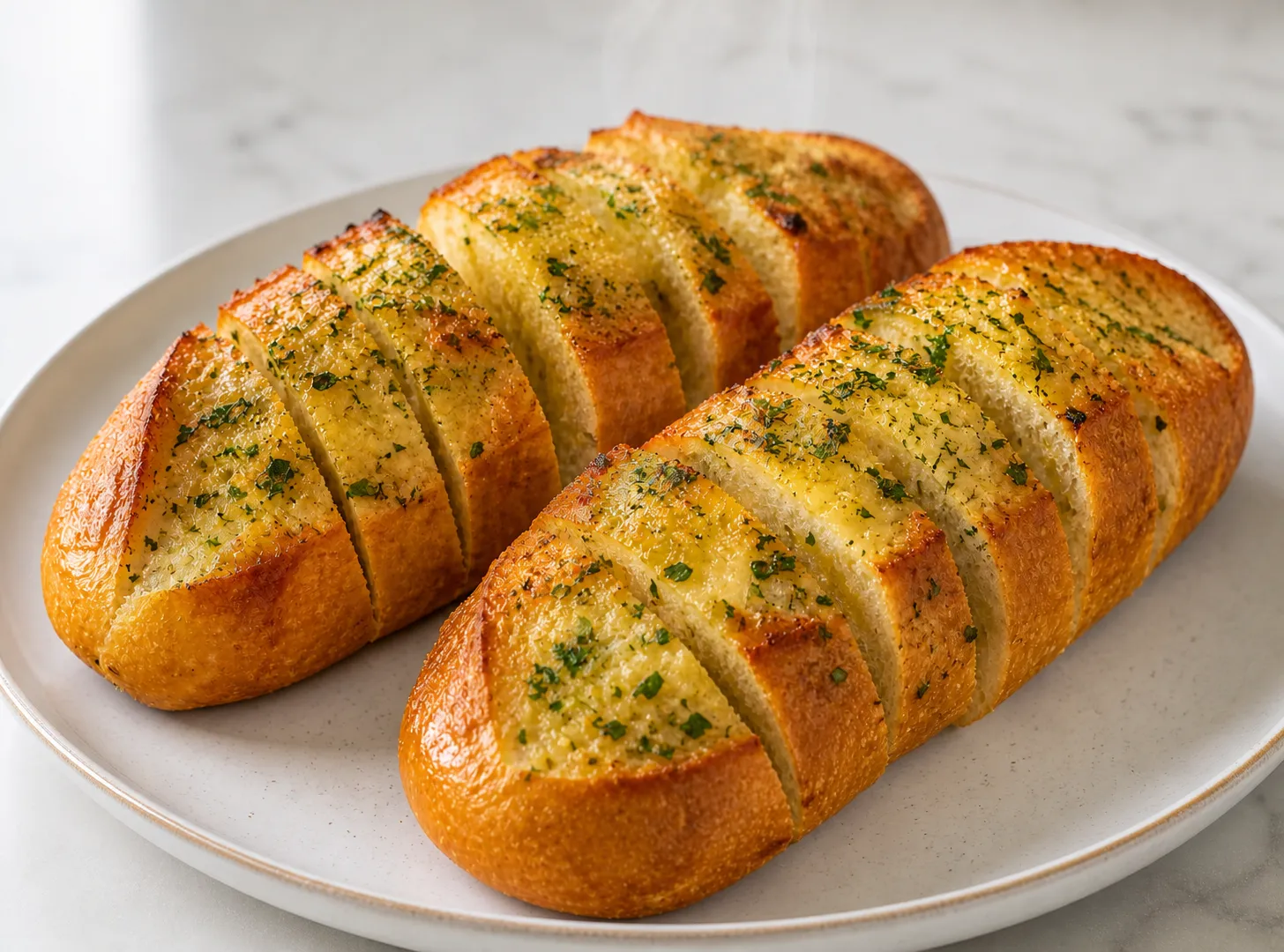
This garlic bread recipe is the one you pull from the oven and start eating before it hits the table. Real butter, fresh garlic, good bread. That is the whole idea. The crust goes golden and crisp while the inside stays soft and soaked through. No complicated steps, no special equipment. If you have been using the frozen kind, this will change that. It works as a side dish, a starter, or honestly just a reason to turn the oven on. Simple food done properly.
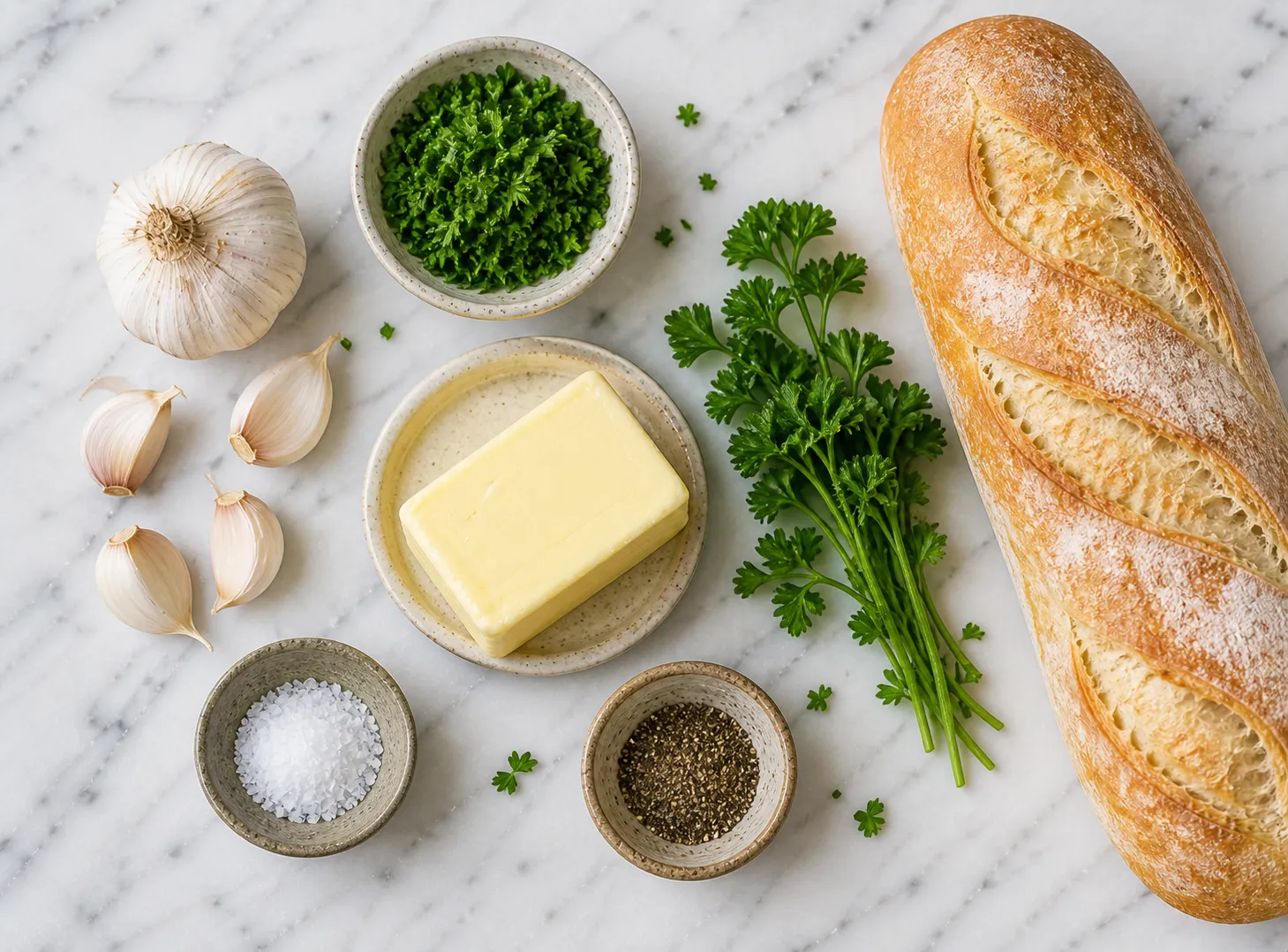
- 1 large Italian or French bread loaf, halved lengthwise
- 113g unsalted butter, softened to room temperature
- 5 large garlic cloves, minced fine
- 2 tablespoons fresh flat-leaf parsley, finely chopped
- 1/2 teaspoon fine sea salt
- 1/4 teaspoon black pepper, freshly ground
- 1/2 teaspoon garlic powder
- 1 pinch red pepper flakes
- 30g Parmesan cheese, freshly grated
- Large baking sheet
- Aluminum foil
- Small mixing bowl
- Butter knife or offset spatula
- Microplane or fine grater
- Serrated bread knife
- Oven with a broil setting
- Heat oven to 190C and line a baking sheet with foil.
- Stir together softened butter, fresh garlic, parsley, salt, and pepper.
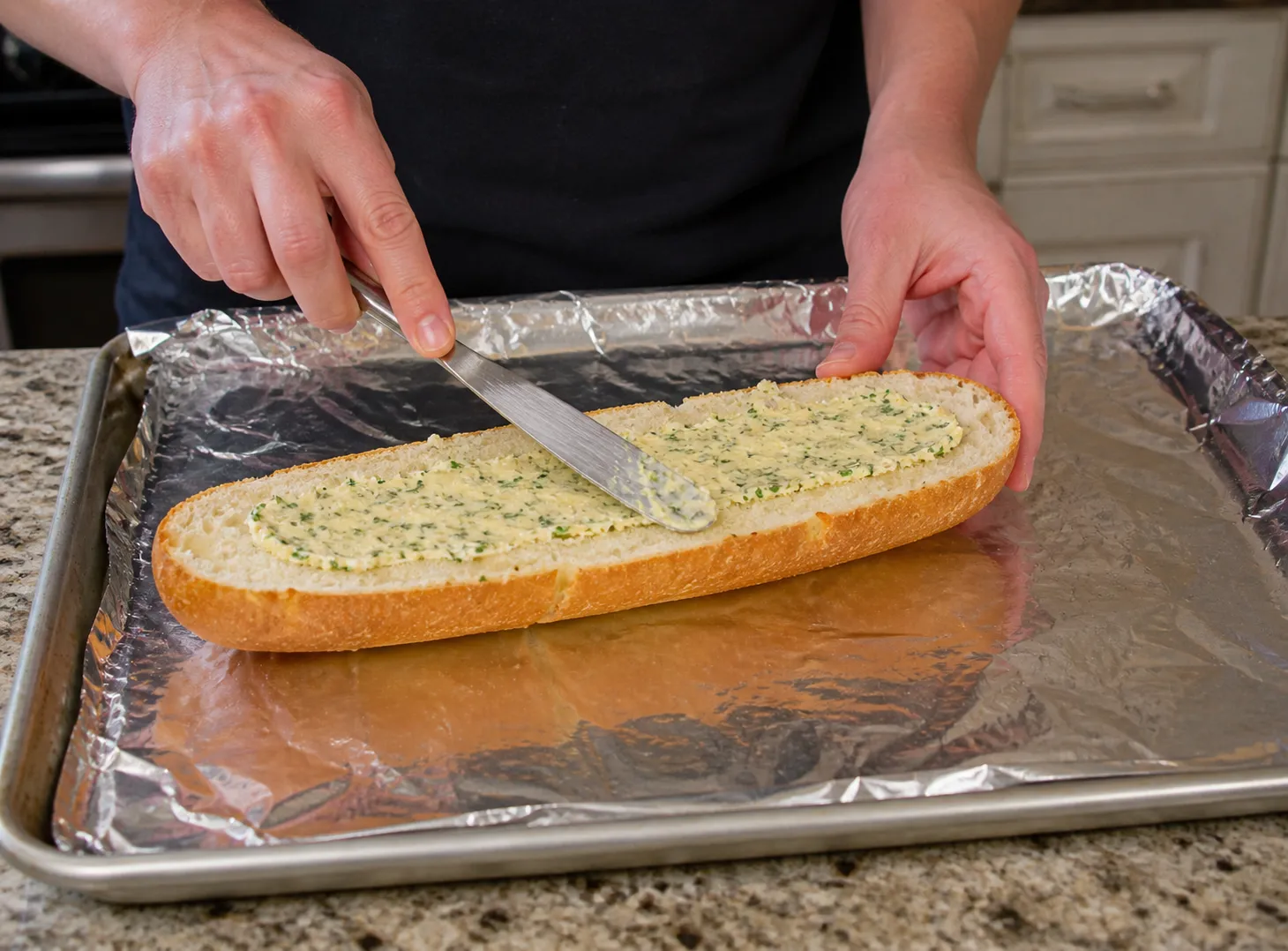
- Spread the garlic butter across both halved bread surfaces.
- Bake uncovered for 12 to 15 minutes until golden. Broil 1 to 2 minutes if you want extra crunch.
- Rest for 2 minutes, slice with a serrated knife, and serve hot.
- Set your oven to 190C (375F). Line a large baking sheet with foil. The foil catches any butter drips and reflects heat under the bread so the bottom crisps evenly.
- Add the softened butter, minced garlic, chopped parsley, salt, and black pepper to a small bowl. Add garlic powder now if you are using it. Mix until smooth and well combined. Give it a quick taste. The butter should be well seasoned and noticeably garlicky. It mellows once it hits the oven.
- Lay both bread halves cut side up on the baking sheet. Spread the garlic butter all the way to the edges. Do not leave the crust bare. If you are adding Parmesan, scatter it evenly over both halves now.
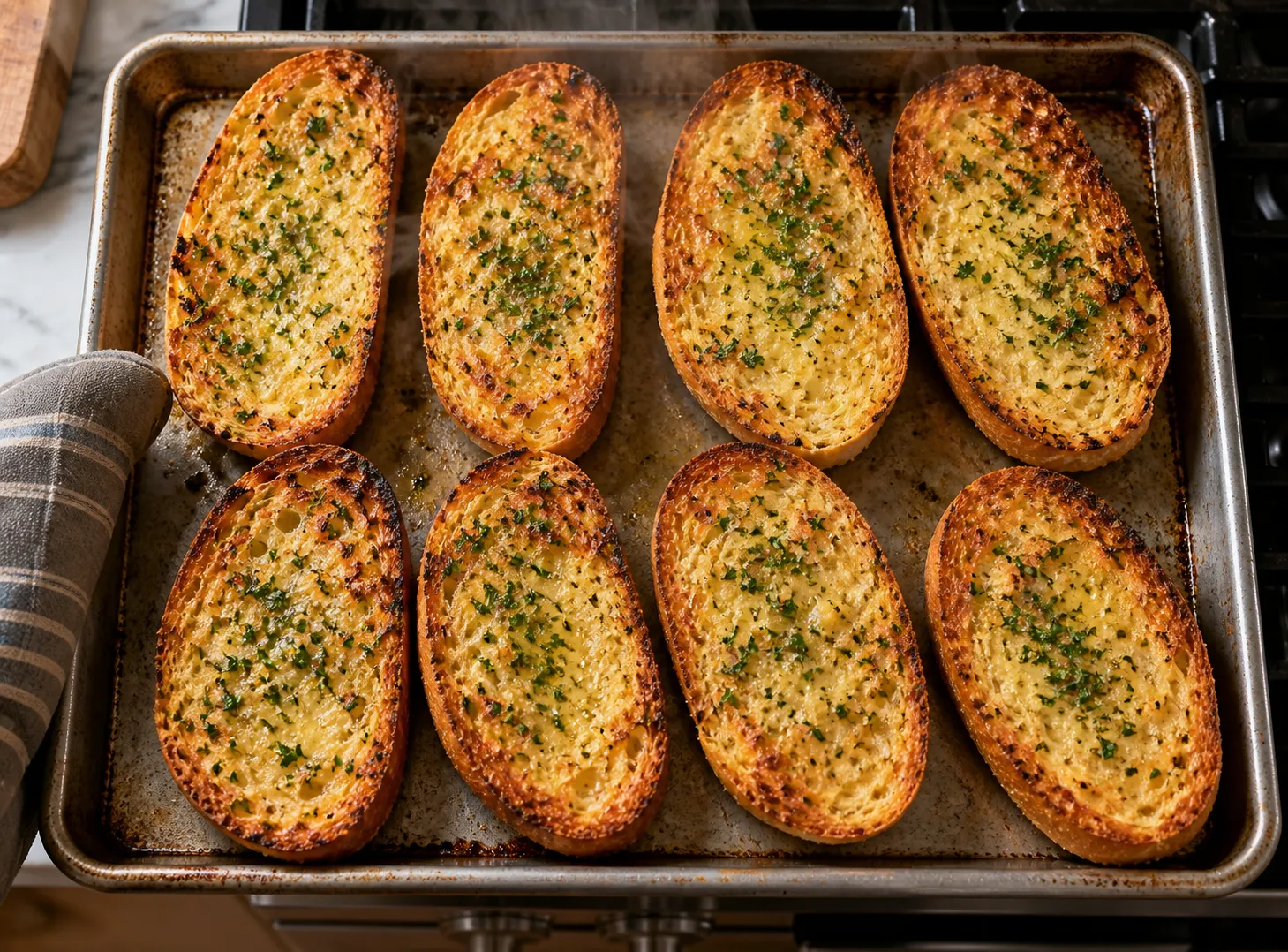
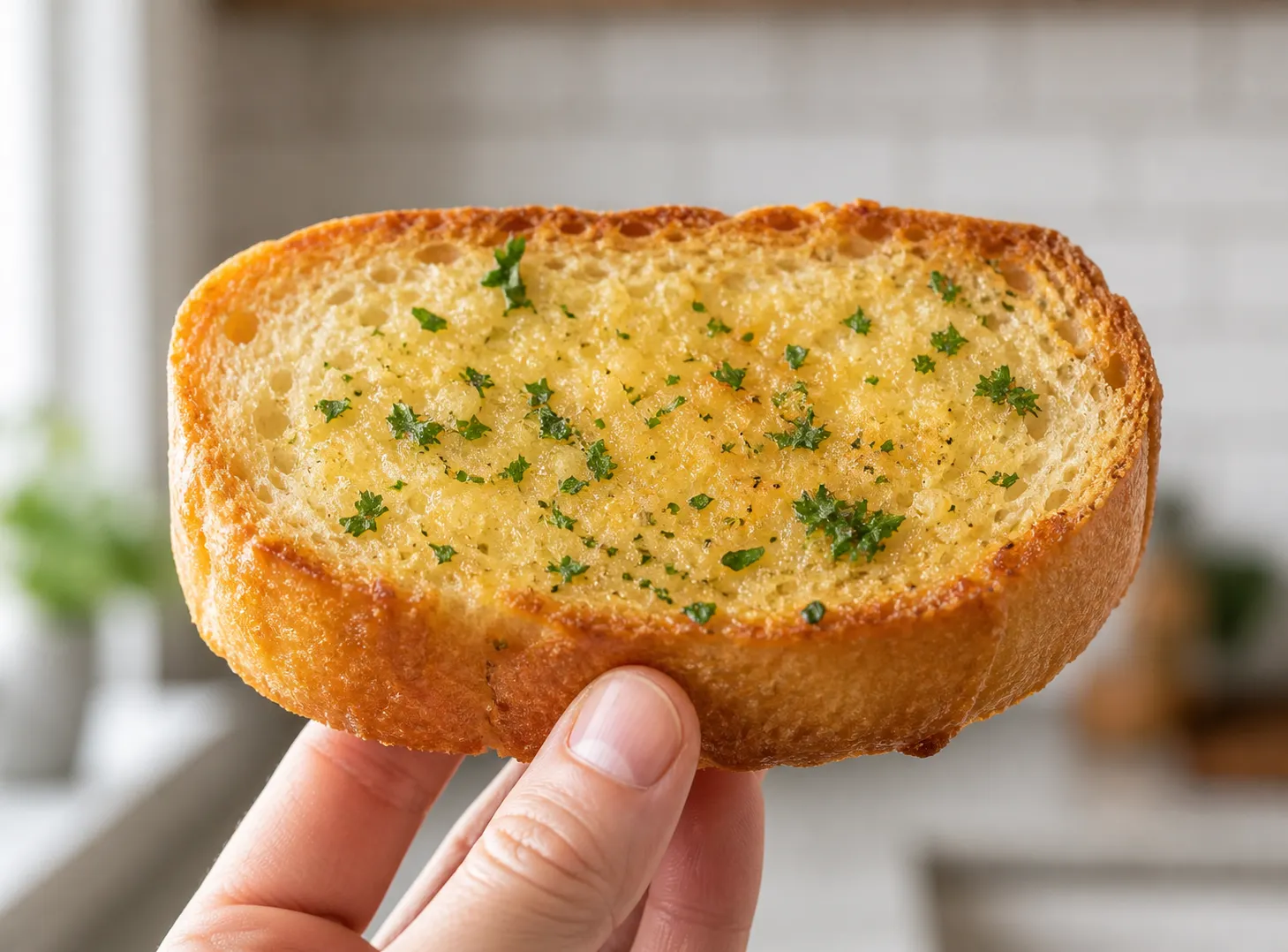
- Slide the pan onto the middle rack. Bake uncovered for 12 to 15 minutes. The edges should be golden and the butter fully absorbed. For a crispier top, switch to broil for the last 1 to 2 minutes. Stay close. Bread under a broiler goes from golden to burnt fast.
- Take the bread out and let it sit for 2 minutes before cutting. The butter needs a moment to settle. Use a serrated knife to slice into portions and serve right away.
- Use softened butter, not melted. Melted butter soaks into the bread unevenly and leaves wet patches. Softened butter spreads cleanly and stays in place.
- Fresh garlic makes a real difference. Jarred pre-minced garlic has a flat, sometimes sour edge once it bakes. Use fresh cloves when you can.
- Mince the garlic fine. Larger pieces cook unevenly and can turn bitter before the bread is ready.
- Bake open-faced. Do not wrap the bread in foil. Wrapping traps steam and gives you soft, pale bread instead of a crisp golden top.
- The broil step is worth it. One to two minutes under the broiler gives you those slightly charred edges that make this recipe worth repeating.
- Bring the butter to room temperature properly. Cold butter will not mix smoothly. Give it 30 minutes on the counter before you start.
- Let it rest before cutting. The butter is still liquid straight out of the oven. Two minutes makes a real difference.
- Rushing with cold butter. The mixture turns lumpy and spreads unevenly across the bread.
- Adding too much garlic powder. It is there to deepen the flavor, not lead it. Too much makes the bread taste artificial.
- Forgetting to season the butter. Salt pulls everything together. Without it the bread tastes flat no matter how much garlic you use.
- Cutting before resting. Slicing immediately sends the butter sliding right off.
- Not adjusting bake time for thinner bread. A thin baguette needs only 8 to 10 minutes or it dries out. Check it early.
- Placing the rack too high during broiling. Keep it on the middle position even when you switch to broil or the top scorches before the center heats through.
- Cheesy garlic bread: Scatter shredded mozzarella over the buttered surface before baking. Broil at the end until spotted and bubbly.
- Herb swap: No parsley? Fresh basil, chives, or a small pinch of dried oregano all work fine.
- Dairy-free: A good quality vegan butter holds up well here. The flavor is slightly different but the texture is close.
- Spicy version: Use a full half teaspoon of red pepper flakes and a small drizzle of hot sauce mixed into the butter.
- Sourdough base: Chewier and slightly tangy. Works especially well alongside a bowl of soup.
- Roasted garlic: Swap raw minced garlic for roasted garlic. The flavor turns sweeter and less sharp. Good for anyone who finds raw garlic too strong once baked.
- Lighter version: Replace half the butter with good extra virgin olive oil for something closer to Italian bruschetta.
- Pasta with tomato based sauce, bolognese, or arrabbiata
- Creamy tomato soup. This bread was made for dunking.
- Caesar salad for a casual dinner spread
- Grilled or roasted chicken with a simple pan sauce
- Baked pasta dishes like lasagna, baked ziti, or stuffed shells
- Minestrone or any thick vegetable based soup
- A simple antipasto board as part of a starter
- Room temperature: Wrap slices loosely in foil. Good for up to one day.
- Refrigerator: Store in a foil wrap or sealed container for up to 3 days. Always reheat before eating.
- Freezer before baking: Spread the butter on the bread, wrap tightly in plastic wrap then foil, and freeze for up to 2 months. Bake straight from frozen at 190C for 20 to 22 minutes.
- Freezer after baking: Cool completely, wrap individual slices, and freeze. Reheat at 180C for 8 to 10 minutes.
- Reheating: Oven at 180C for about 8 minutes, or a dry skillet over medium heat for 2 to 3 minutes per side. Skip the microwave. It softens the crust and makes the crumb chewy in a bad way.
Yes. Butter the bread, wrap it well, and refrigerate for up to 24 hours. Bake fresh when you are ready.
Italian bread or a sturdy French baguette. Both hold the butter well and develop a properly golden crust.
It can in a pinch. Use about 1 teaspoon in place of 5 cloves. The flavor will be softer and less complex.
Usually the butter was melted rather than softened, or the bread was wrapped while baking. Use softened butter and bake open-faced.
No. Baking uncovered is what gives you the crisp top. Covering it creates steam. Use the foil on the pan, not over the bread.
You can, but it bakes faster, dries out easily, and the result is closer to garlic toast. It works in a pinch but it is a different result entirely.
- This garlic bread recipe doubles easily. Make twice the butter mixture for two loaves.
- Parmesan is optional but worth adding when serving alongside pasta. It adds a savory, slightly salty layer that fits well.
- Hand-minced garlic gives a little more texture in the finished bread. A microplane produces finer, more evenly spread flavor. Both work.
- If your oven runs hot, start checking at 10 minutes. Overbaked garlic bread loses its soft interior completely.
- The garlic butter can be made up to 3 days ahead and kept in the fridge. Bring it to room temperature before spreading.
Most garlic bread falls short because the butter is under-seasoned or the wrong bread was used. Get those two things right and everything else follows. This garlic bread recipe does not ask much from you. Fresh garlic, real butter, a decent loaf, and about 25 minutes. Make it once and you will know the proportions by memory. It is that straightforward. No tricks, no shortcuts needed, just a reliable recipe that holds up every single time you make it.