

Store-bought naan does the job. Homemade naan is in a different category. Yogurt and yeast work together to build a dough that puffs and chars the way it should on a very hot pan. The result has that chew, that slight smokiness, and that pull you want from a good naan. This is the kind of naan bread recipe you make once and then keep coming back to. No tandoor, no complicated technique. Just dough, a pan, and a little patience.
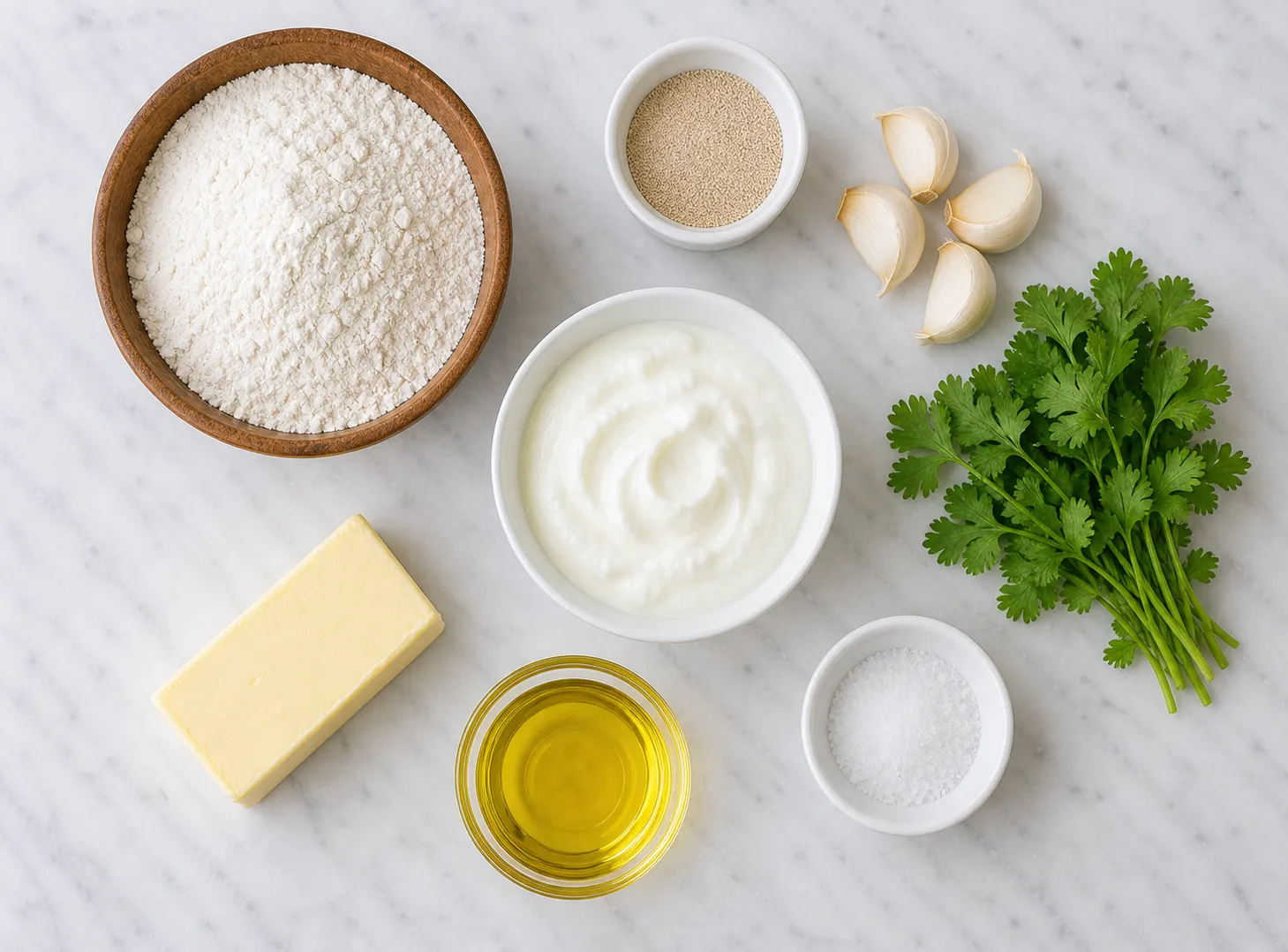
- 2.5 cups all-purpose flour
- 1 tsp instant yeast
- 1 tsp sugar
- 1 tsp salt
- 0.5 tsp baking powder
- 1/3 cup plain full-fat yogurt, room temperature
- 1/2 cup warm water, around 110°F
- 2 tbsp neutral oil or melted ghee
- 3 tbsp unsalted butter
- 4 garlic cloves, finely minced
- 2 tbsp fresh cilantro, finely chopped
- Large mixing bowl
- Small bowl for proofing yeast
- Cast iron skillet or heavy-bottomed pan, 10 to 12 inch
- Rolling pin
- Pastry brush
- Small saucepan for garlic butter
- Clean kitchen towel for keeping naan warm
- Proof yeast in warm water with sugar until foamy.
- Mix into flour with yogurt and oil to form a dough.
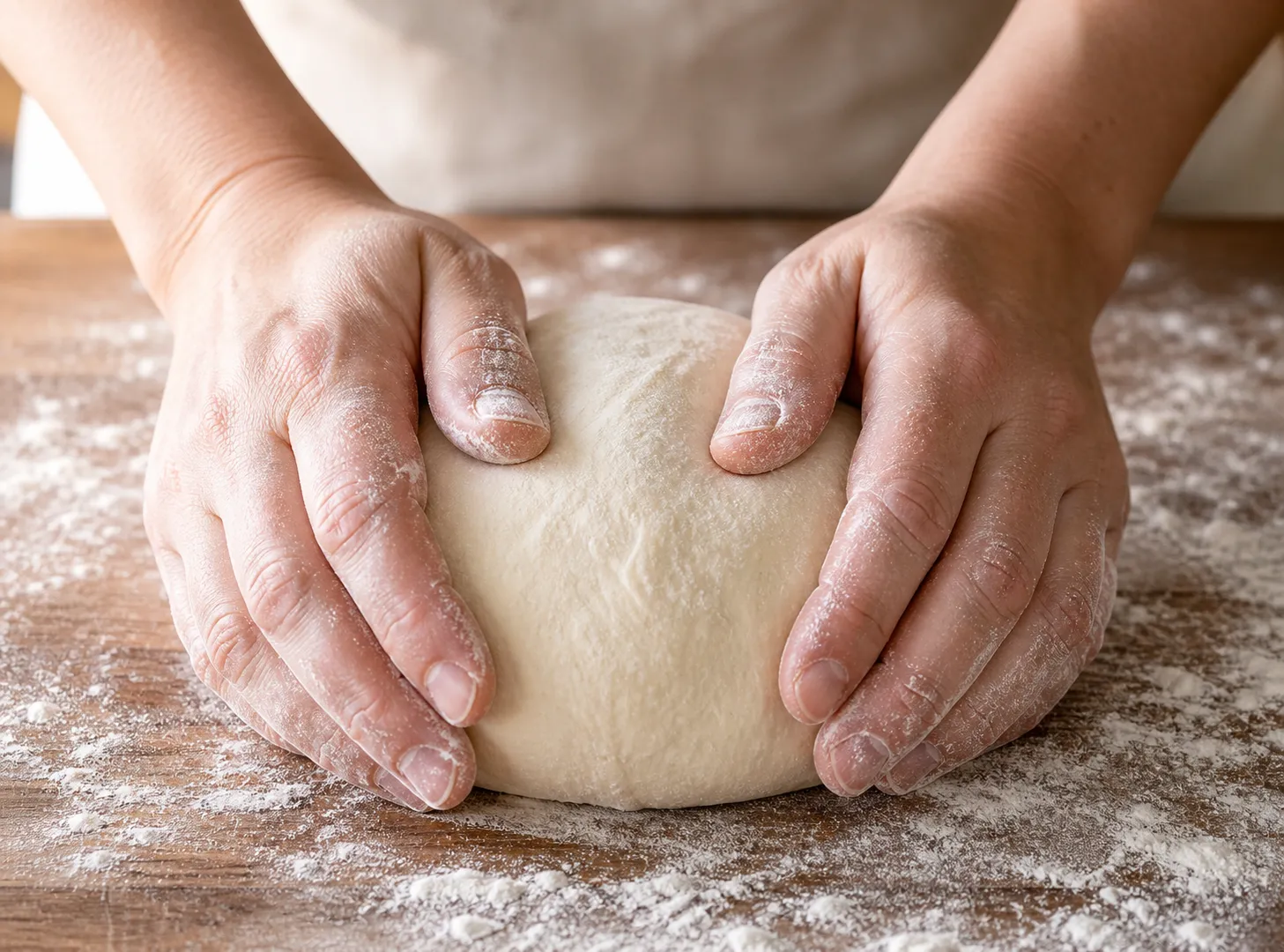
- Knead for 6 to 8 minutes, then leave to rise for 1 to 1.5 hours.
- Divide, roll thin, and cook on a very hot dry pan.
- Brush with garlic butter and serve while hot.
- Pour warm water into a small bowl. Add the yeast and sugar. Stir once and leave it for 8 to 10 minutes. It should look foamy and slightly domed on top. If nothing happens, the yeast is dead. Start with a fresh packet before going any further.
- Whisk flour, salt, and baking powder together in a large bowl. Make a well in the center and pour in the foamy yeast mixture, yogurt, and oil. Use a fork to bring it together, then finish with your hands until you have a rough dough.
- Turn the dough out onto a lightly floured surface. Knead for 6 to 8 minutes. You want a smooth dough that is slightly tacky but does not stick to your hands. If it feels too wet, add flour one teaspoon at a time. Too much flour makes the naan tough.
- Put the dough in a lightly oiled bowl and cover with a damp towel or plastic wrap. Leave it somewhere warm for 1 to 1.5 hours. It should roughly double in size. If your kitchen is cold, put the bowl in the oven with just the light on.
- Punch the dough down and divide into 6 even pieces. Roll each into a ball.
- On a lightly floured surface, roll each ball into an oval or teardrop shape, about 6 to 7 inches long. Keep the edges thinner than the center.
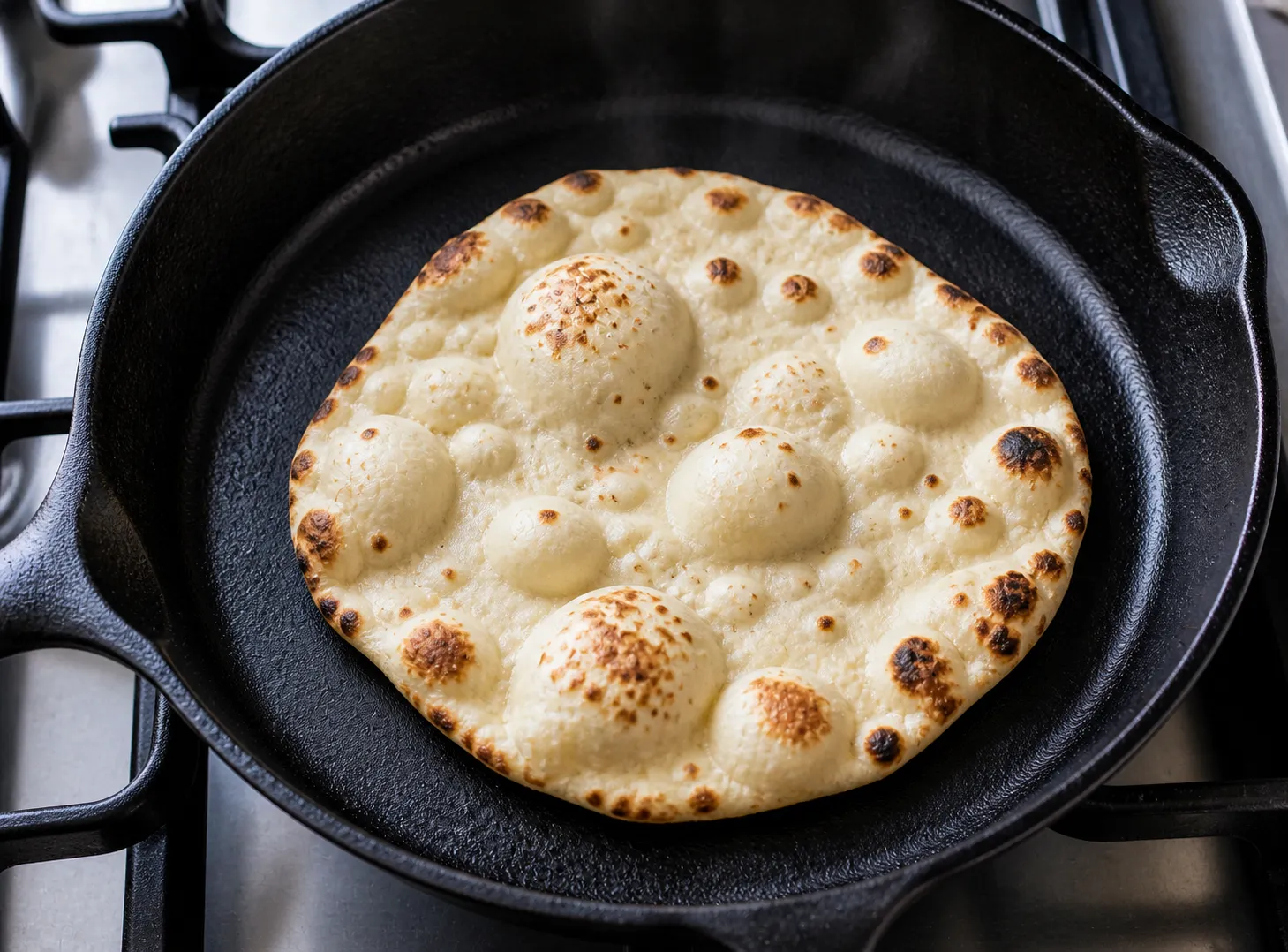
- Set a cast iron skillet or heavy pan over high heat. Give it at least 3 minutes to get very hot. Do not add any oil.
- Lay one piece of rolled dough flat in the hot pan. Leave it for 90 seconds to 2 minutes. Bubbles will form across the surface and the underside will go spotty and golden. Flip and cook the second side for another minute or so. It should look puffed and charred in spots. Repeat with the remaining dough.
- While the naan cooks, melt butter in a small pan over low heat. Add garlic and cook for about 30 seconds, just until fragrant. Pull off the heat before it colors. Stir in cilantro.
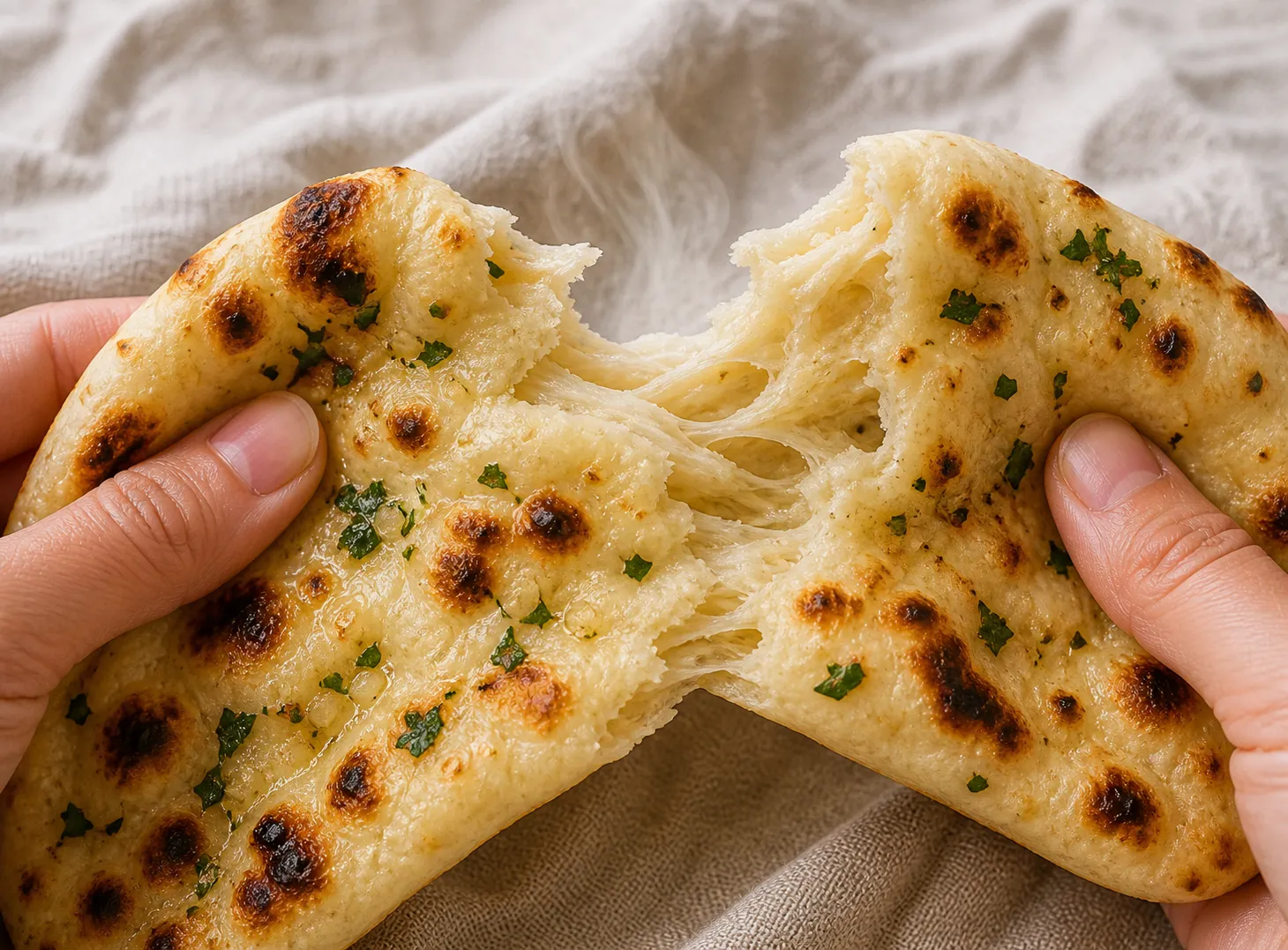
- Brush each naan with garlic butter while it is still hot off the pan. Stack and cover with a clean towel to keep warm while you finish the batch. Serve right away.
- Full-fat yogurt is not optional here. Low-fat versions reduce moisture and make the dough stiffer.
- Preheat the pan longer than you think you need to. Three minutes on high heat is the minimum.
- Shape each naan so the edges are thinner than the center. It gives a better texture after cooking.
- Brush with garlic butter the second the naan comes off the pan. The heat helps it soak in.
- A cold kitchen will slow the rise significantly. A switched-off oven with just the light on solves this quickly.
- Stack finished naan under a towel as you go. It keeps them soft and ready to serve all at once.
- Water above 115°F will kill the yeast. Use a thermometer if you are not sure.
- Cutting the rise short makes the naan flat and dense. Give it the full time.
- Thick dough does not cook through properly on a stovetop. Roll it out properly.
- Do not oil the pan. Oil prevents the char you are trying to get.
- Flipping too soon leaves the underside pale and underdone. Wait for the bubbles and the color.
- Low heat makes naan soft and pale in the wrong way. Keep it on high.
- Cheese naan: Tuck grated mozzarella into the center of the dough ball before rolling it flat.
- Stuffed naan: Use spiced mashed potato or crumbled paneer as a filling. Seal the edges and roll gently.
- Whole wheat: Swap half the flour for whole wheat. The dough will be a bit denser but still good.
- Dairy-free: Coconut yogurt works in place of regular yogurt. Use dairy-free butter for finishing.
- No yeast version: Increase baking powder to 1.5 teaspoons and skip the rise entirely. The texture will be softer and more bready.
- Kasuri methi naan: Mix a teaspoon of dried fenugreek leaves into the dough for a flavor very close to restaurant-style.
- Butter chicken or tikka masala
- Dal makhani or chana masala
- Palak paneer
- Any curry or stew with a good amount of sauce
- Hummus with roasted vegetables, used as a flatbread wrap
- A bowl of thick soup when you want something simple
- Room temperature: Airtight container or sealed bag for up to 2 days.
- Refrigerator: Up to 5 days. The texture firms up a little when cold.
- Freezer: Layer with parchment between each piece and freeze for up to 2 months.
- Best reheat method: 30 to 45 seconds per side in a dry skillet over medium heat.
- Microwave: Wrap in a damp paper towel and heat for 20 to 30 seconds. Soft but no char.
- Avoid reheating uncovered in the oven. It dries out quickly.
Yes. After kneading, cover the bowl tightly and refrigerate overnight. Take it out 30 minutes before you plan to roll and cook.
Usually the pan was not hot enough, or the yeast did not activate properly. Preheat the pan on high for a full 3 minutes and check that the yeast was foamy before you used it.
Yes. Cast iron works well on electric burners. Give it 4 to 5 minutes to preheat since electric coils take longer than gas.
No. A heavy cast iron pan on high heat gets close enough. It is not identical, but the result is genuinely good.
Yes. Proof it in warm water for about 10 minutes before adding it to the flour. The rise may take a little longer.
Some stickiness is normal and actually useful. Only add more flour, one teaspoon at a time, if the dough is sticking badly to the bowl. Too much flour makes tough naan.
- Measure flour by spooning it into the cup and leveling off the top. Scooping packs it in and throws off the amount.
- Use yogurt at room temperature. Cold yogurt straight from the fridge does not mix in as smoothly.
- The garlic butter makes enough for a generous coat on all six naan. Scale it down if you want something lighter.
- You can divide the dough into 8 pieces instead of 6 for slightly smaller naan.
- Ghee gives a richer, nuttier finish than butter. Use it if you have it on hand.
Homemade naan is one of those things that genuinely surprises people the first time they make it. The process is straightforward, the ingredients are basic, and the results are noticeably better than anything from a packet. Make a full batch, freeze what you do not use, and you will always have something good to pull out when dinner needs a little more. This naan bread recipe is the kind that earns a permanent spot in the regular rotation without any drama about it.