
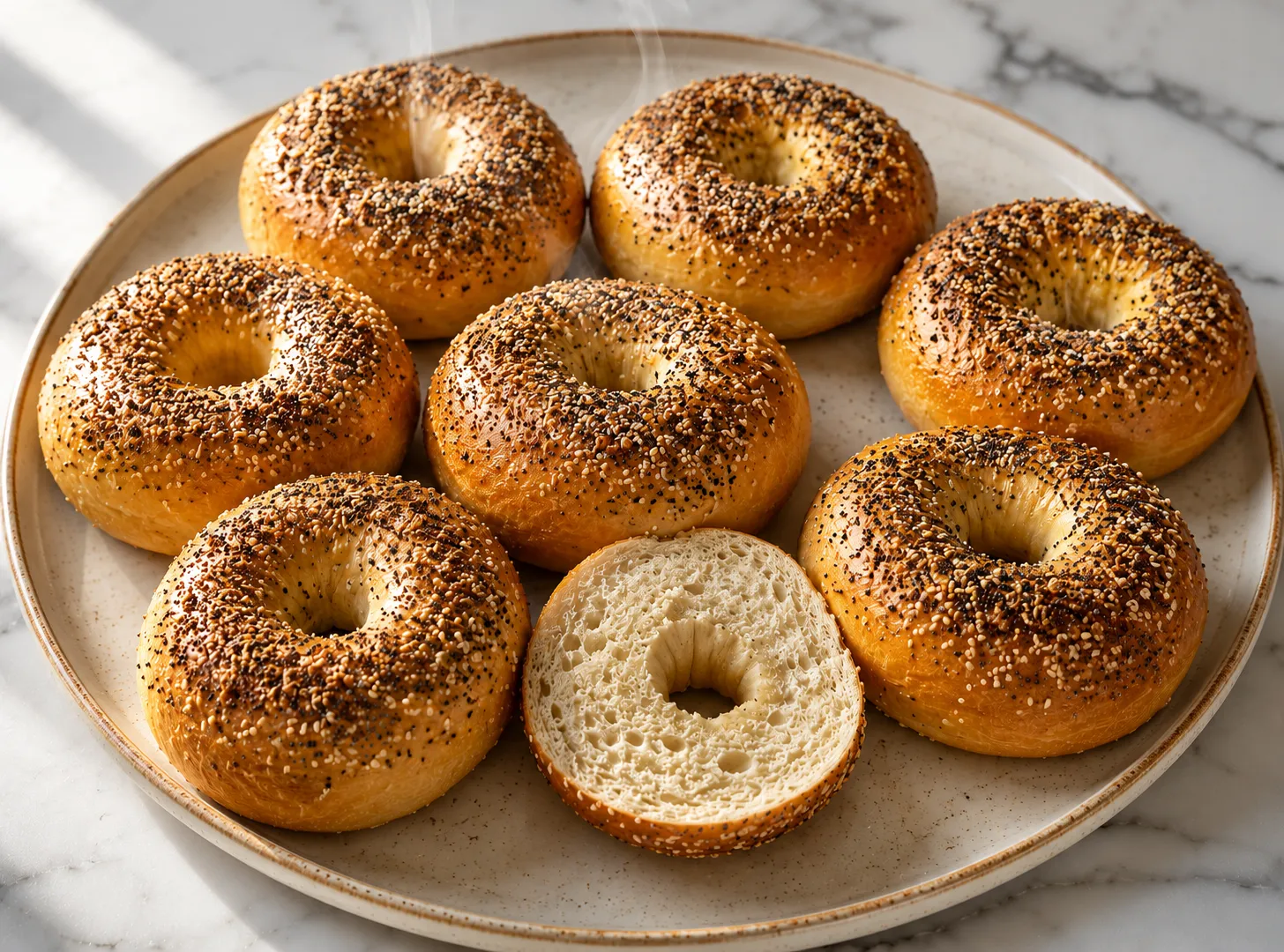
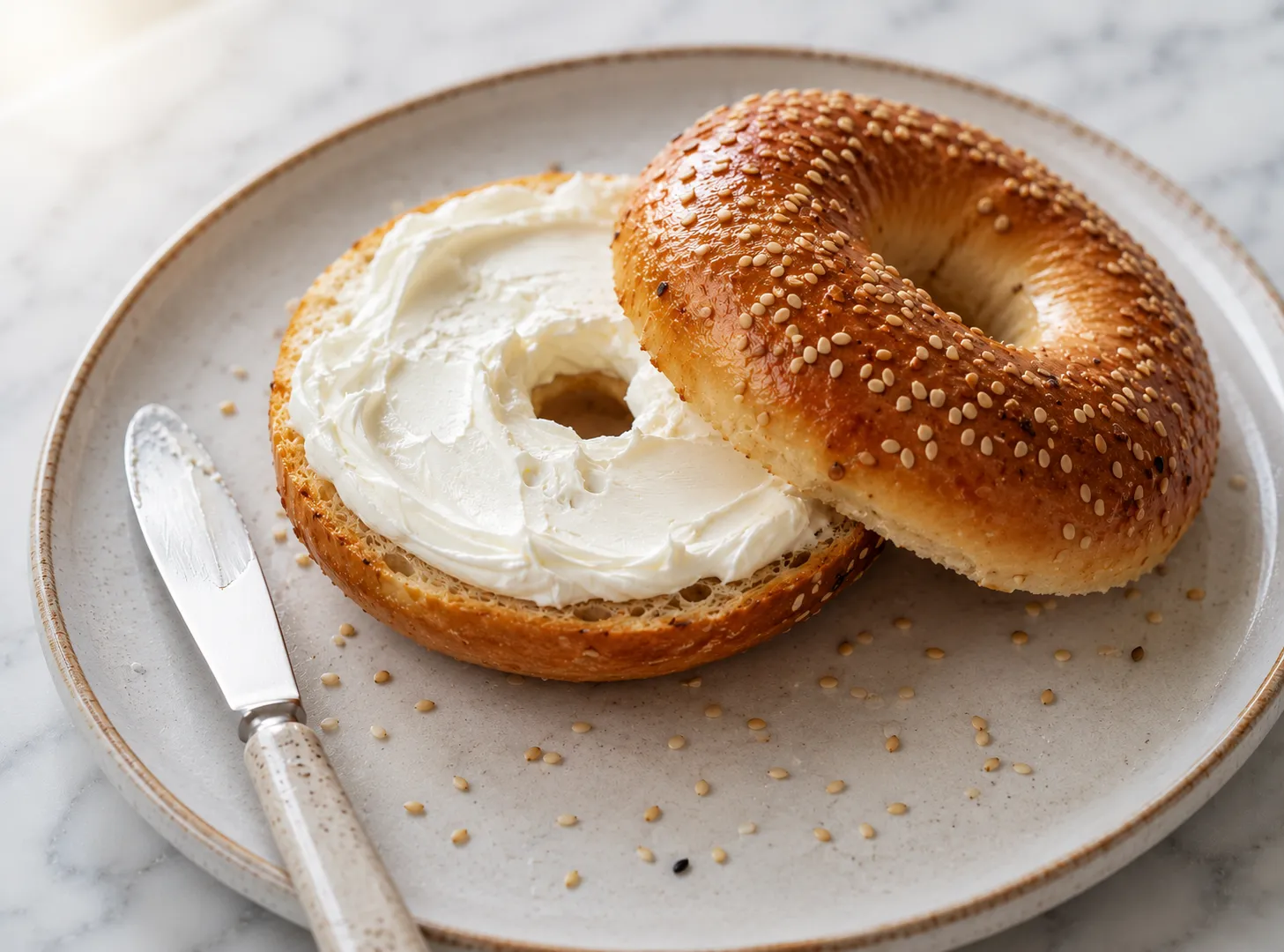
This bagel recipe gives you a real chewy crust and a dense, satisfying crumb without any complicated technique or overnight waiting. The dough comes together in one bowl, the boiling step takes about ten minutes, and the whole process wraps up in two hours. These are the kind of bagels worth making on a weekend morning — sturdy enough to hold a full egg sandwich, flavored enough to eat plain with just butter. If you have been relying on store-bought bagels that taste like bread rolls, this recipe changes that. Eight proper bagels, one straightforward method, and results that actually taste like the real thing.
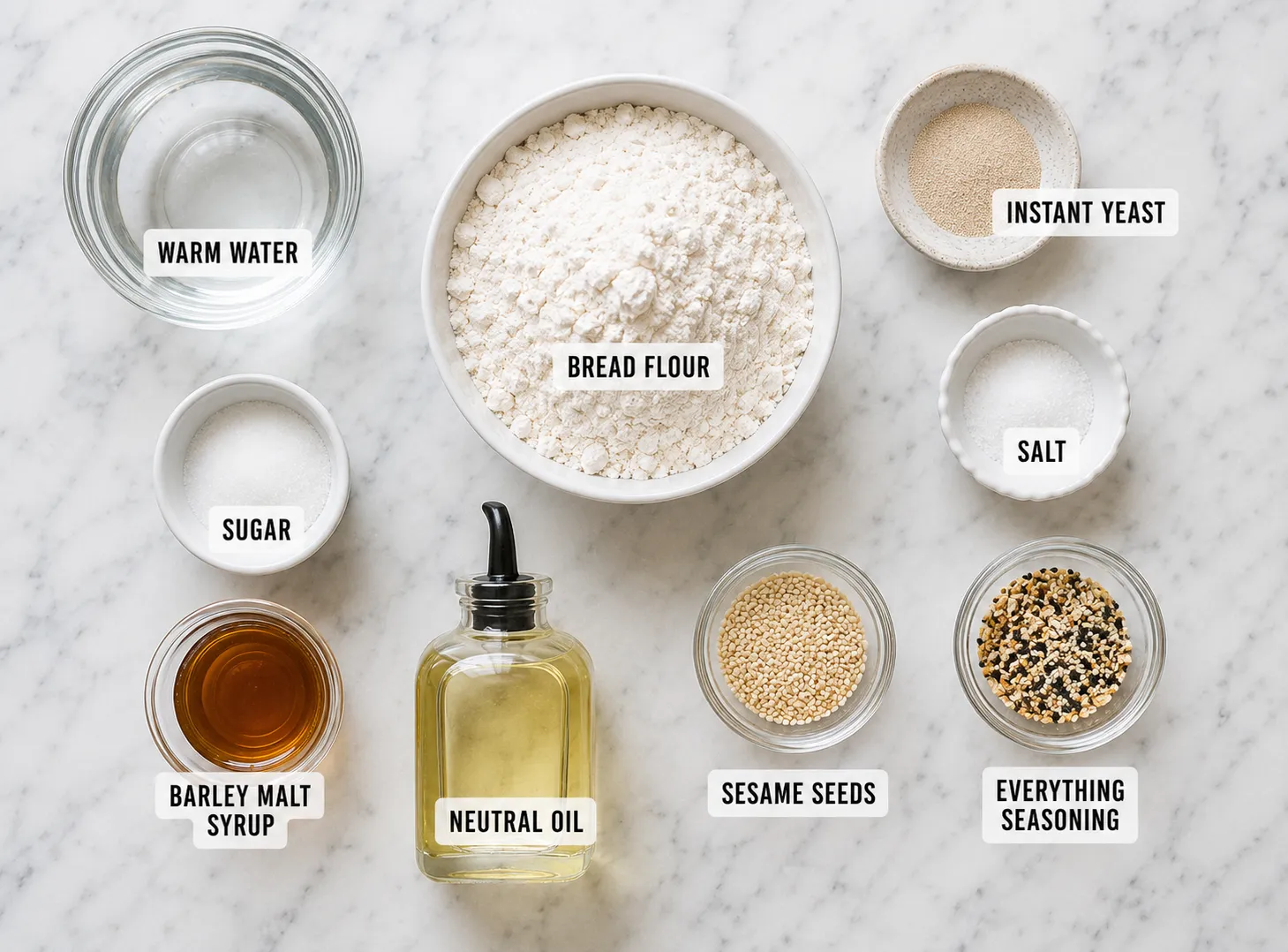
- 4 cups bread flour , 480g. Plus extra for dusting. Bread flour is not optional here — it is what creates the chew.
- 2.25 teaspoons instant yeast , One standard packet. No need to proof instant yeast.
- 1.5 teaspoons salt
- 1 tablespoon granulated sugar
- 1.25 cups warm water , 295ml. Around 110 degrees F. Use a thermometer if unsure — too hot kills the yeast.
- 1 tablespoon neutral oil , Canola or vegetable oil works fine.
- 3 quarts water
- 2 tablespoons barley malt syrup , Substitute with 1 tablespoon honey plus 1 tablespoon molasses if needed.
- 1 tablespoon baking soda
- 1 teaspoon salt , Seasons the crust from the outside in.
- everything bagel seasoning , As needed.
- sesame seeds , As needed.
- poppy seeds , As needed.
- coarse salt , As needed.
- dried minced onion or garlic , As needed.
- Stand mixer with dough hook (or large mixing bowl for hand kneading)
- Large pot, at least 6-quart, for boiling
- Baking sheet
- Parchment paper
- Slotted spoon or spider strainer
- Kitchen scale (recommended for even sizing)
- Clean kitchen towel or plastic wrap
- Cooling rack
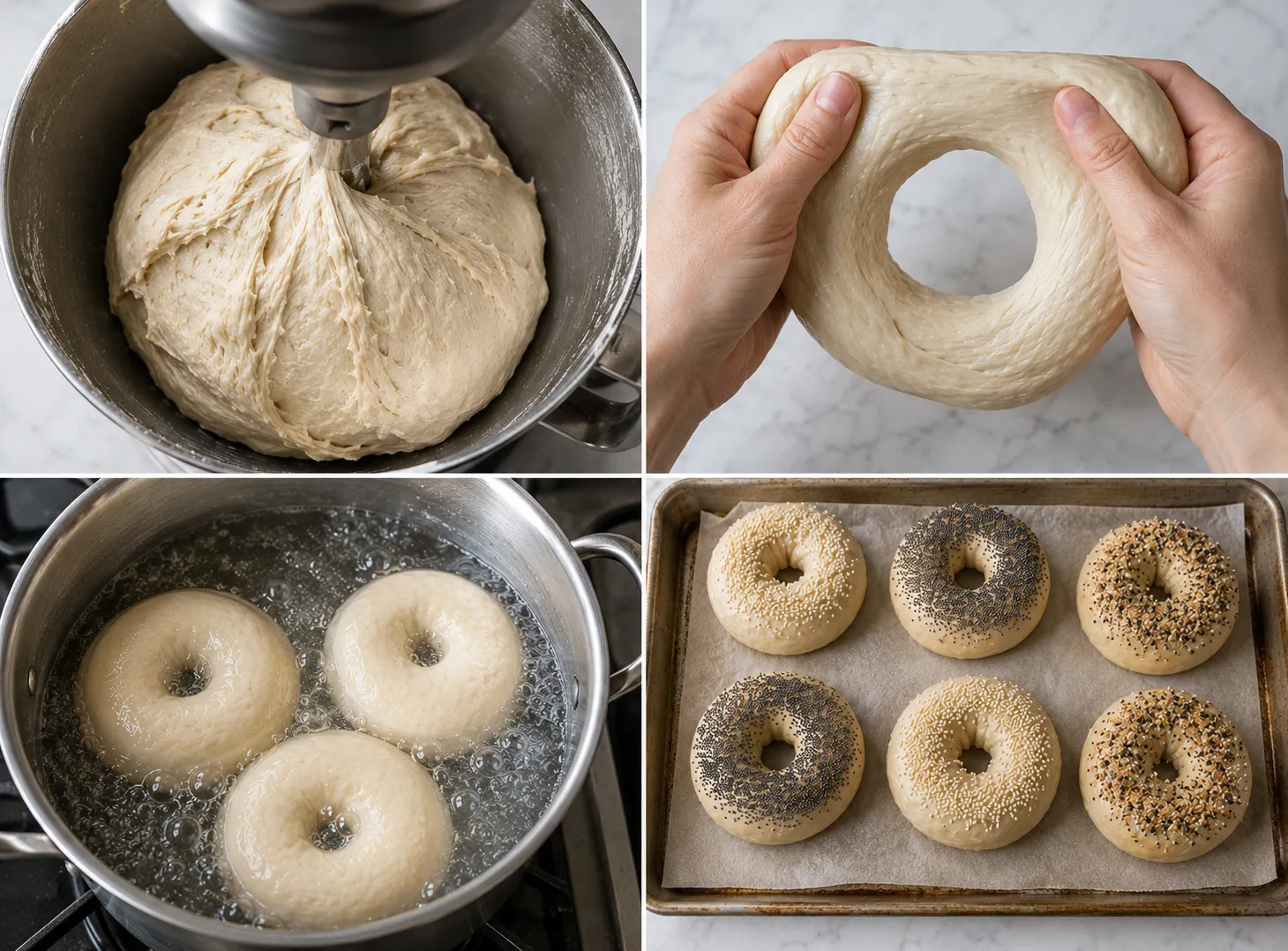
- Mix and knead the dough until smooth and stiff.
- Let the dough rise at room temperature for about 1 hour.
- Shape into rings and let them rest for 10 minutes.
- Boil each bagel in the malt syrup bath, then add toppings.
- Bake at high heat until deep golden brown.
- Combine warm water, sugar, and yeast in the bowl of your stand mixer. Stir gently and let it sit for 5 minutes until slightly foamy.
- Add bread flour, salt, and oil to the bowl. Mix on low speed with the dough hook until a rough, shaggy dough forms, about 2 minutes.
- Increase to medium speed and knead for 8 to 10 minutes. The dough should be smooth, stiff, and pulling cleanly from the sides of the bowl. If kneading by hand, work it firmly on a lightly floured surface for 10 to 12 minutes.
- Shape the dough into a ball. Place it in a lightly oiled bowl and cover tightly with plastic wrap or a damp kitchen towel. Let it rise at room temperature for 1 hour. It will puff slightly but will not double — that is expected with bagel dough.
- Punch down the dough gently. Divide into 8 equal pieces, about 110 to 115 grams each if you are using a scale.
- Roll each piece into a smooth ball. Poke your thumb through the center and stretch the hole to about 2 inches wide. It will shrink during baking, so make it larger than feels right.
- Place shaped bagels on a parchment-lined baking sheet. Cover loosely and let them rest for 10 minutes. They should look just slightly puffed.
- Preheat your oven to 450 degrees F (230 degrees C).
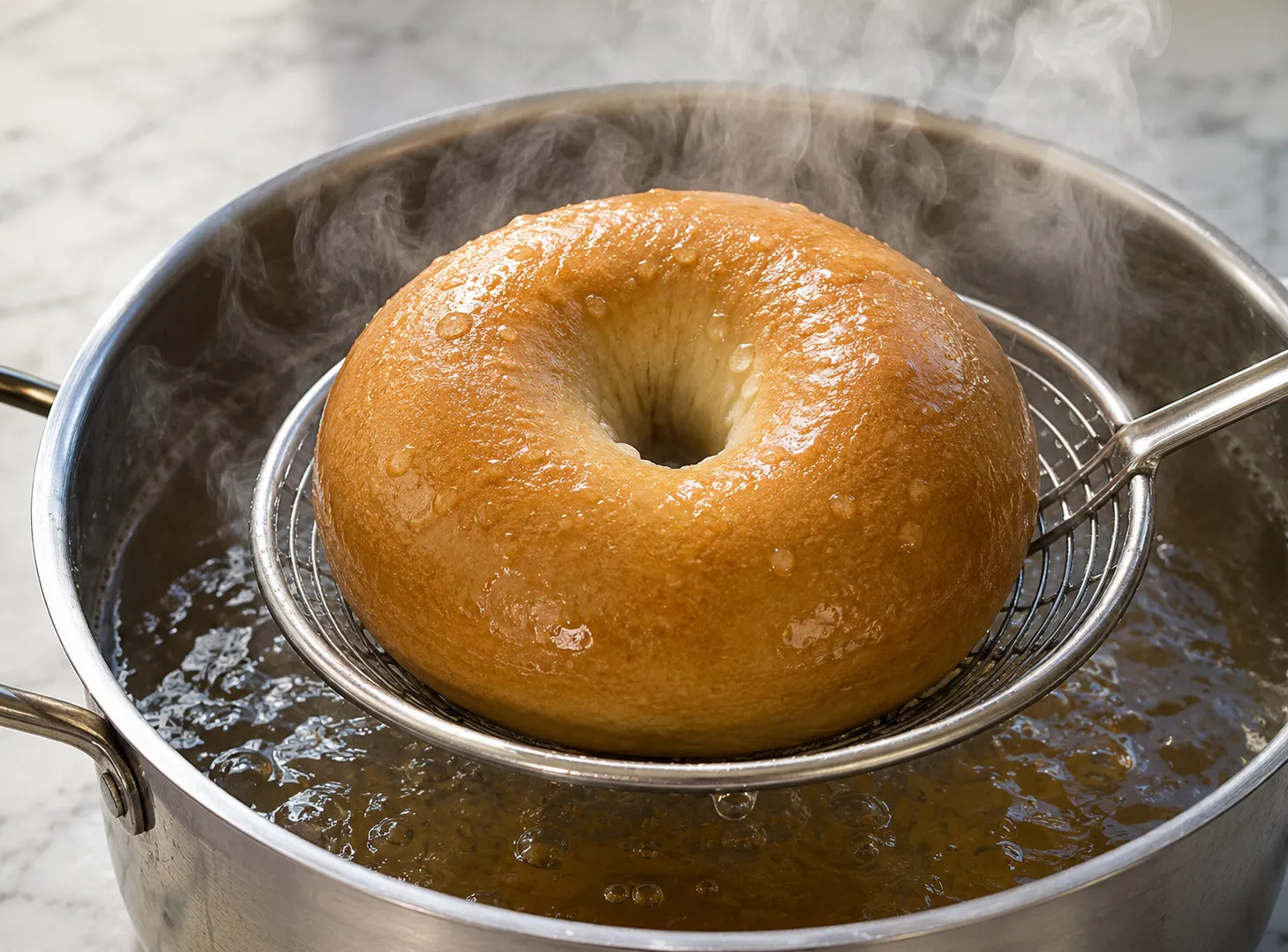
- Bring the large pot of water to a rolling boil. Add barley malt syrup, baking soda, and salt. Stir to combine.
- Working in batches of 2 to 3 at a time, lower bagels into the boiling water. Boil for 1 minute on the first side, then flip and boil for another 30 seconds. For a chewier result, go 90 seconds per side.
- Lift bagels out with a slotted spoon and return them to the parchment-lined baking sheet.
- While the surface is still wet, press on your chosen toppings so they stick.
- Bake for 20 to 25 minutes, rotating the pan at the halfway point, until the bagels are a deep, even golden brown. Do not pull them early.
- Transfer to a cooling rack and wait at least 15 minutes before slicing. The crumb continues to set as they cool.
- Use bread flour, not all-purpose. The higher protein content builds the gluten structure that gives bagels their chew. All-purpose flour produces a noticeably softer, lighter result.
- Do not skip the boiling step. It sets the crust and creates the dense interior texture. Nothing else replicates it.
- Barley malt syrup is worth finding. It adds a subtle, slightly sweet depth and improves browning. Look for it at health food stores or order it online.
- The dough is meant to feel stiff and a little dry. If it clings to your hands, add flour a tablespoon at a time.
- Always stretch the hole wider than you think you need. Aim for 2 inches at minimum, since it closes up significantly during boiling and baking.
- Rotate the pan halfway through baking for even color on all sides.
- Let bagels cool before slicing. Cutting into them while hot gives you a gummy, compressed crumb.
- A kitchen scale is the easiest way to get 8 evenly sized bagels that all finish baking at the same time.
- Using all-purpose flour instead of bread flour. The texture ends up noticeably softer and less chewy.
- Skipping the rest period after shaping. The gluten needs a few minutes to relax or the dough will spring back when you try to shape it.
- Using water that is too hot for the dough. Above 115 degrees F kills the yeast. Use a thermometer if you are not sure.
- Not boiling long enough. Under-boiled bagels bake up bready and soft instead of properly chewy.
- Pulling bagels from the oven too early. Pale bagels have less flavor. Wait for a deep, even golden color all over.
- Crowding the boiling pot. Bagels expand in the water and stick together if there is not enough space. Work in small batches.
- Skipping the salt in the boiling water. It seasons the outer crust and makes a real difference in the finished flavor.
- Letting shaped bagels sit too long before boiling. More than 20 minutes at room temperature and you risk a lighter, breadier final texture.
- No barley malt syrup: Combine 1 tablespoon honey with 1 tablespoon molasses as a substitute. Or use 2 tablespoons honey for a milder flavor.
- Whole wheat bagels: Replace up to half the bread flour with whole wheat flour. Expect a slightly denser texture and a more pronounced flavor.
- Cinnamon raisin bagels: Fold in 1 teaspoon cinnamon and 3/4 cup raisins during the last minute of kneading.
- Asiago or cheddar bagels: Press shredded cheese on top right before baking. Some will melt onto the parchment — that is fine.
- Pumpernickel bagels: Replace 1 cup of bread flour with dark rye flour and add 1 tablespoon cocoa powder and 1 tablespoon caraway seeds to the dough.
- Oil-free dough: The tablespoon of oil can be left out. The dough will be slightly stiffer but still workable.
- Classic cream cheese, plain or with chives or herbs
- Smoked salmon with capers, thin red onion slices, and cream cheese
- Avocado with flaky salt and a squeeze of lemon
- Peanut butter and sliced banana
- Butter and a thin layer of good jam
- Egg and cheese as a sandwich filling
- Hummus with sliced cucumber
- Tomato soup as a lunch pairing
- Room temperature: Store whole bagels in an airtight bag or container for up to 2 days. Once sliced, they dry out faster, so keep them whole until ready to eat.
- Refrigerator: Not recommended. Cold temperatures speed up staling in bread rather than slowing it.
- Freezer: Slice before freezing. Wrap each bagel individually in plastic wrap, then store in a zip-lock freezer bag for up to 3 months.
- Toasting from room temperature: Toast sliced halves in a standard toaster for 2 to 3 minutes.
- Toasting from frozen: No need to thaw. Toast directly from frozen and add a minute or two to the usual setting.
- Oven reheating: Wrap a whole bagel in foil and heat at 350 degrees F for 10 to 12 minutes. This refreshes both the crust and the center evenly.
- Avoid microwaving. It makes the crust rubbery and the interior gummy.
Yes. After shaping, place the bagels on a parchment-lined baking sheet, cover tightly with plastic wrap, and refrigerate overnight. The next morning, boil and bake straight from the fridge with no need to bring them to room temperature first.
That stiffness is correct. Bagel dough has a lower water content than most bread doughs, which is exactly what produces the dense, chewy crumb. If it feels too tight to work with, let it rest under a towel for 5 minutes. The gluten will relax and it will become easier to handle.
Technically you can bake them without boiling, but the result will be a soft bread roll, not a bagel. Boiling sets the crust and creates the characteristic chew. It is not an optional step if you want actual bagel texture.
Hand kneading works fine. Plan for 10 to 12 minutes of firm, consistent kneading on a lightly floured surface. The dough is stiff, so it takes some effort, but it is completely doable without any equipment.
The holes were not stretched wide enough before boiling. Always aim for at least 2 inches across, because they close up significantly during both the boil and the bake. Holes that look too large at the shaping stage are usually about right once baked.
Yes, it scales up without any changes to the method. Just make sure your pot is large enough to boil in batches without crowding, and use two baking sheets so all 16 bagels can bake at once.
- Bread flour is the most important ingredient in this recipe. Look for one with 12 to 14 percent protein — King Arthur Bread Flour is a reliable choice.
- If you only have active dry yeast instead of instant, proof it in the warm water with the sugar for 5 to 10 minutes before adding the flour.
- Water temperature for the dough should be between 105 and 110 degrees F. Below that, the yeast is sluggish. Above 115 degrees F, it dies.
- Barley malt syrup can be found at health food stores and ordered online. It keeps well in the pantry and is worth having on hand for future batches.
- Dark baking sheets absorb more heat and may brown the bottoms faster. Check at the 18-minute mark if yours runs dark.
- For extra shine, brush boiled bagels with a light egg wash before adding toppings. It is not traditional but gives a glossier crust.
- At high altitude, above 3,500 feet, reduce the yeast by about 25 percent and watch the rise closely — dough tends to move faster.
Homemade bagels are one of those things that seem more complicated than they actually are. Once you go through the process a single time — mixing a stiff dough, boiling in malt water, baking until genuinely golden — it becomes straightforward. The steps are simple. The timing is forgiving. And the difference between these and what you find in most grocery stores is significant enough that it is hard to go back. This bagel recipe is built around technique that actually matters: the right flour, a proper boil, and enough oven time to develop real color and flavor. Nail those three things and everything else falls into place. Whether you keep them plain, load them with everything seasoning, or freeze a batch for later, these bagels hold up well and taste the way bagels should. Try the basic version first, then experiment with toppings or fillings once you are comfortable with the dough. Eight bagels, two hours, and one process worth repeating.