
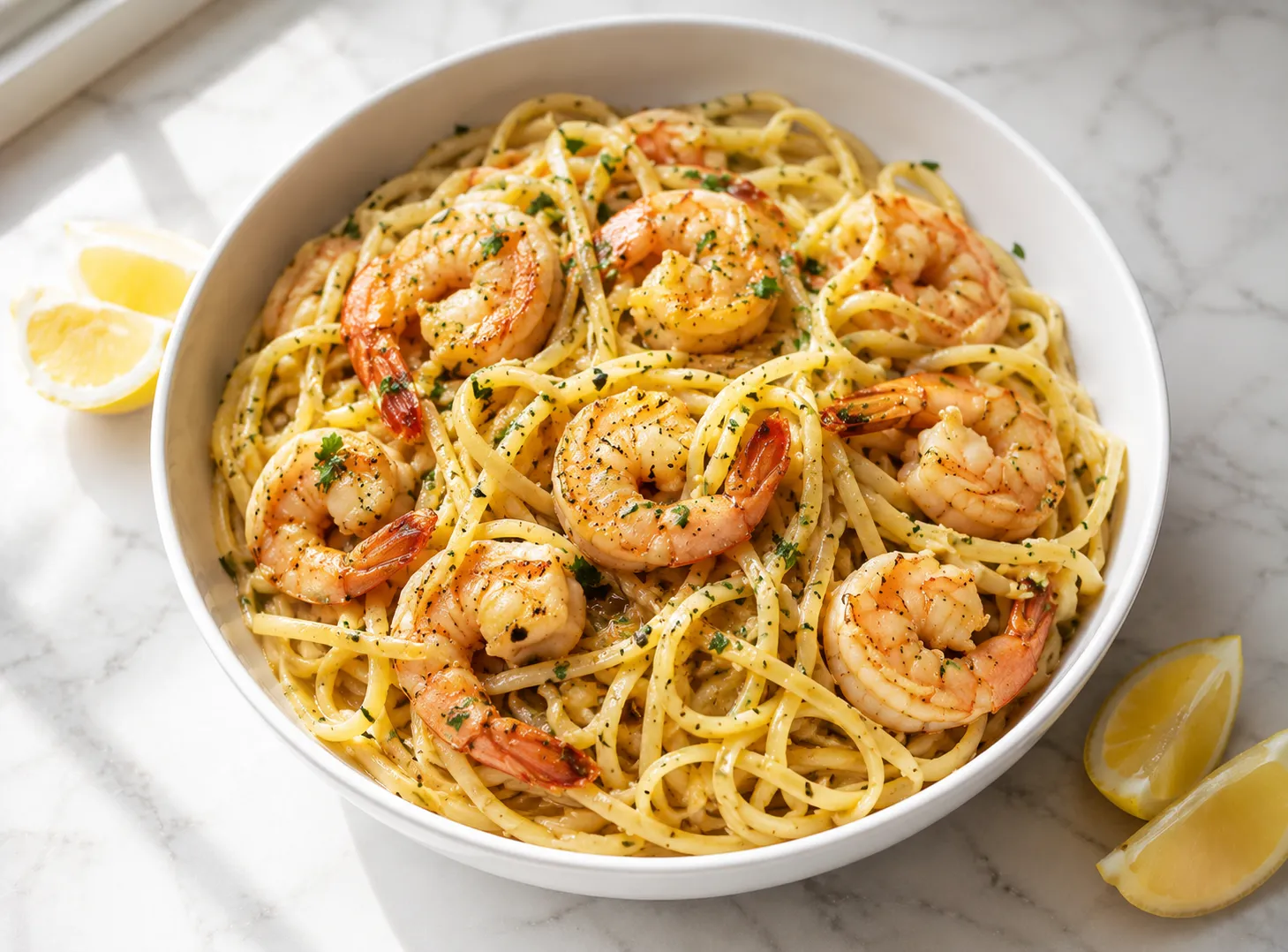
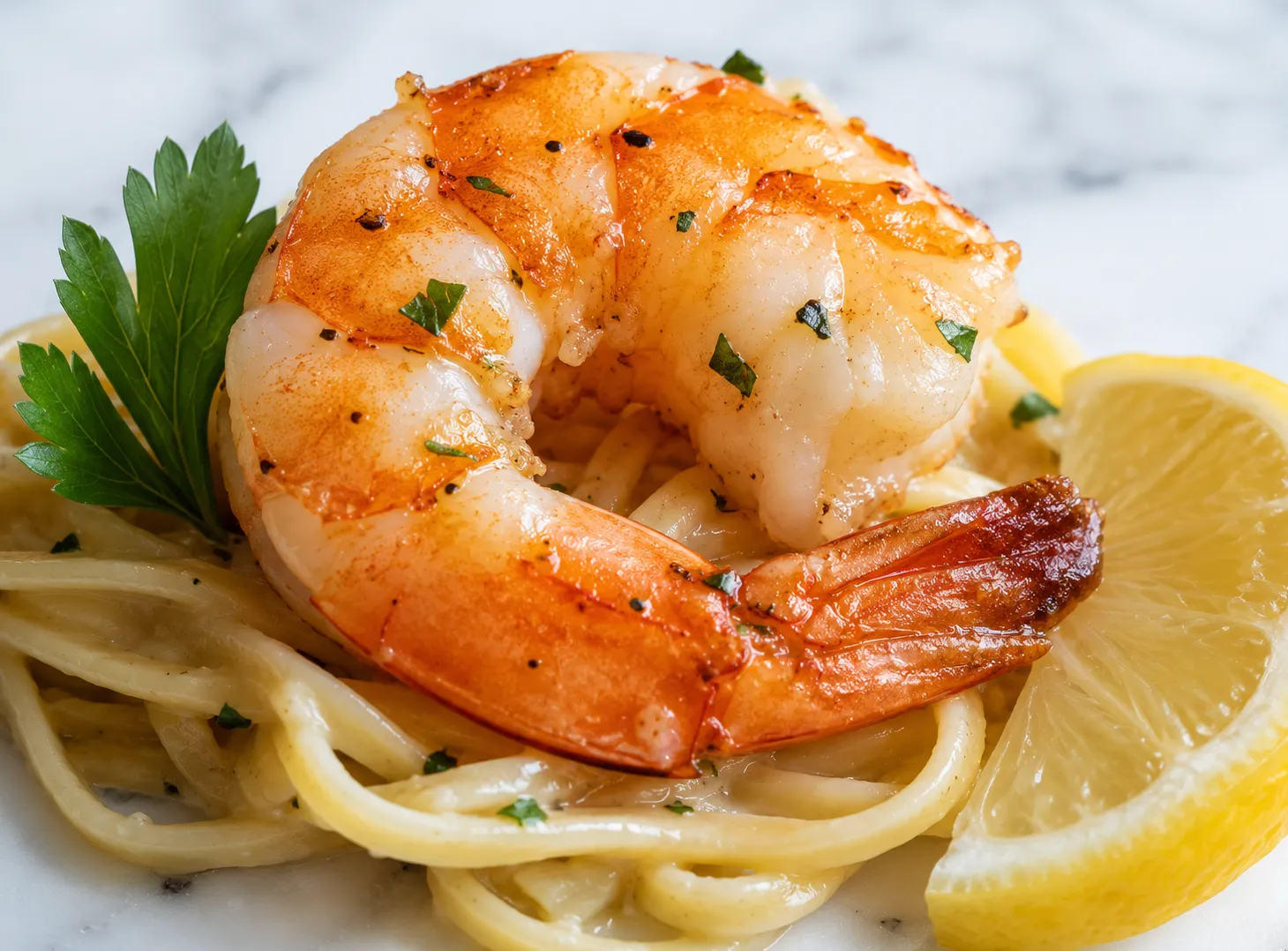
This shrimp scampi recipe is the kind of weeknight dinner that earns a permanent spot in your rotation. Large shrimp seared in butter and olive oil, finished in a garlic and white wine sauce with a generous hit of fresh lemon — it comes together in twenty minutes using one pan and ingredients you likely already have. The sauce is light and glossy, not heavy, and it coats the pasta without overwhelming it. Whether you are cooking for two or feeding a family, this recipe is straightforward enough for a Tuesday and good enough to serve to company without any apology.
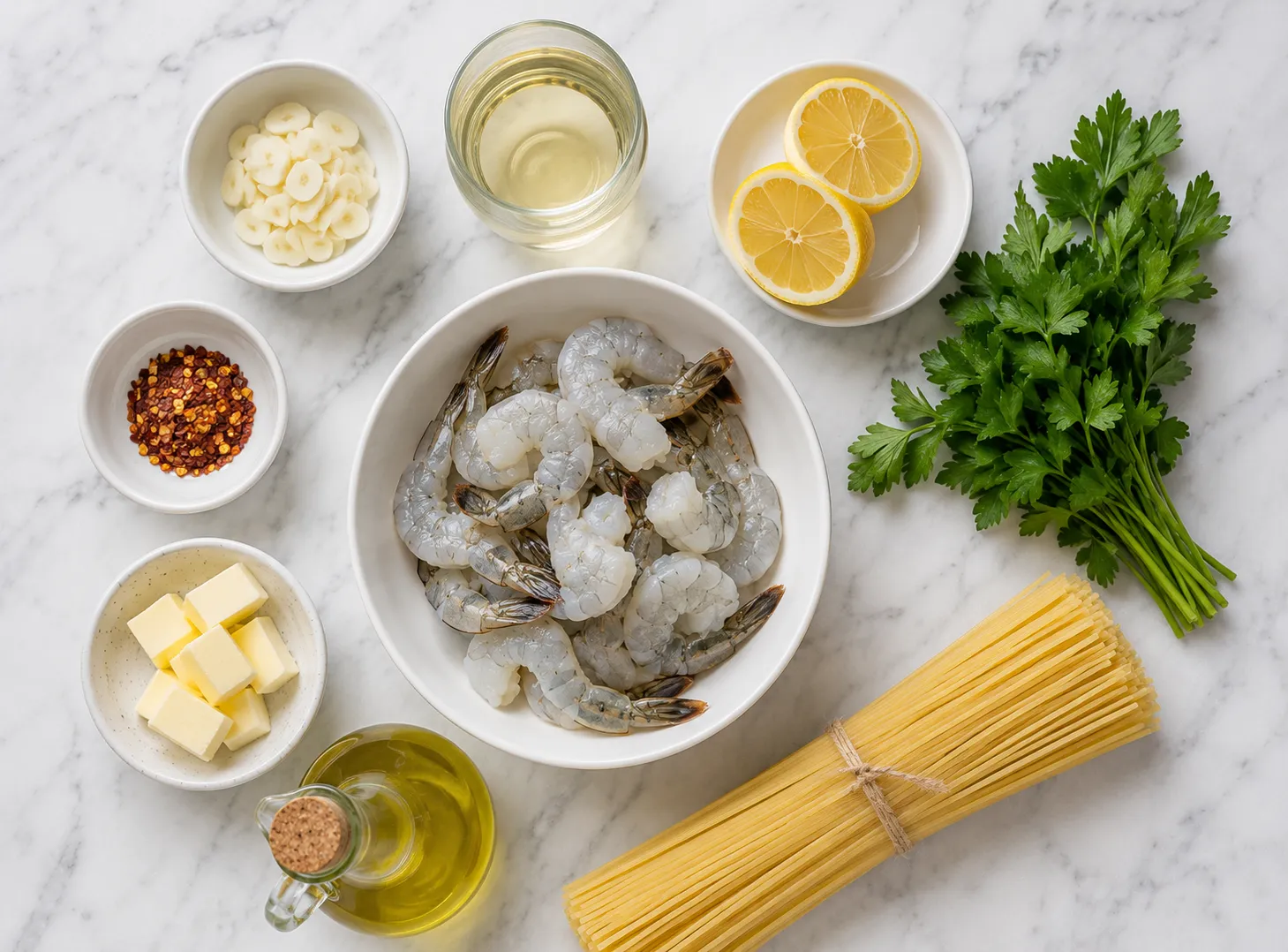
- 1 pound large shrimp, peeled and deveined , 16 to 20 count works best. Pat completely dry before cooking.
- salt and black pepper , To taste. Season both sides of the shrimp.
- 0.5 teaspoon red pepper flakes , Adjust to your heat preference or leave out entirely.
- 4 tablespoons unsalted butter, divided , Use cold butter when finishing the sauce for better emulsification.
- 2 tablespoons olive oil , Divided. Use a good quality everyday olive oil, not extra virgin for cooking.
- 6 cloves garlic, thinly sliced , Up to 8 cloves if you prefer a stronger garlic flavor. Slice thin, do not mince.
- 0.5 cup dry white wine , Pinot Grigio or Sauvignon Blanc. Use wine you would actually drink.
- 0.25 cup fresh lemon juice , About 2 lemons. Add half, taste, then adjust.
- 1 teaspoon lemon zest , Adds brightness without extra acidity.
- 0.25 cup reserved pasta water , Pull this before draining the pasta. The starch binds the sauce.
- 12 ounces linguine or spaghetti , Cook just under al dente. It finishes in the sauce.
- salt for pasta water , Season heavily. It is the only chance to season the pasta itself.
- 0.25 cup fresh flat-leaf parsley, roughly chopped , Flat-leaf gives cleaner flavor than curly parsley.
- lemon wedges , For serving.
- freshly grated Parmesan , Optional. Some purists skip it with seafood pasta.
- Large skillet or saute pan, 12-inch recommended
- Large pot for boiling pasta
- Colander
- Tongs
- Wooden spoon or silicone spatula
- Knife and cutting board
- Measuring cups and spoons
- Microplane or zester for lemon zest
- Boil and cook the pasta until just under al dente.
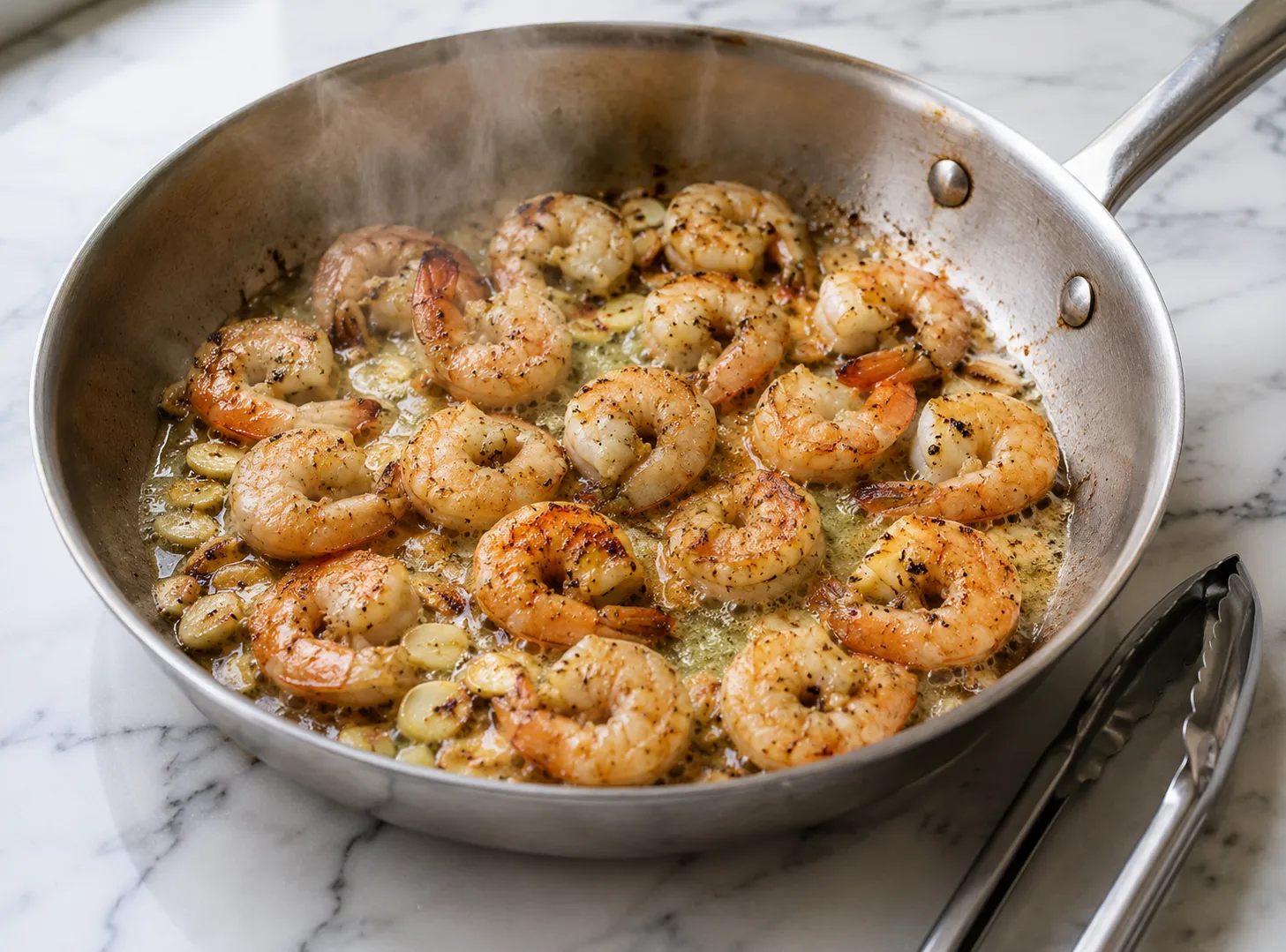
- Season and sear the shrimp in butter and oil until just pink.
- Remove the shrimp and build the garlic and wine sauce in the same pan.
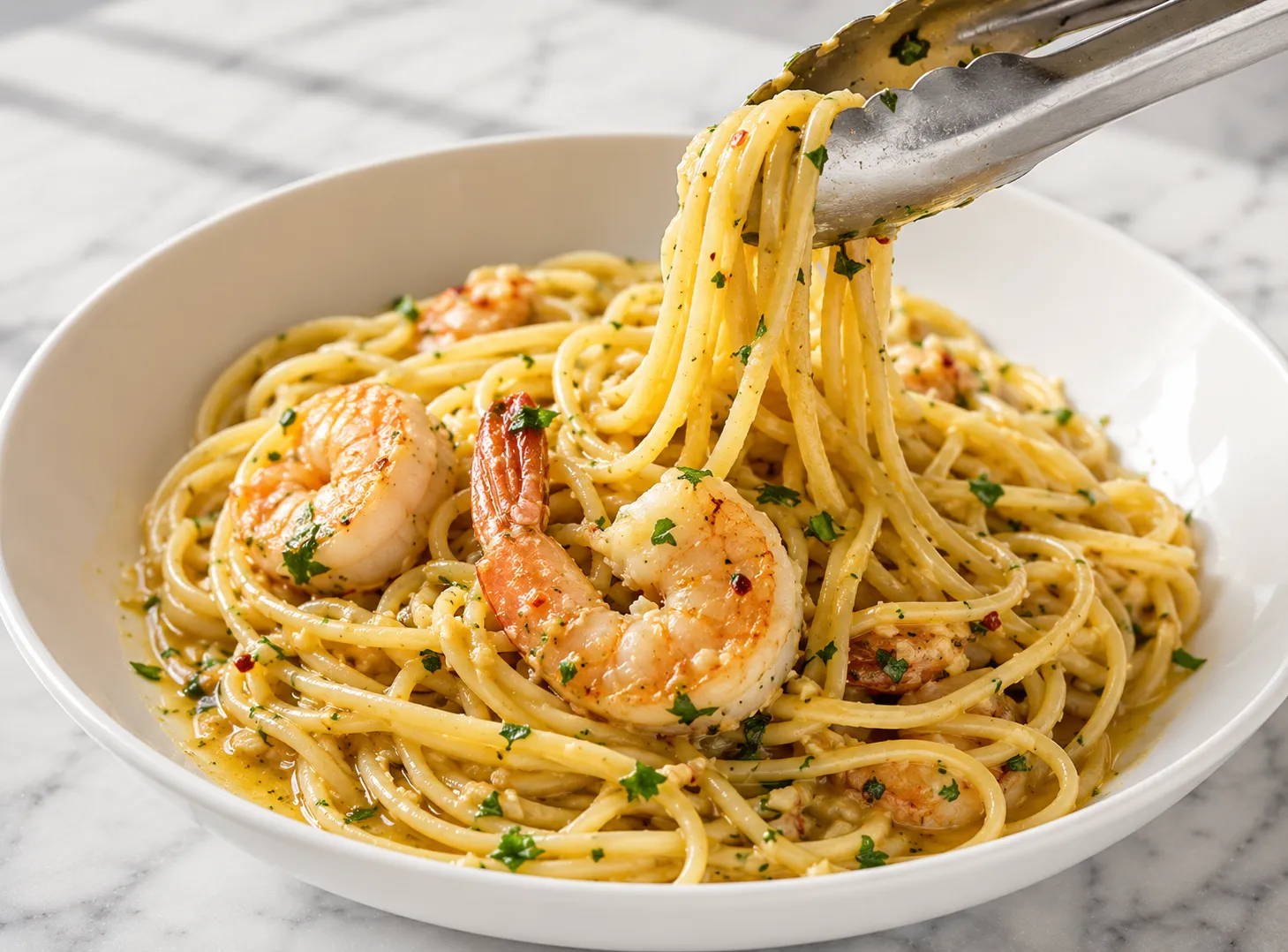
- Toss the drained pasta in the sauce with a splash of pasta water.
- Return the shrimp, finish with lemon and parsley, and serve right away.
- Bring a large pot of heavily salted water to a boil. Cook the pasta about 1 minute less than the package directions. Reserve a quarter cup of pasta water before draining. Set the pasta aside.
- Pat the shrimp completely dry with paper towels. Wet shrimp will steam instead of sear. Season both sides with salt, black pepper, and red pepper flakes.
- Heat 1 tablespoon of butter and 1 tablespoon of olive oil in a large skillet over medium-high heat. Once the butter foams, add the shrimp in a single layer. Do not crowd the pan.
- Cook the shrimp for 1 to 2 minutes per side until pink and just opaque. Pull them before they curl into a tight C shape. That means overcooked. Transfer to a plate and set aside.
- Reduce heat to medium. Add the remaining tablespoon of olive oil to the same pan. Add the sliced garlic and stir constantly for 60 to 90 seconds until fragrant and barely golden. Do not let it brown.
- Pour in the white wine. Let it simmer and reduce by half, about 2 minutes. Scrape up any browned bits from the bottom of the pan.
- Add the lemon juice, lemon zest, and remaining 3 tablespoons of butter. Stir until the butter melts and the sauce looks glossy. Pour in the reserved pasta water and stir to combine.
- Add the drained pasta to the pan. Toss with tongs until every strand is coated. If it looks dry, add a small splash more pasta water.
- Return the shrimp to the pan. Toss gently and heat through for 30 to 45 seconds only. Scatter the parsley over the top and serve immediately with lemon wedges on the side.
- Dry the shrimp thoroughly before cooking. Any surface moisture prevents browning and you will lose the sear.
- Slice the garlic thin instead of mincing. Thin slices give a milder, more even flavor and are less likely to burn quickly.
- Do not skip the pasta water. The starch in it binds the sauce to the pasta and prevents a greasy, broken sauce.
- Only use wine you would drink. Cooking wine adds an off-flavor the whole dish will carry.
- Pull the shrimp when they are just barely pink. They finish cooking when you toss them back into the hot sauce.
- Use cold butter cut into pieces when finishing the sauce. It emulsifies better and creates a silkier texture than room-temperature butter.
- Season the pasta water generously. It is the only opportunity to season the pasta from within.
- Serve immediately after plating. The pasta absorbs the sauce fast and the shrimp tighten up as they sit.
- Overcooking the shrimp. They need no more than 2 minutes per side. Check early and pull them as soon as they turn opaque.
- Crowding the pan. Cook in two batches if needed. A crowded pan drops the temperature and the shrimp steam instead of sear.
- Burning the garlic. Burnt garlic ruins the entire dish. Keep the heat at medium and stir constantly while it cooks.
- Using pre-cooked frozen shrimp. They turn rubbery before the sauce is even finished. Start with raw shrimp only.
- Skipping the reserved pasta water. Without it, the sauce can separate or go too thin.
- Cooking the pasta too far in advance. Overcooked pasta falls apart when tossed in hot sauce.
- Using salted butter without adjusting the rest of your seasoning. Taste as you go.
- Adding all the lemon at once. Add half, taste, and adjust from there.
- No wine: Replace with an equal amount of low-sodium chicken broth plus an extra squeeze of lemon. The depth is slightly different but still works well.
- Gluten-free: Use your preferred GF pasta or serve over zucchini noodles or cauliflower rice.
- Dairy-free: Swap the butter for a good quality vegan butter. The texture holds up without issue.
- Extra protein: Add scallops alongside the shrimp or substitute them entirely. Sear them the same way.
- Creamy version: Stir in 2 to 3 tablespoons of heavy cream after the wine reduces for a richer sauce.
- Spicier: Double the red pepper flakes or add a pinch of cayenne to the shrimp seasoning.
- No pasta: Serve over polenta, toasted sourdough, or a simple arugula salad with lemon dressing.
- With tomatoes: Add a handful of halved cherry tomatoes when you add the garlic. They blister quickly and add a mild sweetness.
- Crusty sourdough or garlic bread to soak up the extra sauce
- Simple green salad with lemon vinaigrette
- Roasted asparagus or broccolini
- Steamed or sauteed spinach
- Caprese salad
- Caesar salad
- A glass of the same white wine used in the recipe
- Refrigerator: Store in an airtight container for up to 2 days.
- Freezer: Not recommended. Cooked shrimp turn rubbery after freezing and thawing.
- Stovetop reheating: Add a splash of water or broth to a skillet over low heat. Toss gently until warmed through. Add the shrimp back in during the last 30 seconds only.
- Microwave reheating: Use 50 percent power in 30-second intervals. Cover loosely. Stop as soon as the shrimp are heated through.
- Do not reheat more than once.
- The sauce thickens in the fridge. A small amount of water or broth loosens it back up.
Yes, but thaw them fully first and pat them completely dry before cooking. Do not cook from frozen in this recipe or the shrimp will steam rather than sear.
Linguine or spaghetti. The long strands hold a thin sauce well. Angel hair is too delicate and tends to break apart when tossed.
Yes. Use an equal amount of low-sodium chicken broth with an extra squeeze of lemon. The flavor is slightly different but the dish still comes out well.
They are ready when they turn pink and just opaque throughout. Pull them before they curl into a tight C shape. That curl means they have gone too far.
The sauce can be made up to a day ahead and kept in the fridge. Cook the pasta and shrimp fresh right before serving for the best result.
Mildly. The red pepper flakes add a background heat rather than a strong kick. Leave them out entirely for no heat, or double them if you want more.
- Shrimp size matters. Use 16 to 20 count large shrimp for best results. Smaller shrimp cook even faster and are easier to overdo.
- Fresh garlic only. Jarred minced garlic does not saute the same way and tends to burn before it builds any real flavor.
- The sauce is intentionally light and glossy, not thick. It coats the pasta rather than drowning it. If it looks broken or greasy, the pan was likely too hot when the butter went in.
- Always taste the sauce before plating and adjust salt and lemon to your liking.
- This recipe doubles well for a larger group. Use the biggest pan you have and cook the shrimp in two batches to avoid crowding.
- If the sauce reduces too much before the pasta is ready, add a bit more pasta water and stir over low heat to bring it back.
This shrimp scampi recipe works because the technique behind it is sound, not because it relies on complicated ingredients or special equipment. Dry shrimp sear properly. Thinly sliced garlic cooks evenly without burning. Cold butter stirred into a reduced wine sauce creates something glossy and cohesive rather than greasy. These are small things, but they are the difference between a dish that tastes like it came from a restaurant and one that just tastes like buttered pasta with shrimp on top. Once you make this a few times, the steps become automatic. You will stop measuring the garlic and start trusting your eye. That is the point of a recipe worth repeating. Get the technique right once and you will not need to look it up again. This is that kind of recipe for a shrimp scampi.