
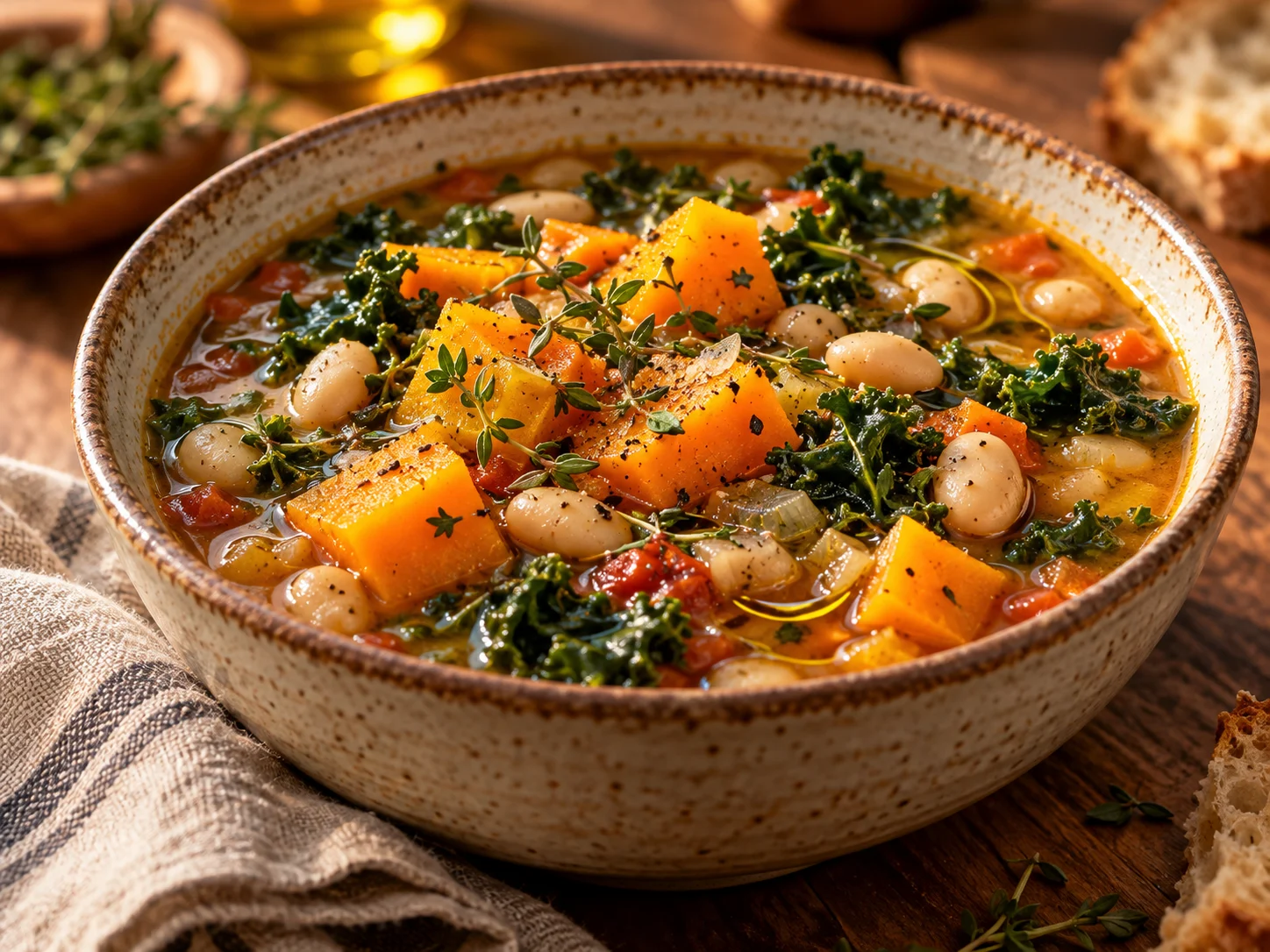
Slow Cooker Fall Harvest Soup for Cozy Dinner Nights
When the temperature drops and the days grow shorter, there is a specific kind of comfort found in a bowl of warm, hearty soup. This Slow Cooker Fall Harvest Soup is designed to capture that feeling without requiring hours of standing over a hot stove. By utilizing the slow cooker, the root vegetables—butternut squash, carrots, and sweet potatoes—have the time to slowly break down and infuse the broth with natural sweetness and deep, earthy flavor. It is a forgiving, straightforward recipe that relies on the quality of your seasonal produce rather than complex culinary techniques.
Understanding the Fall Harvest Flavor Profile
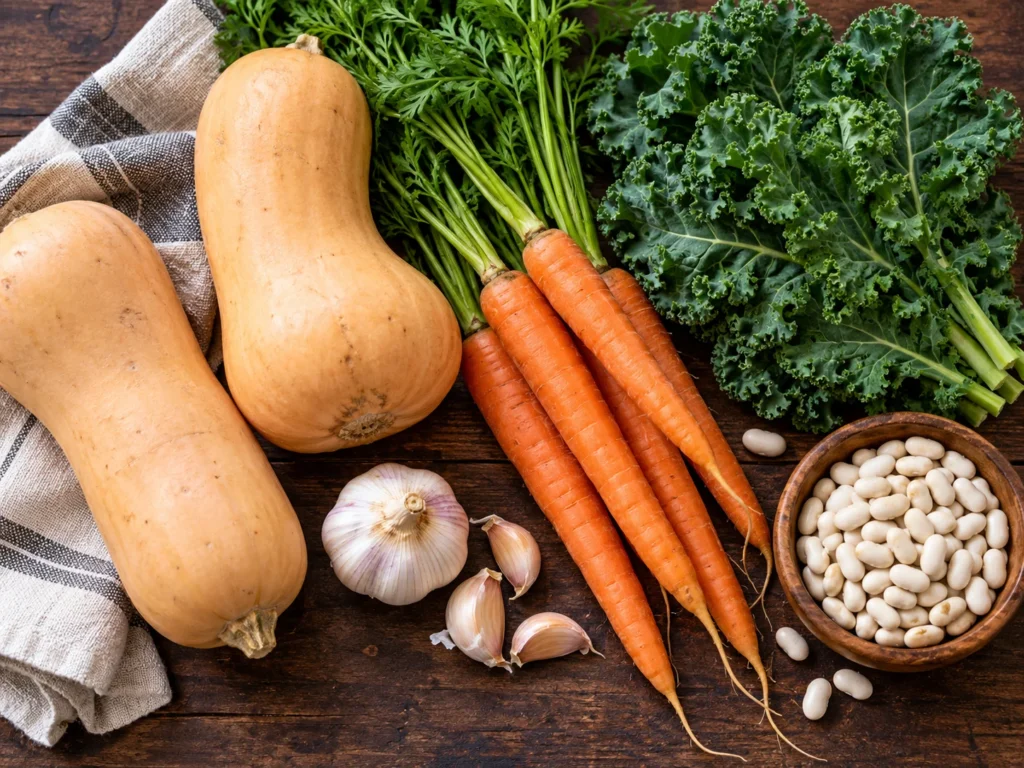
The flavor profile of this soup leans heavily into the transition from summer to autumn. You are looking for a balance between the natural sugars found in squash and carrots, the creaminess of white beans, and the savory, woody notes provided by fresh sage and thyme. Unlike a pureed soup, this version relies on keeping the vegetables in distinct, bite-sized cubes. This provides a satisfying texture that stands up to long cooking times without turning into mush.
Choosing the right ingredients is the most important step. Because the vegetables cook in their own juices alongside vegetable or chicken stock, their individual characteristics will be magnified. Use firm, unblemished butternut squash and sweet potatoes to ensure they hold their shape. The inclusion of cannellini beans adds a layer of protein and a velvety texture that thickens the broth naturally as they soften in the heat.
Salt balance deserves special attention here. Because root crops like sweet potatoes and squash are inherently sweet, an under-seasoned broth will taste flat or dessert-like rather than savory. Building the flavor with a rich, low-sodium stock allows you to control the salinity precisely. A bay leaf tucked beneath the vegetables releases a herbal, tea-like background note that grounds the lighter floral notes of the thyme.
Selecting and Prepping Your Produce
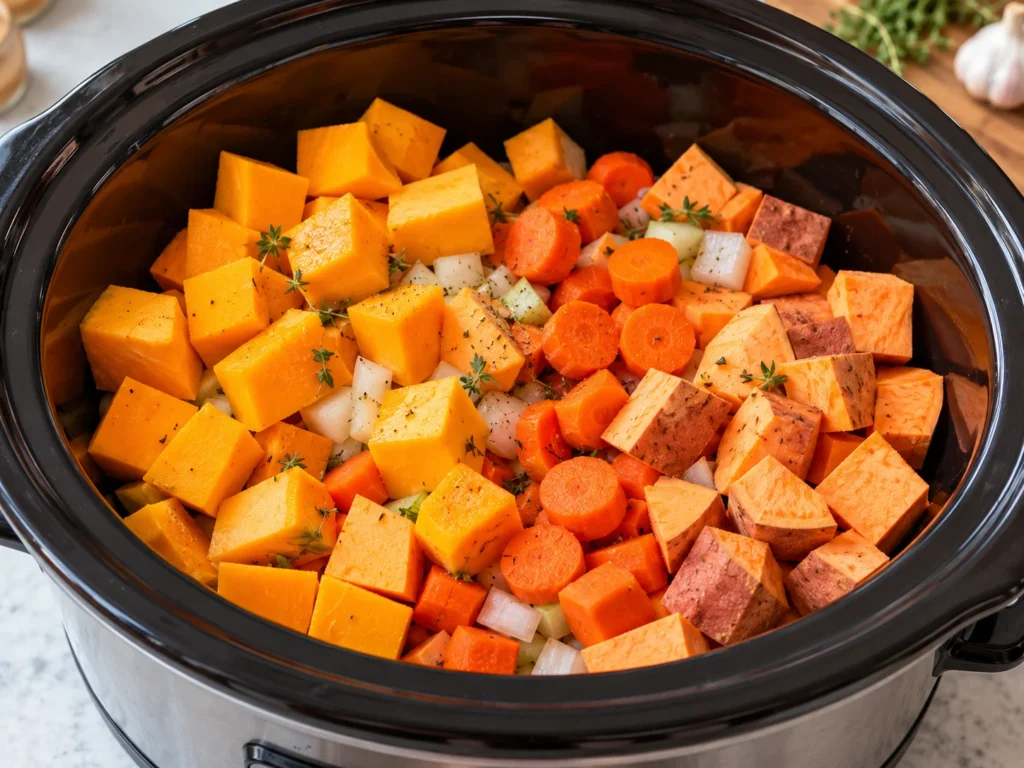
When you are prepping your vegetables, consistency is key. Aim for roughly half-inch to three-quarter-inch cubes. If the pieces are too small, they will lose their structural integrity during the four to six hours of cooking. If they are too large, the centers might remain hard while the outside edges get soft. Think of it as creating uniform ‘bites’ for your spoon.
Tough-skinned squashes are easiest to handle when you slice off the stem and base first, giving you a flat, stable surface on the cutting board. Peel away the waxy skin with a sharp Y-peeler until you expose the dark orange flesh underneath. If you are substituting standard sweet potatoes with jewel yams or red garnets, keep in mind that garnets tend to cook down slightly faster and will add even more body to the broth.
For the aromatics, do not be shy with the onion and garlic. While you could sauté them first, adding them raw to the slow cooker works perfectly fine in this application. The long, gentle heat effectively mellows their sharp bite and infuses the liquid base with aromatic intensity. If you have extra time, you can quickly sauté them in a pan with a little olive oil before adding them to the pot, but for a true ‘dump-and-go’ experience, the raw method is equally delicious.
Why the Slow Cooker Works for This Soup
The beauty of a slow cooker is the gentle distribution of heat. In a standard pot on the stove, you have to manage a constant boil or simmer, which can sometimes break apart delicate vegetables before the flavor has fully developed. With a slow cooker, the temperature stays consistently below the boiling point. This allows the fibers in the squash and carrots to relax and soften gradually, absorbing the seasonings rather than just cooking in a high-intensity environment.
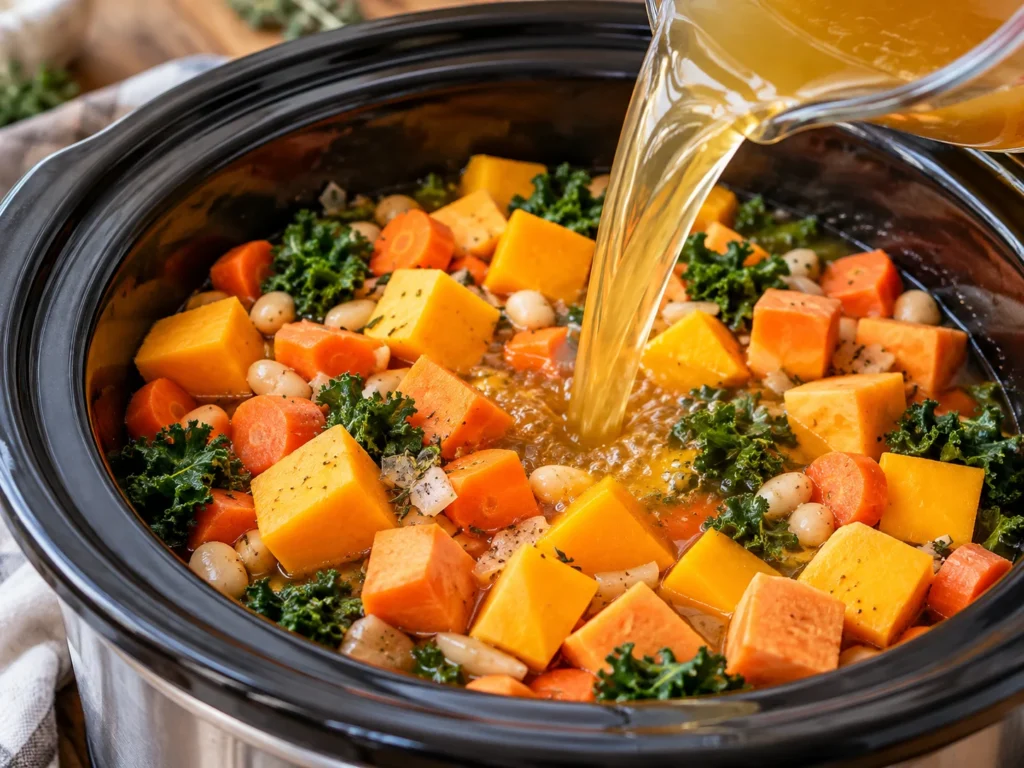
You might notice that the broth begins quite clear. As the starch from the beans and the squash releases into the liquid, the soup will naturally gain body. By the time the cooking cycle is complete, you will have a thick, nourishing broth that tastes like it has been simmering on a stove for days. This method is particularly useful for busy afternoons where you want the house to smell incredible without having to watch a pot.
Condensation builds steadily along the inside of the slow cooker lid, sealing in moisture that would otherwise evaporate on a traditional stovetop. This means very little liquid is lost during the simmer, keeping the vegetable nutrients and subtle woodsy herb oils right in the bowl rather than lost to kitchen steam.
Step-by-Step Cooking Process
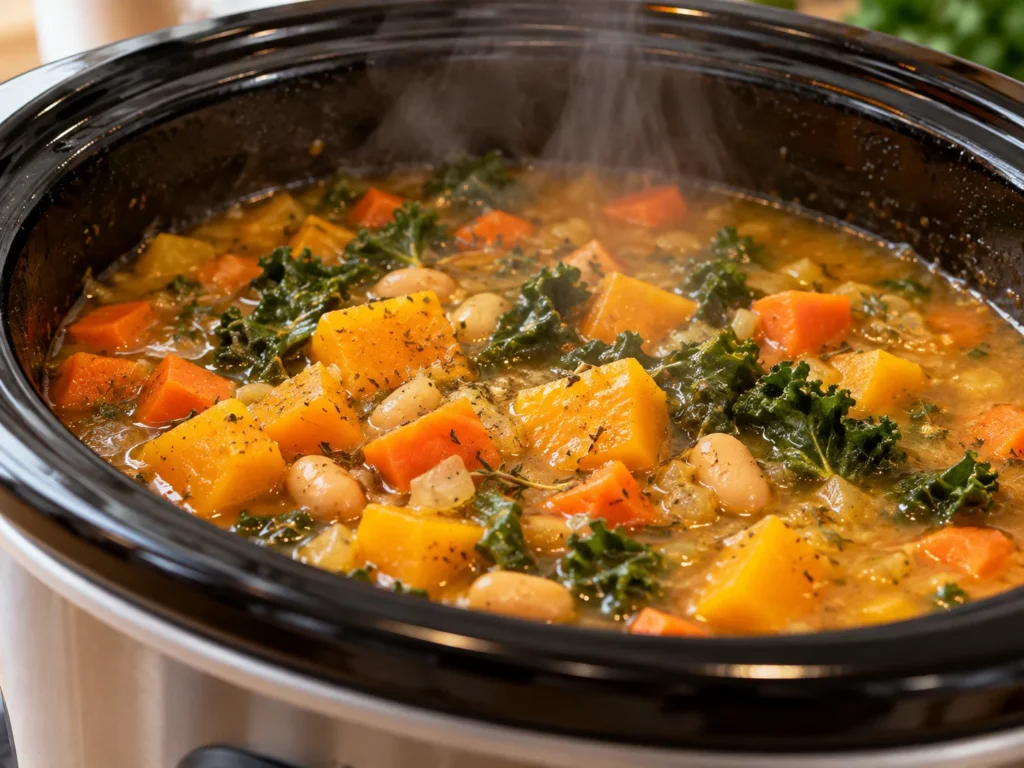
Begin by lining your slow cooker or simply ensuring it is clean and ready. Add your cubed squash, carrots, sweet potatoes, and onions. Sprinkle the herbs—thyme, sage, and a bay leaf—directly over the vegetables along with salt and black pepper. Stirring them slightly ensures the seasoning is evenly distributed before you add the liquid.
Pour in your broth—vegetable or chicken both work well—until the vegetables are just barely covered. You do not want to submerge them completely, or you will end up with too thin a soup. Once the lid is on, set the cooker to low for six to seven hours or high for three to four hours. The exact timing will depend on how soft you prefer your vegetables.
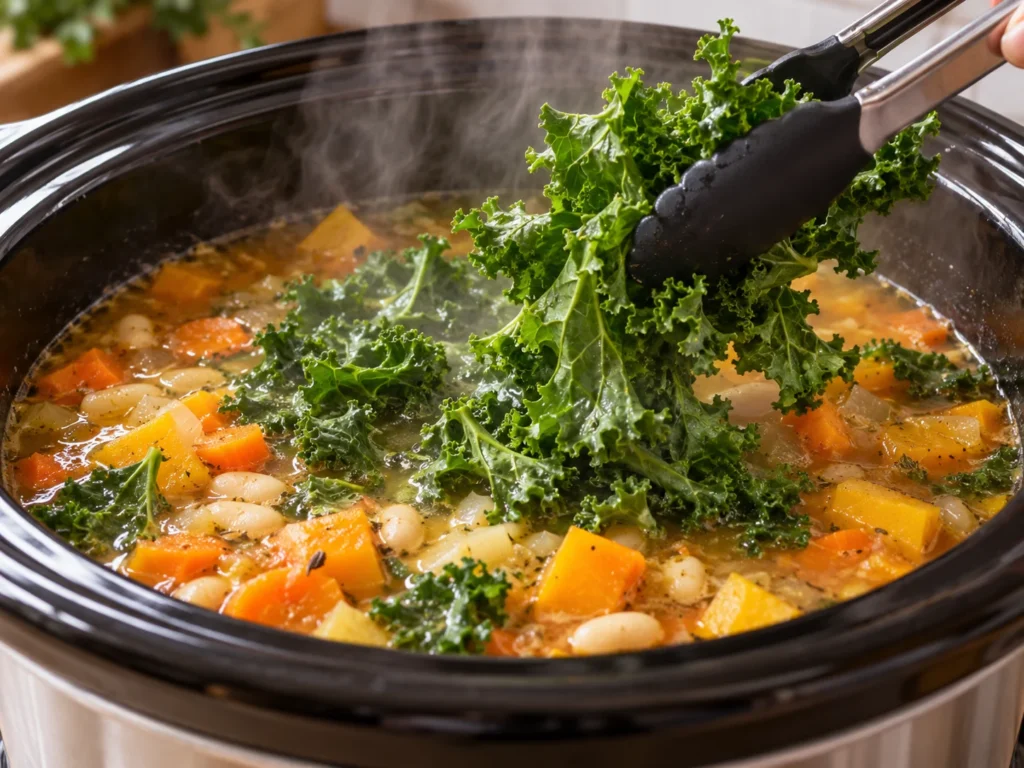
About thirty minutes before you are ready to serve, stir in your greens. Kale or spinach are excellent additions. They only need a brief amount of time to wilt into the broth. If you add them at the beginning, they will become bitter and stringy. This final step adds a pop of color and freshness that brightens up the entire dish, cutting through the richness of the root vegetables.
If you prefer a thicker, almost stew-like broth, use a wooden spoon or potato masher to lightly crush a cup or two of the cooked beans and squash against the side of the stoneware insert right before adding your greens. This instantly creates a luxurious, starchy thickness across the broth without needing any heavy cream, flour, or cornstarch slurry.
Serving and Storing Your Leftovers
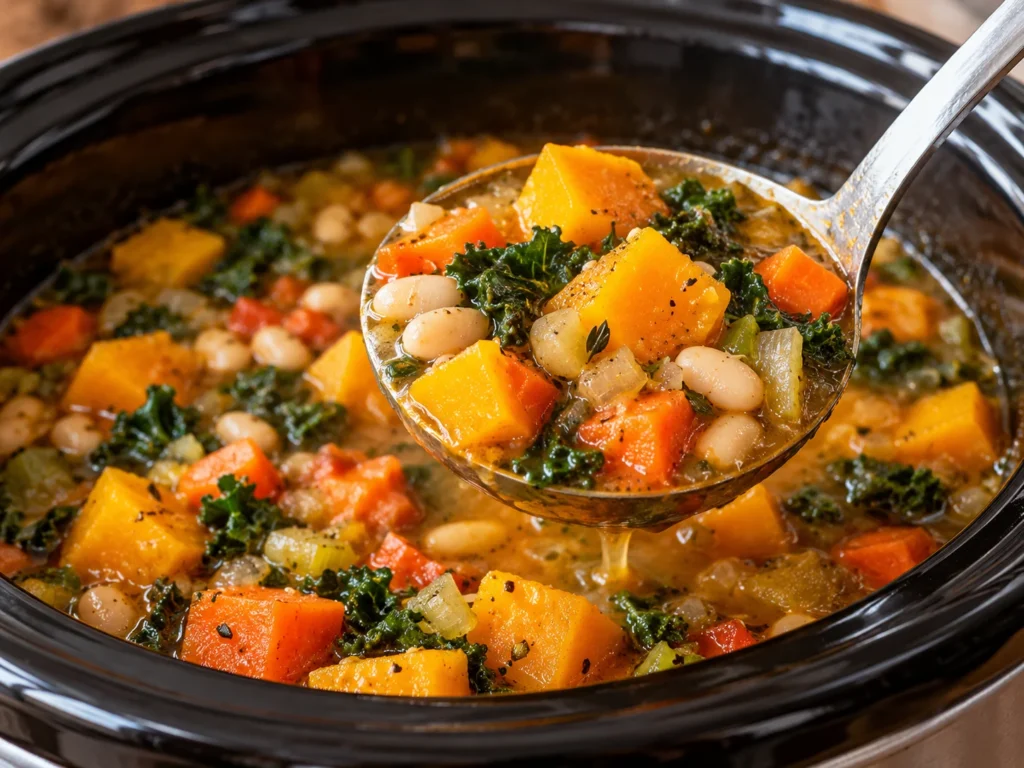
This soup pairs exceptionally well with crusty sourdough bread or a side salad of bitter greens like arugula. Because it is hearty enough to be a main course, you generally do not need much else to complete the meal. If you like a little extra texture, topping your bowl with toasted pumpkin seeds or a shaving of hard, aged cheese like Parmesan or Pecorino adds a nice savory crunch.
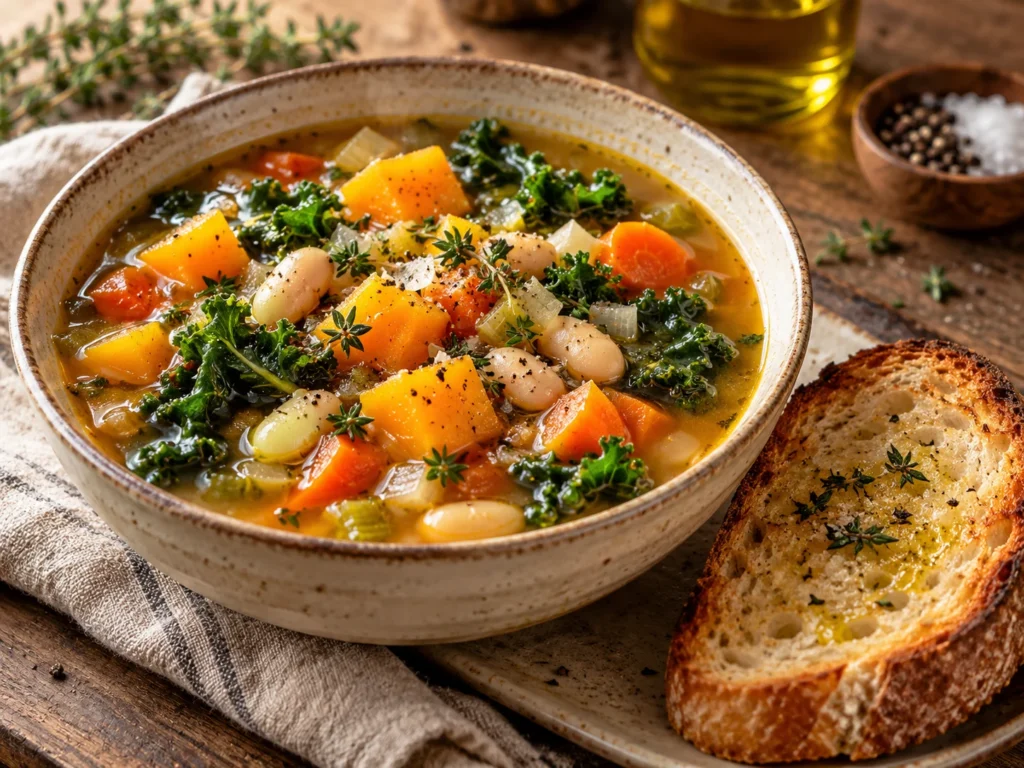
When storing, allow the soup to cool completely before placing it in airtight containers. It keeps very well in the refrigerator for up to four days. In fact, many people find it tastes even better the next day as the flavors have had more time to meld. You can reheat it on the stovetop over medium heat or in the microwave. If it seems too thick after being refrigerated, simply splash in a little extra broth or water to bring it back to your preferred consistency.
For longer preservation, this soup freezes neatly for up to three months. Ladle the cooled soup into freezer-safe glass jars or heavy-duty freezer bags, leaving an inch of headspace at the top to allow for liquid expansion as it freezes. Thaw overnight in the refrigerator before reheating gently over low heat on the stove, finishing with an extra crack of fresh black pepper to wake up the aromatics.
If you enjoy this recipe, consider pinning it to your soup board for those cold evenings when you need something nourishing. It is one of those reliable favorites that makes the shift into the cooler months feel just a little bit warmer.
Frequently Asked Questions
Can I use frozen vegetables for this soup?
Can I add protein like sausage or chicken?
Why is my soup watery?
Can I leave out the beans?
Slow Cooker Fall Harvest Soup for Cozy Dinner Nights
A wholesome, vegetable-packed Slow Cooker Fall Harvest Soup that uses root vegetables and beans for a rich, hearty, and comforting dinner. Requires minimal prep and provides maximum flavor.
Ingredients
- 1 medium butternut squash, peeled, seeded, and cubed (approx. 4 cups)
- 2 large sweet potatoes, peeled and cubed
- 3 large carrots, peeled and sliced
- 1 large yellow onion, diced
- 4 cloves garlic, minced
- 1 can (15 oz) cannellini beans, rinsed and drained
- 6 cups vegetable or chicken broth
- 1 teaspoon dried thyme
- 1 teaspoon dried sage
- 1 bay leaf
- 2 cups chopped kale or spinach
- Salt and black pepper to taste
- Olive oil for serving (optional)
- Pumpkin seeds for garnish (optional)
Instructions
- Prepare the vegetables by peeling and cutting the squash, sweet potatoes, and carrots into uniform 1/2 to 3/4 inch cubes.
- Place the cubed vegetables, diced onion, minced garlic, and drained cannellini beans into the slow cooker.
- Add the thyme, sage, bay leaf, a generous pinch of salt, and black pepper. Stir to combine the seasonings.
- Pour the broth over the vegetable mixture until they are just covered.
- Cover and cook on LOW for 6 to 7 hours, or HIGH for 3 to 4 hours, until the vegetables are tender.
- Remove the bay leaf. Stir in the kale or spinach and let it sit for about 5 to 10 minutes until wilted.
- Taste and adjust seasoning with additional salt or pepper if needed. Serve hot.
Notes
Ensure vegetables are cut to a similar size to promote even cooking.
If you prefer a thicker soup, you can smash a few of the beans against the side of the pot with a wooden spoon toward the end of the cooking time.
Leftovers can be stored in the refrigerator for up to 4 days and reheat well on the stovetop.
The kale or spinach must be added at the very end to prevent it from overcooking and losing its texture.
Nutrition
| Calories | 285 |
| Protein | 9g |
| Total Fat | 2g |
| Carbohydrates | 58g |
| Fiber | 11g |
| Sugar | 8g |
| Sodium | 720mg |