
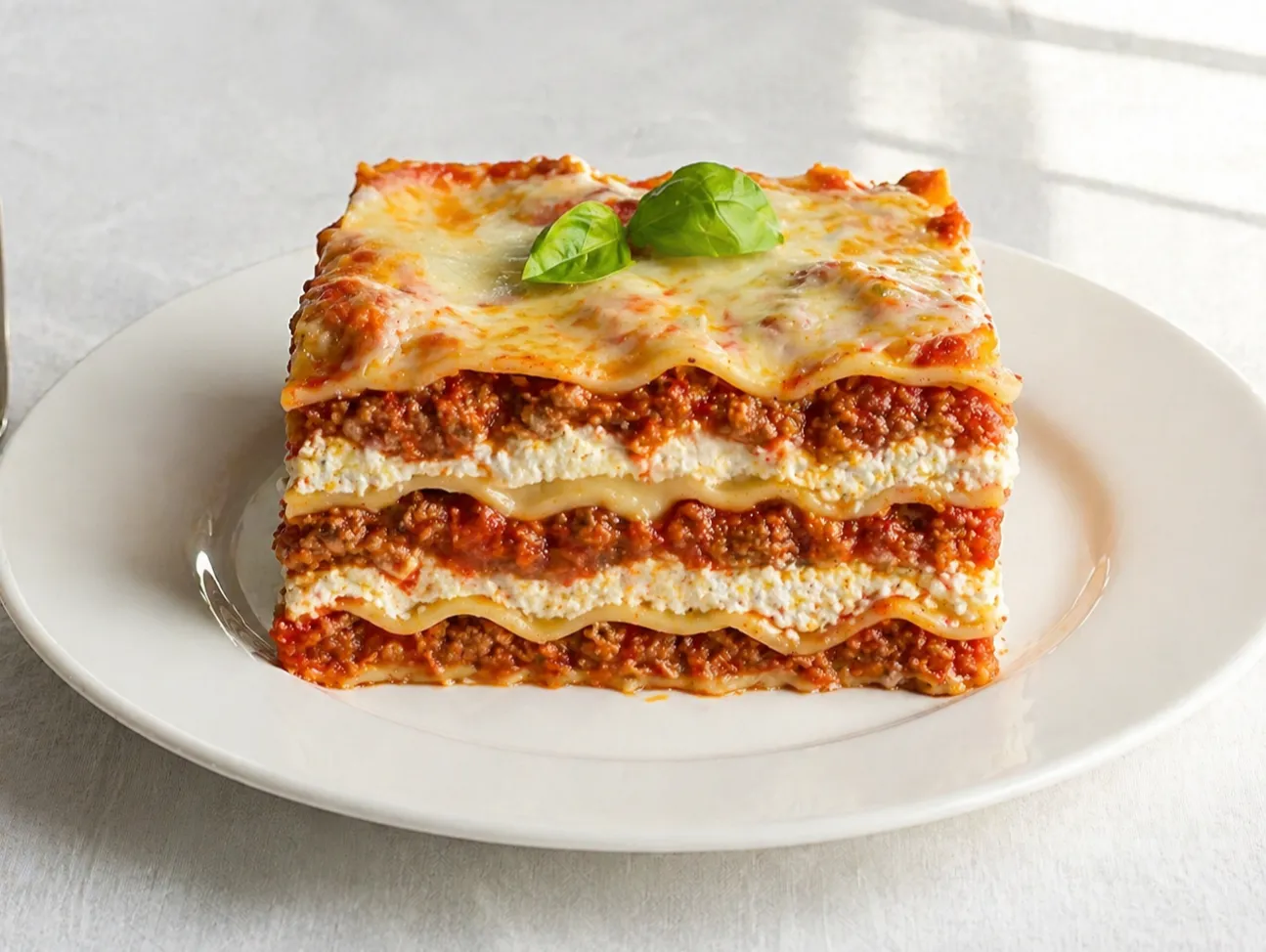
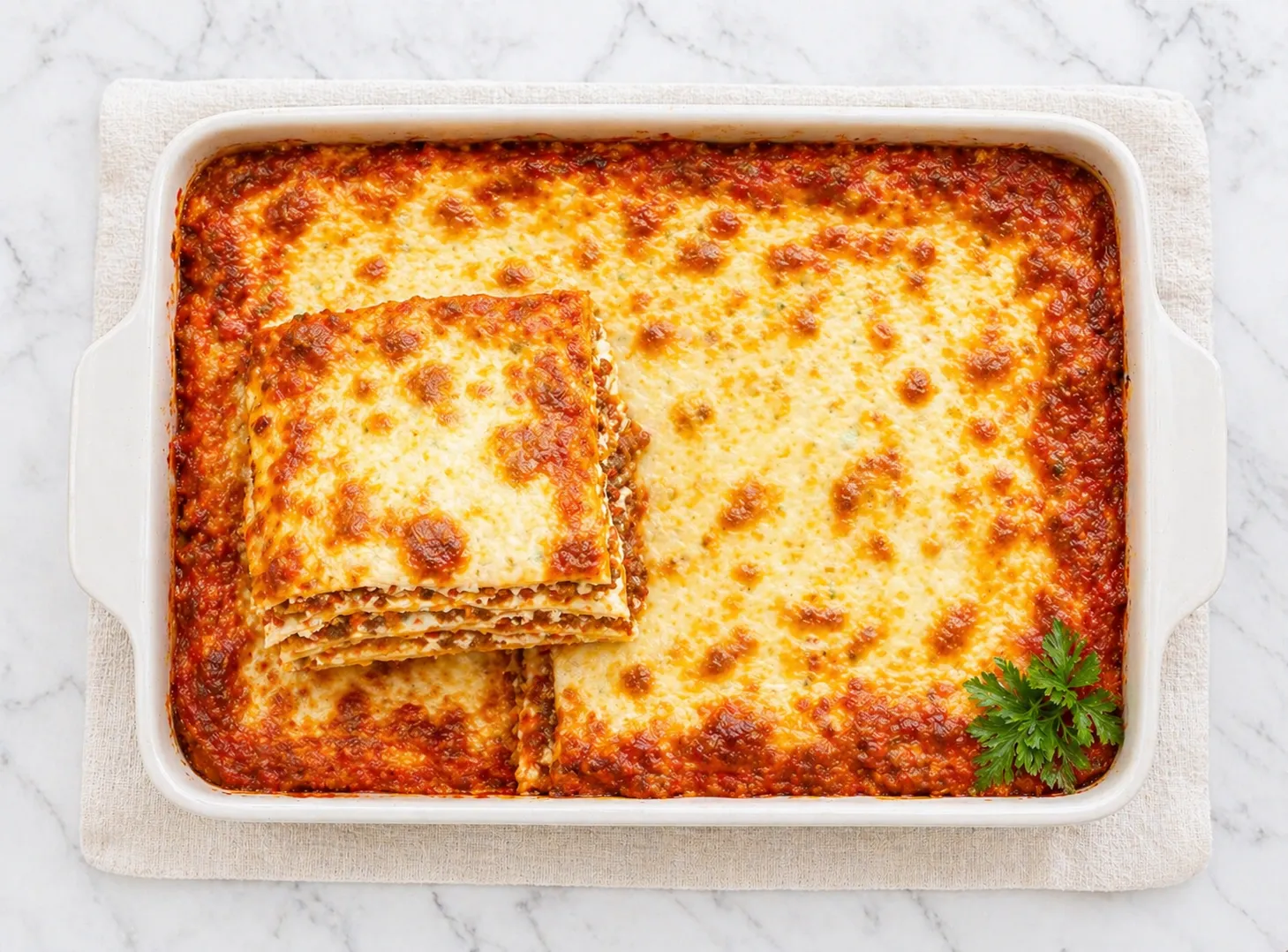
This lasagna recipe with ricotta is the kind of baked pasta that actually delivers. The ricotta layer stays creamy without making the dish heavy. The meat sauce has real depth. And the whole thing slices cleanly when you give it time to rest. It feeds a full table, reheats well, and works just as well for a Sunday dinner as it does for meal prepping a few days ahead. If you have been looking for a lasagna recipe that is worth the effort and does not require any shortcuts that compromise the result, this is it. The ingredients are simple and accessible. The process is straightforward once you understand the layering. And the outcome is a lasagna that tastes exactly the way a good lasagna should.
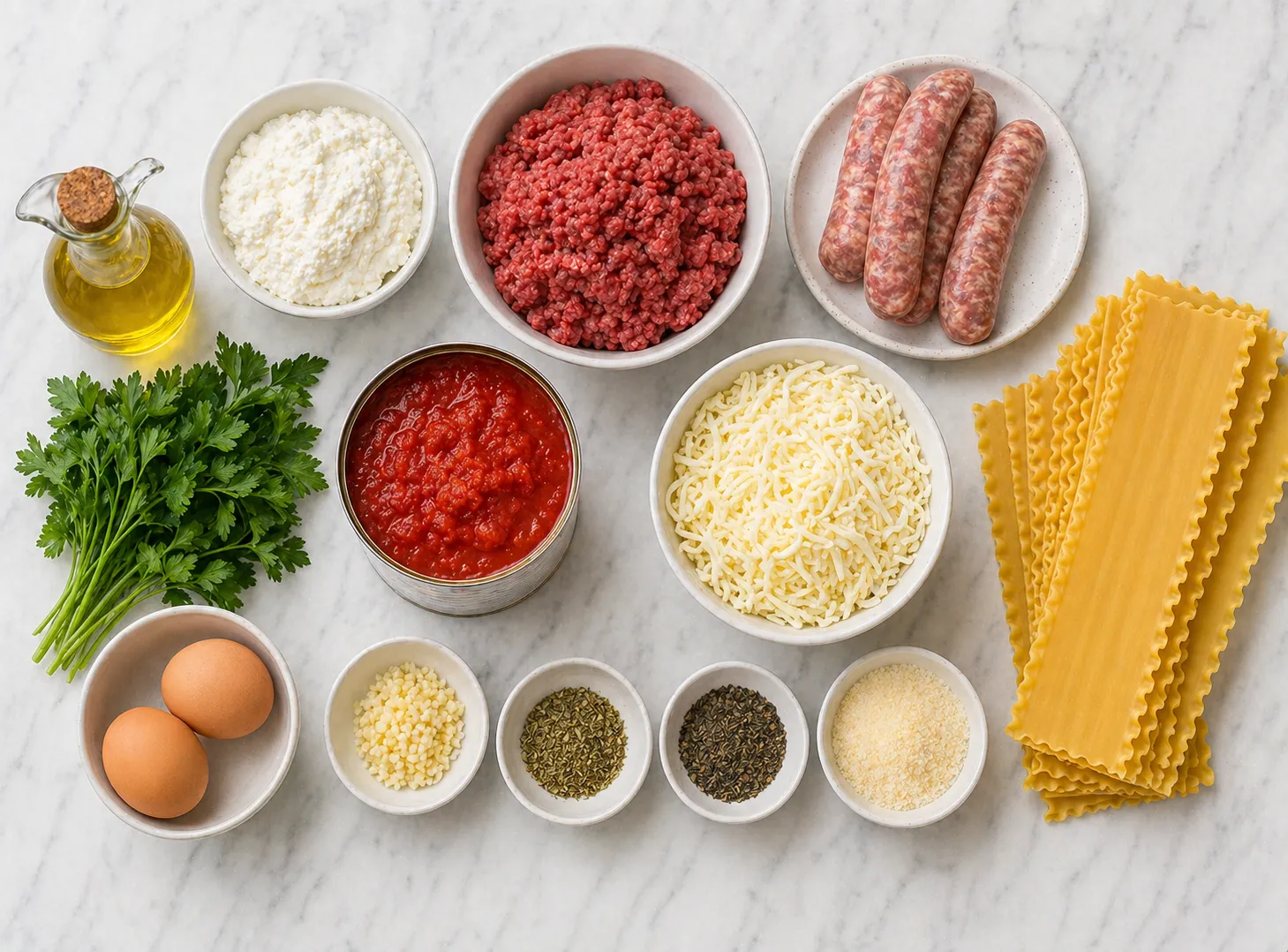
- 1 lb (450g) ground beef, 80/20 fat ratio
- 1/2 lb (225g) Italian sausage, casing removed
- 1 medium yellow onion, finely diced
- 4 cloves garlic, minced
- 2 cans (28 oz each) crushed tomatoes
- 2 tablespoons tomato paste
- 1 teaspoon dried oregano
- 1 teaspoon dried basil
- 1/2 teaspoon crushed red pepper flakes, optional
- 1 tablespoon olive oil
- Salt and black pepper to taste
- 32 oz (900g) whole milk ricotta cheese
- 2 large eggs
- 1/2 cup grated Parmesan cheese
- 2 tablespoons fresh parsley, chopped, or 1 teaspoon dried
- 1/2 teaspoon salt
- 1/4 teaspoon black pepper
- 12 lasagna noodles, regular or oven-ready
- 3 cups shredded whole milk mozzarella, divided
- 1/2 cup grated Parmesan, for the top
- 9 by 13 inch deep baking dish, ceramic or glass preferred
- Large skillet or Dutch oven for the meat sauce
- Large pot for boiling noodles
- Mixing bowl for the ricotta filling
- Aluminum foil
- Wooden spoon or silicone spatula
- Sharp knife and wide spatula for serving
- Fine mesh strainer, optional, for draining ricotta if needed
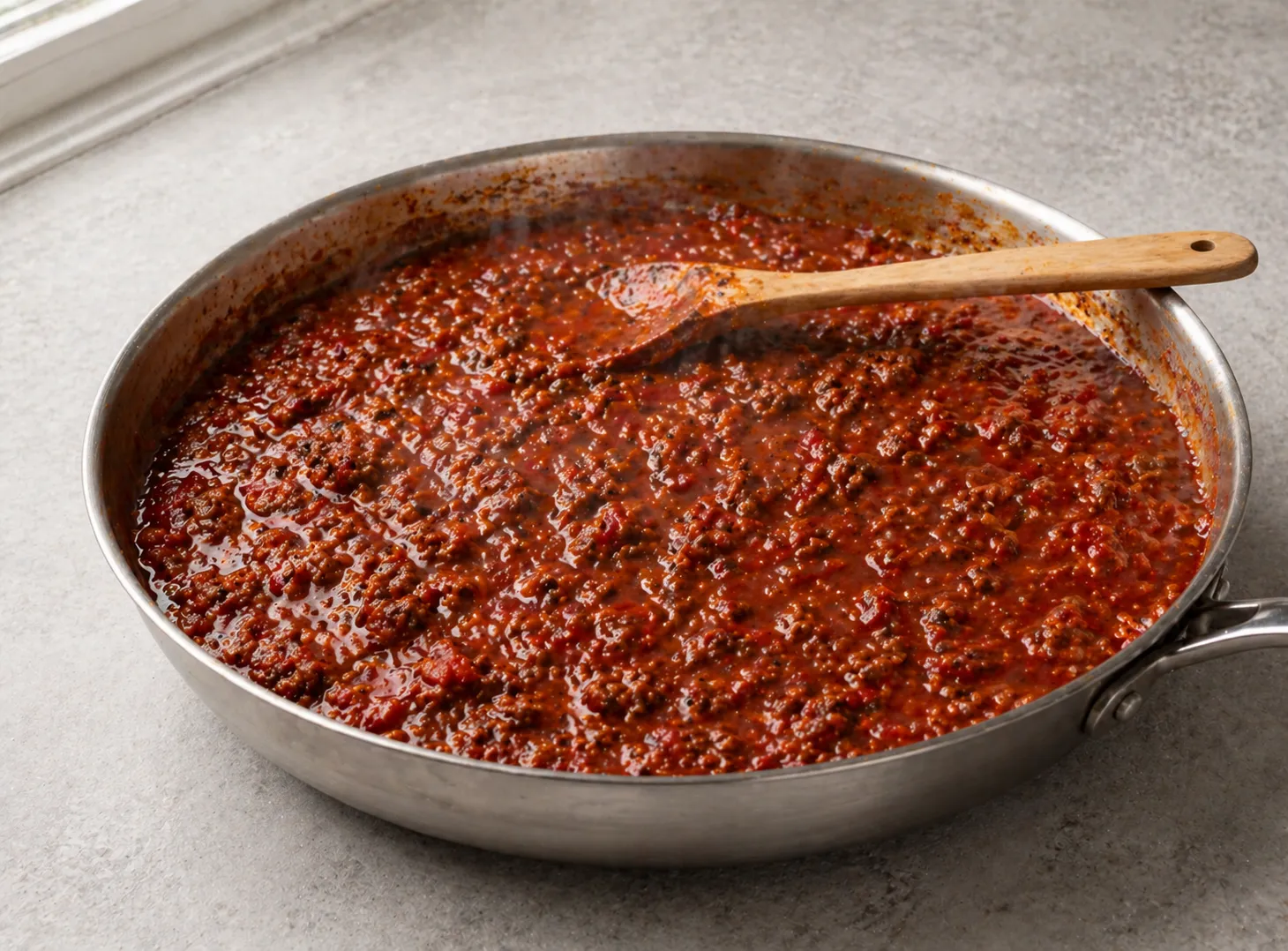
- Brown the meat and build the tomato sauce on the stovetop.
- Mix the ricotta filling with eggs, Parmesan, and seasoning.
- Boil and drain your noodles. Skip this step if using oven-ready.
- Layer sauce, noodles, ricotta, and mozzarella. Repeat three times.
- Bake covered first, then uncovered, until the top is golden and the edges are bubbling.
- Heat olive oil in a large skillet or Dutch oven over medium-high heat. Add the diced onion and cook for 3 to 4 minutes until softened.
- Add the minced garlic and stir for 30 seconds. Do not let it brown or it will turn bitter.
- Add the ground beef and Italian sausage. Break up the meat with a wooden spoon and cook until no pink remains, about 8 to 10 minutes. Drain off excess fat.
- Stir in the tomato paste and cook for 2 minutes. This step concentrates the flavor before the tomatoes go in.
- Add the crushed tomatoes, oregano, basil, red pepper flakes, salt, and pepper. Stir to combine, reduce heat to low, and simmer uncovered for 20 minutes. Stir occasionally.
- While the sauce simmers, cook the lasagna noodles in a large pot of well-salted boiling water. Pull them out 1 to 2 minutes before the package says they are done. They will finish cooking in the oven. Drain and lay flat on a lightly oiled baking sheet so they do not stick together.
- In a large bowl, combine the ricotta, eggs, Parmesan, parsley, salt, and pepper. Stir until fully mixed. Set aside.
- Preheat your oven to 375 degrees F (190 degrees C). Lightly grease a 9 by 13 inch baking dish.
- Spread 1 cup of meat sauce across the bottom of the dish. This layer prevents the noodles from sticking and helps the bottom layer cook evenly.
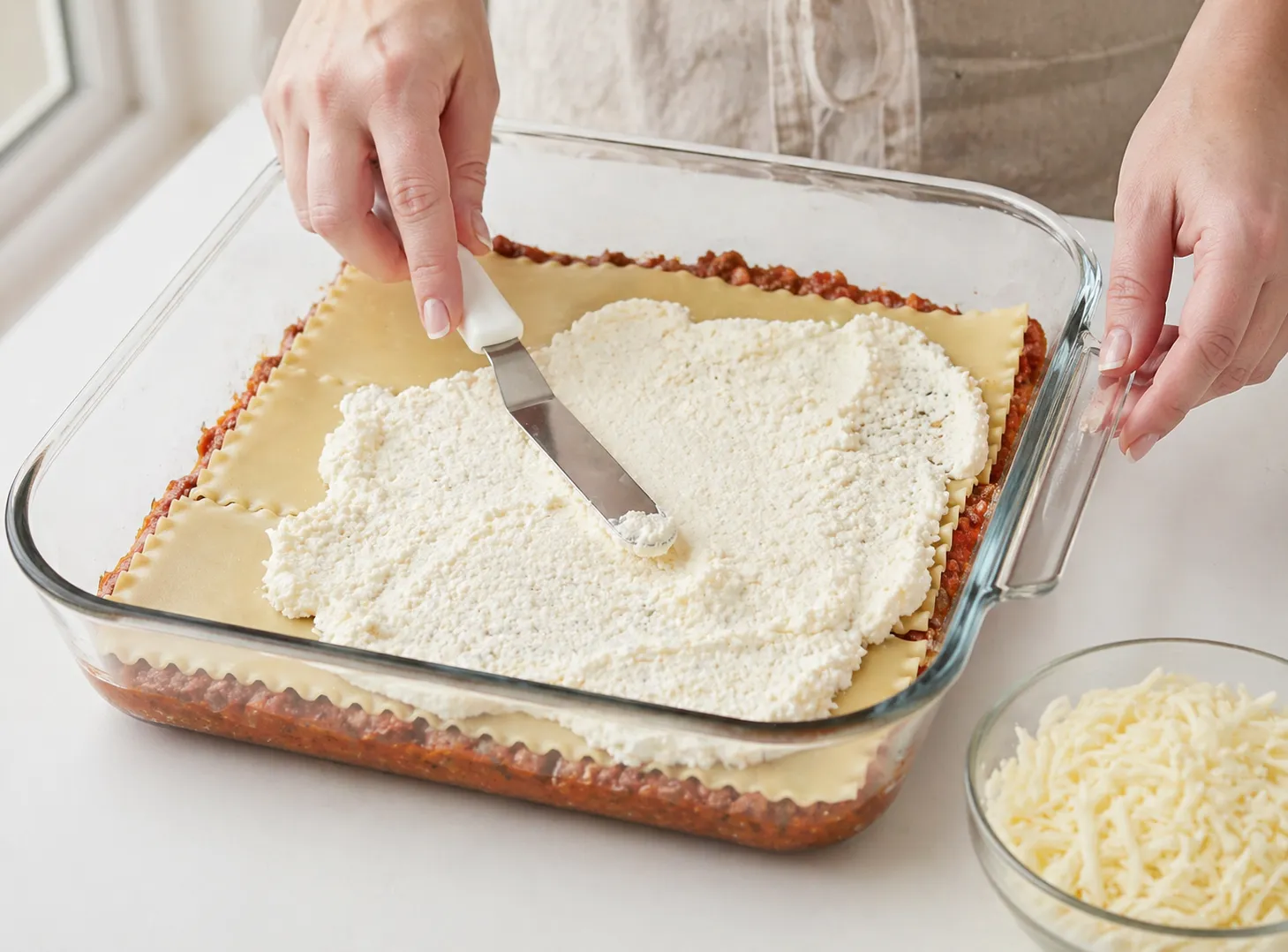
- Lay 3 to 4 noodles over the sauce, slightly overlapping. Spread one-third of the ricotta mixture over the noodles in an even layer. Spoon on one-third of the remaining meat sauce. Sprinkle with about 3/4 cup of shredded mozzarella.
- Repeat the layering two more times: noodles, ricotta, sauce, mozzarella.
- For the final layer, add the last of the noodles, the remaining sauce, the rest of the mozzarella, and all of the Parmesan on top.
- Cover the dish tightly with foil and bake for 35 minutes. Remove the foil and bake for another 20 minutes until the top is golden and the edges are visibly bubbling.
- Take the lasagna out of the oven and let it rest for at least 15 minutes before cutting. This is what allows the layers to set and gives you clean, structured slices. Cutting into it too early will cause the layers to slide.
- Use whole milk ricotta, not part-skim. The extra fat gives it a creamier texture that holds up during baking.
- Always spread a thin layer of sauce on the bottom of the baking dish before the first noodle goes in. It protects the bottom layer from drying out and prevents sticking.
- Simmer the meat sauce for the full 20 minutes. A quick sauce tastes thin and acidic. The extra time rounds out the flavor considerably.
- Undercook your noodles if you are boiling them. They absorb moisture from the sauce during baking, so starting them al dente prevents them from going mushy.
- Rest the lasagna for the full 15 minutes after baking. It is not just about making clean slices. The internal temperature also continues to rise slightly during this time, which helps everything finish cooking through properly.
- Shred your own mozzarella from a block. Pre-shredded cheese contains an anti-caking agent that makes it melt unevenly and gives the top a slightly grainy texture.
- Use a deep 9 by 13 dish to fit three generous layers without anything spilling over the sides.
- Cutting into the lasagna while it is still hot. The filling has not had time to set and everything will slide apart on the plate.
- Using a thin sauce. If the sauce runs off a spoon quickly, simmer it down further before assembling. A watery sauce leads to a watery final dish.
- Making the ricotta layer too thick. Pile it on too generously and it will not heat through properly, leaving dense, undercooked pockets in the middle.
- Not seasoning the ricotta mixture. Plain ricotta is mild and flat on its own. Season it properly or it will dull the flavor of every bite it is in.
- Skipping the foil for the first part of baking. Without it, the top layer of cheese will burn long before the inside has a chance to cook through.
- Using low-fat or fat-free cheese. The texture and flavor both take a noticeable hit.
- Packing the noodles too tightly. Leave a small gap at the edges so they have room to expand without buckling or folding during baking.
- Ground turkey or chicken can replace the beef for a lighter version. Both are milder, so increase the seasoning slightly to compensate.
- For a vegetarian lasagna, skip the meat and use sauteed cremini mushrooms, diced zucchini, and wilted spinach in the sauce. The mushrooms give it enough substance that you will not miss the meat.
- Cottage cheese can substitute for ricotta in a pinch. Drain it well before using and the texture comes reasonably close, though the result will be a little less rich.
- If you use oven-ready noodles, add an extra half cup of water or sauce to the dish before baking to give the noodles enough moisture to soften properly.
- For more heat, increase the red pepper flakes and swap the mild Italian sausage for hot.
- Add a layer of thinly sliced provolone or fontina between the mozzarella layers if you want extra cheese depth.
- For a white lasagna, replace the tomato sauce with a bechamel and use chicken or roasted vegetables as the filling. It is a completely different dish built on the same structure.
- Garlic bread or a sturdy crusty loaf for soaking up the sauce on the plate.
- A simple green salad with a light vinaigrette. Something fresh and acidic works well alongside a rich, cheesy baked dish.
- Roasted broccoli or green beans. Both are easy to prepare while the lasagna bakes and they do not compete with the main dish.
- Caesar salad is a reliable, classic pairing.
- A dry red wine like Chianti or Sangiovese complements the tomato-based sauce without overwhelming it.
- Refrigerator: Store covered leftovers for up to 5 days. The flavor tends to improve after a day as everything settles and melds together.
- Freezer: Freeze baked or unbaked lasagna for up to 3 months. Wrap it tightly in foil and then in plastic wrap. Label it with the date.
- Reheating from the fridge: Cover with foil and bake at 350 degrees F for 20 to 25 minutes. Individual slices can be microwaved for 2 to 3 minutes.
- Reheating from frozen (already baked): Thaw overnight in the refrigerator, then bake covered at 350 degrees F for 30 to 40 minutes. Remove the foil for the last 10 minutes to refresh the top.
- Baking from frozen (unbaked): No need to thaw. Cover with foil and bake at 375 degrees F for 60 to 75 minutes, then remove the foil for the final 20 minutes.
- Add a small splash of water or a spoonful of extra sauce before reheating to prevent the top from drying out.
Yes. Assemble it fully, cover it tightly with foil, and refrigerate for up to 24 hours before baking. Add about 10 extra minutes to the initial covered bake time since the dish starts cold.
Only if you are using regular dried lasagna noodles. Oven-ready noodles go in dry and absorb moisture from the sauce during baking. Regular noodles used without boiling will be tough and underdone.
Usually the cause is a sauce that was not simmered long enough or ricotta that has a high moisture content. Simmer the sauce until it thickens noticeably, and if your ricotta seems wet, drain it through a fine mesh strainer for 30 minutes before mixing.
Yes. Fresh noodles do not need any boiling. They cook fully in the oven and give a more tender texture than dried noodles.
Three layers of noodles and filling is standard for a 9 by 13 dish. You can fit a fourth layer if your dish is deeper and you have enough ingredients.
Yes. Use all ground beef instead. Add a small amount of fennel seed or extra Italian seasoning to make up for some of the flavor the sausage would have contributed.
- This recipe makes a full 9 by 13 lasagna. If you are cooking for a smaller household, it halves well in an 8 by 8 pan. Reduce the bake time by about 10 minutes and check early.
- The meat sauce yields a slightly generous amount on purpose. Any leftover sauce freezes well and can be used for pasta or as a pizza base.
- If your ricotta mixture seems loose or wet, the ricotta itself likely has a high moisture content. Strain it briefly before mixing to avoid a watery final dish.
- Foil can stick to melted cheese if it makes contact. Either tent the foil slightly above the cheese or lightly spray the underside with cooking spray before covering the dish.
- The 15-minute rest period is structural. It allows the layers to firm up so that when you cut and serve, each portion holds together on the plate.
This lasagna recipe with ricotta is one of those dishes that earns a permanent spot in your cooking rotation. It takes some time to put together, but the process is straightforward and the result is consistently good. Once you have made it a couple of times, you will not need to look at the recipe again. If you have leftovers, hold onto them. A slice reheated the next day, after the sauce has had time to settle into the pasta overnight, is genuinely one of the better things you can pull out of your refrigerator on a weeknight. Make it once and you will understand why this is the version people keep coming back to.