
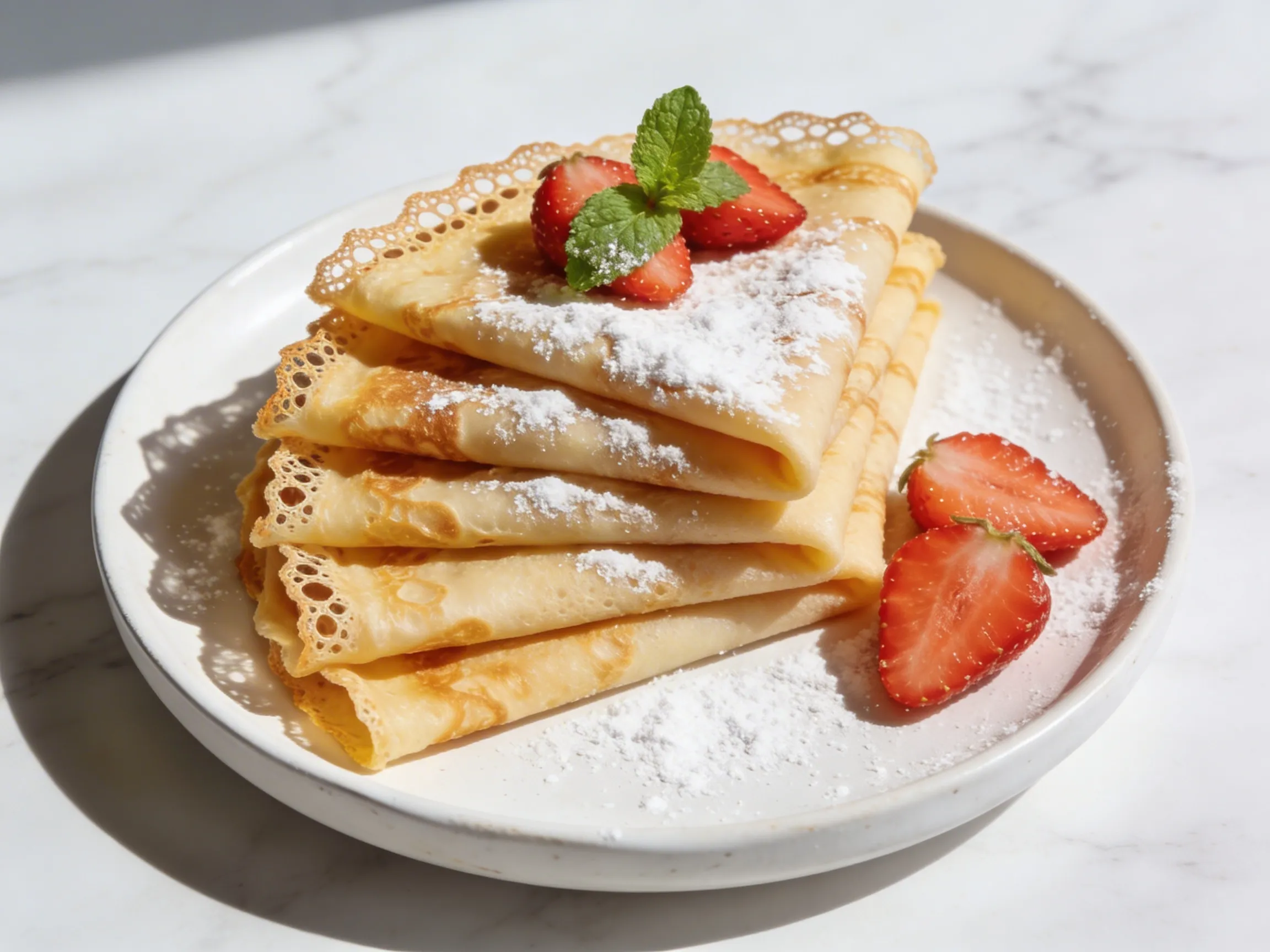
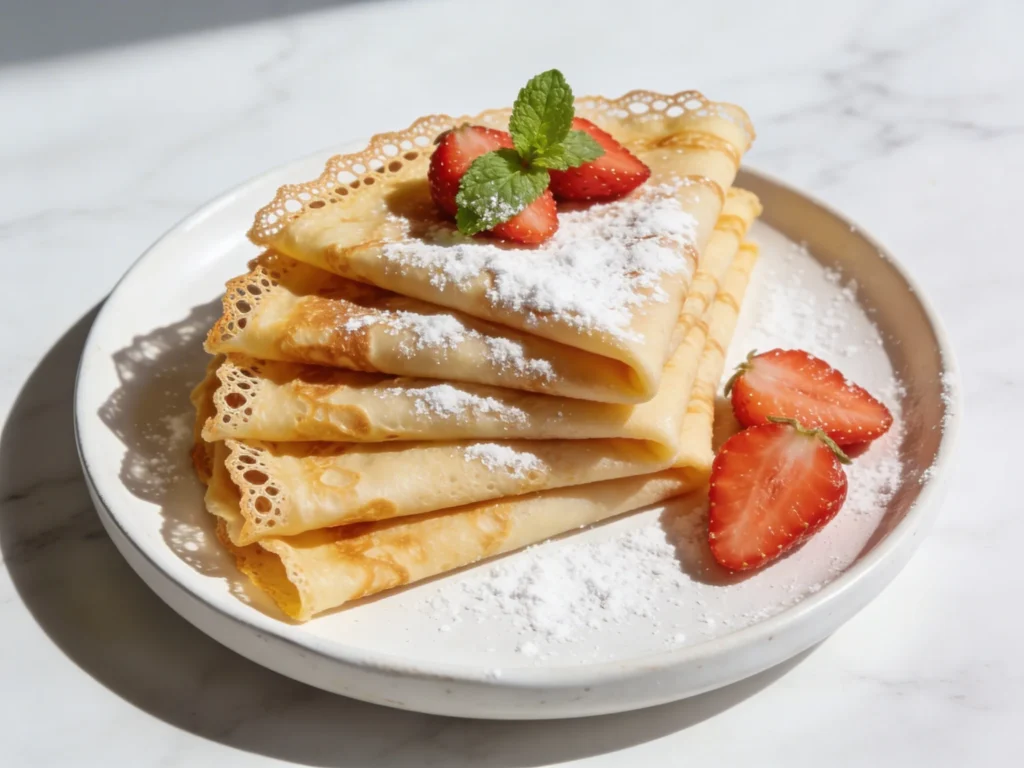
French crepes have a reputation for being tricky, but that reputation isn’t really earned. The batter takes five minutes to mix, the technique clicks fast, and the results — thin, golden, slightly crispy at the edges — make it worth learning properly.
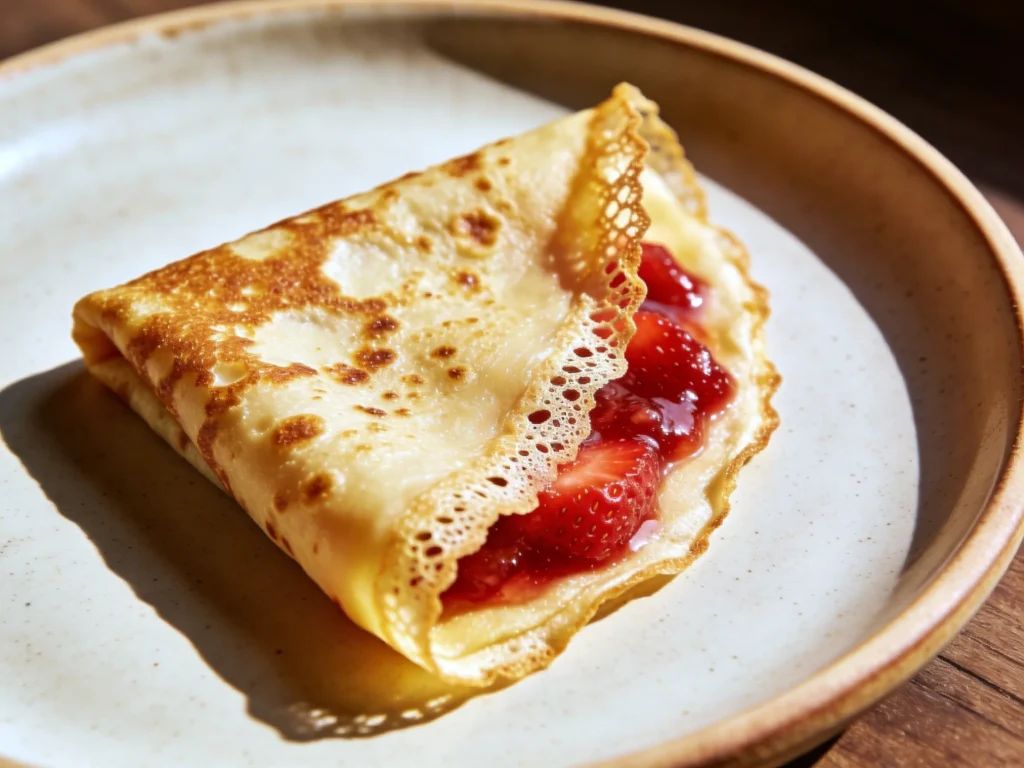
What separates crepes from pancakes is simple: no leavening. The batter is intentionally thin, close to the consistency of heavy cream, and it spreads across a hot pan in seconds. The finished crepe is soft and pliable through the middle, with delicate lacy edges and just enough structure to hold a filling without falling apart.
This crepe recipe works equally well for sweet and savory — the same base batter handles a Nutella-and-banana dessert just as well as a ham-and-Gruyère dinner.
Why You’ll Love This Recipe
- Just 6 pantry ingredients — nothing specialty, nothing unusual
- Batter ready in under 5 minutes with a blender or a simple whisk
- Sweet or savory — one recipe, two directions
- Beginner-friendly — the first crepe is always a test; it genuinely gets easier right after
- Make-ahead batter — mix it the night before and cook in the morning
- Reliable texture — thin, buttery, and pliable every time
Ingredients
For the batter:
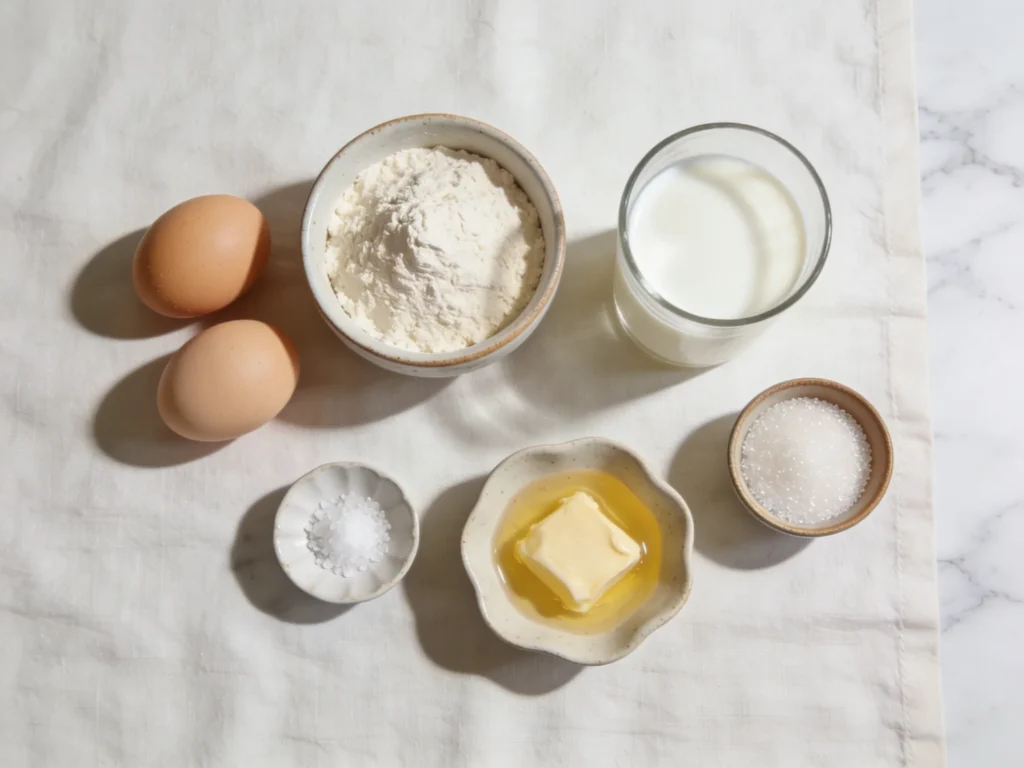
- 1 cup (125g) all-purpose flour
- 2 large eggs
- 1¼ cups (300ml) whole milk
- ½ cup (120ml) water
- 2 tablespoons (28g) unsalted butter, melted and cooled, plus more for the pan
- 1 tablespoon sugar (leave out for savory crepes)
- ¼ teaspoon fine salt
Optional for sweet crepes:
- ½ teaspoon vanilla extract
- 1 teaspoon orange zest
Optional for savory crepes:
- Pinch of black pepper
- 1 teaspoon finely chopped fresh chives, stirred in after mixing
How to Make Crepes
Step 1 — Mix the batter Add all ingredients to a blender and run it for about 20 seconds until smooth. If mixing by hand, start with the flour and eggs to form a paste, then gradually whisk in the milk and water — this prevents lumps. Add the butter and salt last. The finished batter should pour freely. If it feels thick or pulls, stir in a tablespoon of water and check again.
Step 2 — Rest the batter Pour the batter into a bowl or pitcher, cover, and refrigerate for at least 30 minutes. The rest lets the flour hydrate and the air bubbles from blending settle. Crepes made from rested batter are noticeably smoother. Overnight works too — and is often slightly better.
Step 3 — Prep the pan Set a 9- to 10-inch non-stick skillet or crepe pan over medium heat. Add about ½ teaspoon of butter and swirl to coat. The butter should foam and settle. If it browns the second it hits the pan, lower the heat before you pour.
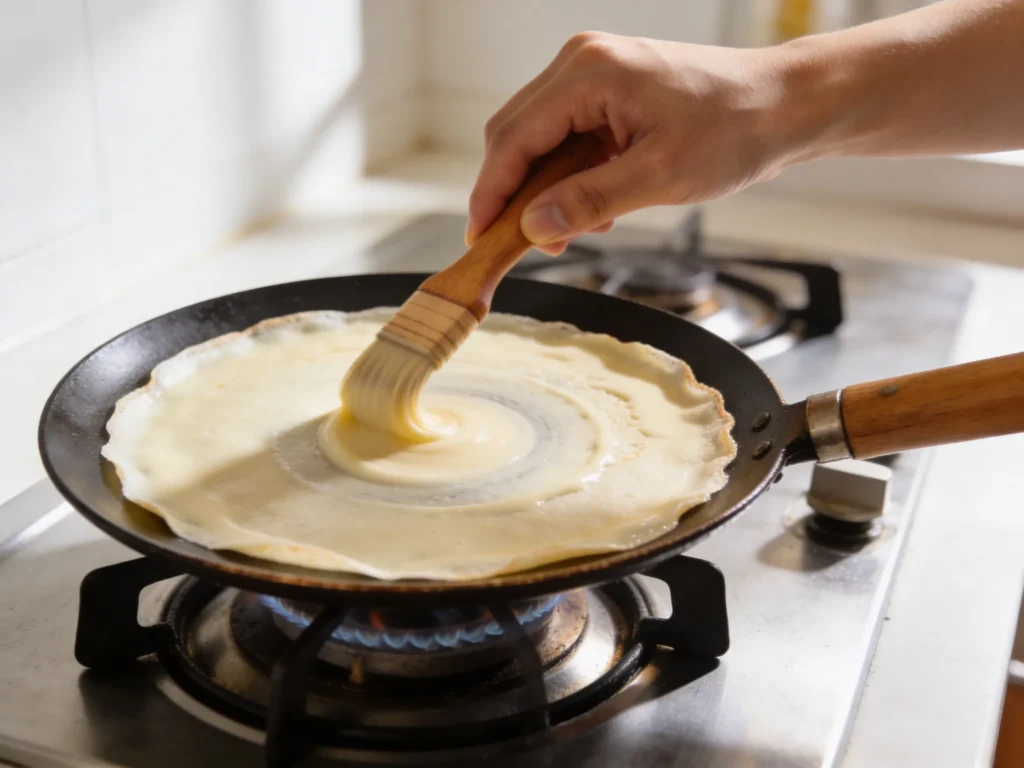
Step 4 — Pour and swirl Lift the pan off the heat briefly, pour in about 3 tablespoons of batter, then tilt and rotate the pan quickly so the batter spreads into a thin, even circle. This needs to happen fast — the batter starts setting almost immediately. Return the pan to the heat.
Step 5 — First side Cook for 1 to 1½ minutes. Watch the edges: they’ll look dry and start to peel slightly from the pan. The surface should go from shiny and wet to completely matte. Slide a thin spatula under the edge to check — the underside should be pale gold with a few faint brown spots.
Step 6 — Flip and finish Flip with a spatula and cook the second side for 30 to 45 seconds. The second side cooks faster and looks more speckled — that’s normal. Slide the crepe onto a plate and continue with the remaining batter, adding a small knob of butter to the pan every two or three crepes.
Expert Tips
- The first crepe is a throwaway. Almost always. It helps calibrate the heat and lubrication before the rest of the batch. Don’t judge the recipe by it.
- Don’t skip the rest. Thirty minutes minimum. Batter that hasn’t rested tends to make tougher, bubblier crepes.
- Keep the heat at medium. High heat doesn’t speed things up — it just means the batter sets before you can spread it.
- Measure each pour. A small ladle or 3-tablespoon measuring cup keeps the crepes consistent and prevents overfilling.
- Stack cooked crepes directly. They won’t stick to each other, and stacking keeps them soft by trapping a little steam.
- If batter thickens after resting, stir in a small splash of milk before cooking. This is common, especially the next morning.
- For lacier edges, thin the batter slightly with an extra tablespoon or two of water.
Common Mistakes to Avoid
- Skipping the rest. The gluten needs time to relax — without it, crepes can turn rubbery. Budget at least 30 minutes.
- Pan too hot. If the batter sets the instant it hits the pan, the heat is too high. Pull the pan off the burner for a moment before trying again.
- Too much batter per crepe. More doesn’t mean better here. A smaller pour spreads thinner and cooks more evenly.
- Swirling too slowly. You have about two seconds once the batter hits the pan. A quick, confident wrist rotation makes all the difference.
- Flipping too early. Wait until the entire surface looks matte — no wet patches at all. Flipping before that point causes tearing.
- Pan too greasy. A thin butter coating is enough. Too much fat leads to uneven browning and greasy edges instead of crispy ones.
Variations
- Buckwheat crepes (galettes): Replace half or all of the flour with buckwheat flour. Nuttier and slightly earthy — especially good with savory fillings.
- Chocolate crepes: Add 2 tablespoons of unsweetened cocoa powder and an extra teaspoon of sugar to the sweet batter. Works well with banana, hazelnut spread, or vanilla ice cream.
- Dairy-free crepes: Swap the milk for oat milk or unsweetened almond milk and use a neutral oil in place of butter. The texture is slightly different but holds up fine.
- Herb crepes: Stir a tablespoon of chopped parsley, dill, or chives into the batter after mixing. Adds color and a subtle fresh note to savory preparations.
- Lemon crepes: Add a teaspoon of lemon zest and a small squeeze of juice to the sweet batter. Pairs well with berries, whipped ricotta, or blueberry compote.
What to Serve With
Sweet:
- Fresh berries with whipped cream or crème fraîche
- Nutella and sliced banana
- Lemon curd with powdered sugar
- Jam and butter, simply done
- Sautéed cinnamon apples
Savory:
- Ham, Gruyère, and a fried egg
- Spinach and ricotta with a pinch of nutmeg
- Smoked salmon with cream cheese and capers
- Sautéed mushrooms with shallots and fresh thyme
For a complete savory meal, a simple green salad alongside is all you need. For a dessert presentation, warm caramel sauce or dark chocolate ganache finishes the plate well.
Storage and Reheating
Room temperature: Covered crepes are fine for up to 2 hours.
Refrigerator: Stack cooled crepes — a small piece of parchment between each is helpful but not essential. Wrap and refrigerate for up to 3 days.
Freezer: Layer crepes with parchment, wrap tightly, and freeze for up to 2 months. Thaw overnight in the fridge.
Reheating: A dry non-stick pan over low heat, about 20 to 30 seconds per side, works well. Or microwave with a damp paper towel for about 15 seconds per crepe.
Raw batter: Keeps refrigerated for up to 48 hours. Stir before using and thin with a splash of milk if needed.
FAQs
Can I make the batter ahead of time? Yes — and it’s actually better for it. Batter keeps for up to 48 hours in the fridge. Stir well before cooking and add a splash of milk if it’s thickened.
Why do my crepes tear when I flip them? Usually it’s too early a flip. The entire surface needs to look dry and matte before the crepe is ready to turn. A thin, flexible spatula also helps considerably.
Do I need a crepe pan? No. A standard non-stick skillet works well. Crepe pans just have lower sides that make swirling and flipping slightly easier.
How thin should the batter be? Similar to heavy cream — much looser than pancake batter. If it feels thick when you pour, thin it with a tablespoon of water or milk.
Can I make this gluten-free? Yes. A 1-to-1 gluten-free flour blend works as a direct substitute. The texture is slightly less elastic but still good.
Can I use low-fat or non-dairy milk? Low-fat milk works fine, though whole milk gives a richer result. For dairy-free, oat milk is the closest match in terms of texture and flavor.
Why does my pan stick even after buttering? Usually the pan isn’t fully up to temperature before the first pour, or the butter coat is too thin. Non-stick pans work best. Cast iron and stainless steel need more fat and practice.
Conclusion
The only real requirements here are a rested batter and steady medium heat. Accept that the first crepe rarely comes out right, and the rest of the batch usually goes smoothly. Once the method is familiar, this crepe recipe earns a permanent spot in your regular rotation — simple enough for a weeknight, easy enough to scale up for a full brunch spread. Try it once and you’ll see what all the fuss is about.
Recipe Card
| Recipe Name | Classic French Crepes |
| Prep Time | 10 minutes (+ 30 min rest) |
| Cook Time | 20–25 minutes |
| Total Time | 55–65 minutes |
| Servings | 12–14 crepes |
| Course | Breakfast, Brunch, Dessert, Main |
| Cuisine | French |
| Calories | ~85 kcal per crepe (unfilled, estimated) |
Ingredients:
- 1 cup (125g) all-purpose flour
- 2 large eggs
- 1¼ cups (300ml) whole milk
- ½ cup (120ml) water
- 2 tbsp (28g) unsalted butter, melted, plus more for pan
- 1 tbsp sugar (omit for savory)
- ¼ tsp fine salt
Instructions:
- Blend all ingredients until smooth, about 20 seconds. Or whisk flour and eggs into a paste, then add milk, water, butter, and salt gradually.
- Refrigerate batter for at least 30 minutes.
- Heat a 9–10 inch non-stick pan over medium heat. Coat lightly with butter.
- Pour 3 tablespoons of batter into the pan, swirling immediately to spread thin.
- Cook 1–1½ minutes until the surface is matte and edges are dry. Flip and cook 30–45 seconds more.
- Slide onto a plate and repeat, adding butter to the pan every 2–3 crepes.
Notes: The first crepe is almost always a test — that’s expected, not a sign something’s wrong. Batter keeps refrigerated for up to 48 hours. Cooked crepes freeze well for up to 2 months with parchment between each layer.