
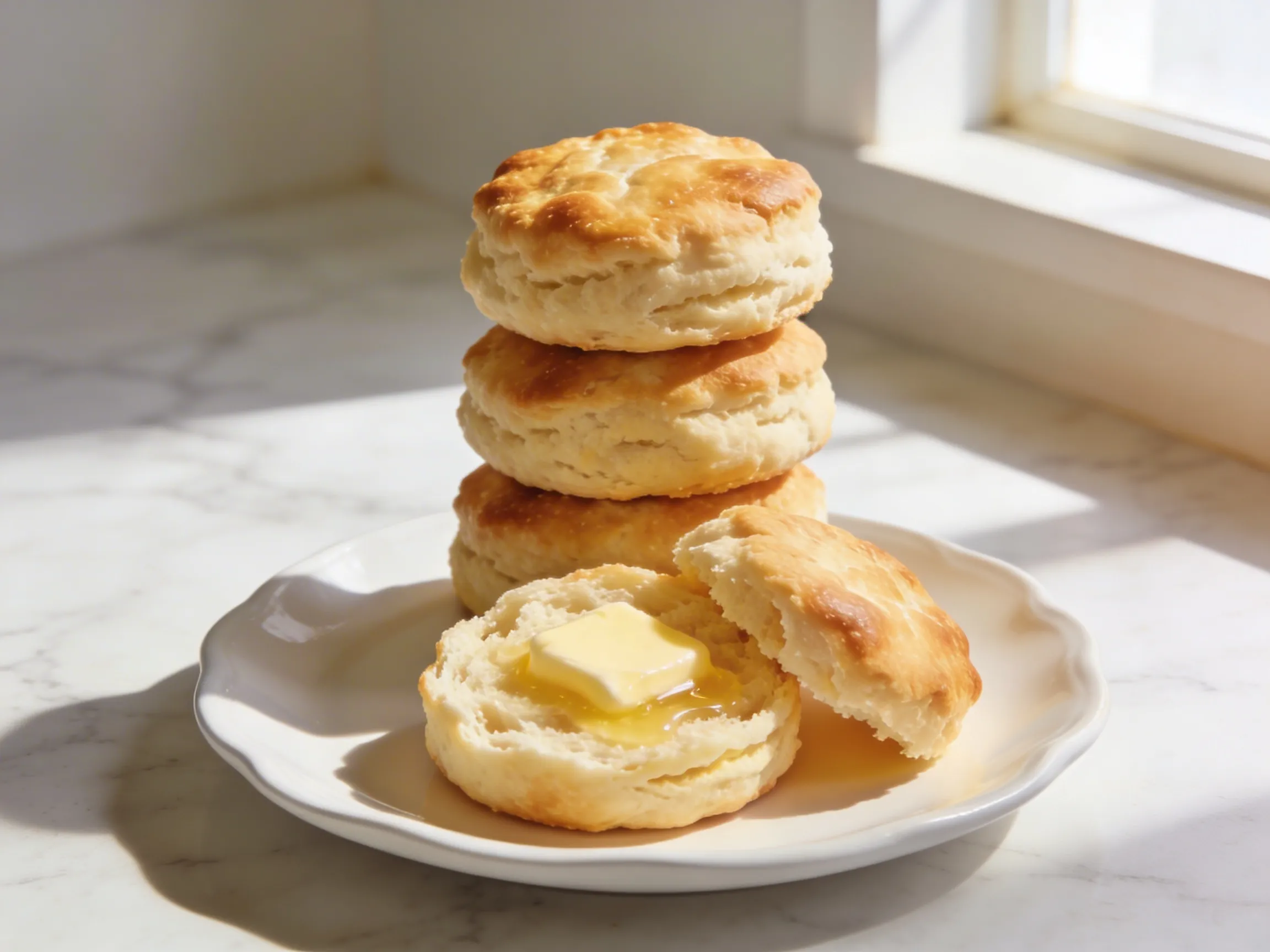
Prep Time: 8 mins | Cook Time: 12–14 mins | Total Time: 20–22 mins | Servings: 8–10 biscuits
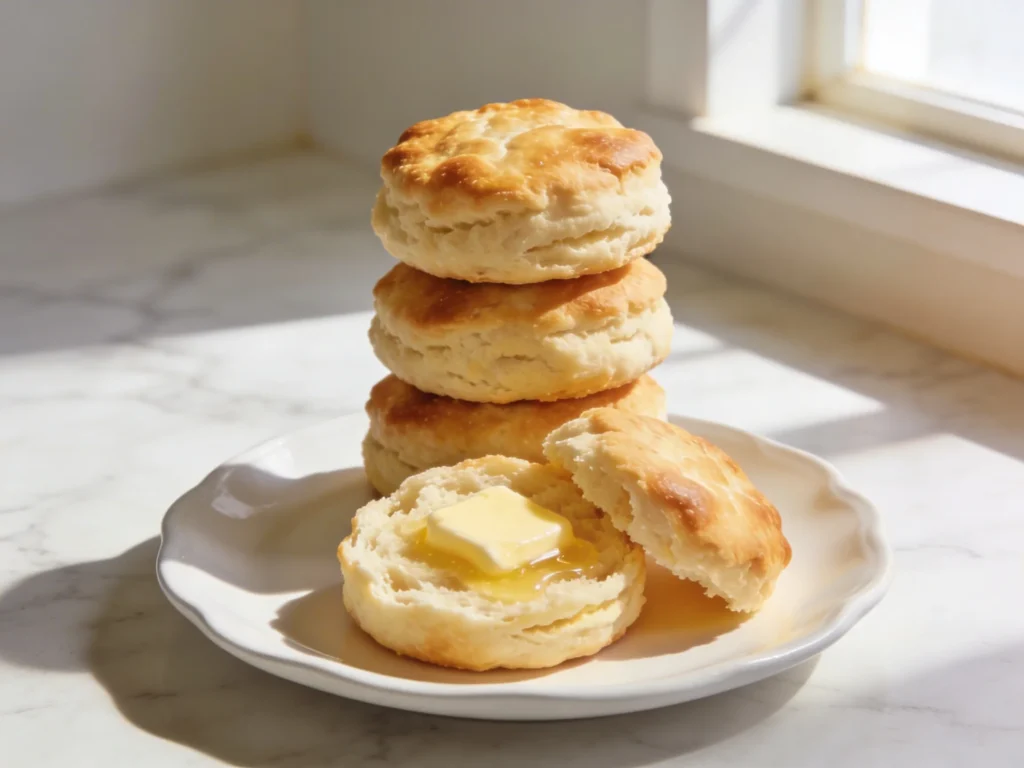
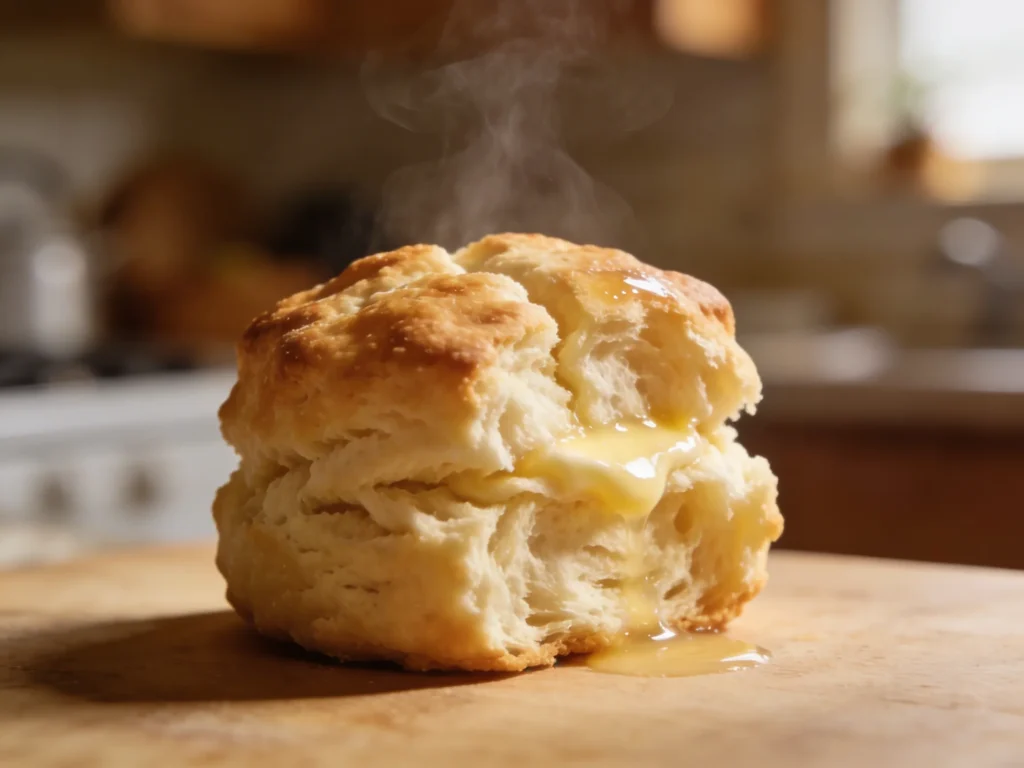
Pull a tray of tall, golden biscuits from the oven and the whole kitchen smells like something worth sitting down for. This biscuit recipe takes about 20 minutes, uses ingredients most kitchens already have, and requires no yeast.
Good biscuits come down to three things: cold butter, a light hand with the dough, and a hot oven. Get those right and you end up with layers that pull apart cleanly, a tender crumb, and a slightly crisp exterior. Use warm butter or overwork the dough and the results are flat and dense — closer to a cracker than a biscuit.
These work alongside a bowl of soup, split open for a breakfast sandwich, or simply spread with butter straight off the tray.
Why You’ll Love This Recipe
- Done in 20 minutes — no yeast, no rising, no waiting
- Pantry ingredients — flour, cold butter, buttermilk, baking powder, salt
- Beginner-friendly — forgiving as long as you don’t overwork the dough
- Real flaky layers — cold butter folded into the dough creates visible, pull-apart layers
- Versatile — breakfast, dinner sides, sandwiches, shortcakes
- Easy to scale — double or halve without changing anything about the method
Ingredients
Makes 8–10 biscuits:
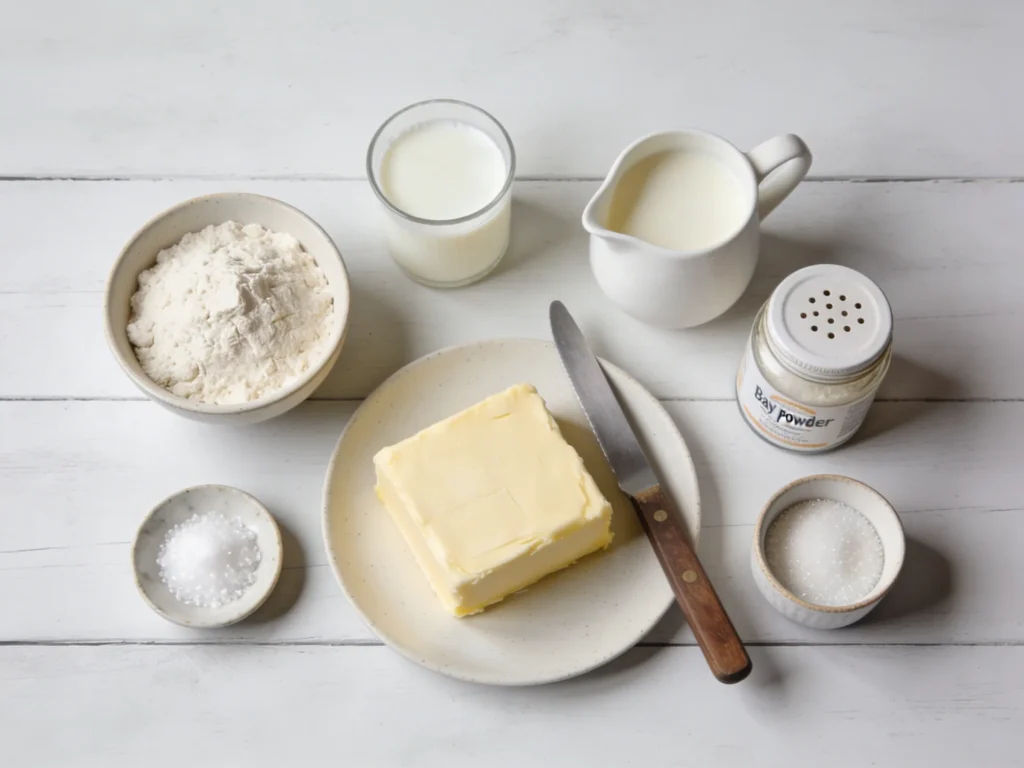
- 2 cups (250g) all-purpose flour, plus extra for dusting
- 1 tablespoon baking powder
- 1 teaspoon fine salt
- 1 teaspoon granulated sugar (optional — adds just a hint of sweetness)
- ½ cup (113g) unsalted butter, very cold — cubed or grated
- ¾ cup (180ml) cold buttermilk, plus 1–2 tablespoons extra if needed
- 1 tablespoon melted butter, for brushing (optional but worth it)
Useful substitutions:
- No buttermilk? Add 1 tablespoon of white vinegar or lemon juice to ¾ cup of whole milk, stir, and wait 5 minutes.
- Salted butter works — reduce the added salt to ½ teaspoon.
- For a richer biscuit, swap 2 tablespoons of buttermilk with heavy cream.
How to Make Biscuits
Step 1 — Heat the oven Set it to 425°F (220°C). Line a baking sheet with parchment and move a rack to the upper third. The oven needs to be fully preheated before the biscuits go in — don’t cut this short.
Step 2 — Mix the dry ingredients Whisk the flour, baking powder, salt, and sugar together in a large bowl until evenly combined. Any pockets of baking powder left in the flour can create uneven rise.
Step 3 — Work in the cold butter Add the cold cubed butter to the flour. Use your fingertips or a pastry cutter to press it into flat, irregular pieces — roughly pea-sized, with some smaller crumbs throughout. You want visible chunks remaining, not a uniform sandy texture. Those chunks are what create steam in the oven and push the layers apart.
If the butter starts feeling soft or greasy, put the bowl in the freezer for 5 minutes before continuing.
Step 4 — Add the buttermilk Pour in ¾ cup of cold buttermilk and stir with a fork just until the dough comes together. It should look rough and shaggy — that’s correct. If dry flour remains at the bottom, add buttermilk a tablespoon at a time and stop the moment the dough holds.
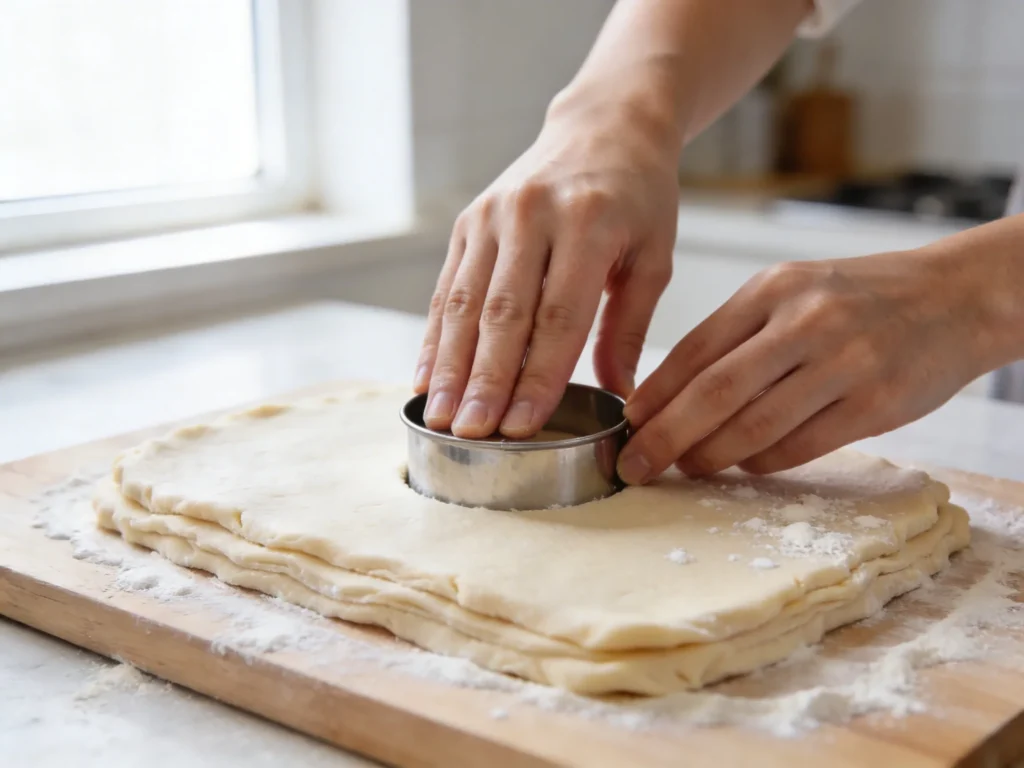
Step 5 — Turn out and fold Lightly flour the surface and turn out the dough. Pat it into a rough rectangle about ¾ inch thick. Fold it in half, then pat it flat again. Repeat four to five times total. This builds layers without overdeveloping the gluten. Finish with the dough between ¾ and 1 inch thick.
Step 6 — Cut the biscuits Press a sharp 2½-inch round cutter straight down and lift cleanly. Don’t twist — twisting seals the cut edges and stops the layers from opening during baking. Place biscuits on the pan with sides just touching for taller rise, or spaced an inch apart for crispier edges.
Step 7 — Bake Bake 12–14 minutes until the tops are golden and the sides have set. Brush with melted butter right out of the oven if you like. Let them rest 2–3 minutes before serving.
Expert Tips
- Cold butter matters more than anything else. Warm butter melts into the flour during mixing and the layers never form. Work quickly and keep everything cold.
- Try grating frozen butter. Freeze a stick for 20 minutes, then grate it straight into the flour. Toss immediately before it warms up — this is the easiest way to distribute butter evenly without overworking it.
- Rough dough is the right dough. If it looks scraggly and uneven when you turn it out, that’s what you want. Smooth dough means overworked dough, and overworked dough means tough biscuits.
- Press straight down when cutting. No twist, no rocking. Just straight down and straight up.
- Touching biscuits rise higher. The sides support each other during baking and force the rise upward instead of outward.
- Don’t discard the scraps. Pat leftover pieces back together gently without refolding. Fewer visible layers, but still worth baking.
- Check the baking powder first. Drop a teaspoon into hot water — it should bubble clearly. If it barely reacts, replace it. Stale baking powder causes more flat biscuits than any technique mistake.
Common Mistakes to Avoid
Butter that isn’t cold enough Room-temperature butter coats the flour instead of staying in distinct pieces. Without those solid chunks, there’s no steam, no pockets, no layers. If the kitchen is warm, work fast and chill the dough between steps if needed.
Too much liquid Add buttermilk gradually — a tablespoon at a time — and stop earlier than feels right. A wet, sticky dough is harder to handle and produces a heavier biscuit than a slightly crumbly one.
Overworking the dough This is the most common mistake. Biscuit dough doesn’t need to be smooth or uniform. The more it’s mixed and pressed, the more gluten builds and the tougher the biscuit.
Twisting the cutter One small habit that consistently undermines good dough. Straight down, clean lift.
Opening the oven early The first 10 minutes are when the biscuits spring up. A temperature drop during that window interrupts the rise. Leave the door shut until the 12-minute mark.
Too low an oven temperature Lower heat dries the biscuits out before they can rise properly. Stick to 425°F, fully preheated.
Variations
Cheddar and herb Add ½ cup of shredded sharp cheddar and 1 teaspoon of dried chives or rosemary to the dry ingredients before the butter. Good alongside soups and stews.
Honey butter Stir 1 tablespoon of honey into the buttermilk before mixing. Brush finished biscuits with salted butter and a little extra honey while they’re still hot.
Parmesan and black pepper Mix in ¼ cup of grated parmesan and ½ teaspoon of coarsely cracked black pepper with the flour. Sharp, savory, works well as a dinner roll alternative.
Whole wheat Replace up to half the all-purpose flour with whole wheat. Slightly denser, nuttier flavor. Add an extra tablespoon of buttermilk to account for the drier flour.
Drop biscuits Skip the folding and cutting. Increase buttermilk by 2–3 tablespoons for a wetter dough and drop rounded spoonfuls directly onto the pan. Less layered, but faster and just as good.
What to Serve With
- Eggs and breakfast items — scrambled eggs, fried eggs, bacon, a simple egg sandwich
- Sausage gravy — the classic; thick pork gravy poured over split biscuits
- Soup — fills the role of bread next to tomato, chicken, or vegetable soup without any effort
- Jam or honey — no prep, works any time of day
- Fried chicken — biscuits alongside coleslaw and pickles make a full plate
- Just butter — warm biscuit, salted butter, nothing else needed
Storage and Reheating
Room temperature: Airtight container, up to 2 days. Best the day they’re made.
Refrigerator: Sealed container or zip bag, up to 4 days. The texture firms in the cold, so reheating helps.
Freezer: Cool completely, freeze individually on a tray, then transfer to a bag. Good for up to 2 months.
Reheating: Wrap in foil and warm in a 350°F oven for 6–8 minutes (10–12 from frozen). Better texture than a microwave. If you’re short on time, 20–30 seconds in the microwave works — the exterior softens rather than crisps, but it’s fine.
Best make-ahead option: Cut the biscuits and freeze unbaked. Bake straight from frozen at 425°F for 16–18 minutes — fresh biscuits with almost no morning prep.
FAQs
Can I use self-rising flour? Yes. Leave out the baking powder and salt — both are already in the blend.
Why didn’t my biscuits rise? Check the baking powder first. Drop a teaspoon in hot water — it should bubble clearly. Beyond that, the most likely causes are warm butter, overworked dough, or an oven that wasn’t fully preheated.
What if I don’t have buttermilk? Stir 1 tablespoon of white vinegar or lemon juice into ¾ cup of whole milk. Wait 5 minutes. It thickens slightly and works the same way in the recipe.
Can I make the dough ahead? Refrigerate the dough (covered) for up to 24 hours before cutting and baking. For longer storage, cut and freeze the unbaked biscuits — they keep for 2 months and bake straight from frozen.
How do I know when they’re done? The tops should be clearly golden, and the sides set and dry — not pale or damp-looking. Internal temperature around 190–200°F if you’re using a thermometer.
Why are my biscuits tough? Almost always overworking. Mix until the dough just holds and fold the minimum number of times. The dough should still look rough going into the oven.
Can I double the recipe? Yes, with no changes to the method. Use a larger bowl and work in batches when cutting if needed.
Conclusion
This biscuit recipe is 20 minutes, one bowl, and a short list of ingredients. The method isn’t complicated — cold butter, minimal mixing, hot oven — and once the logic clicks, the process becomes genuinely fast.
Make it a few times and you’ll start to know by feel when the dough is right. That’s the point a good biscuit recipe is supposed to get you to.
Recipe Card
| Recipe Name | Fluffy Homemade Biscuit Recipe |
| Prep Time | 8 minutes |
| Cook Time | 12–14 minutes |
| Total Time | 20–22 minutes |
| Servings | 8–10 biscuits |
| Course | Breakfast, Side Dish, Bread |
| Cuisine | American |
| Calories | Approx. 220 kcal per biscuit |
Ingredients:
- 2 cups (250g) all-purpose flour
- 1 tablespoon baking powder
- 1 teaspoon fine salt
- 1 teaspoon sugar (optional)
- ½ cup (113g) cold unsalted butter, cubed
- ¾ cup (180ml) cold buttermilk, plus more as needed
- 1 tablespoon melted butter, for brushing (optional)
Instructions:
- Preheat oven to 425°F (220°C). Line a baking sheet with parchment.
- Whisk flour, baking powder, salt, and sugar in a large bowl.
- Work cold butter into flour until flat, pea-sized pieces remain.
- Add cold buttermilk. Stir with a fork until the dough just holds.
- Turn onto a floured surface. Pat and fold 4–5 times. Pat to ¾–1 inch thick.
- Cut with a 2½-inch cutter, pressing straight down without twisting.
- Bake 12–14 minutes until golden.
- Brush with melted butter and rest 2–3 minutes before serving.
Notes:
- Biscuits placed touching rise taller; spaced apart, they crisp more on the sides.
- Cut unbaked biscuits freeze well — bake from frozen at 425°F for 16–18 minutes.
- Test baking powder before starting. Stale powder is the most common cause of flat biscuits.