
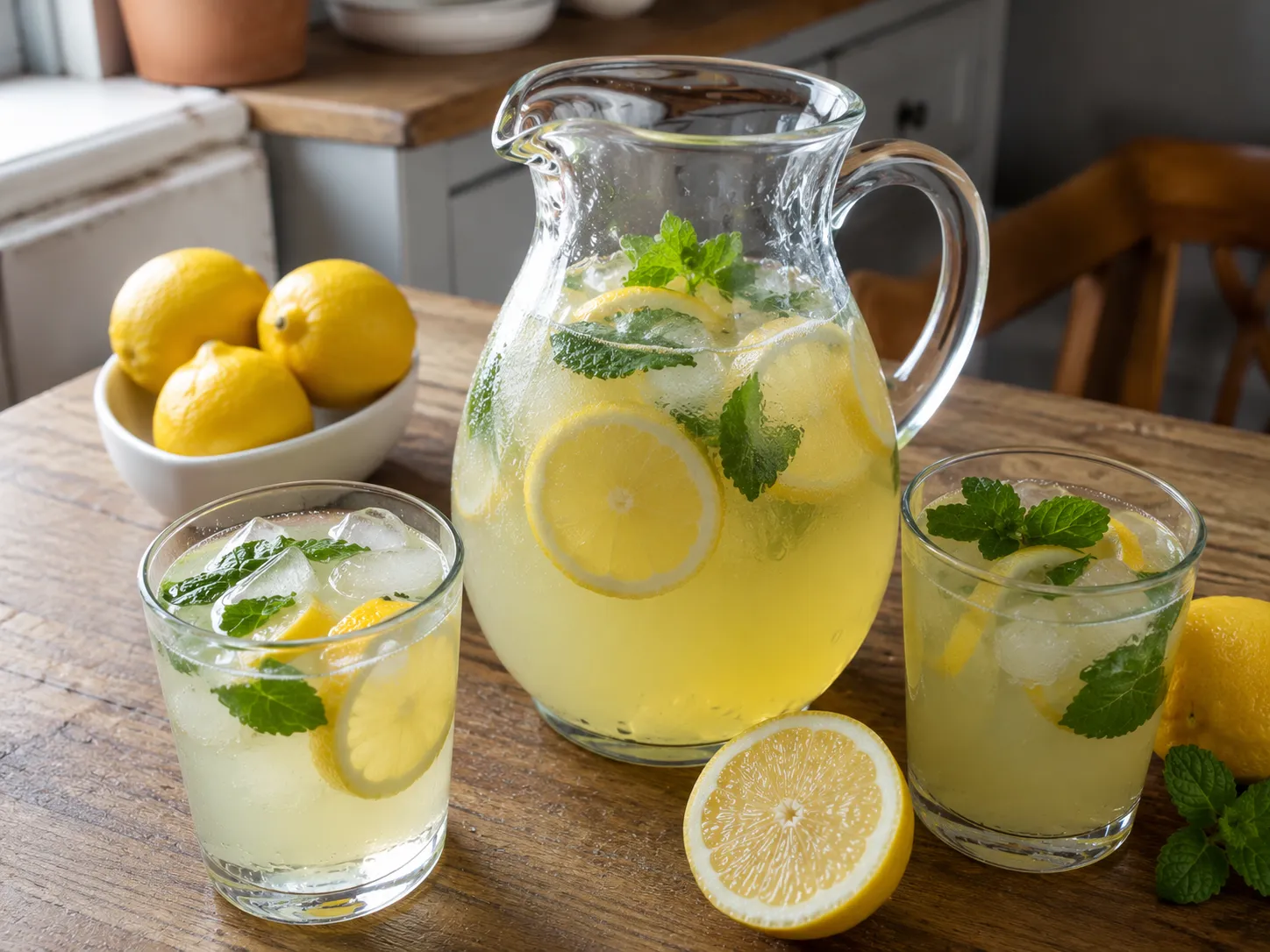
Most store-bought lemonade is either too sweet or tastes like it came from a powder packet. This homemade lemonade recipe uses real lemons, a properly made simple syrup, and takes about ten minutes of hands-on work. The result is a cold, sharp, genuinely satisfying drink where you control the balance of sweet and tart. It works for one glass or a full pitcher, and the method is simple enough to repeat without thinking twice. If you have been looking for a reliable lemonade recipe that actually tastes like lemons, this is it.
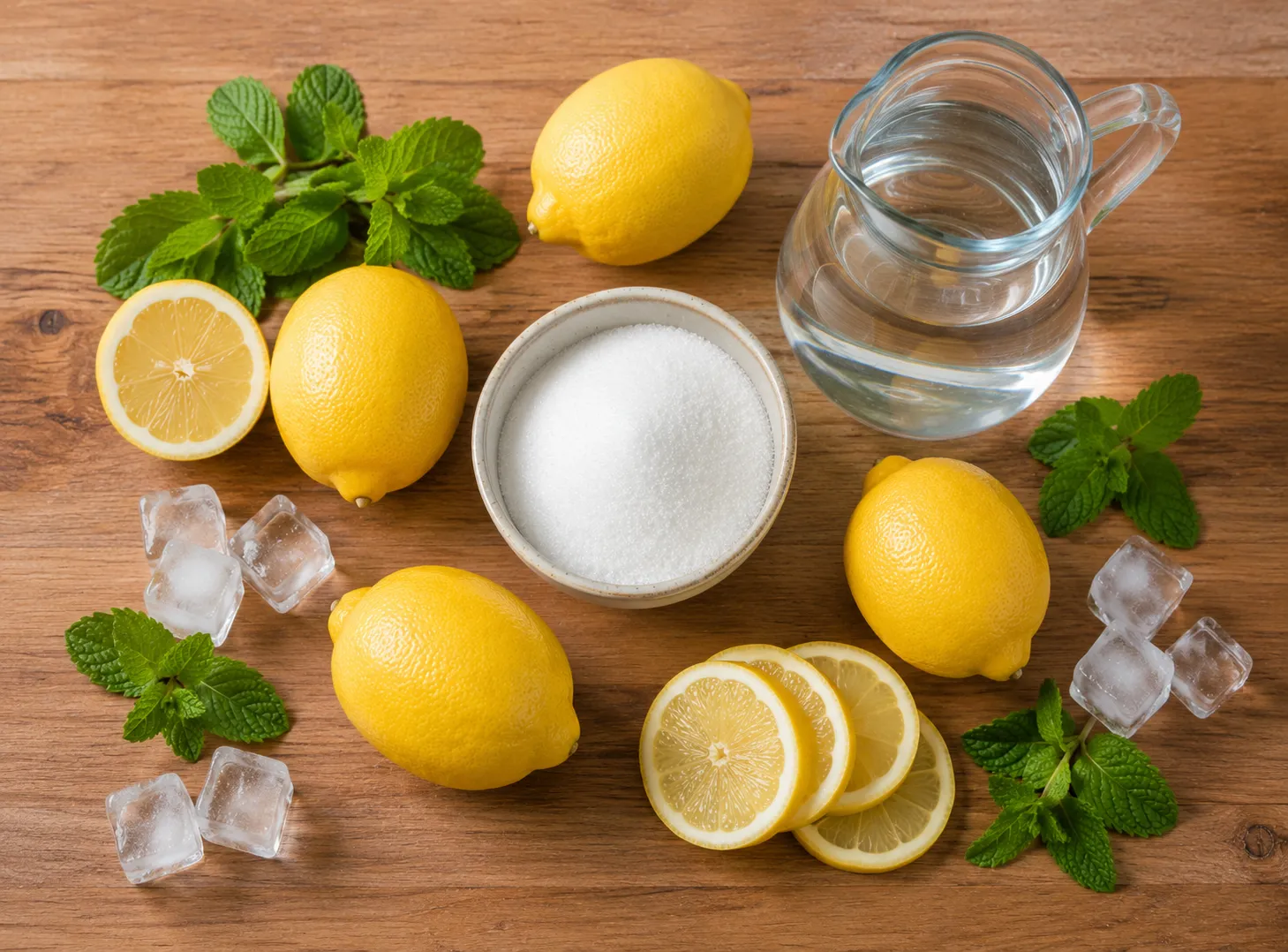
- 1 cup granulated white sugar
- 1 cup water , For making the syrup only
- 6 fresh lemons, juiced , About 1 cup of lemon juice; roll before cutting to maximize yield
- 4 cups cold water , For mixing
- 2 cups ice cubes , Add to glasses when serving, not the pitcher
- 4 lemon slices , Garnish
- 4 fresh mint sprigs , Optional
- Citrus juicer or handheld reamer
- Small saucepan
- Measuring cups and spoons
- Large pitcher (at least 6 cups / 1.5 litres capacity)
- Fine mesh strainer
- Long stirring spoon
- Serving glasses
- Cook the simple syrup on the stove until sugar dissolves. Cool completely.
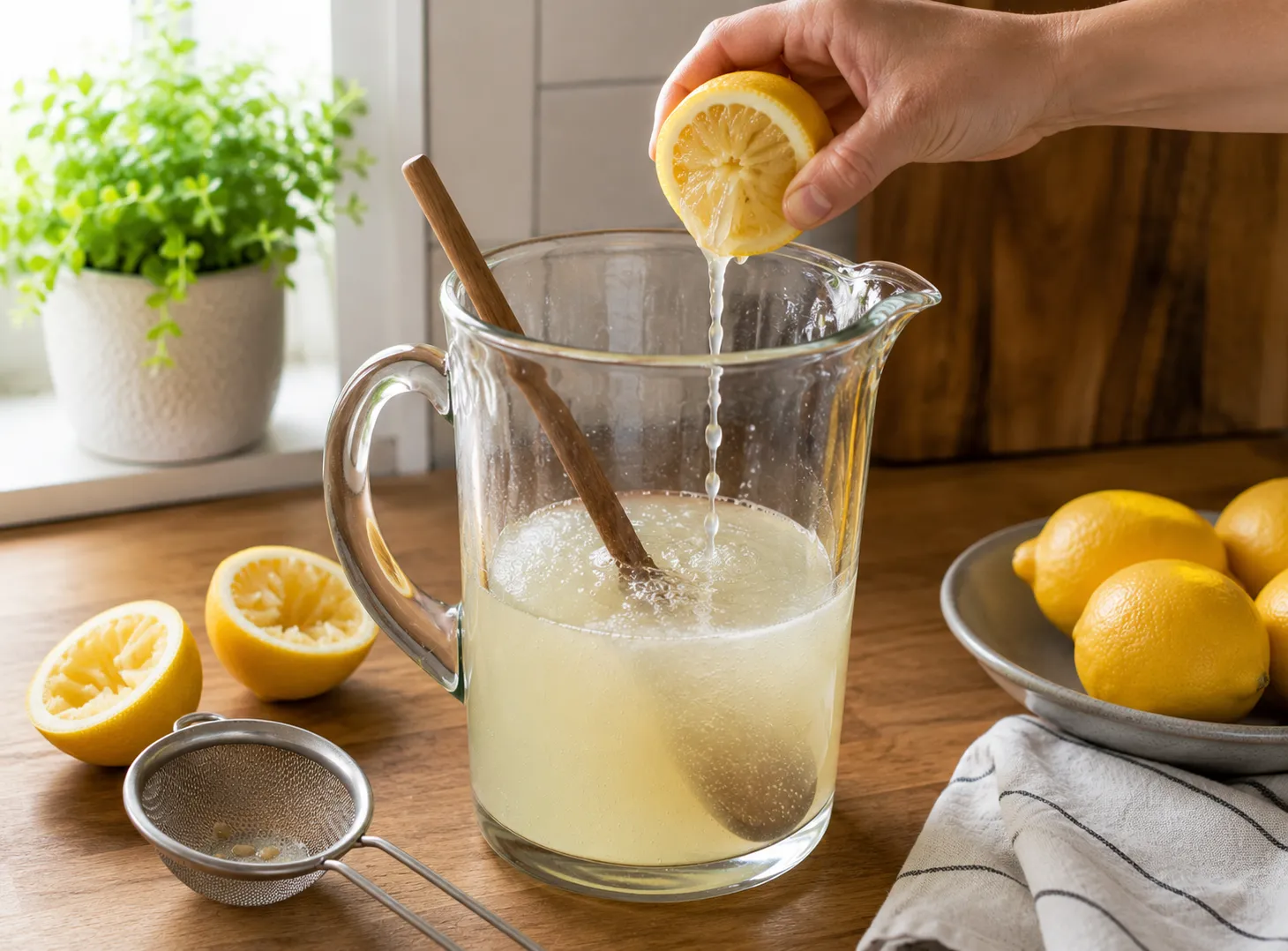
- Juice the lemons and strain out seeds and pulp.
- Combine lemon juice, syrup, and cold water in a large pitcher.
- Taste, then adjust sweetness or tartness as needed.
- Chill in the fridge, then pour over ice and serve.
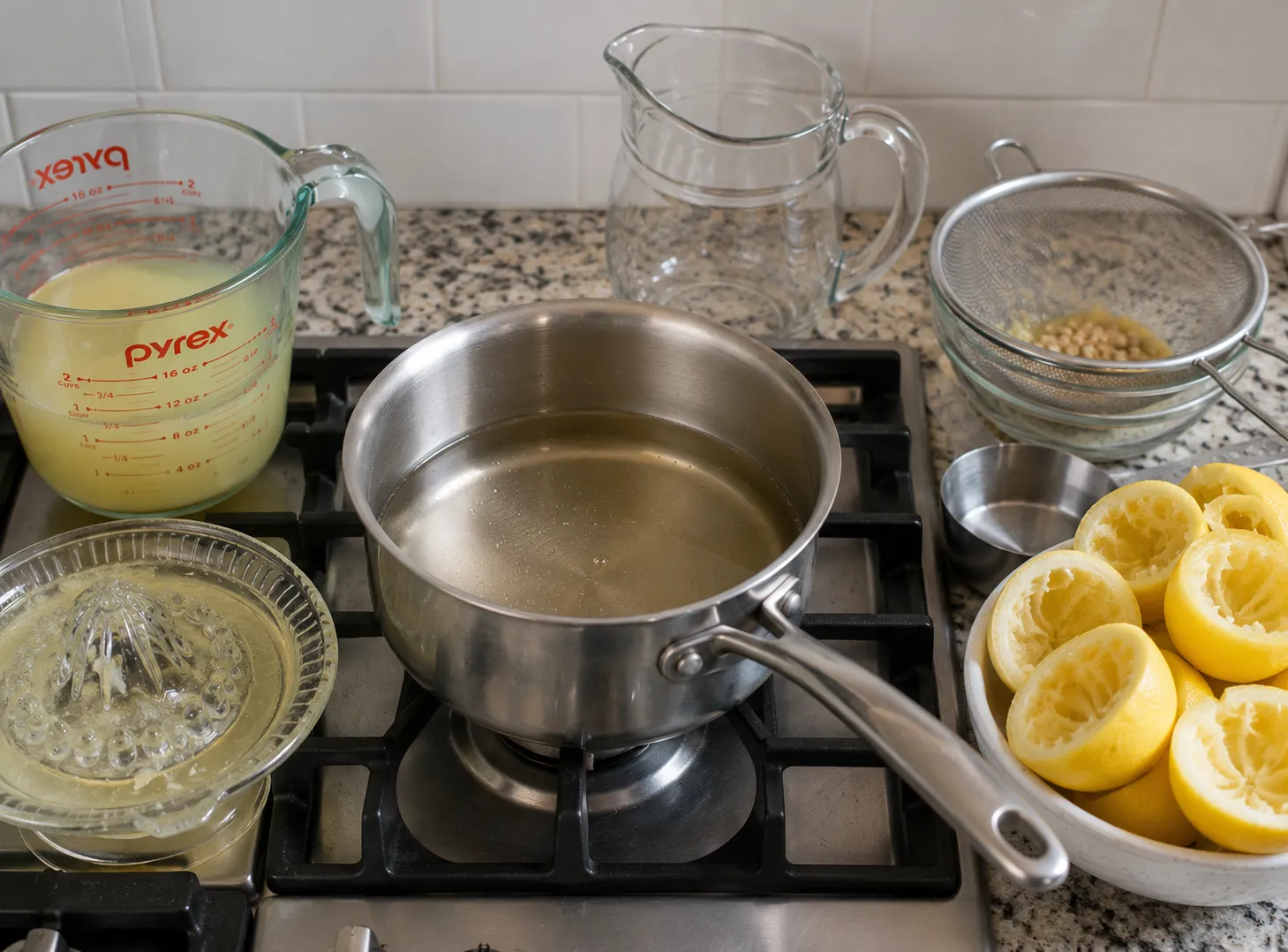
- Add 1 cup sugar and 1 cup water to a small saucepan.
- Heat over medium, stirring steadily until the sugar dissolves fully and the liquid turns clear.
- Do not let it boil. Pull it off the heat the moment it clears.
- Set the syrup aside to cool to room temperature before using.
- Roll each lemon firmly on the countertop for about 10 seconds before cutting.
- Slice and juice all 6 lemons using a citrus juicer or reamer.
- Pour the juice through a fine mesh strainer into a bowl to catch seeds and excess pulp.
- Measure the strained juice. You need about 1 cup.
- Pour the lemon juice into a large pitcher.
- Add the fully cooled simple syrup. Stir well to combine.
- Pour in 4 cups of cold water. Stir again.
- Taste the lemonade. Too tart? Add a small splash of syrup. Too sweet? Add a bit more cold water.
- Place the pitcher in the refrigerator for at least 30 minutes.
- Fill each glass with ice cubes.
- Pour lemonade over the ice, add a lemon slice to the rim, and serve straight away.
- Use lemons at room temperature. Cold lemons from the fridge give noticeably less juice.
- Roll each lemon on the counter before cutting. It breaks down the membranes inside and maximizes the yield.
- Let the syrup cool fully before mixing. Warm syrup muddies the flavor and makes the lemonade taste flat.
- For a stronger lemon flavor, stir 1 teaspoon of fresh lemon zest into the syrup while it is still warm, then strain before using.
- Make a double batch of syrup and keep it in a sealed jar. It stays good for two weeks and works in iced tea and cocktails too.
- Taste before serving. Every batch of lemons is slightly different in acidity, so final adjustments matter.
- Chill your pitcher before filling it. It keeps the lemonade colder for longer once poured.
- Adding granulated sugar directly to cold water instead of making a syrup first. It does not dissolve properly and the drink ends up gritty.
- Using bottled lemon juice. The flavor is dull and often slightly bitter. Fresh lemons make a real difference.
- Boiling the simple syrup. You only need enough heat to dissolve the sugar. High heat changes the flavor.
- Adding ice directly to the pitcher before serving. It melts fast and dilutes the entire batch. Add it to individual glasses instead.
- Skipping the taste check before serving. Lemon acidity varies from fruit to fruit, so a quick taste and adjustment matters.
- Letting the finished lemonade sit out at room temperature. It loses its freshness quickly. Keep it in the fridge until ready to pour.
- Sparkling lemonade: Swap the 4 cups of still water for chilled sparkling water. Add it right before serving so it stays fizzy.
- Honey lemonade: Replace the granulated sugar with an equal amount of honey in the syrup. The flavor comes out slightly floral and less sharp.
- Strawberry lemonade: Blend 1 cup of fresh strawberries, strain out the seeds, and stir the puree into the finished lemonade.
- Mint lemonade: Drop a small handful of fresh mint leaves into the warm syrup and let them steep for 10 minutes before straining.
- Lavender lemonade: Add 1 tablespoon of dried culinary lavender to the syrup while it heats. Strain thoroughly before using.
- Lower sugar version: Halve the sugar in the syrup and replace the rest with honey or a sugar-free sweetener. Taste and adjust.
- Pink lemonade: Stir a small amount of grenadine or cranberry juice into the finished pitcher.
- Grilled chicken sandwiches or wraps
- Cold pasta salad or grain bowls
- Watermelon, melon, or mixed fruit platters
- A simple cheese and cracker board
- Classic burgers or sliders
- Chilled soups like gazpacho
- Shortbread cookies, lemon bars, or light summer desserts
- Store leftover lemonade in a sealed pitcher or airtight jar in the refrigerator.
- It keeps well for up to 5 days. Stir before serving since it can separate slightly.
- Do not freeze the mixed lemonade. The texture and taste both suffer once thawed.
- The simple syrup can be stored separately in a sealed glass jar in the fridge for up to 2 weeks.
- If the lemonade tastes flat after a couple of days, squeeze in a bit of fresh lemon juice before serving.
- This recipe does not need reheating. Serve cold, always over fresh ice.

Most medium lemons give between 3 and 4 tablespoons of juice each. You need around 5 to 6 lemons for a full cup, though rolling them before juicing helps you get the most out of each one.
Yes. Cut the lemon in half and press it firmly against a fork, twisting as you push down over a strainer. It takes a bit more effort but the result is the same.
Bitterness usually comes from pressing the lemon too hard and extracting juice from the white pith near the rind. Apply firm pressure but avoid crushing the skin.
Yes. Monk fruit sweetener and erythritol both dissolve reasonably well when heated with water and can replace sugar at a 1:1 ratio in the syrup. Taste before finalizing.
Up to 5 days when stored properly in the refrigerator in a sealed container. After that the flavor starts to fade and the lemon juice turns.
Absolutely. Multiply all ingredients by however many batches you need. Make the syrup the night before and mix the full pitcher the morning of the event so it has time to chill properly.
- This lemonade recipe is balanced rather than overly sweet. Adjust the syrup ratio freely to suit your preference.
- The simple syrup step is what separates a good lemonade from a grainy, uneven one. Do not skip it.
- Lemon sizes vary a lot. Always measure the juice rather than relying on a fixed number of fruits.
- For gatherings, set out a small jar of extra syrup so guests can sweeten their own glass to taste.
- If you prefer a pulpier drink, skip the strainer and leave some pulp in the juice.
- Mint is optional but adds a cooling quality that pairs well with the tartness, especially on warm days.
- This recipe scales easily. Double or triple everything in the same ratios.
A good lemonade recipe comes down to three things: fresh lemons, a properly dissolved syrup, and taking a minute to taste and adjust before you serve it. This version gives you a solid, reliable base that you can repeat all summer without needing to measure obsessively after the first time. The variations are worth trying too. Strawberry and sparkling are both crowd pleasers. Once you stop relying on store-bought lemonade, it is hard to go back. The difference in taste is that clear, and the effort is genuinely minimal. Keep a batch in your fridge through the warmer months and you will find yourself reaching for it constantly.