
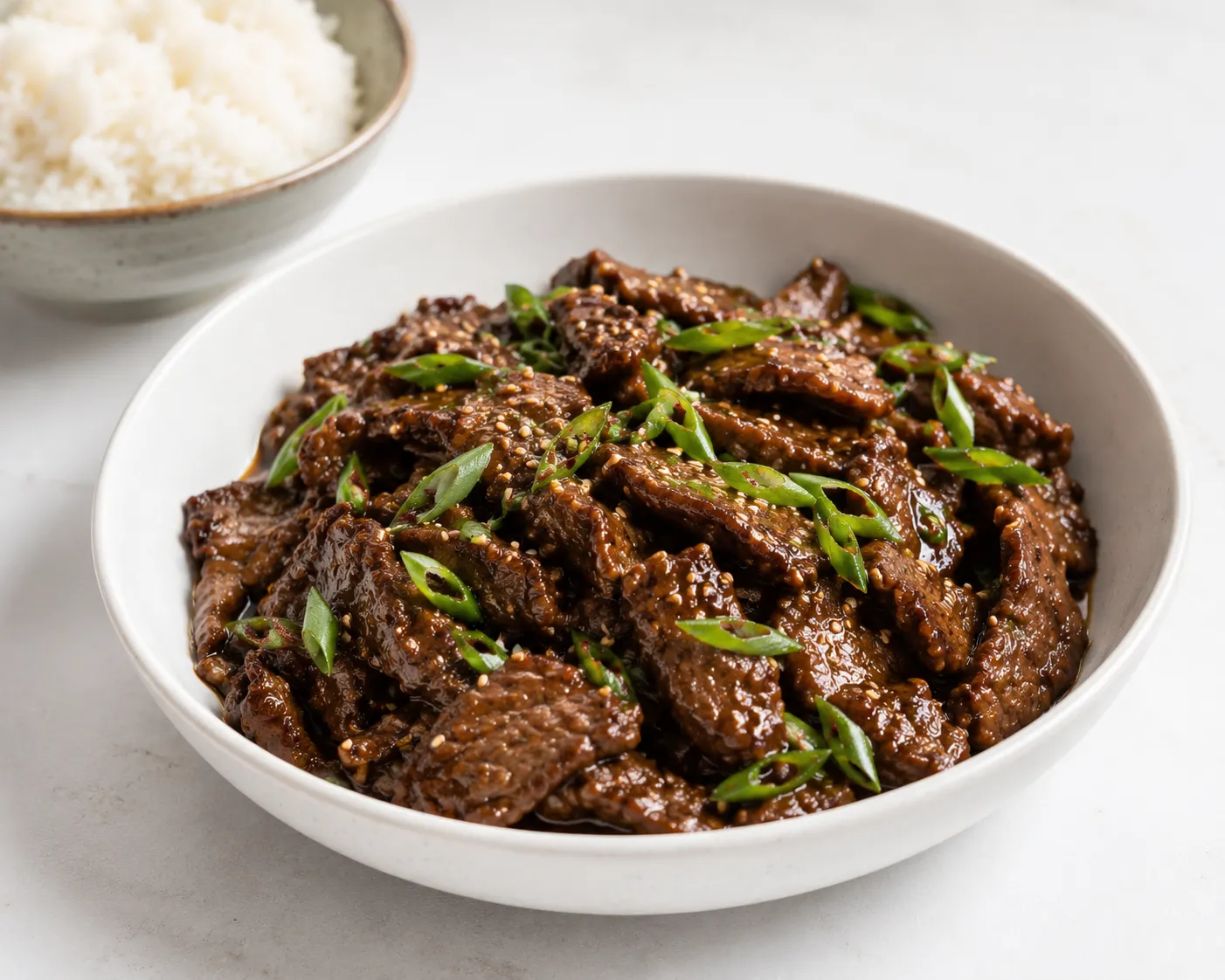
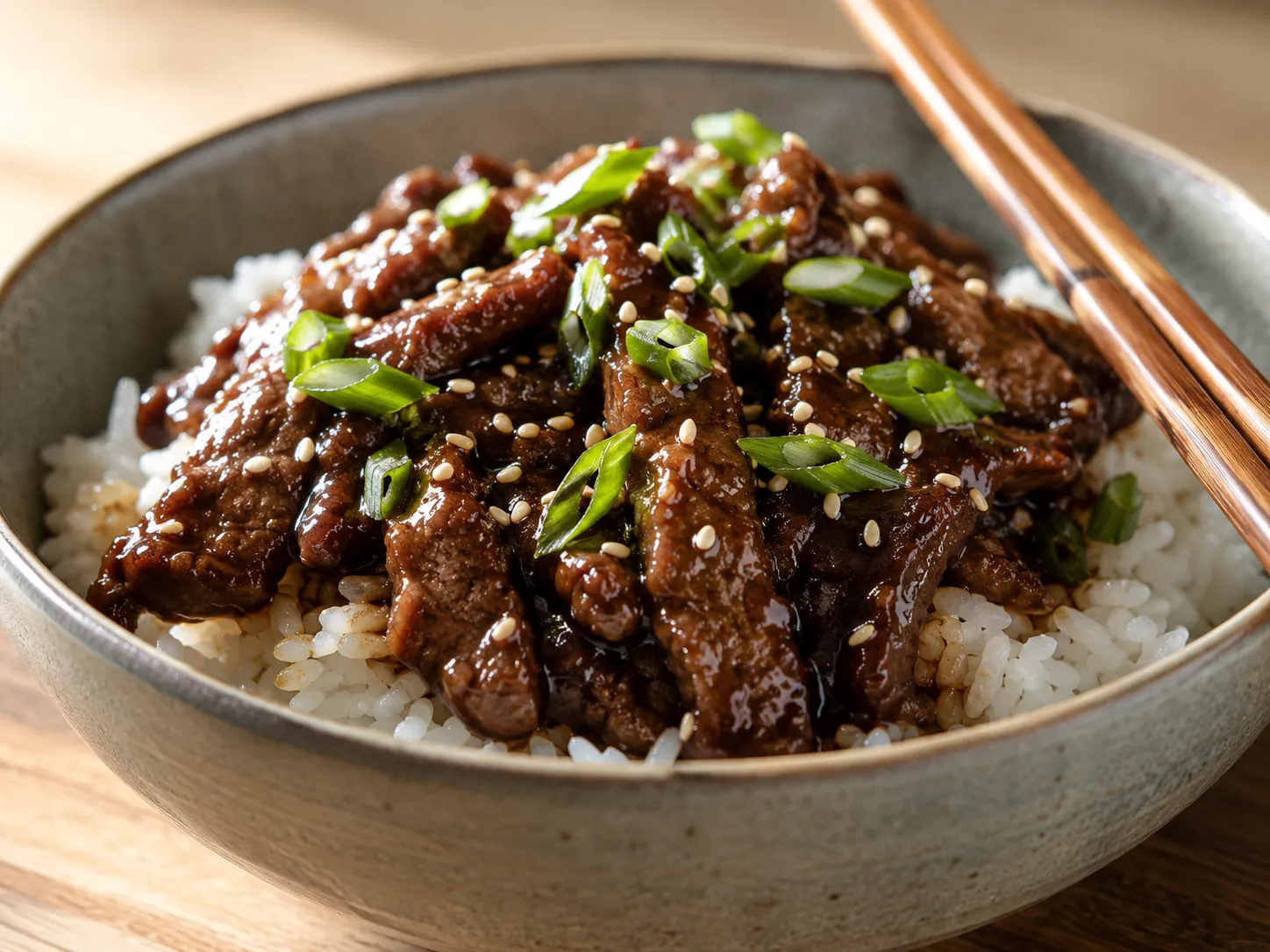
This mongolian beef recipe is the one you make when you want something that tastes like it took way more effort than it actually did. Thin strips of flank steak get coated in cornstarch, fried until golden, and tossed in a thick soy and brown sugar sauce loaded with garlic and fresh ginger. The whole thing comes together in about 30 minutes. It is rich, savory, and just sweet enough without being cloying. Way better than ordering out, and you probably have most of the ingredients already sitting in your pantry right now.
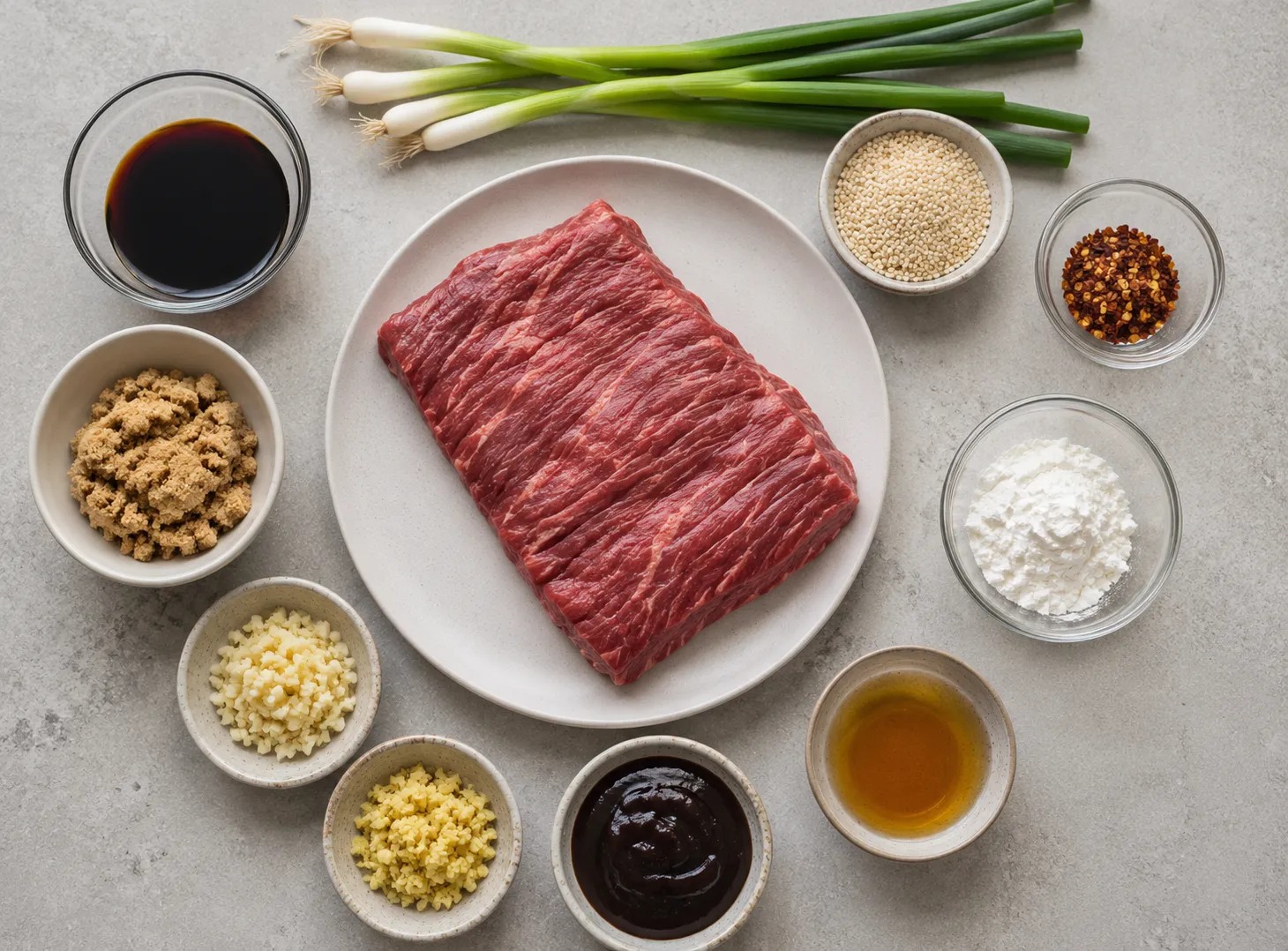
- 1.5 lbs flank steak , sliced thin against the grain
- 1/3 cup cornstarch
- 1/2 tsp black pepper
- 1/4 cup neutral oil , vegetable or avocado oil
- 1/2 cup low-sodium soy sauce
- 1/2 cup water
- 1/2 cup dark brown sugar , packed
- 1 tbsp hoisin sauce
- 1 tsp sesame oil
- 1 tbsp fresh ginger , minced
- 4 cloves garlic , minced
- 1/2 tsp red pepper flakes , optional
- 1 tbsp cornstarch , mixed with 2 tbsp cold water to make a slurry
- 3-4 green onions , sliced on a bias
- 1 tsp sesame seeds , optional
- Large wok or heavy skillet (cast iron or stainless steel)
- Sharp knife and cutting board
- Two mixing bowls
- Whisk
- Tongs or chopsticks
- Measuring spoons and cups
- Paper towels
- Slice and coat the beef in cornstarch.
- Whisk the sauce ingredients together in a bowl.
- Fry the beef in batches until a deep golden crust forms.
- Build and thicken the sauce in the same pan.
- Toss the beef back into the sauce, garnish, and serve right away.
- Slice the flank steak into strips about 1/4 inch thick. Always cut against the grain so the fibers shorten and the beef stays tender after cooking.
- Lay the strips on a layer of paper towels and press another layer on top. Let them sit for two minutes. Dry beef browns. Wet beef steams.
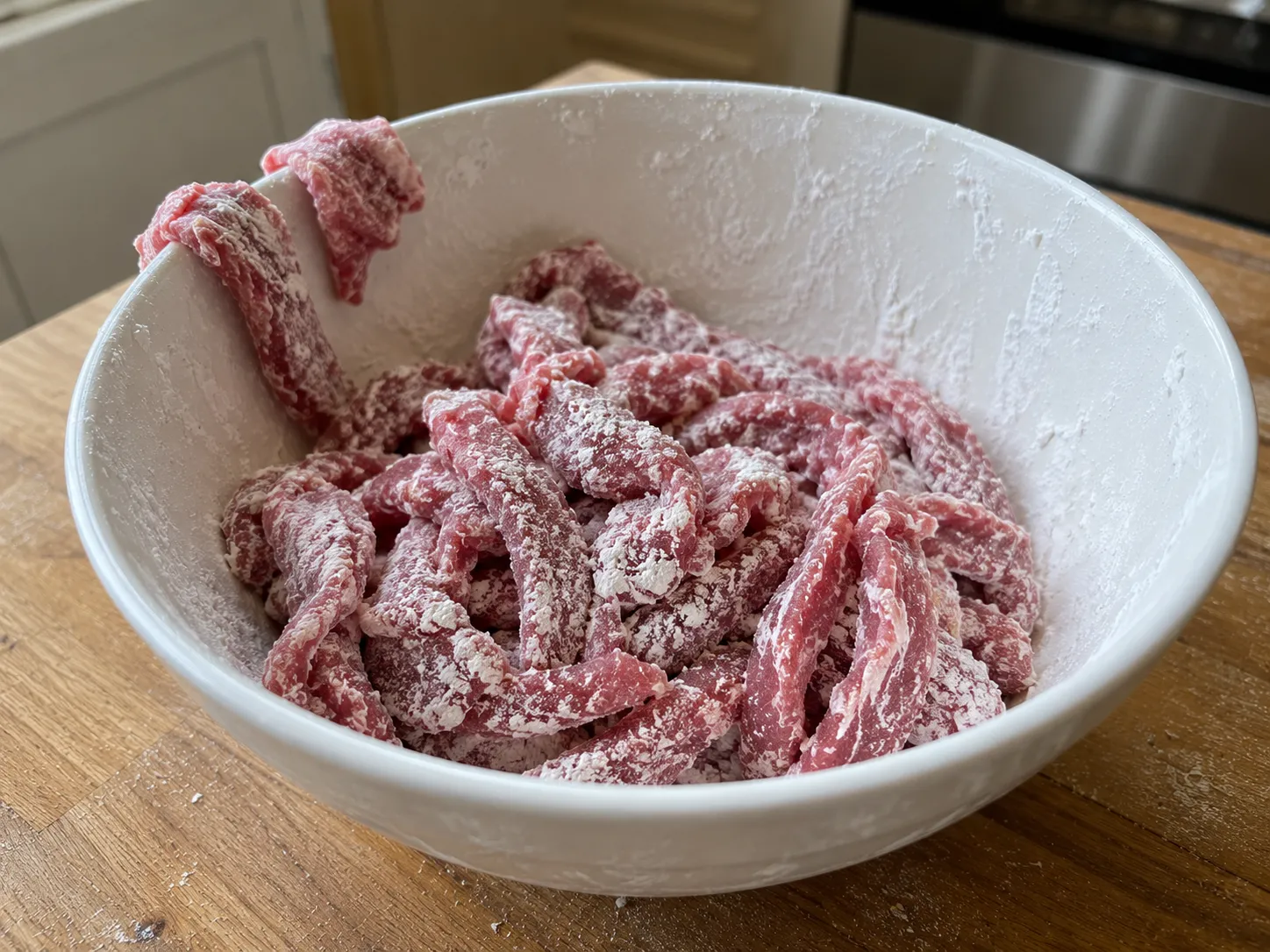
- Toss the dried strips in cornstarch and black pepper. Coat every piece and shake off any loose excess.
- Let the coated beef rest on the counter for five minutes so the cornstarch sticks properly before it hits the oil.
- In a medium bowl, whisk together soy sauce, water, brown sugar, hoisin, sesame oil, minced ginger, and minced garlic. Set it aside.
- Heat the oil in your wok or skillet over high heat. Wait until it just starts to shimmer and you see the first wisps of smoke.
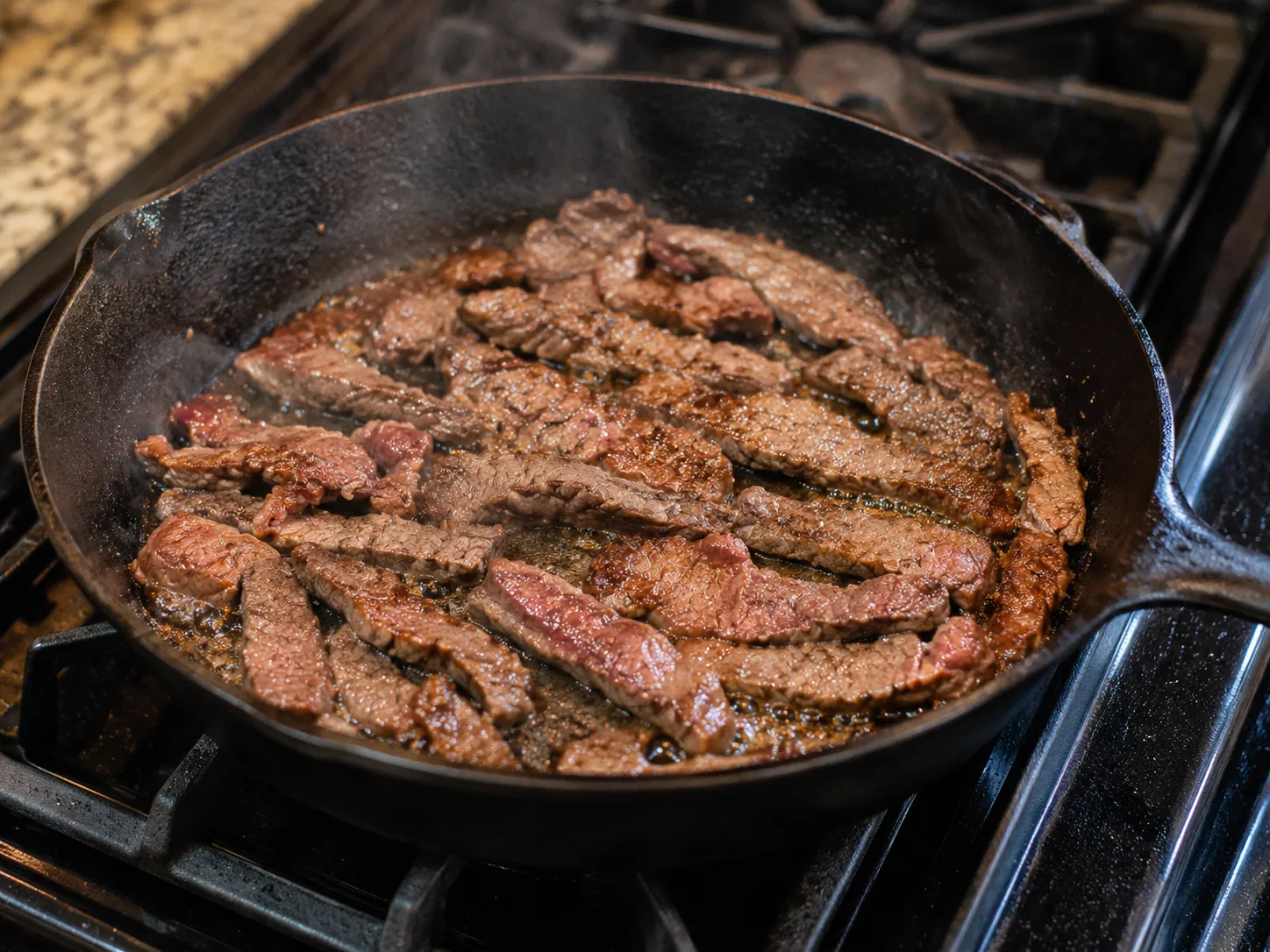
- Add the beef in a single layer. Do not crowd. If your pan is not large enough, do two or three batches. Crowding ruins the crust.
- Let each batch cook for two to three minutes per side without moving it. You want a deep golden color and a real crust on the outside.
- Transfer each finished batch to a clean plate and repeat until all the beef is cooked.
- Pour off most of the oil, leaving about one tablespoon in the pan.
- Lower the heat to medium and pour the sauce into the pan. Stir it and let it simmer for about two minutes.
- Stir in the cornstarch slurry while the sauce is moving. It will thicken noticeably within a minute.
- Add all the beef back into the pan and toss to coat every piece. Give it one more minute over the heat.
- Pull the pan off the burner. Top with green onions and sesame seeds and serve immediately over rice or noodles.
- Put the steak in the freezer for 20 minutes before slicing. Slightly firm meat is much easier to cut into even, thin strips without the meat sliding around on the board.
- Cut strictly against the grain. Find the direction the muscle fibers run and cut across them at a 90 degree angle. This is what keeps the beef from being chewy.
- Dry the beef before coating it. This step is not optional if you want a proper crust.
- Use high heat and resist the urge to stir. Let the beef sit and develop color before you touch it.
- Dark brown sugar gives the sauce more depth than light brown sugar. The extra molasses content makes a real difference in the final flavor.
- Low-sodium soy sauce is important here because the sauce reduces and concentrates. Regular soy often makes the dish too salty by the end.
- Add the beef back into the finished sauce at the very last minute. The longer it sits in liquid, the softer the coating gets.
- Taste the sauce before you add the beef. That is your last easy chance to adjust sweetness or salt levels.
- Skipping the step where you dry the beef. Even a small amount of surface moisture prevents browning.
- Using too little oil. This is a shallow fry situation, not a light saute. Use enough oil to properly coat the bottom of the pan.
- Moving the beef constantly while it cooks. Let it make full contact with the pan and stay there.
- Adding all the beef at once when your pan cannot fit it in a single layer. Two or three batches always produce better results than one crowded pan.
- Buying pre-sliced stir-fry beef from the store. The pieces are cut too thick and inconsistently. Slice your own.
- Skipping a sauce taste before adding the beef. Once everything is coated and plated, adjusting seasoning becomes much harder.
- Overcooking after adding the slurry. The sauce thickens fast. Once it reaches the right consistency, move quickly.
- Letting the finished dish sit in the pan. Serve it right away or the coating softens in the sauce.
- Other cuts of beef: Skirt steak, sirloin, and flat iron steak all work well. Avoid round steak since it gets tough with high-heat cooking.
- Lower sodium: Swap soy sauce for tamari or coconut aminos for a noticeably less salty version.
- Less sweet: Reduce the brown sugar to 1/3 cup and add a small splash of rice vinegar to keep the balance.
- More heat: Stir one to two teaspoons of chili garlic sauce or doubanjiang into the sauce before simmering.
- Add vegetables: Thinly sliced bell peppers, broccoli florets, or snap peas can be stir-fried and added before the sauce goes in.
- No fresh ginger on hand: Use 1/2 teaspoon ground ginger. The flavor will be less sharp but still works.
- Gluten-free version: Use certified gluten-free soy sauce or tamari, and check the hoisin label before using.
- Chicken version: Thin-sliced chicken thighs follow the exact same process and cook in about the same amount of time.
- Plant-based version: Use extra-firm tofu, pressed well and cubed. Coat and fry the same way. The sauce works just as well with it.
- Steamed jasmine rice or plain long-grain white rice
- Fried rice made with day-old rice
- Lo mein or plain ramen noodles tossed in a little sesame oil
- Steamed broccoli or bok choy
- Egg rolls or spring rolls as a side starter
- A simple cucumber salad dressed with rice vinegar, sesame oil, and a pinch of sugar
- Hot and sour soup if you want a full spread
- Cauliflower rice as a lower-carb base
- Cool leftovers completely before putting them in a container.
- Store in an airtight container in the refrigerator for up to four days.
- For longer storage, freeze in a sealed freezer-safe container for up to two months.
- Thaw frozen portions in the refrigerator overnight before reheating.
- Stovetop reheating works best. Use medium heat with a small splash of water or broth to loosen the sauce as it warms.
- Microwave reheating works in a pinch. Cover loosely and heat in 60-second intervals, stirring between each one.
- Do not reheat more than once. The beef texture deteriorates with each round of heat.
- The crispy coating does soften after storage. That is expected. The flavor does not suffer much.
- Store beef and rice separately if you plan to freeze. Mixing them together before freezing makes the rice mushy on reheating.
Flank steak is the go-to. It is lean, slices thin without much effort, and stays tender when cooked fast over high heat. Skirt steak is a solid backup.
Most likely it was sliced with the grain rather than against it, or it was cooked at too low a heat for too long. Thin cuts against the grain and a genuinely hot pan fix both problems.
Yes. The sauce keeps in the refrigerator for up to three days in a sealed jar. Give it a good stir before using since the sugar can settle at the bottom.
No. It is a Chinese-American restaurant dish with no real connection to Mongolian cuisine. The name has been around for decades in American Chinese restaurants but it is not a traditional recipe from Mongolia.
You can skip it but the result is noticeably different. Without cornstarch, the beef will not develop the same crispy edges and the sauce will not cling to it as well.
Add water or chicken broth a tablespoon at a time while stirring over low heat. It loosens up quickly, so add liquid slowly.
- Buying a whole flank steak and slicing it yourself gives you much more control over thickness and consistency than pre-packaged stir-fry cuts.
- The freezer trick before slicing is especially useful if you do not own a mandoline. Even 15 minutes in the freezer makes a difference.
- Dark brown sugar is the better choice here. The stronger molasses flavor gives the sauce more character and gets closer to the restaurant version most people are trying to recreate.
- Hoisin sauce adds a slightly fermented, sweet-savory layer to the sauce that plain soy and sugar cannot replicate. Use it if you can.
- This recipe doubles easily. Cook the beef in more batches and the sauce can be doubled without any adjustments needed.
- If your sauce thickens too much before the beef goes back in, add two tablespoons of water and stir over low heat for 30 seconds.
- Green onions are a garnish and go on after the heat is off. They are not meant to be cooked in the sauce.
- Sesame seeds are optional but they add a small amount of texture and a subtle nuttiness that works well with the sauce.
If you have been relying on takeout for your Mongolian beef fix, this recipe gives you a reason to stop. The process is straightforward once you understand the two things that matter most: dry beef for a proper sear and high heat without crowding the pan. Get those two things right and everything else follows naturally. The sauce takes about five minutes to put together and it works every time. Leftovers hold up well in the fridge and reheat without much fuss. Whether you are cooking for yourself on a Tuesday night or putting together a quick dinner for the family, this mongolian beef recipe is reliable, fast, and genuinely good. Keep the ingredients stocked and it becomes the kind of dish you can pull off without thinking twice.