
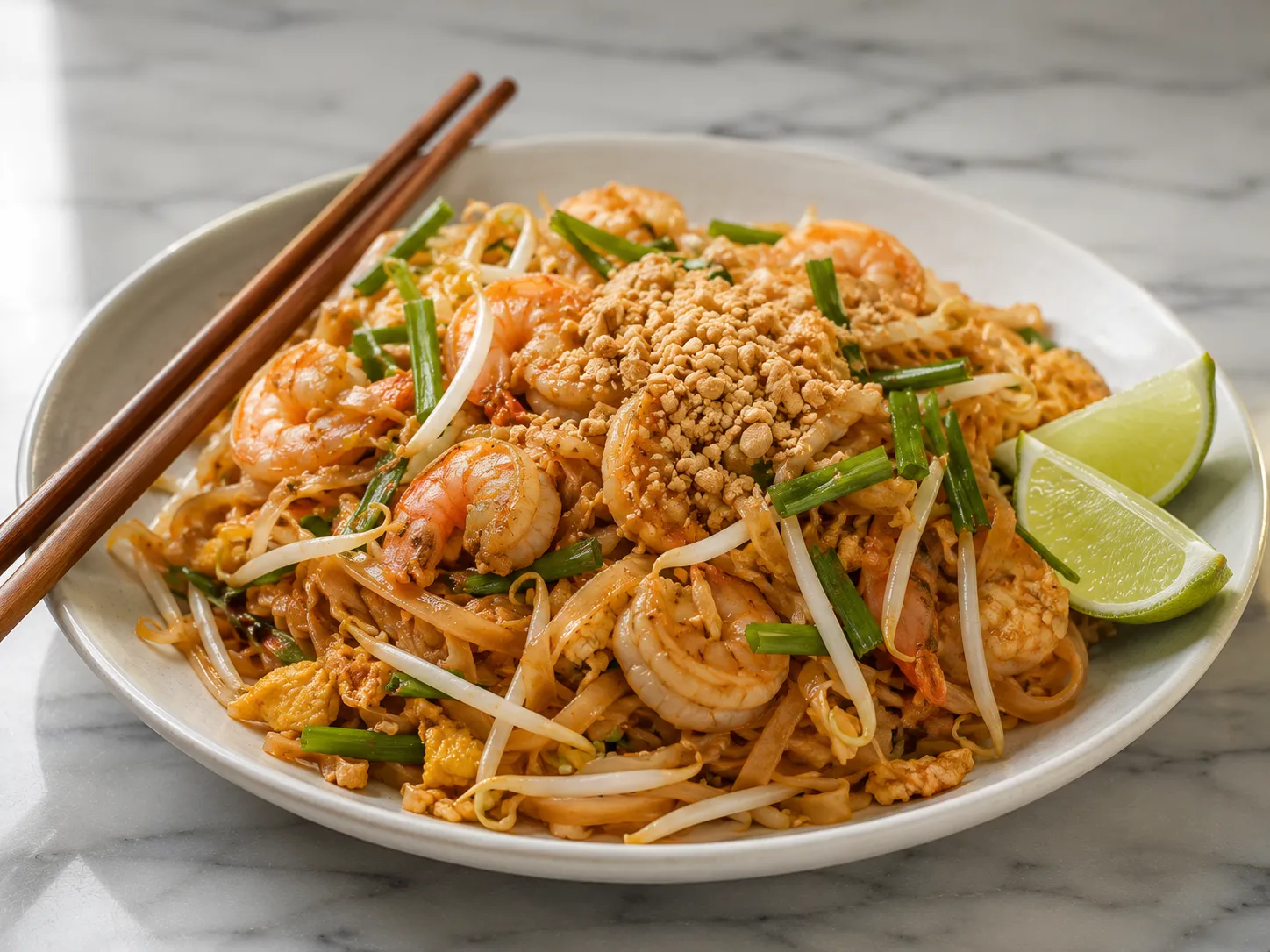
This pad Thai recipe is built on the real thing: tamarind paste, fish sauce, and a properly hot wok. It is not a shortcut version. The sauce is balanced — tangy from tamarind, savory from fish sauce, with just enough sweetness to round it out. Rice noodles stay chewy, the eggs are folded in at the right moment, and the garnishes are served fresh at the table so nothing wilts. From start to finish it takes about 35 minutes, and the result is noticeably better than most takeout. This is a pad Thai recipe worth making again.
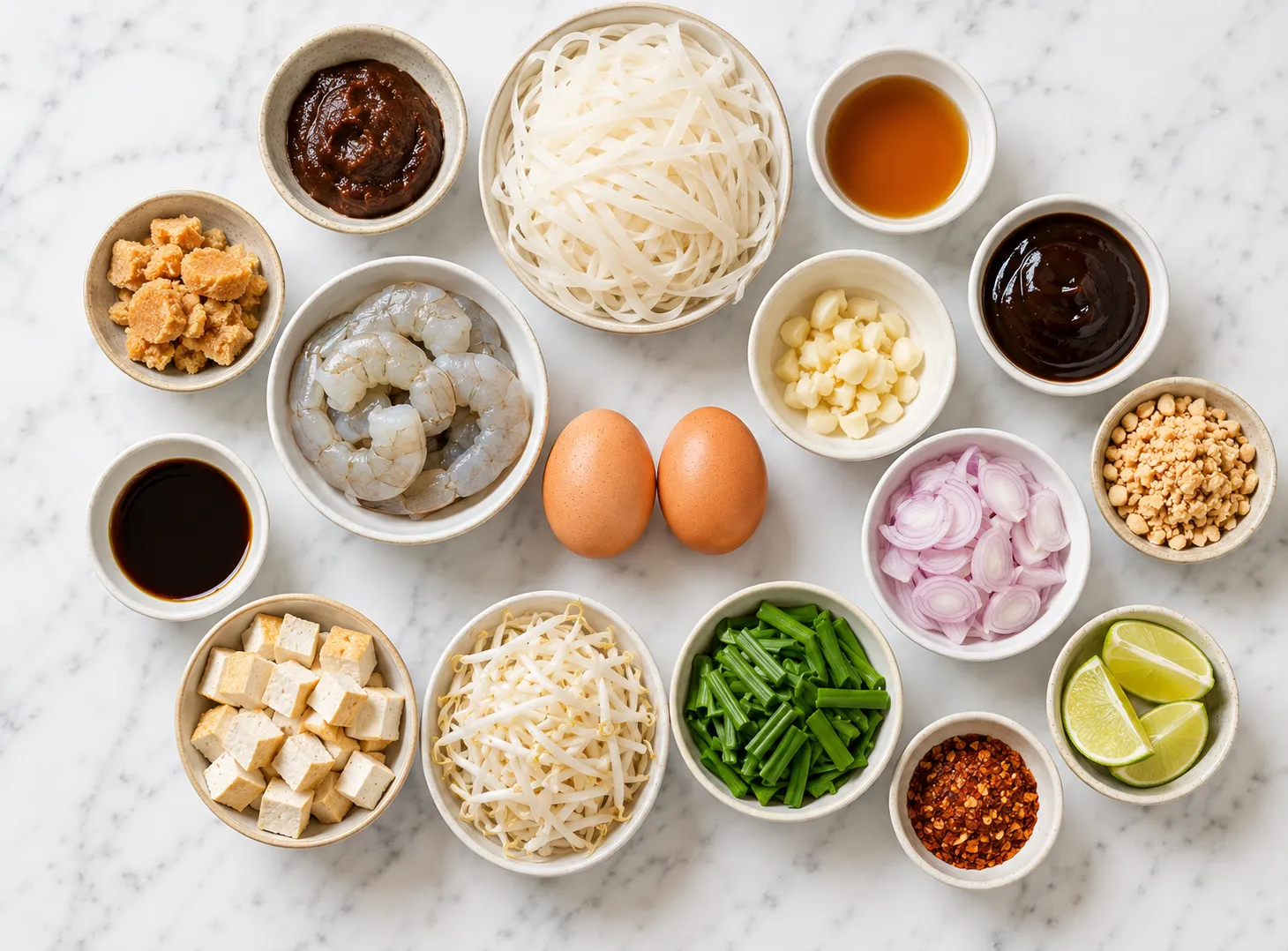
- 200 g dried rice stick noodles, medium width , Medium width, sometimes labeled banh pho or rice noodles 3mm to 5mm. Do not use thin vermicelli.
- 3 tablespoons tamarind paste , Use paste, not concentrate. Concentrate is much stronger and needs diluting.
- 2 tablespoons fish sauce
- 1 tablespoon oyster sauce
- 1.5 tablespoons palm sugar or light brown sugar , Palm sugar gives a more authentic result. Coconut sugar also works.
- 1 teaspoon soy sauce
- 200 g medium shrimp, peeled and deveined , Or substitute thinly sliced chicken breast.
- 2 large eggs
- 3 cloves garlic, minced
- 2 shallots, thinly sliced
- 100 g firm tofu, pressed and cubed , Press the tofu well before cubing so it browns instead of steaming.
- 1 cup bean sprouts , Reserve half for serving tableside so they stay crunchy.
- 3 stalks green onion, cut into 1-inch pieces
- 3 tablespoons neutral oil , Vegetable or canola oil. Do not reduce this amount or the noodles will stick.
- crushed roasted peanuts , Served tableside.
- lime wedges , Served tableside.
- dried chili flakes , Served tableside.
- extra bean sprouts , Served tableside.
- fresh cilantro , Optional. Served tableside.
- Wok or large heavy-bottomed skillet
- Medium mixing bowl
- Small saucepan or bowl for sauce
- Wooden spatula or wok spatula
- Colander or strainer
- Measuring cups and spoons
- Sharp knife and cutting board
- Tongs (optional but helpful)
- Soak the rice noodles in room-temperature water for 20 to 25 minutes, then drain.
- Whisk together all the sauce ingredients in a small bowl and taste for balance.
- Stir-fry the protein in a very hot wok, then set aside.
- Cook the garlic, shallots, and tofu in the same wok.
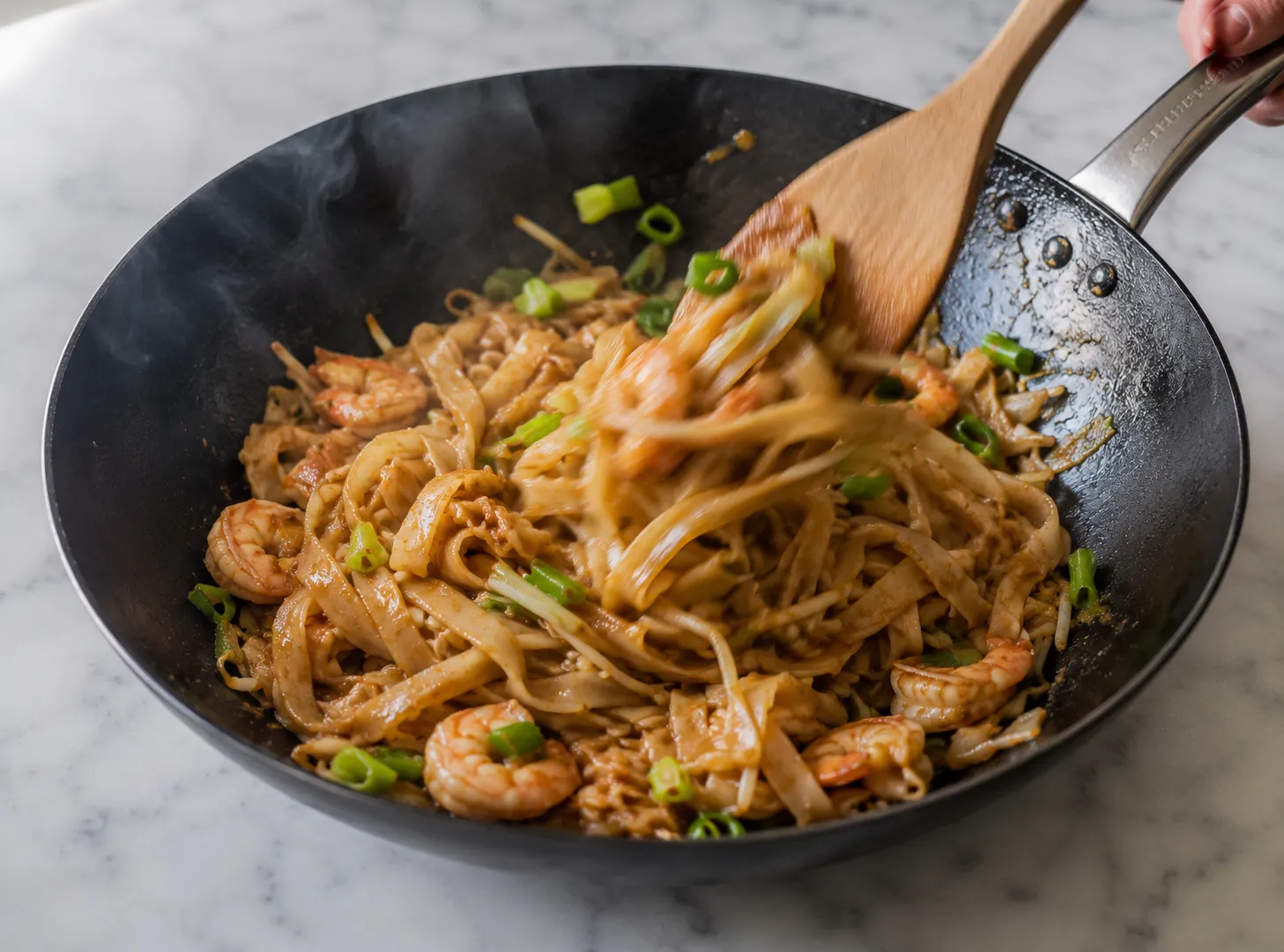
- Add the noodles, pour the sauce over them, and toss quickly over high heat.
- Push noodles to one side, scramble the eggs in the empty space, then fold everything together.
- Finish with green onions, bean sprouts, and fresh garnishes at the table.
- Soak the dried rice noodles in room-temperature water for 20 to 25 minutes. They should be flexible but still slightly firm at the center. Drain and set aside.
- In a small bowl, whisk together the tamarind paste, fish sauce, oyster sauce, palm sugar, and soy sauce. Taste it. The flavor should be tangy first, then savory, with a mild sweetness at the finish. Adjust if needed and set aside.
- Heat your wok over the highest flame available. Add 2 tablespoons of oil and let it get very hot, close to smoking.
- Add the shrimp or chicken. Let it sit undisturbed for 60 seconds, then flip and cook for another 30 seconds. Remove from the wok and set aside.
- Add the remaining tablespoon of oil to the same wok. Add the garlic and shallots. Stir constantly for about 30 seconds until fragrant. Do not let them brown.
- Add the cubed tofu. Let it sit for 30 seconds to pick up some color, then toss it gently.
- Add the drained noodles to the wok. Immediately pour the sauce over them. Use tongs or a spatula to toss and coat every strand. Cook for 1 to 2 minutes, tossing constantly.
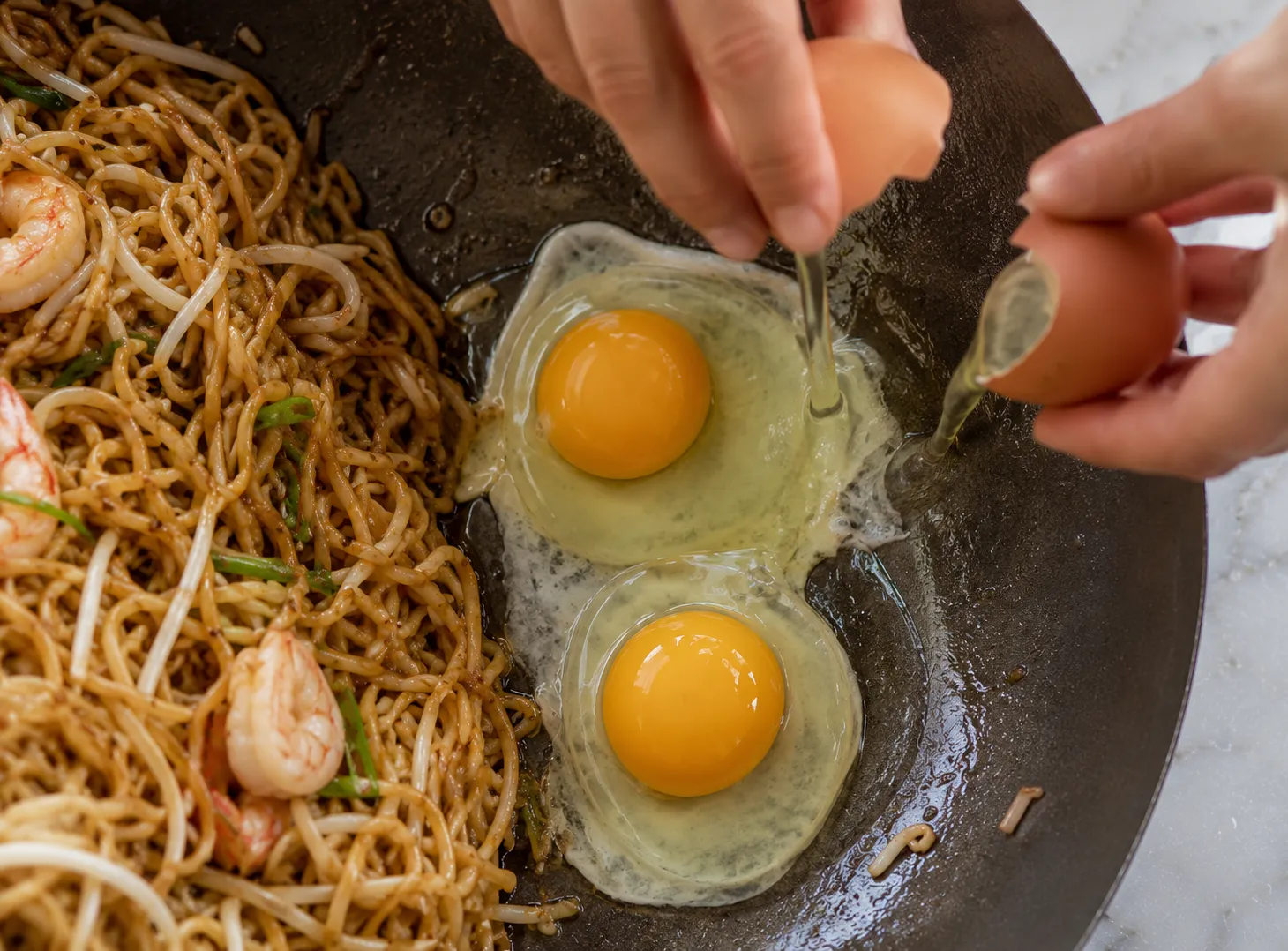
- Push the noodles to one side of the wok. Crack both eggs into the empty space. Let them sit for about 20 seconds, then scramble lightly before folding into the noodles.
- Add the cooked shrimp back in. Add the green onions and half the bean sprouts. Toss for another 30 seconds, then remove from heat.
- Plate immediately. Serve with crushed peanuts, fresh bean sprouts, lime wedges, and chili flakes on the side.
- Soak noodles in room-temperature water, not boiling. Hot water makes them soft before they reach the wok and they will turn to mush during cooking.
- A very hot wok is the single most important factor. If the wok is not hot enough the noodles steam instead of stir-fry and the dish tastes flat.
- Make the sauce in advance and keep it in the fridge. It stays good for two weeks and cuts your active prep time significantly.
- Cook in batches if making more than two servings. Adding too much to the wok drops the heat and you lose the texture.
- Tamarind paste varies between brands. Some are sharper, some are sweeter. Always taste the sauce before cooking and adjust the balance there.
- Add bean sprouts at the very end or serve them raw on the side. They should still have some crunch when the dish is plated.
- Do not stir the eggs the moment they hit the wok. Let them partially set first. The texture in the finished dish is much better this way.
- Fish sauce is strong. Start with the stated amount and add more at the table if needed.
- Soaking the noodles too long makes them sticky and they will clump in the wok and break apart during tossing.
- Skipping tamarind and using ketchup instead is the most common mistake in westernized versions. The depth is completely different and the dish loses its identity.
- Using a regular pan on medium heat will not work. The high, concentrated heat of a wok is what creates the texture and slight char that makes pad Thai taste the way it should.
- Pouring the sauce into the center of the wok instead of directly over the noodles causes it to evaporate before coating anything.
- Overcrowding the wok brings the temperature down and causes steaming. Stick to two servings per batch.
- Skipping the 3 to 5 minute rest after plating means the sauce has not had time to absorb into the noodles fully.
- Using thin rice vermicelli by mistake results in a completely different texture. You need medium-width rice stick noodles, labeled 3mm to 5mm, for the right result.
- Protein: Chicken, beef strips, pork, or extra tofu all work in place of shrimp. Mix and match based on what you have.
- Vegan version: Replace fish sauce with soy sauce and a small pinch of seaweed flakes. Use maple syrup instead of palm sugar. Skip the eggs or use scrambled silken tofu.
- No tamarind: Mix 1.5 tablespoons fresh lime juice with 1 tablespoon rice vinegar. The flavor will not be identical, but it is a workable substitute.
- No palm sugar: Light brown sugar or coconut sugar both substitute cleanly.
- Gluten-free: Use tamari instead of soy sauce and a certified gluten-free oyster sauce. The rice noodles are already gluten-free.
- Spicy: Stir 1 tablespoon sambal oelek directly into the sauce before cooking.
- Extra vegetables: Thinly sliced red bell pepper, baby bok choy, or shredded cabbage all fit naturally into this dish.
- Thai cucumber salad (ajad) for a cool contrast alongside the warm noodles
- Tom kha gai or a light lemongrass soup to open the meal
- Steamed jasmine rice if serving pad Thai as part of a larger spread
- Thai iced tea or fresh coconut water to drink
- Som tam (green papaya salad) for textural contrast
- Fresh spring rolls or rice paper rolls as a starter
- Let leftovers cool completely before storing.
- Keep in an airtight container in the refrigerator for up to 3 days.
- Do not freeze pad Thai. The noodles become mushy after thawing and lose their texture entirely.
- To reheat on the stove, add a splash of water or light broth to the wok and toss over medium-high heat for 2 to 3 minutes.
- To reheat in the microwave, cover with a damp paper towel and heat in 60-second intervals, stirring between each round.
- After reheating, add fresh bean sprouts, a squeeze of lime, and a few extra peanuts to freshen the dish.
- The sauce alone can be made ahead and stored in the fridge for up to 2 weeks.
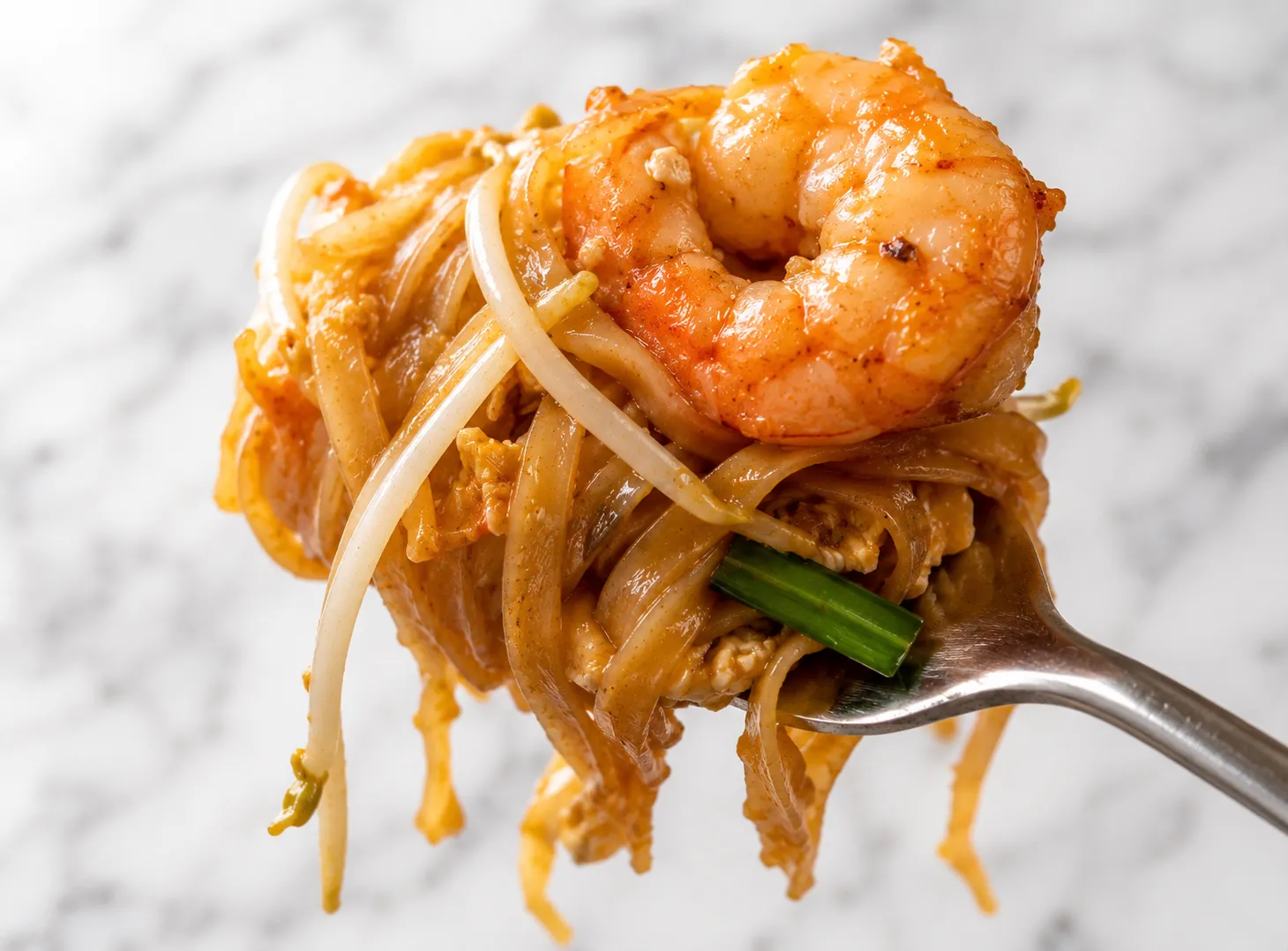
You can use the noodles from a kit, but skip the sauce packet. Those packets are usually too sweet and low on tamarind. Make this sauce instead and you will get a noticeably better result.
A mix of lime juice and rice vinegar is the closest substitute. It will not replicate the depth of tamarind exactly, but it keeps the tangy balance the dish needs.
The sauce likely needs more fish sauce or tamarind. Always taste the sauce before it goes into the wok and adjust there. Once it is on the noodles it is harder to fix.
The sauce can be made days in advance. The noodles are best cooked fresh. Stored noodles lose their texture and become clumpy once cooled.
Authentic pad Thai should coat every noodle but not pool at the bottom of the plate. Adjust the amount of tamarind and fish sauce to find that balance before cooking.
Only if your wok is large and your stove runs very hot. Otherwise cook in two separate batches. Overloading the wok drops the temperature and you end up steaming the noodles instead of stir-frying them.
- Tamarind paste and tamarind concentrate are not the same product. Paste is ready to use. Concentrate is much more intense and needs to be diluted before using in this recipe.
- Medium-width rice stick noodles, labeled 3mm to 5mm, give the right texture. Very thin vermicelli noodles will not hold up in the wok.
- Pull the noodles from the soak while they still feel slightly firm. They finish cooking in the wok.
- Palm sugar dissolves more easily if you grate it or warm it briefly before mixing into the sauce.
- Keep the noodles moving constantly in the wok to prevent sticking or burning, especially if your pan has uneven heat distribution.
- Three tablespoons of oil is the standard amount for wok cooking this recipe. Reducing it will cause the noodles to stick.
- Serve bean sprouts on the side rather than cooking them fully. The crunch makes a real difference in the finished dish.
This pad Thai recipe holds up because it does not skip the parts that matter. The tamarind sauce, the high heat, the properly soaked noodles, the eggs folded in at the right moment — each step is there for a reason. Make it once and you will see the difference between this and most restaurant versions. The method is straightforward once you have done it a couple of times, and the ingredients are easy to keep on hand. If you have been relying on takeout for pad Thai, this recipe is a good reason to stop. Cook it on a weeknight when you want something fast and genuinely satisfying. It earns its place in regular rotation without any effort to get it there.