
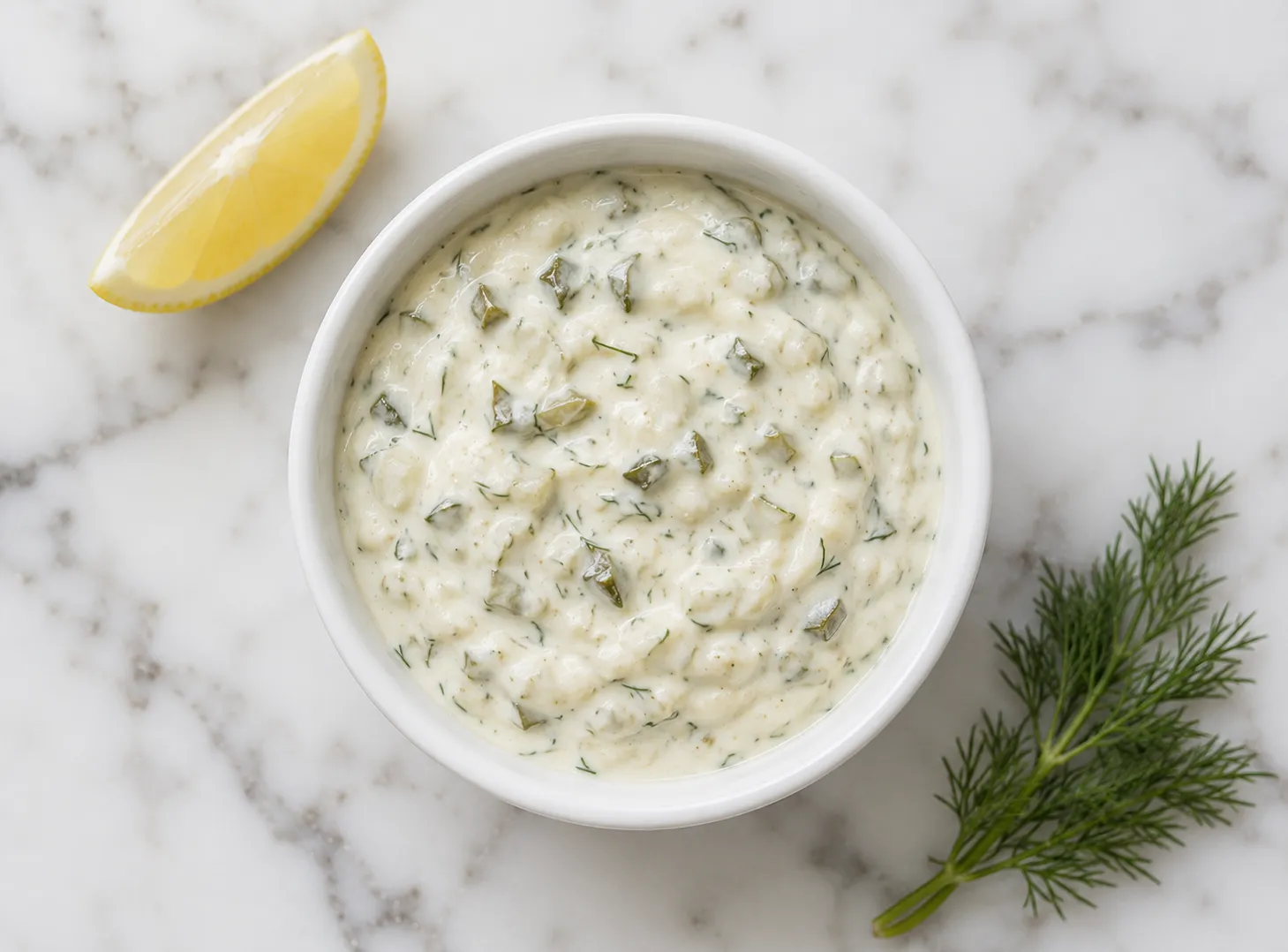
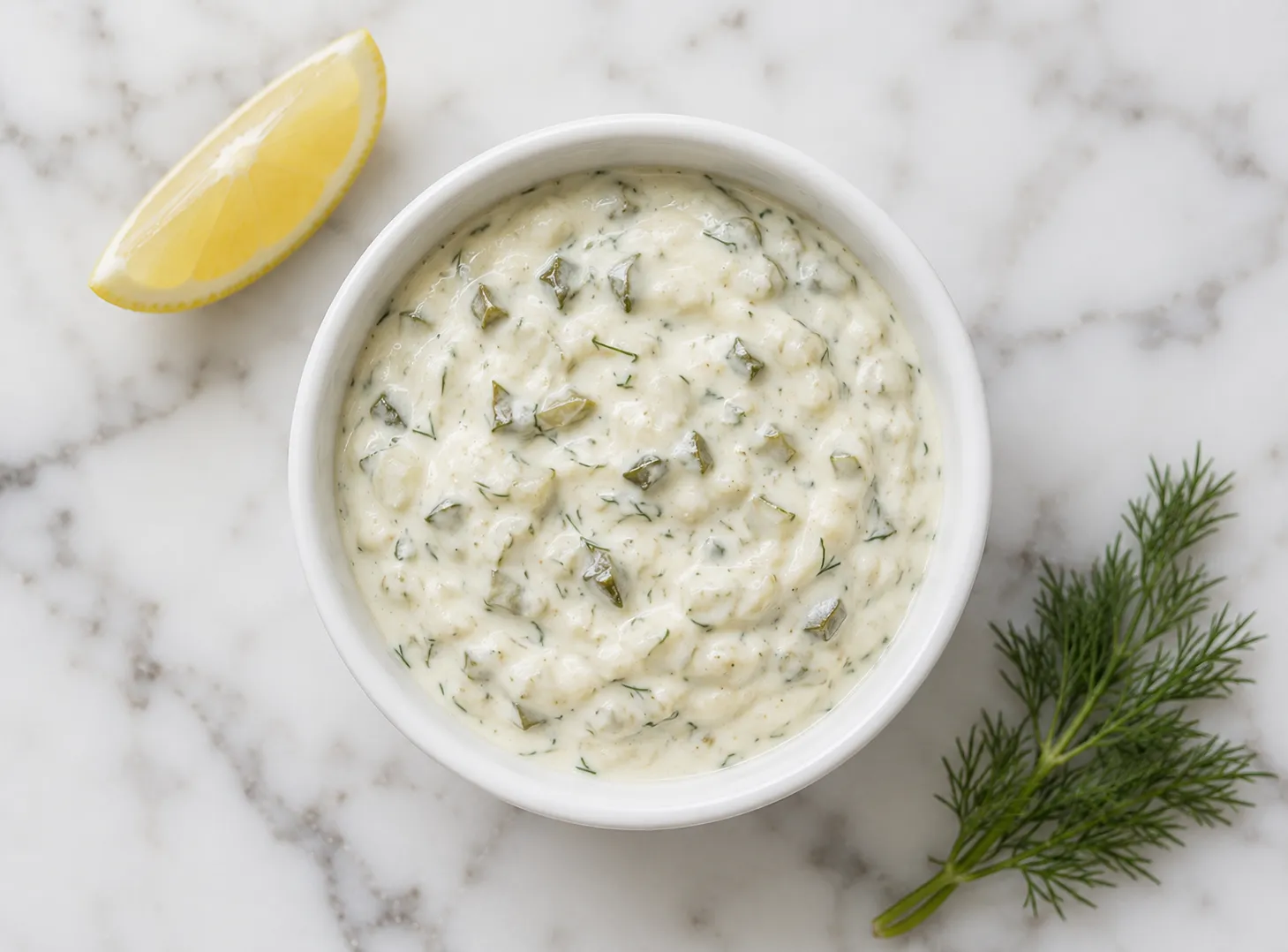
This homemade tartar sauce recipe takes two minutes and a handful of pantry staples, but the result is sharper, fresher, and more balanced than anything that comes in a jar. Made with real dill pickles, fresh lemon juice, capers, and herbs, it has a clean tanginess that store-bought versions rarely manage. The texture is thick and creamy without being heavy, and the flavor holds up to fried fish, crab cakes, and shrimp alike. Make it once and you will not go back to the bottled kind. It is that straightforward and that much better.
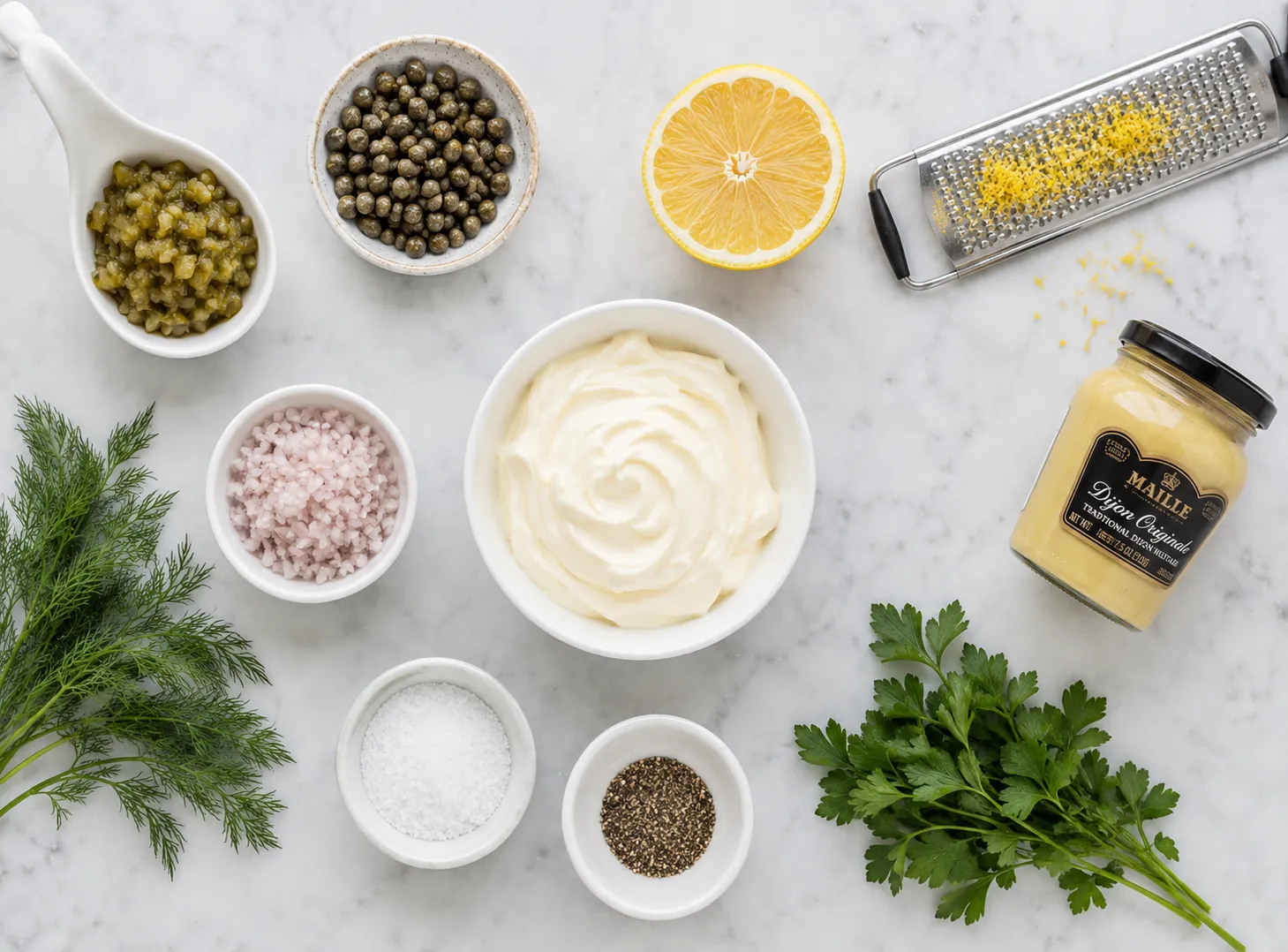
- 1 cup mayonnaise , Full-fat works best. A higher-quality mayo made with whole eggs gives a richer, more stable base.
- 2 tablespoons dill pickle relish , Or finely chopped dill pickles. Do not use sweet relish.
- 1 tablespoon capers, drained and roughly chopped , Rinse if your brand is very salty.
- 1 tablespoon fresh lemon juice , Fresh only. Bottled lemon juice has a dull, slightly bitter taste.
- 1 teaspoon lemon zest , Adds brightness that juice alone cannot provide.
- 1 teaspoon Dijon mustard
- 1 teaspoon Worcestershire sauce , Check label if vegan — some brands contain anchovies.
- 1 tablespoon fresh dill, finely chopped , Or 1 teaspoon dried dill if fresh is unavailable.
- 1 tablespoon fresh flat-leaf parsley, finely chopped , If unavailable, leave it out. Dried parsley adds little here.
- 1 tablespoon shallot, finely minced , About 1 small shallot. Mince as fine as possible.
- 0.25 teaspoon garlic powder
- salt , To taste. Add after mixing since capers and pickles already bring salt.
- black pepper , To taste.
- sugar , Optional. A small pinch balances acidity if the sauce tastes too sharp.
- Medium mixing bowl
- Measuring spoons
- Fine grater or zester (for lemon zest)
- Knife and cutting board
- Spoon or small whisk
- Airtight jar or container for storage
- Measure and prep all ingredients before you start.
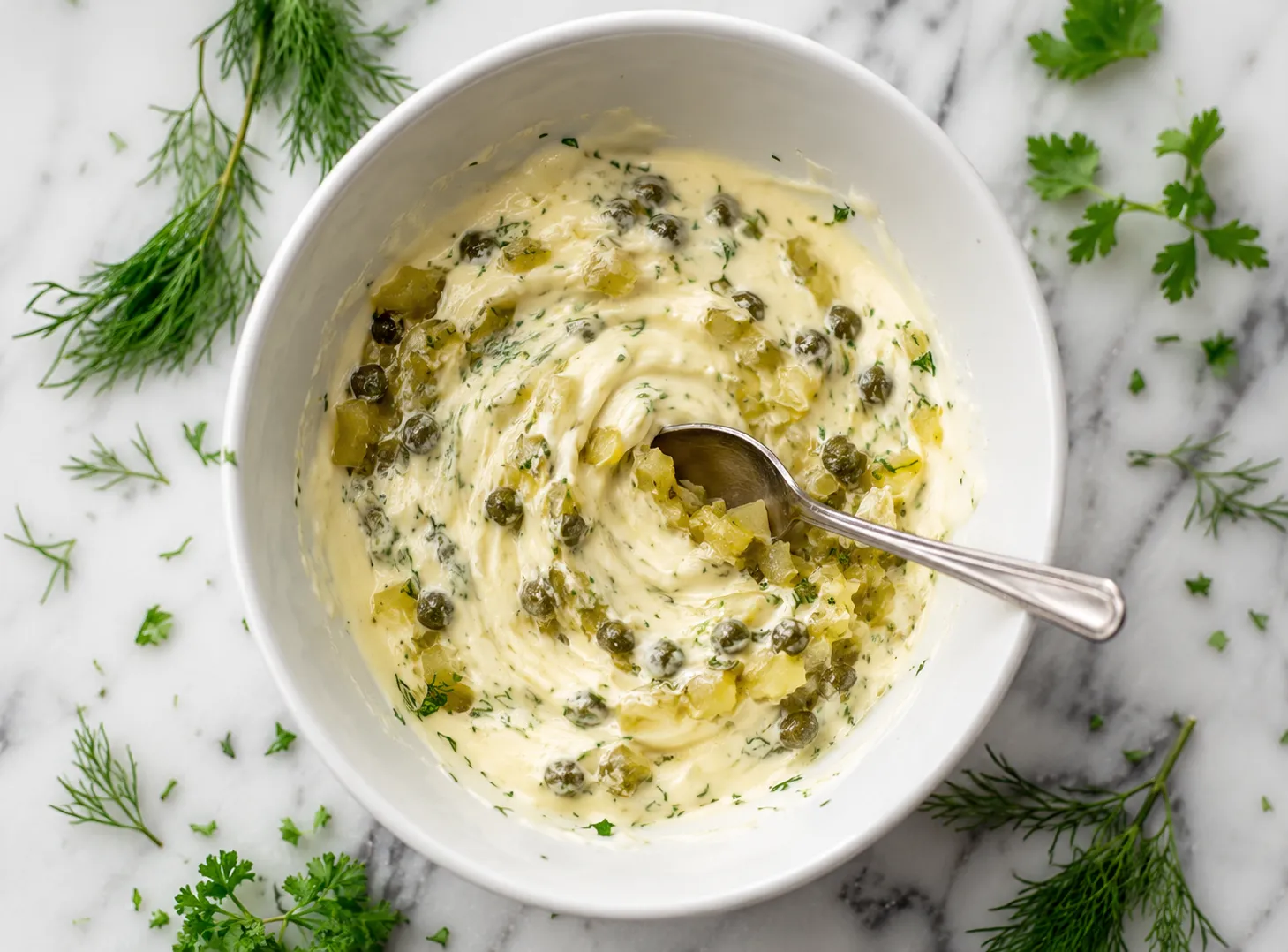
- Combine everything in a medium bowl.
- Stir until fully mixed.
- Taste and adjust seasoning.
- Rest in the fridge for at least 10 minutes before serving.
- Set out a medium mixing bowl. Measure and prep all ingredients before combining anything.
- Add the mayonnaise to the bowl. This is your base.
- Add the dill pickle relish. If using whole pickles, chop them very finely so there are no large chunks.
- Add the chopped capers. Rough chopping distributes them evenly without making any single bite too briny.
- Squeeze in the fresh lemon juice and add the lemon zest right after.
- Add the Dijon mustard and Worcestershire sauce. Both build depth without standing out on their own.
- Add the fresh dill and fresh parsley. If using dried dill, use 1 teaspoon instead of 1 tablespoon.
- Add the minced shallot. Mince it as fine as you can so the texture stays smooth.
- Sprinkle in the garlic powder. Season with salt and black pepper.
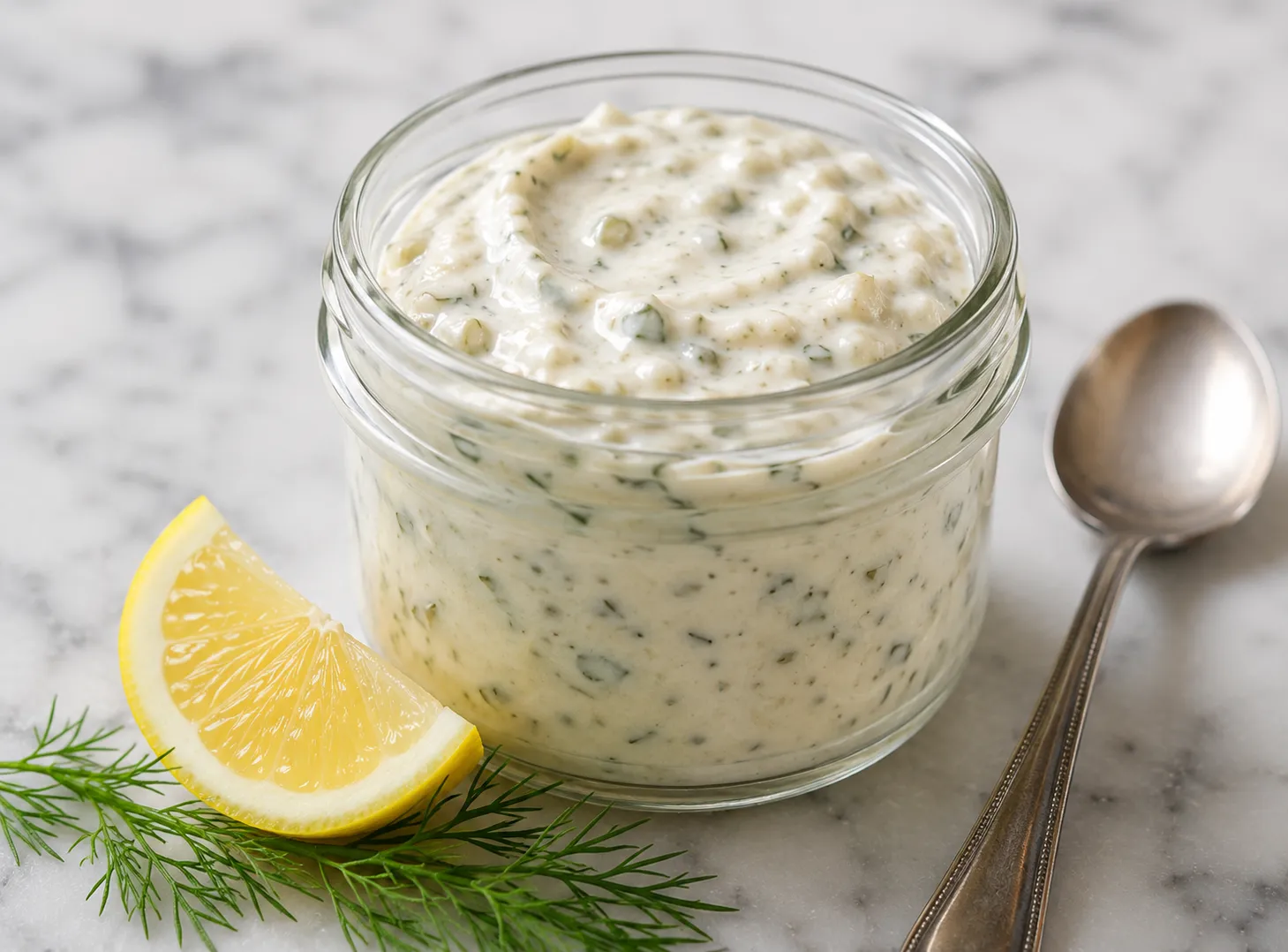
- Stir everything together until fully combined. The sauce should look creamy with visible flecks of herbs and pickle throughout.
- Taste. If the sauce needs more tang, add a few drops of lemon juice. If it is too sharp, add a pinch of sugar. Adjust salt and pepper as needed.
- Cover and refrigerate for at least 10 minutes before serving. The flavors settle and come together as it rests. Serve cold.
- Use full-fat mayonnaise. Low-fat versions taste thin and slightly sweet, which throws off the whole balance.
- Mince the shallot as fine as possible. Large pieces make the sauce feel uneven and can be sharp in a single bite.
- Fresh lemon juice only. Bottled juice has a dull, slightly bitter taste that carries through.
- Let the sauce rest before serving. Even 10 minutes in the fridge makes a real difference. The ingredients need time to come together.
- Chop capers small. They bring a necessary brininess, but large pieces can overwhelm a single spoonful.
- Always taste before serving. Every batch differs slightly depending on the pickle relish and lemon you use.
- Make it a day ahead if you can. The flavor is noticeably better after a few hours in the fridge.
- Using sweet pickle relish instead of dill. Sweet relish changes the entire character of the sauce and makes it taste like a condiment for hot dogs rather than seafood.
- Skipping the rest time. Serving it immediately after mixing tastes flat. The 10-minute rest matters.
- Over-salting before tasting. Capers and pickles already carry salt. Always taste the finished sauce before adding more.
- Adding too much lemon juice at once. A few drops too many can make the sauce watery and overly sour. Add it gradually.
- Using dried parsley instead of fresh. Dried parsley adds almost nothing here. Leave it out if fresh is unavailable.
- Not chopping the pickles finely enough. Large chunks make the texture unpleasant.
- No capers: Add an extra teaspoon of finely chopped dill pickles and a small pinch of salt to approximate the briny note capers provide.
- No shallot: Use 1 tablespoon of very finely minced red onion. Soak it in cold water for 5 minutes first to reduce the sharpness.
- No fresh dill: Use 1 teaspoon of dried dill weed. Not the same, but it works.
- Spicy version: Stir in 1 to 2 teaspoons of hot sauce or 1/4 teaspoon of cayenne pepper.
- Lighter version: Use half mayonnaise and half plain Greek yogurt. The sauce will be slightly tangier and lower in calories.
- Vegan version: Use a good vegan mayonnaise. Everything else in the recipe is already plant-based. Check the Worcestershire sauce label.
- No Worcestershire: A small dash of soy sauce works as a substitute. Use less since soy sauce is saltier.
- Extra herby: Add 1 tablespoon of finely chopped chives for a mild onion-forward finish.
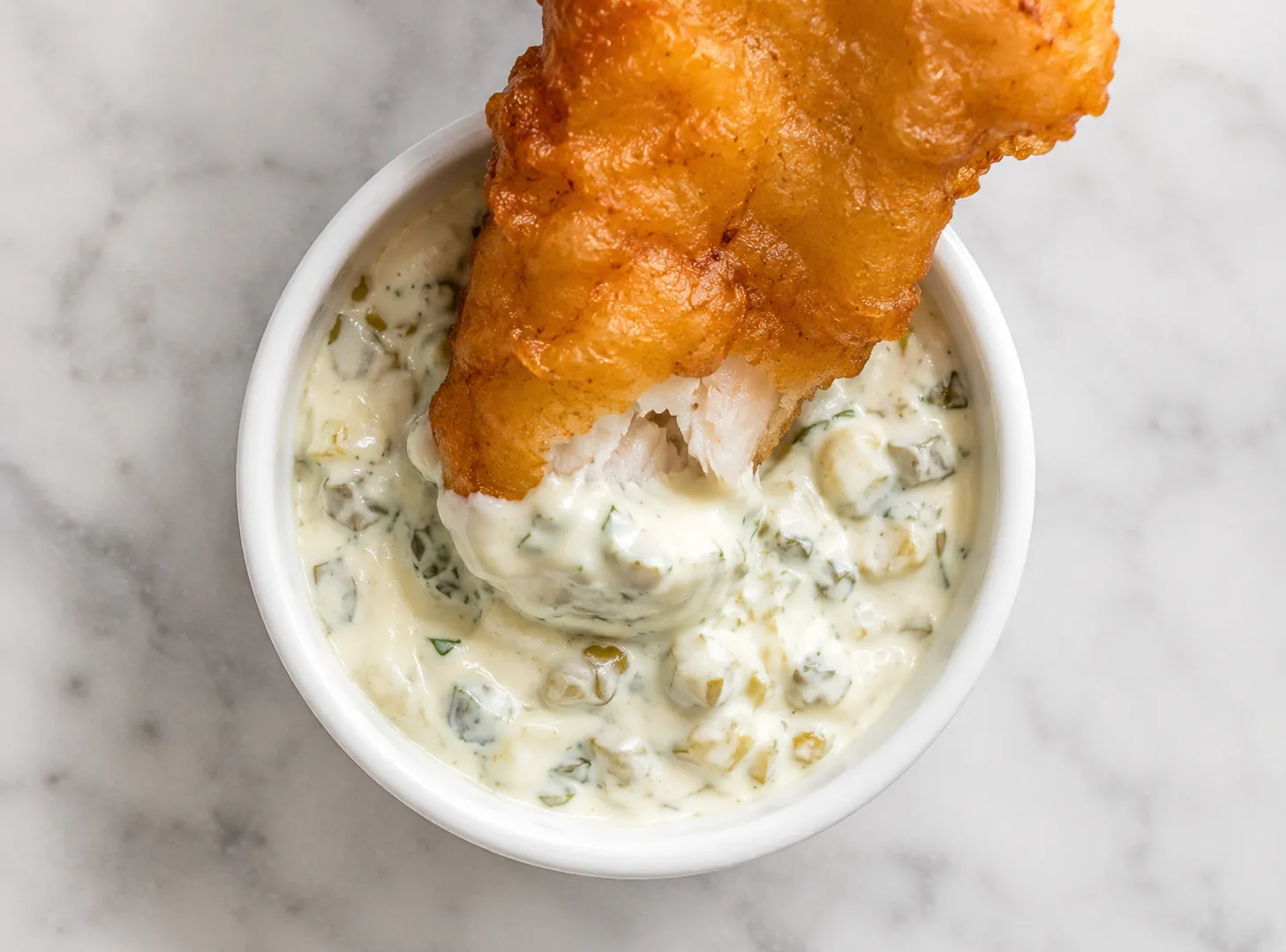
- Classic fish and chips
- Fried shrimp or coconut shrimp
- Crab cakes, pan-fried or baked
- Fish tacos as a drizzle or dipping sauce
- Fish sandwiches and po' boys
- Fried oysters or clam strips
- Baked salmon fillets
- Fried calamari
- Seafood burgers
- Steamed crab legs or lobster
- Refrigerator: Transfer to an airtight jar or sealed container. Keeps well for up to 7 days. Best within the first 4 days.
- Do not freeze. Mayonnaise-based sauces separate and go grainy when frozen. The texture will not recover.
- No reheating needed. This is a cold sauce. Serve straight from the fridge.
- If the sauce looks watery after a few days: Pickles can release liquid over time. Stir well before serving. If it is very watery, strain briefly through a fine mesh strainer, then stir again.
- Make-ahead tip: This sauce actually improves overnight. Making it the day before is a genuinely good move.
You can, but the sauce will taste sweet and sugary rather than tangy and savory. Dill relish is strongly recommended for a classic tartar sauce result.
Up to 7 days in an airtight container. For the best flavor and texture, use it within 4 days.
Yes. Add a bit more pickle relish and a small extra pinch of salt to compensate. The sauce will still taste good, just slightly less complex.
It is, as long as your mayonnaise and Worcestershire sauce are gluten-free. Check the labels on both if this matters for your diet.
Absolutely. Double or triple all the ingredients. The ratio stays the same. Store in a sealed jar in the refrigerator.
No preservatives, no artificial flavors, and you control the balance. You can make it sharper, creamier, or more herby depending on what you are serving it with.
- Mayo quality matters. A higher-quality mayo made with whole eggs gives a richer, more stable base than lower-fat versions.
- Lemon zest is not optional. The zest carries aromatic oils that juice alone cannot provide. It is what makes the sauce taste fresh rather than heavy.
- Capers vary in saltiness. Rinse them before using if your brand tends to run very salty. Taste before adding extra salt.
- Shallot versus onion: Shallot is milder and slightly sweet. It blends in without dominating. Regular white or yellow onion is sharper and can overpower everything else.
- This recipe scales easily. Halve the ingredients for a small batch, double or triple for a crowd.
- Serve cold. This sauce is designed to sit against hot food. The contrast in temperature is part of what makes the pairing work.
- If raw alliums bother you: Soak the minced shallot in a teaspoon of lemon juice for 5 minutes before adding it. Takes the edge off without losing the flavor.
Once you make this tartar sauce recipe from scratch, the jarred version is hard to justify going back to. It takes two minutes, costs less per serving, and the difference in flavor is real. The fresh lemon, the dill, the capers, the balance of creamy and tangy — none of that comes through in most store-bought versions. This recipe is simple enough to make on a weeknight and good enough to serve at a proper dinner. Keep a batch in the fridge whenever you have seafood planned. It holds well for days and quietly makes everything around it taste better. Fresh, sharp, and consistently good every single time.