
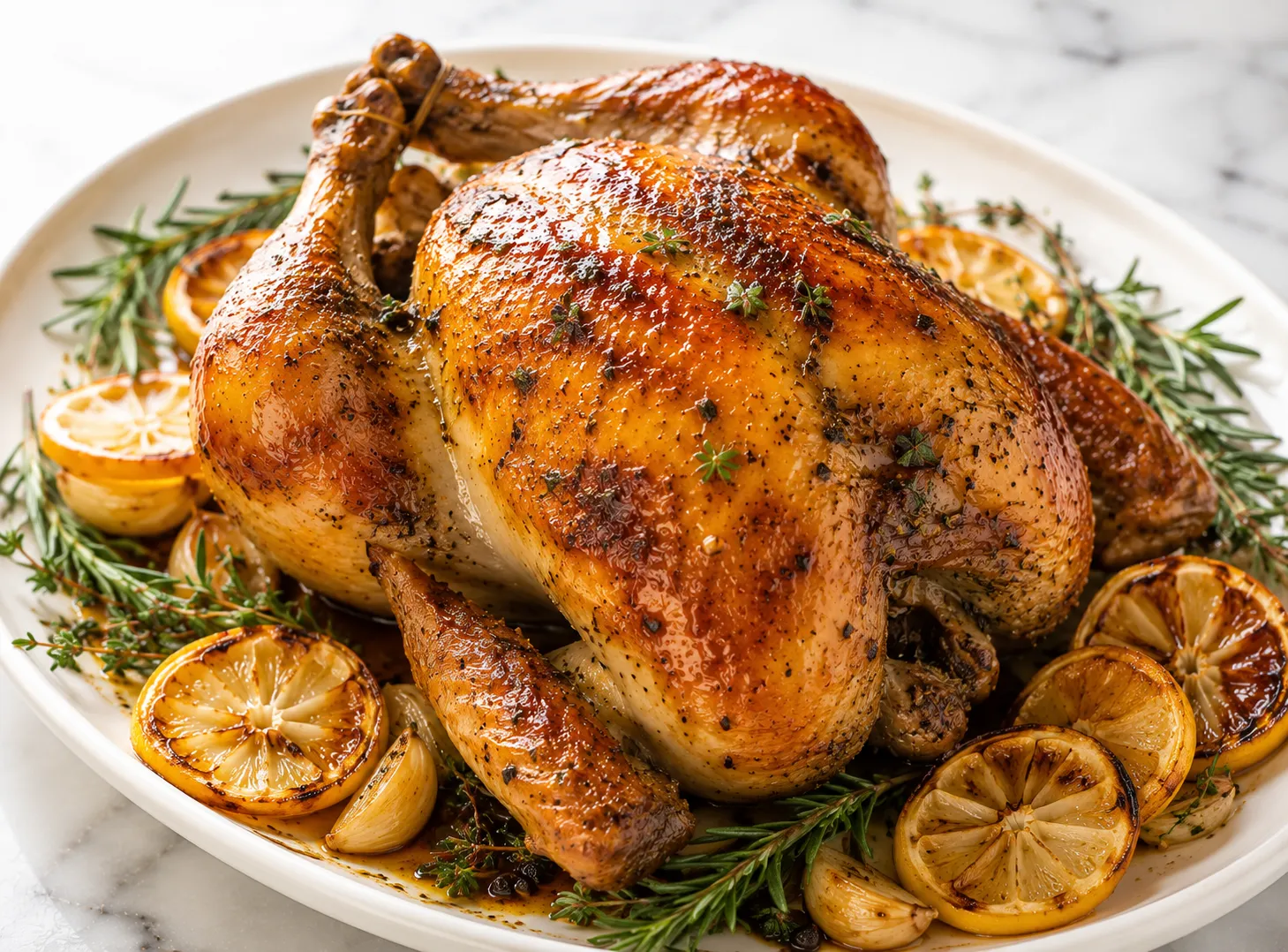
This lemon herb roasted chicken recipe gives you crispy golden skin and genuinely tender meat without anything complicated. The herb butter goes under the skin and all over the outside, so every bite is seasoned properly. Fresh lemon, garlic, rosemary, and thyme do the heavy lifting here. The method is simple enough for a weeknight but produces results you would be comfortable serving to anyone. If you have tried other roasted chicken recipes and ended up with dry meat or pale, soft skin, this one fixes both problems. One pan, real ingredients, consistent results every time you make it.
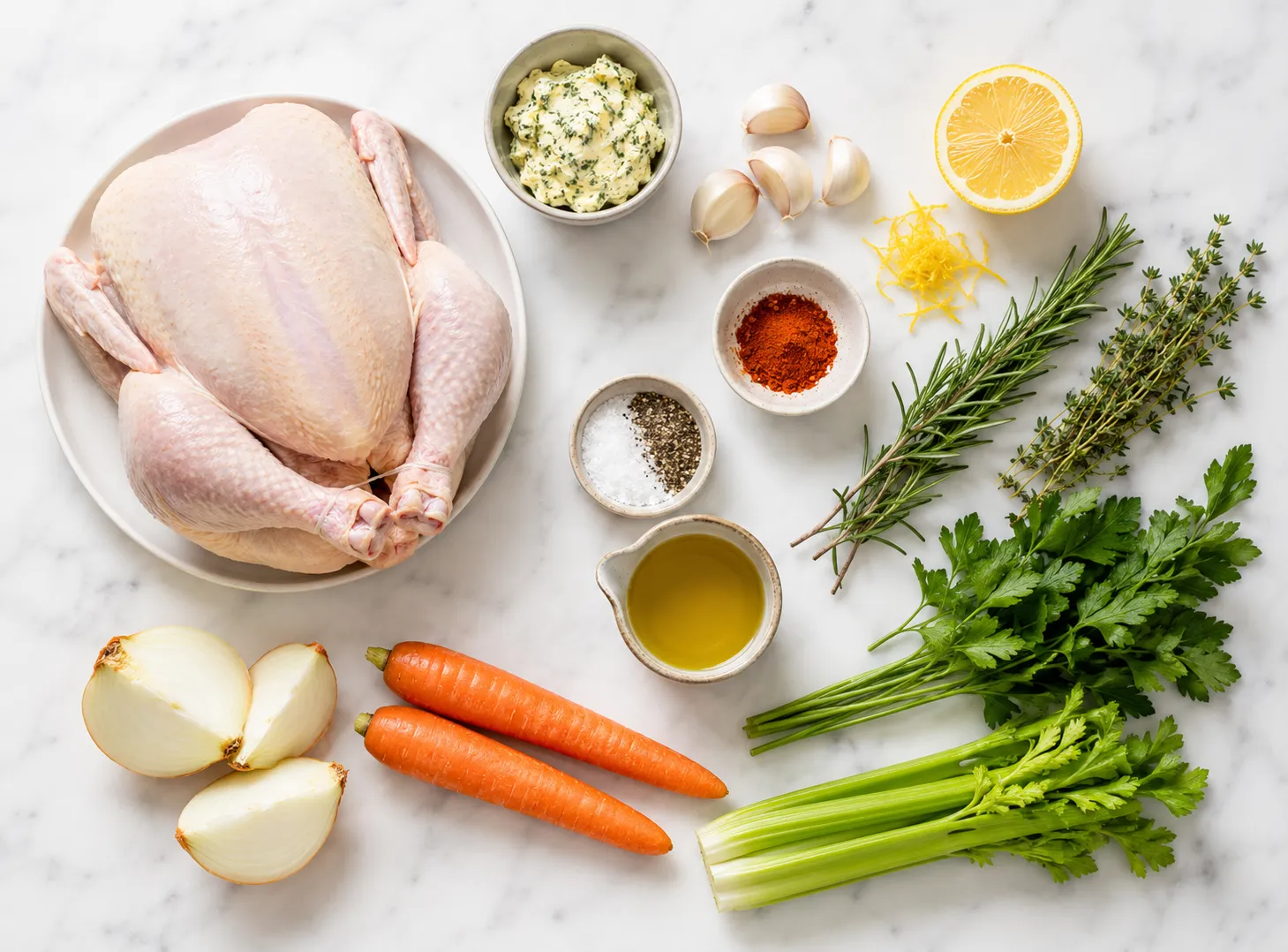
- 1 whole chicken (4 to 5 lbs), giblets removed
- 1 tablespoon kosher salt
- 1 teaspoon black pepper, freshly ground
- 1 tablespoon olive oil , For rubbing the outside of the bird
- 4 tablespoons unsalted butter, softened , Must be at room temperature. Cold butter will not spread under the skin.
- 4 cloves garlic, minced
- 1 large lemon, zested
- 2 tablespoons fresh lemon juice
- 1 tablespoon fresh rosemary, finely chopped
- 1 tablespoon fresh thyme leaves
- 1 tablespoon fresh flat-leaf parsley, chopped
- 1 teaspoon onion powder
- 0.5 teaspoon smoked paprika , Deepens the skin color and adds subtle warmth
- 0.5 teaspoon red pepper flakes , Optional
- 1 lemon, halved
- 1 head garlic, halved horizontally
- 4 sprigs fresh rosemary
- 4 sprigs fresh thyme
- 1 medium yellow onion, quartered
- 2 medium carrots, roughly chopped
- 2 stalks celery, roughly chopped
- 0.5 cup low-sodium chicken broth , Poured into the bottom of the pan before roasting
- 1 tablespoon olive oil , For tossing the vegetables
- Pat the chicken dry, season well, and let it come to room temperature.
- Mix the herb butter and rub it under and over the skin.
- Fill the cavity with lemon, garlic, and fresh herbs.
- Roast at high heat first, then lower the temperature to finish cooking through.
- Rest the chicken before carving to keep the juices inside.
- Take the chicken out of the refrigerator 45 minutes before cooking. Room temperature meat roasts more evenly from outside to inside.
- Preheat the oven to 425 degrees F (220 degrees C). Move the oven rack to the lower third position.
- Pat the chicken completely dry using paper towels. Cover all surfaces including the inside of the cavity. Wet skin will not crisp up no matter how hot the oven is.
- Season the entire exterior generously with kosher salt and black pepper, including the back and underside.
- Make the herb butter: combine softened butter, minced garlic, lemon zest, lemon juice, rosemary, thyme, parsley, onion powder, smoked paprika, and red pepper flakes if using. Mix until fully blended.
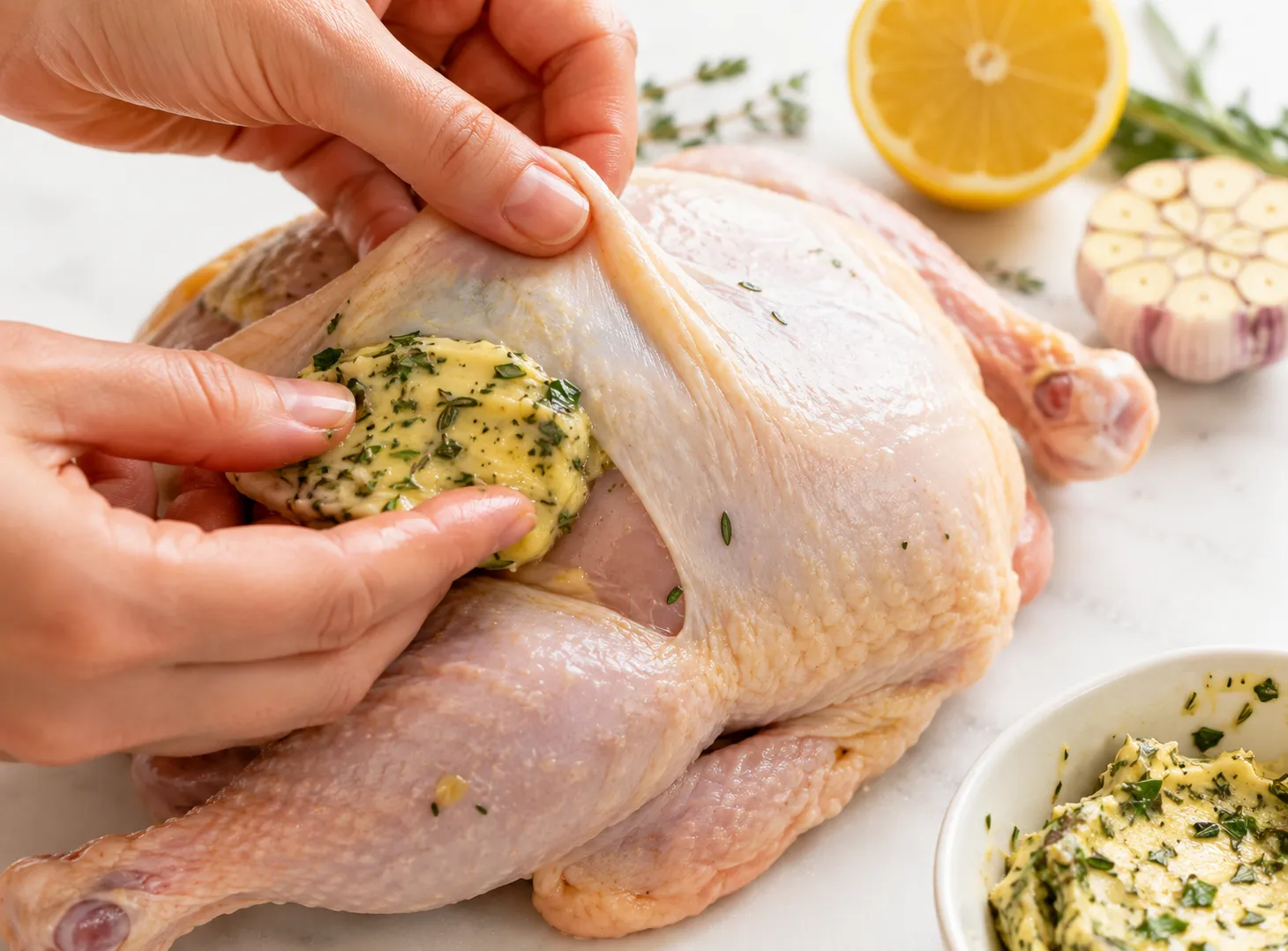
- Starting from the neck end, slide your fingers gently under the breast skin to create a pocket. Go slowly to avoid tearing the skin.
- Push about two-thirds of the herb butter directly under the skin and spread it evenly over both breasts.
- Coat the entire outside of the chicken with the remaining herb butter. Drizzle and rub with 1 tablespoon of olive oil over that. This combination gives you deep, even browning.
- Stuff the cavity with the halved lemon, halved garlic head, and a few sprigs each of rosemary and thyme. These aromatics season the inside of the bird as it roasts.
- Toss the onion, carrots, and celery with 1 tablespoon of olive oil and a pinch of salt. Spread them across the bottom of the roasting pan.
- Set the chicken breast-side up on top of the vegetables. Pour the chicken broth into the bottom of the pan. If using a rack, set it over the vegetables and place the chicken on the rack.
- Tie the drumsticks together with kitchen twine if you like. This is optional but keeps the shape even and helps the legs cook at the same rate.
- Place the pan in the oven and roast at 425 degrees F for 25 minutes. This initial high heat is what builds the crispy skin.
- Reduce the oven temperature to 375 degrees F (190 degrees C). Continue roasting for another 50 to 60 minutes depending on the size of the bird.
- About halfway through the second phase, open the oven and spoon the pan drippings over the top of the chicken. Close the oven and continue roasting.
- Check the internal temperature by inserting a meat thermometer into the thickest part of the thigh, away from the bone. The chicken is done at 165 degrees F (74 degrees C). Check both thighs.
- Remove the pan from the oven. Tent the chicken loosely with aluminum foil and let it rest for at least 15 minutes. Do not skip this. Resting keeps the juices inside the meat instead of running out when you carve.
- Remove the twine if used. Carve with a sharp knife. Spoon or strain the pan drippings to serve alongside or use as the base for a quick pan sauce.
- Dry brine the night before if you have time. Salt the chicken and leave it uncovered in the refrigerator overnight. The skin dries out further and the salt works deeper into the meat. The difference in skin texture and seasoning is real.
- Room temperature chicken cooks more evenly. Cold meat straight from the fridge often ends up overcooked outside before the inside is done.
- Use a thermometer, not just a timer. Ovens run differently. A thermometer removes all guesswork and protects you from both undercooking and drying out the breast meat.
- Save the pan drippings. They are full of flavor. Deglaze with a splash of white wine or extra broth and reduce for a few minutes to make a fast pan sauce.
- Take the butter out at least 30 minutes before mixing. Softened butter spreads easily under the skin. Cold butter tears it.
- Smoked paprika is worth adding. A small amount does a lot for skin color and adds quiet warmth that plays well against the lemon.
- If time allows, leave the chicken uncovered in the fridge for a few hours after patting dry. Even a short air dry makes a visible difference in how the skin crisps.
- Not drying the chicken before roasting. Wet skin steams rather than roasts. The result is pale, soft skin regardless of how hot the oven is.
- Skipping the rest period after roasting. Cutting into the chicken immediately sends all the juices onto the cutting board. Fifteen minutes of resting changes the result significantly.
- Using a pan that is too small. A crowded pan traps steam. The chicken ends up braising in its own moisture rather than developing a proper roast.
- Covering the chicken during cooking. Covered chicken cannot crisp. Roast it uncovered from start to finish.
- Under-seasoning. A whole chicken needs a generous hand with salt. Season the surface, under the skin, and inside the cavity.
- Roasting straight from the refrigerator. Cold meat extends the cooking time and risks the outer layers drying out before the center reaches temperature.
- Checking only one thigh. One side can read done while the other is still underdone. Always check both.
- No fresh herbs available: Use dried herbs at half the quantity. Dried rosemary and thyme both hold up well in the butter rub.
- Dairy-free version: Replace the butter with softened coconut oil or a good dairy-free spread. The skin still crisps well.
- More heat: Increase the red pepper flakes or add a teaspoon of cayenne to the herb butter.
- Spatchcock method: Cut out the backbone with kitchen shears and flatten the bird before applying the butter. This cuts cook time by 20 to 25 minutes and produces even crispier skin across the whole surface.
- Simpler flavor profile: Skip the fresh herbs and double the garlic and lemon zest for a clean, sharp result.
- Add white wine to the pan: Replace the chicken broth with one-third cup of dry white wine for a more layered pan sauce.
- Bone-in chicken pieces: The same herb butter works on individual bone-in skin-on thighs or drumsticks. Roast at 400 degrees F for 40 to 45 minutes and check for 165 degrees F.
- Roasted garlic mashed potatoes (use the pan drippings as gravy)
- Crusty bread or dinner rolls for soaking up the juices
- Roasted asparagus or green beans with olive oil and lemon
- A simple green salad with lemon vinaigrette
- Creamy polenta or risotto
- Roasted root vegetables such as parsnips, carrots, and sweet potatoes
- Steamed white rice or pilaf to absorb the drippings
- Braised kale or Swiss chard with garlic
- Refrigerator: Store carved or whole leftover chicken in an airtight container for up to 4 days.
- Freezer: Wrap carved pieces tightly in plastic wrap, then seal in a freezer bag. Freeze for up to 3 months. Thaw overnight in the refrigerator before reheating.
- Reheating in the oven: Place pieces in a baking dish with a splash of chicken broth. Cover with foil and heat at 325 degrees F for 15 to 20 minutes. Remove the foil for the last 5 minutes to bring the skin back.
- Reheating on the stovetop: Place pieces in a skillet over medium-low heat with a splash of broth. Cover and heat for 8 to 10 minutes, flipping once.
- Avoid the microwave when possible. It softens the skin and makes the breast meat rubbery. The oven or stovetop gives much better results.
- Leftover uses: Shredded chicken works in sandwiches, tacos, grain bowls, soups, and pasta.
Trussing is optional. It helps the bird keep an even shape and cook more consistently, but skipping it does not ruin the recipe. The legs will splay a bit during roasting, which is fine.
Only if it is fully thawed first. Thaw it overnight in the refrigerator before roasting. Cooking from frozen leads to uneven heat distribution and food safety issues.
Pierce the thickest part of the thigh with a knife. If the juices run completely clear with no pink, the chicken is cooked through. That said, a thermometer is a far more reliable method and takes the guesswork out entirely.
The most common reasons are excess moisture on the skin before roasting, a pan that is too small and trapping steam, or opening the oven door too frequently. Dry the chicken thoroughly, give it room in the pan, and keep the oven door closed as much as possible.
Yes. Bone-in skin-on thighs and drumsticks work especially well. Apply the herb butter the same way, roast at 400 degrees F for 40 to 45 minutes, and check for an internal temperature of 165 degrees F.
Yes. It keeps in the refrigerator for up to 3 days, or in the freezer for up to a month. Let it soften at room temperature before using it so it spreads properly under the skin.
- The herb butter recipe makes enough with a little to spare. Use any leftover on roasted vegetables, grilled bread, or tossed with pasta.
- If your chicken is larger than 5 lbs, add roughly 15 minutes of cooking time per extra pound and monitor the internal temperature closely rather than relying on time alone.
- The lemon halves in the cavity do not cook through, but they release steam and aromatics that season the meat from the inside. Squeeze the roasted lemon over the carved chicken right before serving.
- For a crowd, roast two smaller birds side by side rather than one very large chicken. Smaller birds roast more evenly and faster.
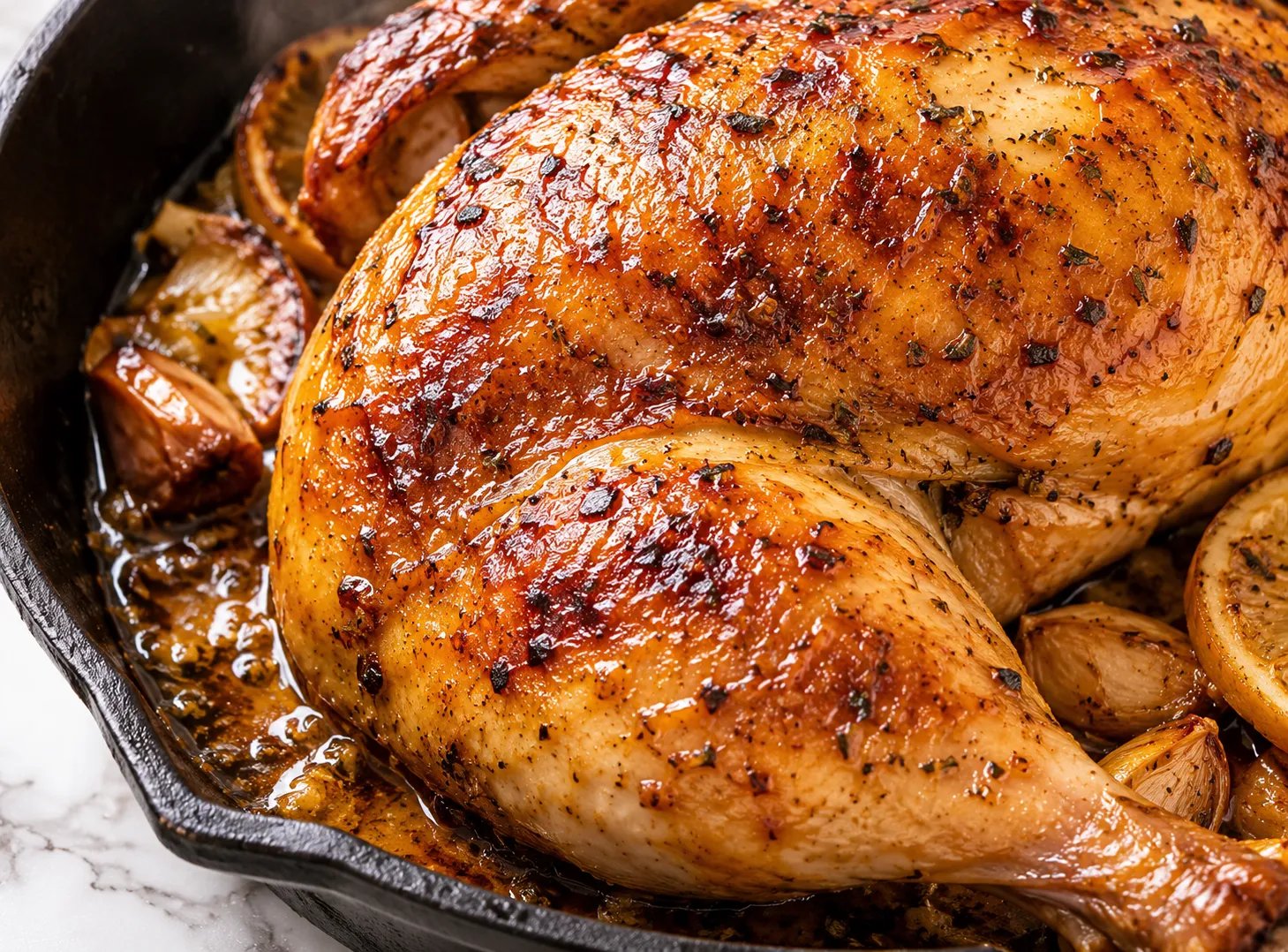
- Cast iron holds heat very well and produces consistent browning on the underside of the chicken. If you have one large enough, it is the better option over a standard roasting pan.
- Salting the chicken overnight uncovered in the refrigerator is the single most impactful step for skin texture and seasoning depth. It is the difference between a good result and a great one.
- The vegetables at the bottom of the pan can be eaten as a side, pureed into a rough sauce, or simply discarded after straining the drippings.
- For a cleaner presentation, strain the drippings through a fine mesh sieve, skim the fat if you like, and serve it alongside the carved chicken as a natural jus.
This lemon herb roasted chicken recipe earns its place in regular rotation because it is genuinely reliable. The method is not complicated, the ingredients are affordable and easy to source, and the results hold up every time. Once you understand how the herb butter works under the skin, why the high-heat start matters, and how important the resting step is, you have a complete technique you can use for the rest of your life. It works on a Tuesday night when you want something real without a lot of fuss. It works on a Sunday when you want the kitchen to smell good and the table to feel like something was made with care. The crispy skin, the herb-forward drippings, and the tender meat make this worth every minute of preparation. Get comfortable with it once and you will not need another roasted chicken recipe again.