
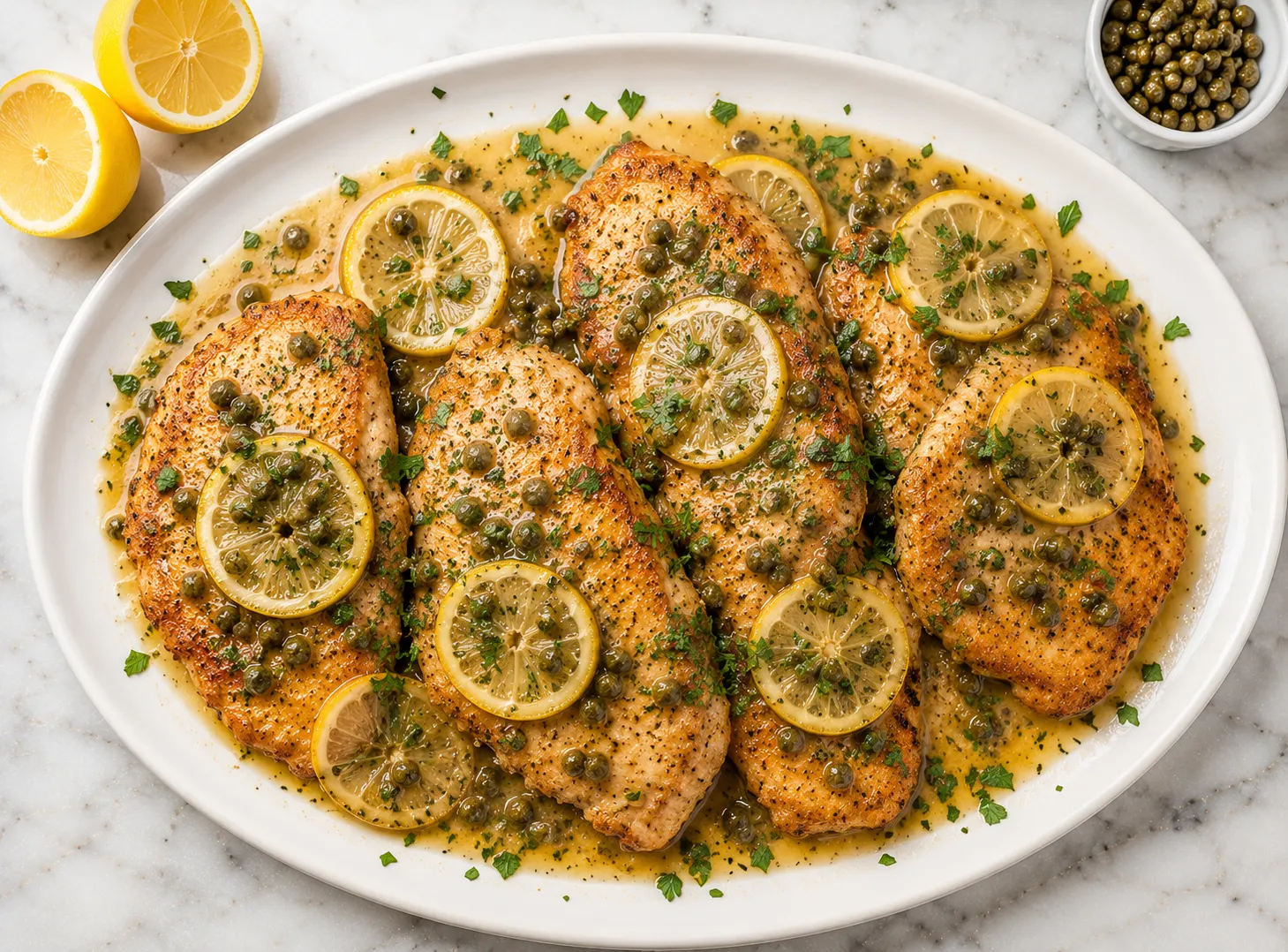
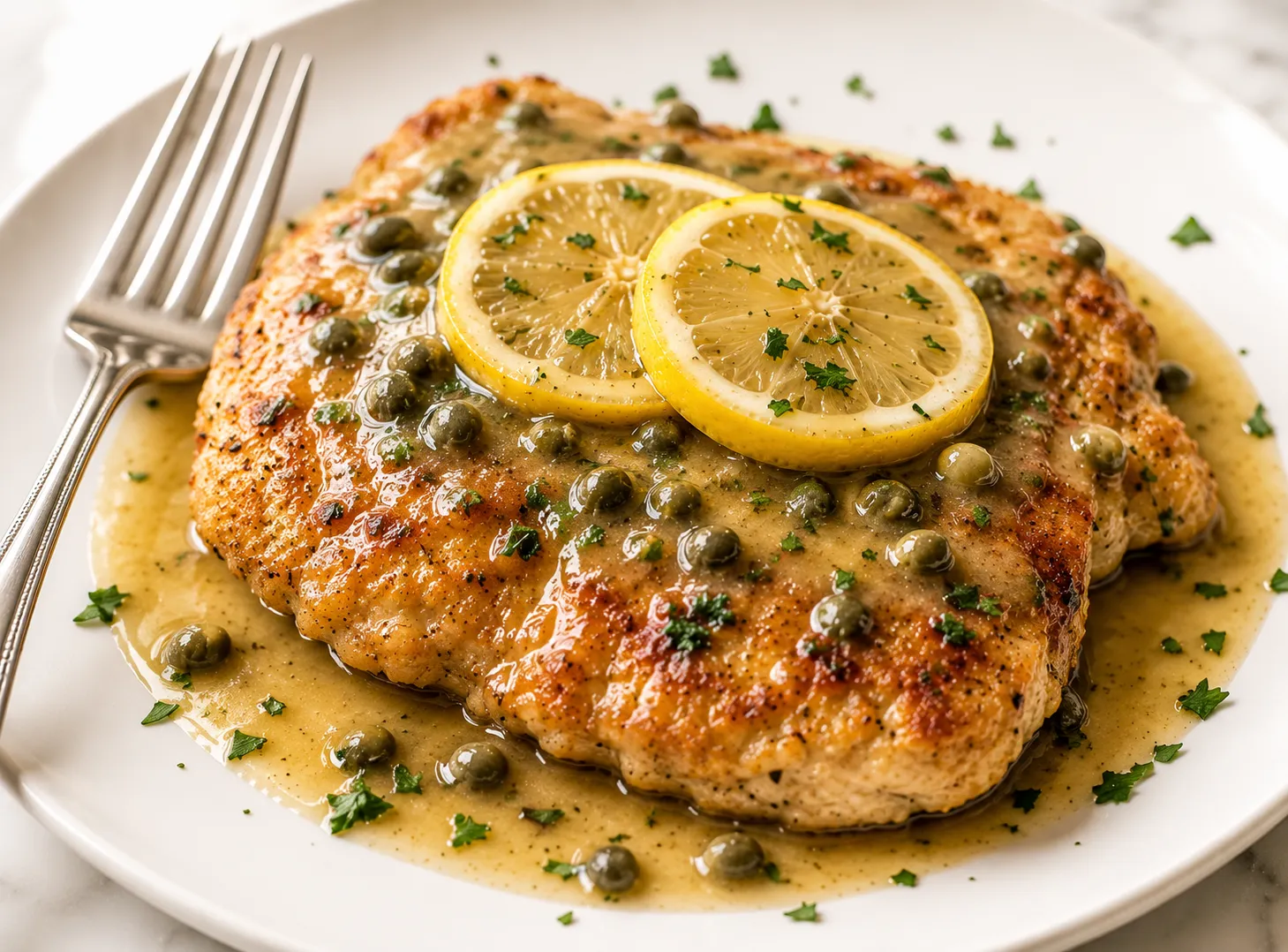
This chicken piccata recipe is one of the most reliable weeknight meals you can make. Thin chicken cutlets cook in minutes, and the sauce, built from butter, fresh lemon juice, capers, and a splash of white wine, comes together in the same pan while the chicken rests. No complicated steps, no long ingredient list. It tastes sharp, rich, and fresh all at once. The whole thing is on the table in about 30 minutes, and it looks and tastes like something you ordered at a proper Italian-American restaurant. Worth learning once and cooking forever.
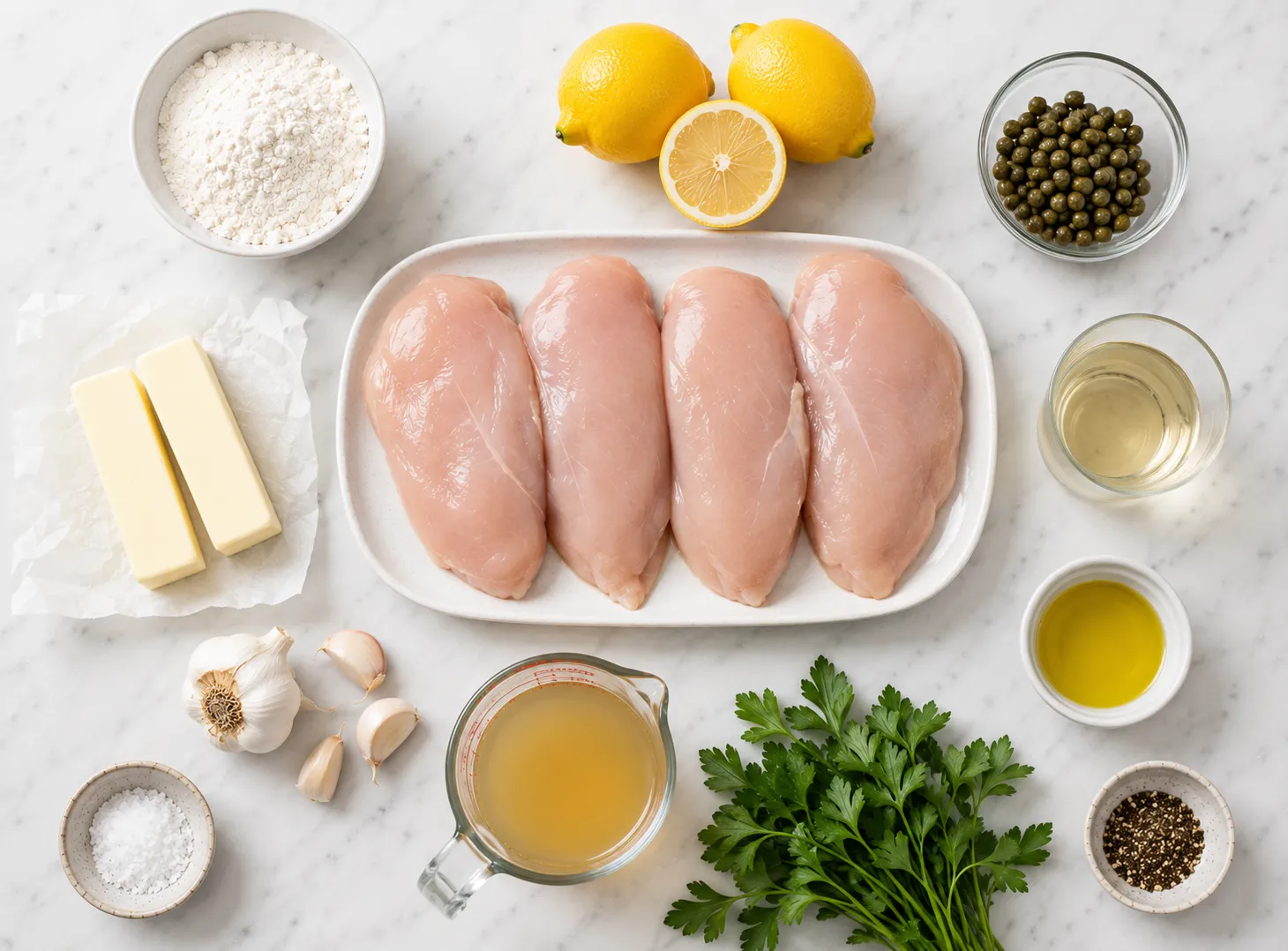
- 4 boneless, skinless chicken breasts , About 6 oz each. Pound to even 1/4-inch thickness.
- salt and black pepper , To taste. Season both sides generously.
- 0.5 cup all-purpose flour , For dredging. Shake off excess before cooking.
- 2 tablespoons olive oil
- 2 tablespoons unsalted butter
- 3 tablespoons unsalted butter , Divided. Use cold butter at the end for a glossy sauce.
- 3 cloves garlic , Minced.
- 0.5 cup dry white wine , Pinot Grigio or Sauvignon Blanc. Can substitute low-sodium chicken broth.
- 0.5 cup fresh lemon juice , About 3 lemons. Fresh only. Bottled juice will taste flat.
- 0.5 cup low-sodium chicken broth
- 3 tablespoons capers , Drained and rinsed to reduce excess brine.
- 2 tablespoons fresh flat-leaf parsley , Chopped. For finishing.
- lemon slices , For serving.
- Large skillet or saute pan, 12-inch recommended
- Meat mallet or rolling pin
- Shallow bowl or plate for dredging
- Tongs or fish spatula
- Cutting board and sharp knife
- Zester or fine grater
- Measuring spoons and cups
- Pound the chicken thin, season well, and dredge in flour.
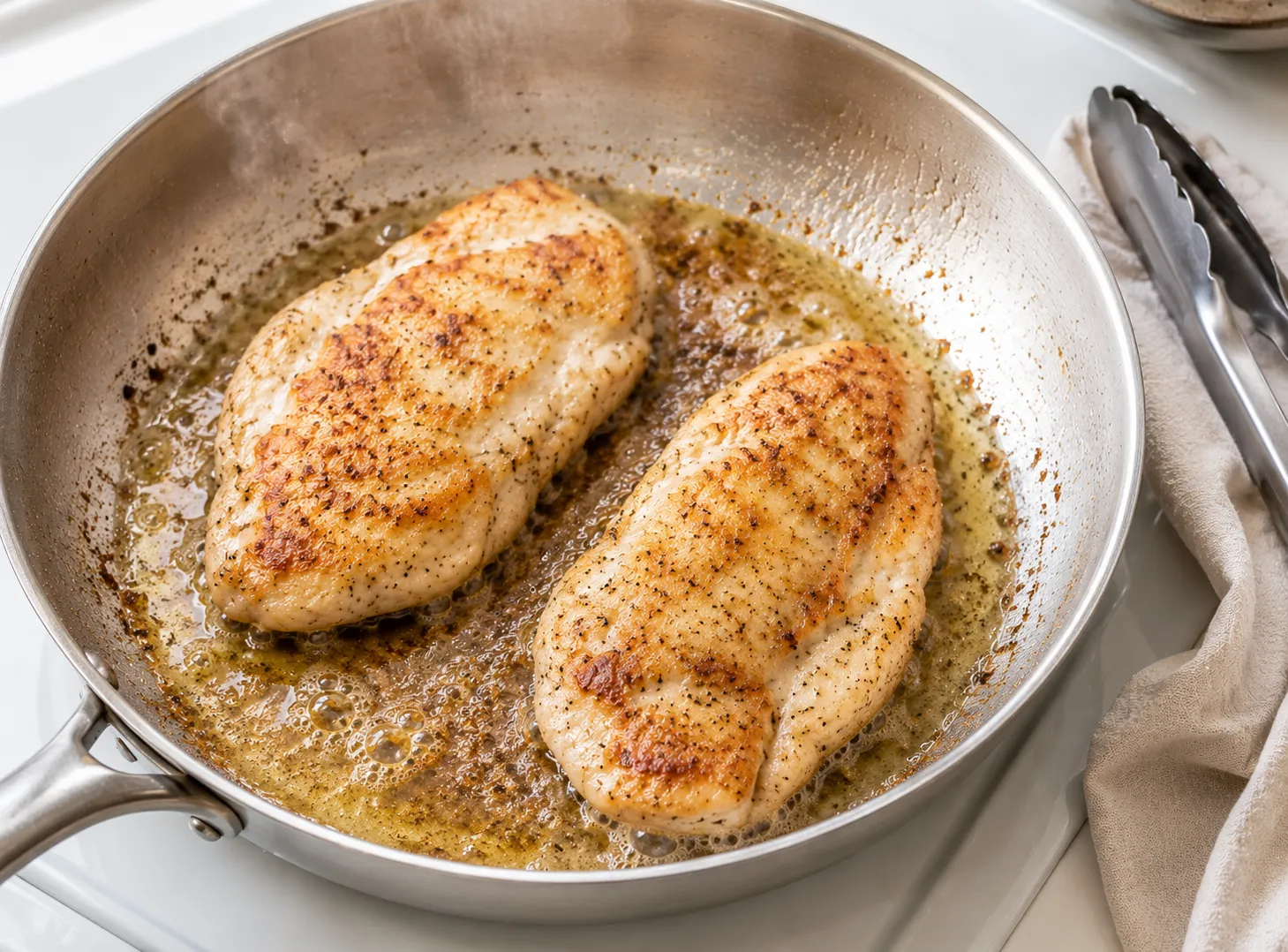
- Sear in oil and butter until golden on both sides.
- Remove chicken and build the sauce in the same pan.
- Return chicken to the pan and finish cooking in the sauce.
- Plate and top with parsley and lemon slices.
- Place each chicken breast between two sheets of plastic wrap or inside a zip-lock bag. Pound to an even 1/4-inch thickness using a meat mallet.
- Season both sides of each cutlet generously with salt and black pepper.
- Add the flour to a shallow bowl. Dredge each piece of chicken through the flour and shake off any excess. Set aside on a clean plate.
- Heat 2 tablespoons of olive oil and 2 tablespoons of butter in a large skillet over medium-high heat.
- Once the butter is melted and the pan is hot, add the chicken cutlets in a single layer. Work in batches if needed. Do not crowd the pan.
- Cook for 3 to 4 minutes on the first side without moving the chicken. You want a deep golden crust to develop.
- Flip the cutlets and cook the second side for 3 minutes, until cooked through to an internal temperature of 165 degrees F.
- Transfer the chicken to a plate and tent loosely with foil to keep warm.
- Reduce the heat to medium. Add 1 tablespoon of butter to the same pan.
- Add the minced garlic and cook for 30 seconds, stirring constantly, until fragrant.
- Pour in the white wine. Scrape up any browned bits from the bottom of the pan using a wooden spoon.
- Let the wine reduce by half, about 2 minutes.
- Add the chicken broth and fresh lemon juice. Stir to combine.
- Simmer the sauce for 3 to 4 minutes until it reduces slightly and coats a spoon lightly.
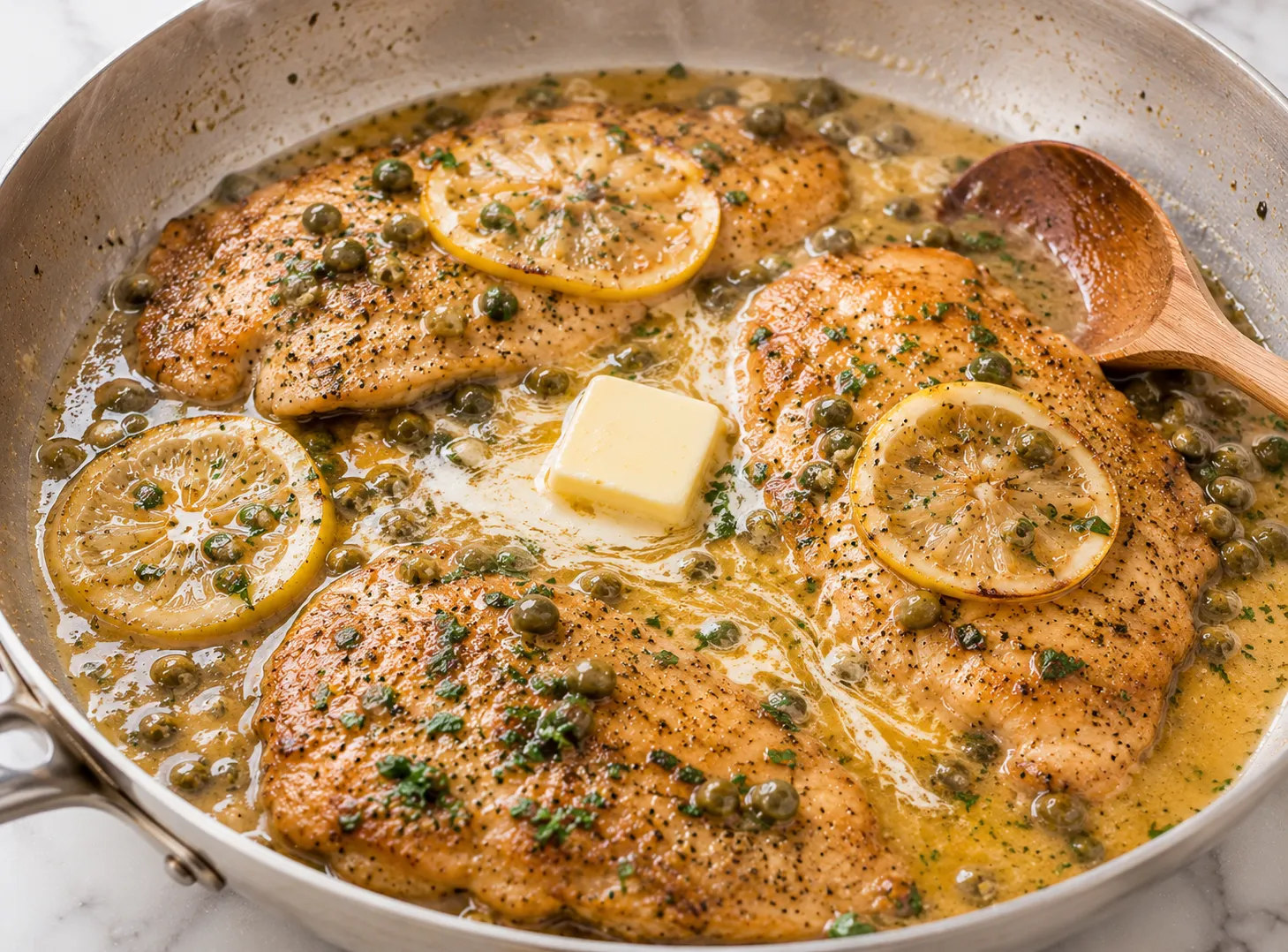
- Stir in the capers and the remaining 2 tablespoons of cold butter. Swirl the pan or whisk until the butter melts fully into the sauce and it looks glossy.
- Return the chicken cutlets to the pan and spoon the sauce over the top.
- Cook together for 1 to 2 minutes so the chicken absorbs the sauce.
- Remove from heat. Scatter fresh parsley over the top and serve immediately with lemon slices.
- Pound the chicken to an even thickness. Uneven cutlets cook unevenly, one end dries out before the other is done.
- Use fresh lemon juice only. Bottled juice tastes flat and slightly off in a pan sauce like this.
- Pat the chicken dry before dredging. Surface moisture causes steaming instead of searing.
- Do not skip the wine. It adds depth that broth alone cannot match. Use something you would actually drink.
- Add cold butter at the end. It creates a smooth, creamy sauce rather than a greasy one.
- Work in batches if your pan is not large enough. Crowding drops the temperature and prevents proper browning.
- Rinse the capers before adding them. This keeps the salt level balanced.
- No wine on hand: Replace with equal chicken broth and add an extra teaspoon of lemon juice for brightness.
- Gluten-free: Use a 1:1 gluten-free flour blend in place of all-purpose flour.
- Dairy-free: A good vegan butter works here. The sauce will be slightly less rich but still comes together.
- Pre-sliced cutlets: Buy thin-cut chicken breasts from the store to skip the pounding step.
- Veal piccata: Substitute veal scallopini and reduce the cook time slightly.
- No capers: Use finely chopped green olives for a similar briny quality.
- Richer sauce: Stir in 2 tablespoons of heavy cream at the finish for a creamier version.
- Buttered pasta such as linguine, angel hair, or spaghetti
- Creamy mashed potatoes
- Steamed or roasted asparagus
- Sauteed spinach with garlic
- Crusty sourdough bread
- Simple green salad with a light vinaigrette
- Roasted broccolini with lemon
- Cauliflower rice for a lower-carb option
- Refrigerator: Store in an airtight container with the sauce for up to 3 days. Keeping the sauce with the chicken prevents it from drying out.
- Freezer: Freeze the chicken without the sauce if possible. The lemon-butter sauce tends to separate after thawing.
- Stovetop reheating: Place chicken and sauce in a skillet over low heat. Add a splash of chicken broth, cover, and heat for 5 to 7 minutes.
- Microwave reheating: Use 50 percent power. Heat in 60-second intervals, covered, until just warm through.
- Do not boil when reheating. Gentle heat keeps the sauce smooth and the chicken tender.
Yes. Store the chicken and sauce separately. Reheat the sauce gently and warm the chicken in it just before serving. Cooking it ahead and reheating together also works, just keep the heat low.
In Italian cooking, piccata refers to a preparation method where meat is sliced thin, sauteed, and served with a lemon-butter sauce. The word relates to a sharp or pointed quality, which fits the bright, acidic flavor of the dish.
Yes. Boneless, skinless thighs work well. Pound them to an even thickness and add a minute or two to the cook time. Check for an internal temperature of 165 degrees F before serving.
Let it reduce a bit longer. Remove the chicken from the pan and simmer the sauce alone for another 2 minutes. Adding too much broth or wine is the most common cause of a thin sauce.
Capers give piccata its signature briny, slightly sharp flavor. Leaving them out changes the dish noticeably. If you must skip them, sliced green olives work as a rough substitute.
Fresh juice is strongly recommended. This sauce is built around lemon, and bottled juice has a flat, slightly chemical flavor that shows through clearly in a simple pan sauce.
- One large lemon gives about 3 tablespoons of juice. Buy 3 lemons to be safe.
- For the wine, Pinot Grigio and Sauvignon Blanc both work well. Avoid anything labeled cooking wine as it contains added sodium and a sharp artificial edge.
- If the sauce breaks and looks greasy, remove from heat and whisk in a teaspoon of cold water. It usually comes back together.
- The flour on the chicken also helps the sauce thicken slightly as the chicken rests in it. Do not skip the dredging step.
- This recipe doubles well. Use two pans at once to keep the searing temperature high.
- For an extra glossy finish, swirl in one final small pat of cold butter just before plating.
Chicken piccata is the kind of recipe that earns a permanent spot in your weeknight rotation. Once you make it a couple of times, the sauce comes together almost on autopilot. The technique is simple: get the pan hot, build the sauce from the drippings, finish with cold butter. That is really all there is to it. What makes this chicken piccata recipe worth coming back to is how much it delivers for the time it takes. Thirty minutes, one pan, and a short list of ingredients that most people already keep on hand. The lemon keeps it bright, the capers keep it interesting, and the butter ties everything together into a sauce that makes you want to drag bread through the pan. Learn it once and you will stop needing to look it up.