
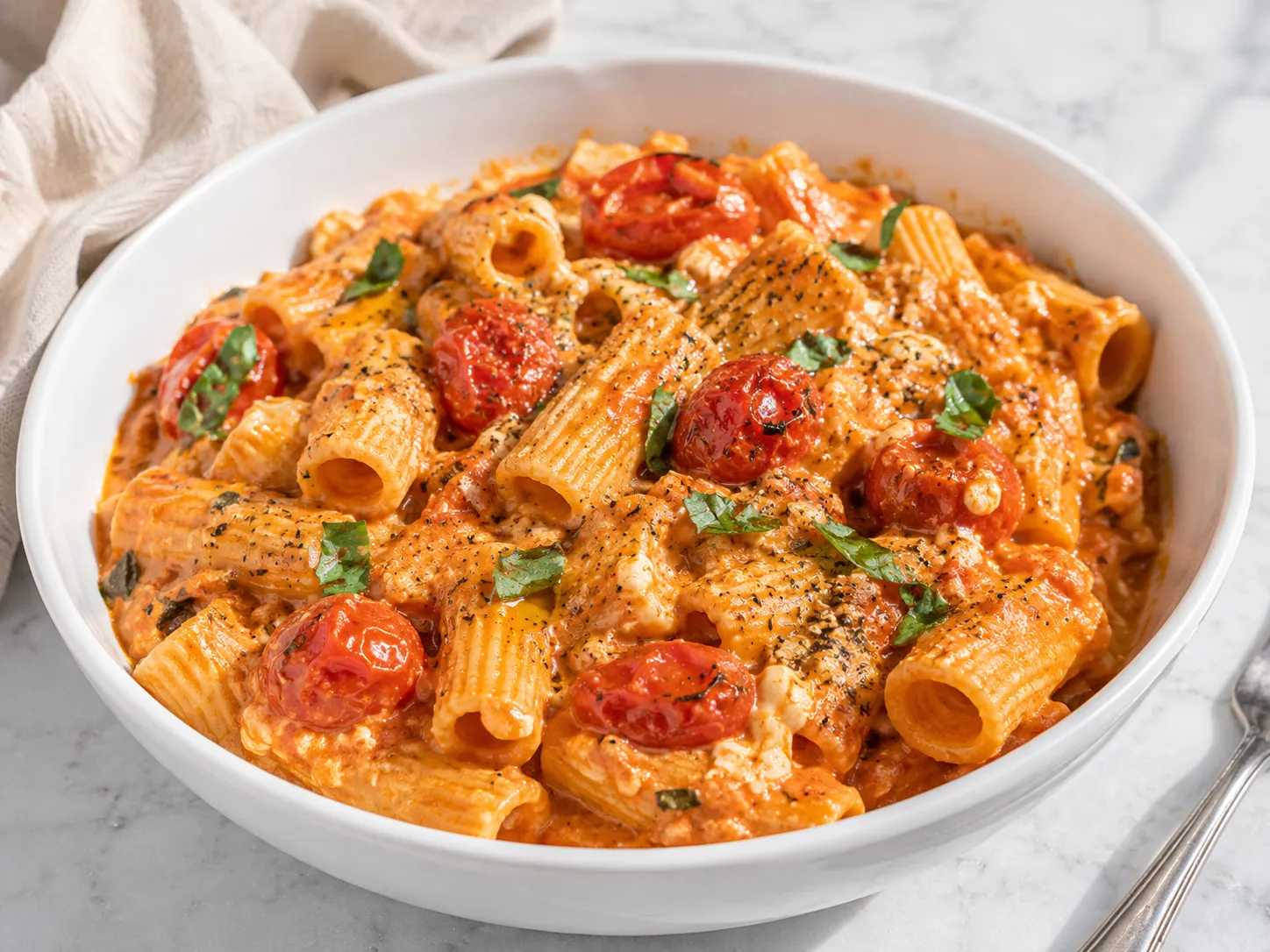
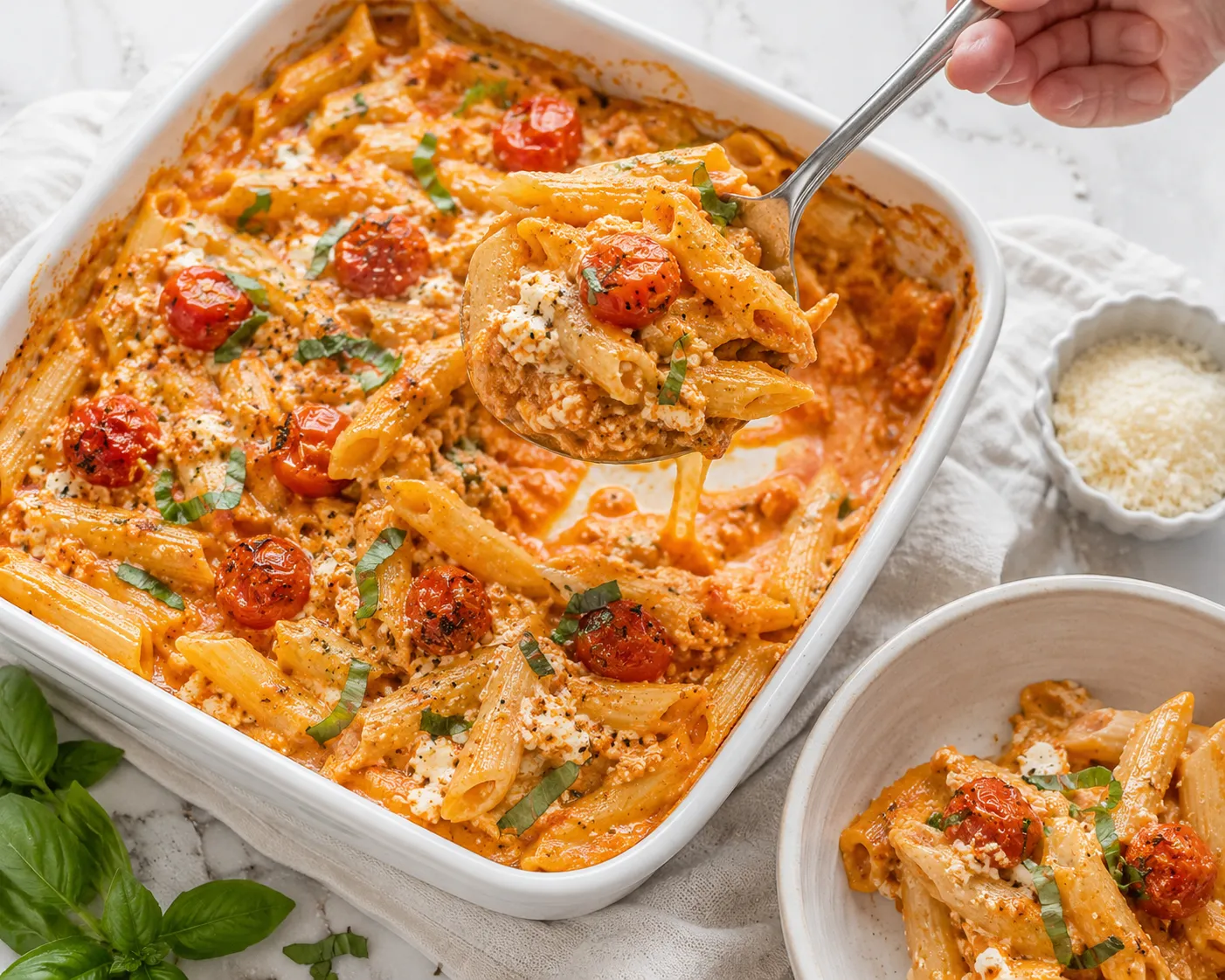
Baked feta pasta became one of those recipes everyone was making at the same time, and it earned that attention honestly. A block of feta bakes next to a pan of cherry tomatoes until both turn soft, then you mash everything into a sauce that clings to hot pasta with barely any effort. This version keeps the method simple and skips anything unnecessary, so you get a rich, tangy dinner in under an hour using one baking dish and one pot. It works on a night when you are too tired to cook properly, and it works when friends are coming over and you want something that tastes like more effort went into it than actually did.
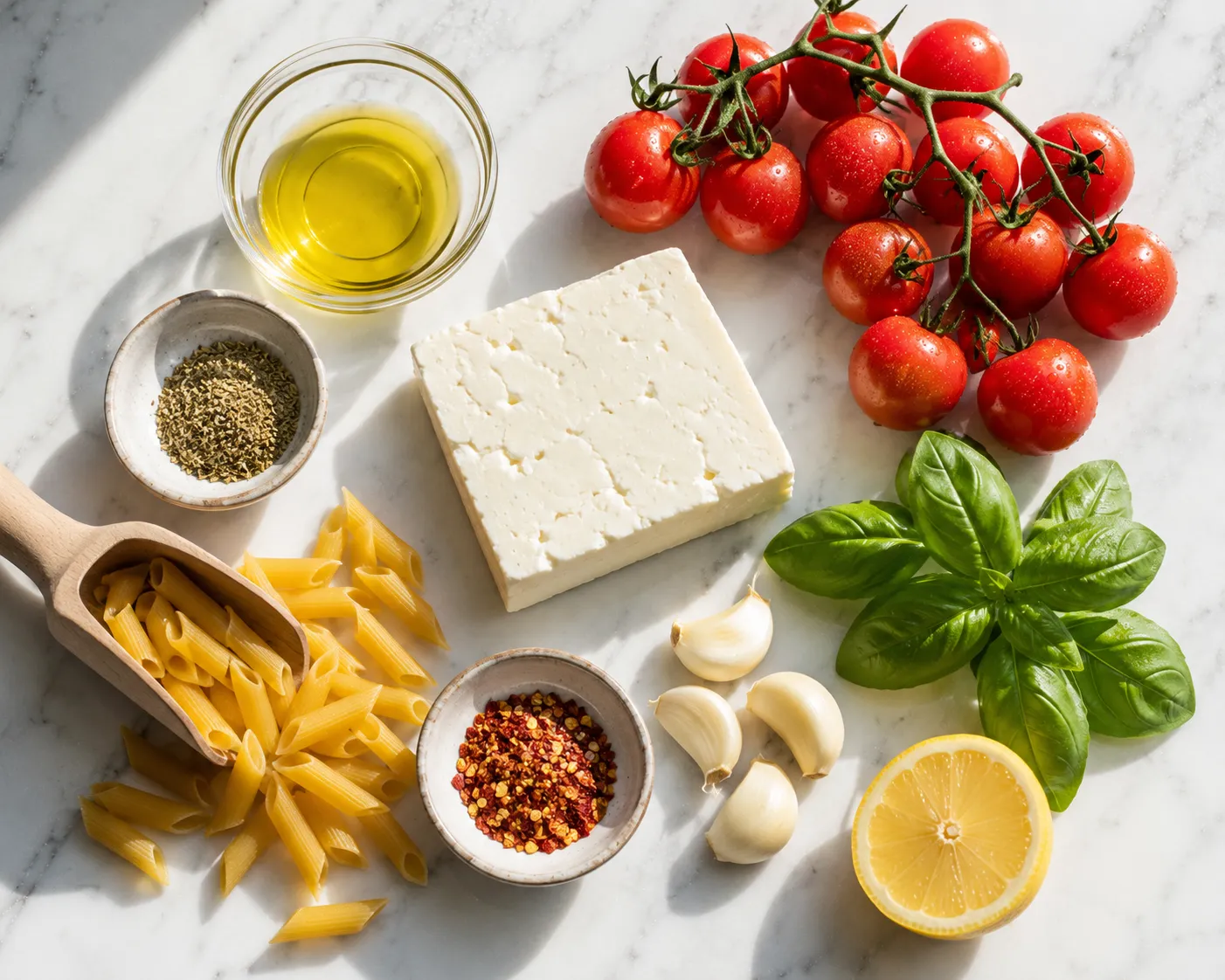
- 1 block (about 7 to 8 ounces) feta cheese , Buy it whole. Pre crumbled feta will not soften the same way.
- 3 cups cherry or grape tomatoes , Smaller tomatoes blister and break down faster than large ones.
- 4 tablespoons olive oil , Plus a little extra for drizzling over the feta.
- 4 cloves garlic , Peeled and left whole so they turn soft and mashable in the oven.
- 1 teaspoon dried oregano
- 0.5 teaspoon red pepper flakes , Adjust to taste.
- salt and black pepper , To taste.
- 12 oz short pasta such as penne, fusilli, or rigatoni
- salt , For the pasta water.
- 0.25 cup reserved pasta water , Scoop this out before draining.
- fresh basil leaves , Torn, added at the end.
- lemon juice , A small squeeze, optional.
- grated parmesan , For serving.
- handful baby spinach , Stir in while the pasta is still hot.
- 9 by 13 inch baking dish
- Large pot for boiling pasta
- Colander
- Wooden spoon or silicone spatula
- Measuring cups and spoons
- Sharp knife and cutting board
- Fork, for mashing
- Toss tomatoes, garlic, and olive oil in a baking dish.
- Nestle the whole feta block in the center and season everything.
- Bake until the tomatoes collapse and the feta turns soft and golden.
- Mash it all together into a chunky sauce.
- Toss with hot pasta and reserved pasta water until glossy.
- Preheat your oven to 400°F, or 200°C, so it has time to fully heat while you prep the tomatoes and garlic.
- Add the cherry tomatoes and whole garlic cloves to a 9 by 13 inch baking dish, spreading them out in a single layer.
- Drizzle with olive oil, then sprinkle in the oregano, red pepper flakes, salt, and black pepper. Toss everything together with your hands or a spoon until it is evenly coated.
- Push the tomatoes to the edges of the dish and set the whole feta block down in the middle, so it has room on all sides.
- Drizzle a little extra olive oil directly over the top of the feta block. This helps it soften evenly instead of drying out on top.
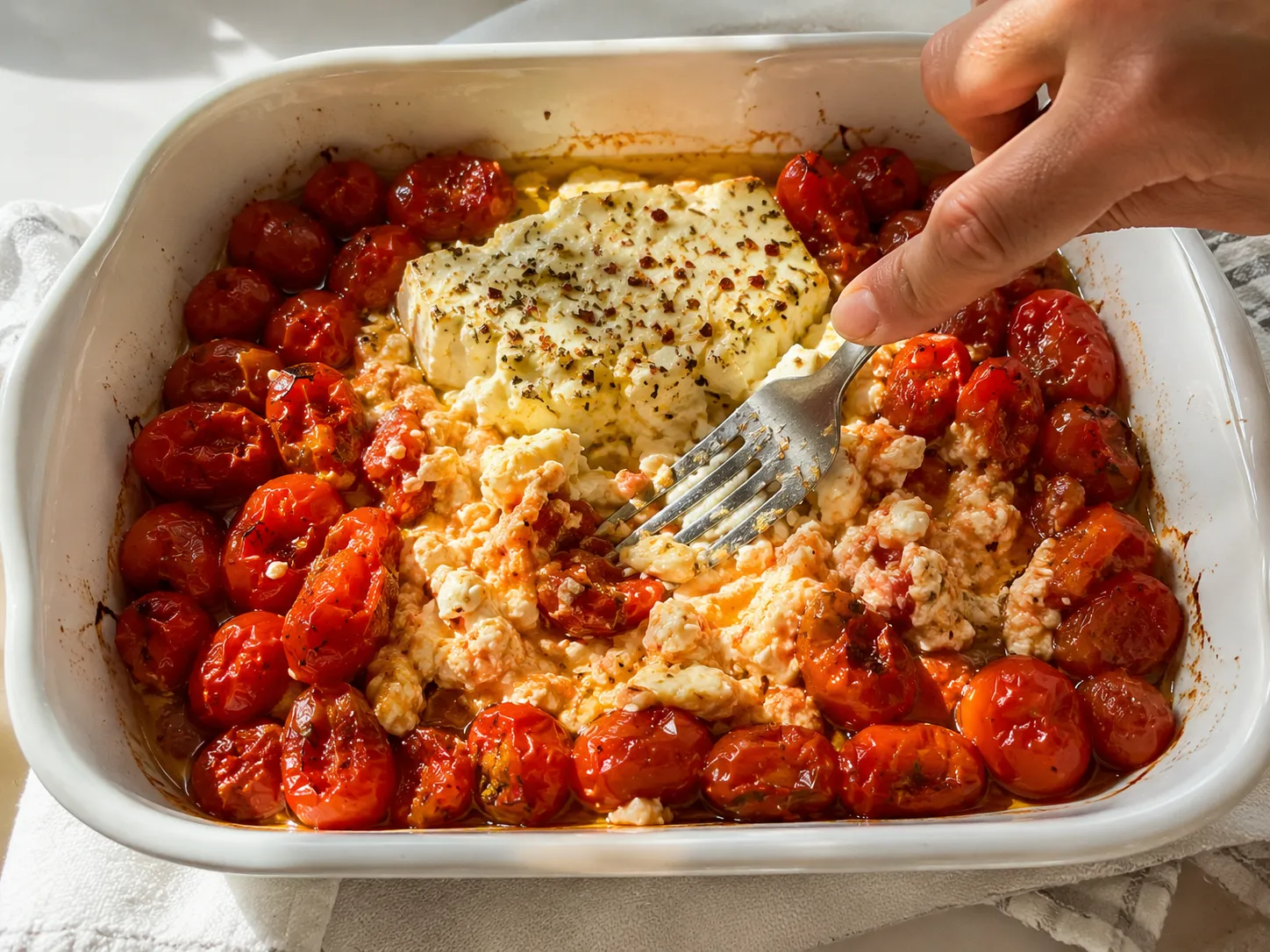
- Bake for 30 to 35 minutes. You are looking for tomatoes that have blistered and started to burst open, and feta that has turned soft with light golden edges.
- While the dish is in the oven, bring a large pot of salted water to a rolling boil.
- Cook the pasta until it is just al dente, using the package timing as a rough guide rather than an exact rule.
- Right before draining the pasta, scoop out about a quarter cup of the starchy cooking water and set it aside. You will need this to bring the sauce together later.
- Drain the pasta in a colander and set it aside for a moment while you finish the sauce.
- Pull the baking dish out of the oven once the tomatoes look collapsed and the feta looks soft and lightly colored.
- Use a fork to mash the softened garlic cloves first, then work the feta and tomatoes into them until the mixture looks chunky and saucy rather than smooth and uniform.
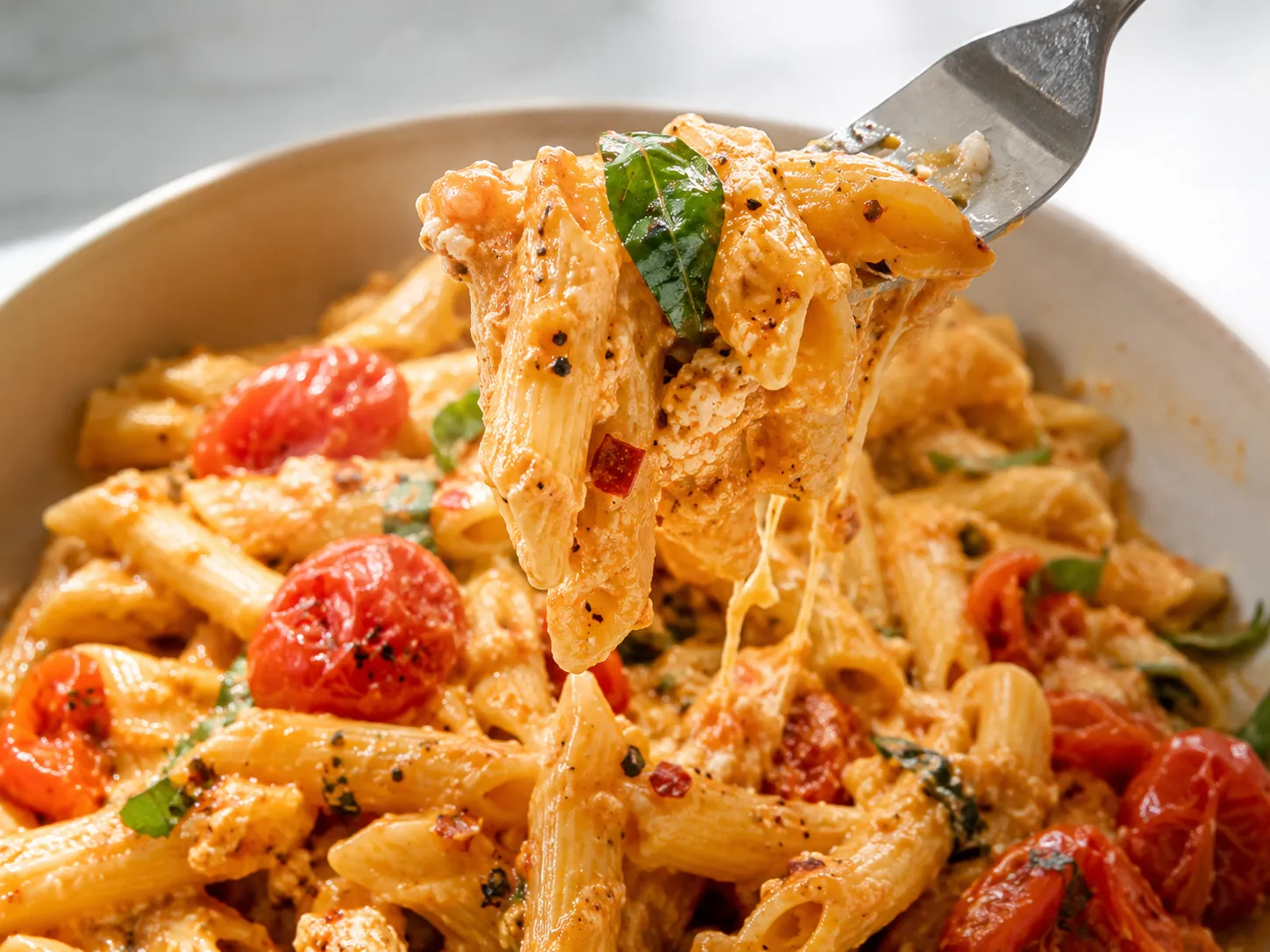
- Add the drained pasta straight into the baking dish, right on top of the mashed sauce.
- Pour in the reserved pasta water a little at a time, stirring as you go, until the sauce coats every piece of pasta and looks glossy rather than dry or clumpy.
- Taste the pasta and adjust the seasoning, adding more salt, pepper, or red pepper flakes if it needs a little more punch.
- Stir in torn basil leaves or a small squeeze of lemon juice at the very end, if you are using either one, so the flavor stays bright.
- Serve the pasta right away, while it is still hot, topped with extra basil or a scattering of grated parmesan.
- Buy feta in a solid block rather than the pre crumbled kind. Crumbled feta tends to dry out in the oven instead of softening into a proper sauce, so the block version is worth seeking out.
- Stick to small tomatoes, like cherry or grape varieties, since they collapse and release their juices much faster than larger tomatoes would.
- Save more pasta water than you think you will need. It is the easiest way to loosen up the sauce at the end without reaching for cream, butter, or extra oil.
- Mash the garlic and feta together while the dish is still hot, right out of the oven. Everything blends far more smoothly this way than it will once it starts to cool.
- Add the cooked pasta directly into the baking dish instead of transferring the sauce to another pot. It keeps more of the sauce in the mix and saves you a dish to wash afterward.
- Do not rush the bake time. If the tomatoes have not fully collapsed yet, give the dish another five minutes rather than pulling it early.
- Skipping the reserved pasta water. Without it, the sauce turns thick and clumpy instead of smooth and glossy.
- Using low fat feta. It does not soften or melt the way full fat feta does, and it can taste slightly chalky once baked.
- Overcooking the pasta before it goes into the sauce. Aim for al dente, since the pasta keeps cooking a little more once it is mixed with the hot sauce.
- Cutting the feta block into smaller pieces before baking. Keeping it whole helps it soften evenly all the way through instead of drying out around the edges.
- Adding fresh basil too early. Basil wilts and loses its flavor quickly if it goes into the oven instead of being stirred in right before serving.
- Crowding the baking dish with too many tomatoes. Give them enough room to spread out so they blister properly instead of steaming.
- Swap the cherry tomatoes for sun dried tomatoes packed in oil if you want a deeper, more concentrated flavor throughout the sauce.
- Use goat cheese in place of feta for a tangier and slightly creamier result.
- Stir in cooked Italian sausage or shredded rotisserie chicken to turn this into a heartier, more filling meal.
- Add a handful of baby spinach or arugula at the very end, letting the residual heat wilt it slightly.
- Use gluten free pasta if that is what you need. The sauce method works exactly the same regardless of the pasta you choose.
- A small pinch of smoked paprika added along with the oregano gives the dish a subtle smoky background note without changing much else.
- Warm crusty bread or garlic bread, for scooping up any extra sauce left in the dish
- A simple green salad with a lemon vinaigrette to balance out the richness
- Roasted or grilled vegetables, like zucchini, asparagus, or bell peppers
- A light white wine, such as a Sauvignon Blanc, if you are serving this for guests
- Grilled shrimp or chicken on the side, if you would like more protein on the plate
- Store any leftovers in an airtight container in the refrigerator for up to 4 days.
- Reheat gently on the stovetop over low heat, adding a small splash of water or olive oil to help loosen the sauce back up.
- If you are using a microwave, heat in short 30 second bursts, stirring in between, so the pasta does not dry out or turn rubbery.
- This dish is not a great candidate for freezing, since the feta based sauce tends to separate once it thaws.
It is not the best choice here. Crumbled feta tends to dry out quickly in the oven instead of softening into a creamy, spreadable sauce, so a solid block gives you noticeably better results and is worth the extra effort of seeking it out.
You most likely need a bit more of the reserved pasta water. Add it back in gradually, a tablespoon at a time, stirring well between additions, until the sauce loosens up to the consistency you are after.
Yes, to an extent. You can bake the feta and tomatoes ahead of time and refrigerate them, then mash everything together and toss with freshly cooked pasta right before you plan to eat, since the pasta tastes best when it is mixed in at the last minute.
Not really, no. The red pepper flakes give it a mild kick rather than real heat, and you can leave them out entirely, or reduce the amount, if you would rather keep the dish milder for kids or spice sensitive eaters.
Any short pasta shape works well here. Penne, fusilli, and rigatoni all hold onto the sauce nicely because of their ridges and curves, which is really the main thing you want from your pasta choice in this recipe.
Fresh parsley makes a fine substitute if that is what you have on hand. You can also skip the fresh herb altogether and simply finish the dish with a drizzle of good olive oil instead.
- The feta block is ready when it looks soft and slightly golden on top, not fully melted flat into the dish.
- The garlic cloves should be soft enough to mash easily with the back of a fork once they come out of the oven.
- You can adjust the ratio of tomatoes to feta slightly based on your own preference. More tomatoes will give you a saucier, juicier dish overall.
- This recipe doubles well if you are cooking for a larger group. Use a bigger baking dish and add a few extra minutes to the bake time so everything has room to cook through properly.
- Leftover sauce, before it is mixed with pasta, keeps well in the fridge for a couple of days if you want to make extra ahead of time.
Baked feta pasta earns its place as a regular weeknight dinner, not just something you make once because it went viral online. The method barely changes each time you make it: one dish goes into the oven, a pot of pasta cooks alongside it, and a few minutes of mashing at the end turns simple ingredients into something that tastes far more involved than it actually is. It suits a beginner cook who wants a reliable win, and it works just as well when you have people over and want dinner to feel a little more put together. Once you have made it the first time, you will find yourself reaching for this one without needing to check the recipe again.