
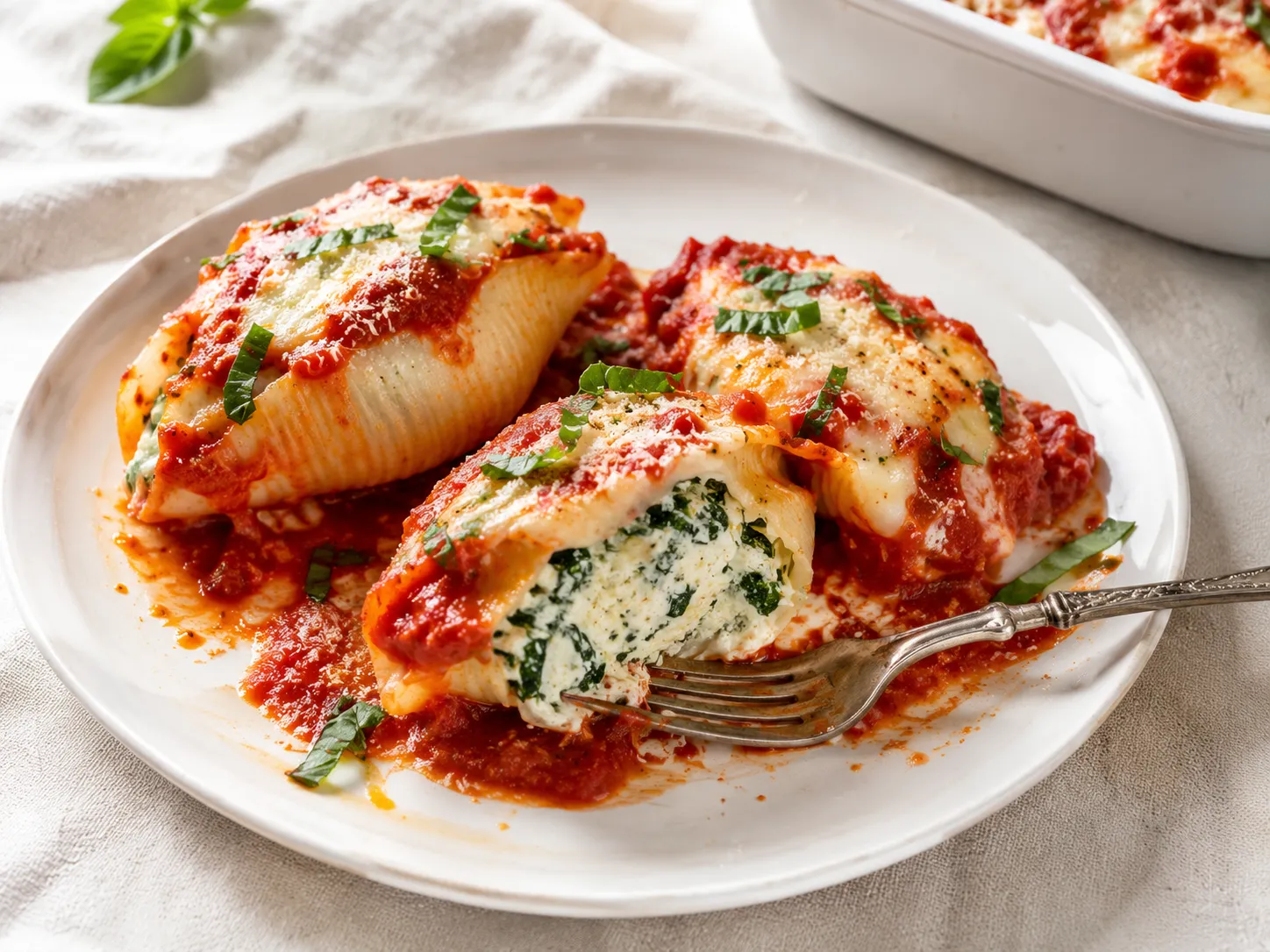
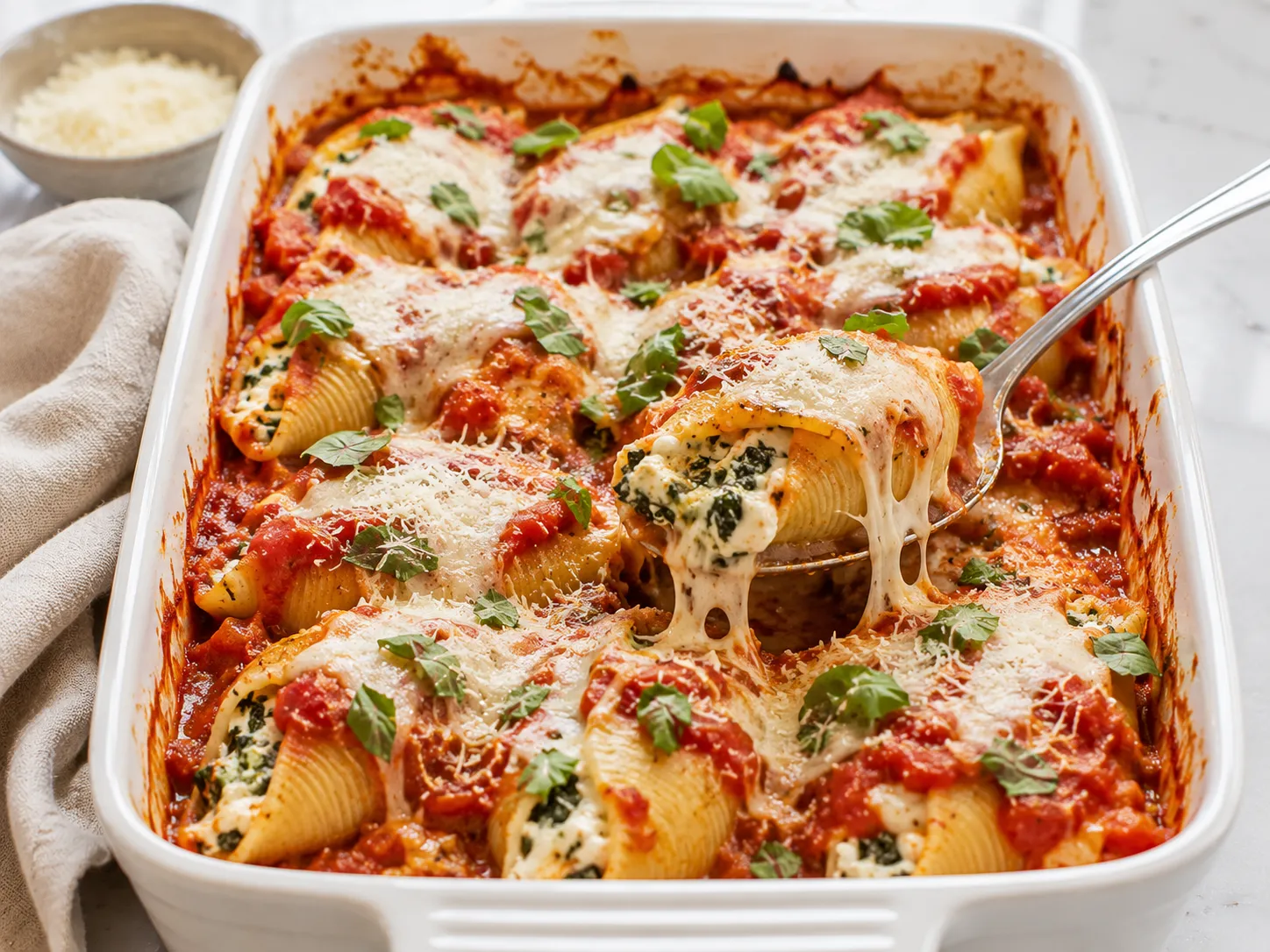
This spinach ricotta stuffed shells recipe turns simple pantry ingredients into a dinner people actually ask for again. Jumbo pasta shells get packed with a garlicky ricotta and spinach filling, then baked under marinara sauce and melted mozzarella until the top turns golden at the edges. It works on a weeknight because the filling comes together while the pasta boils, and it works for guests because it looks like far more effort than it actually takes. You can assemble the whole tray a day ahead, which means dinner is mostly done before your kitchen gets busy at all.
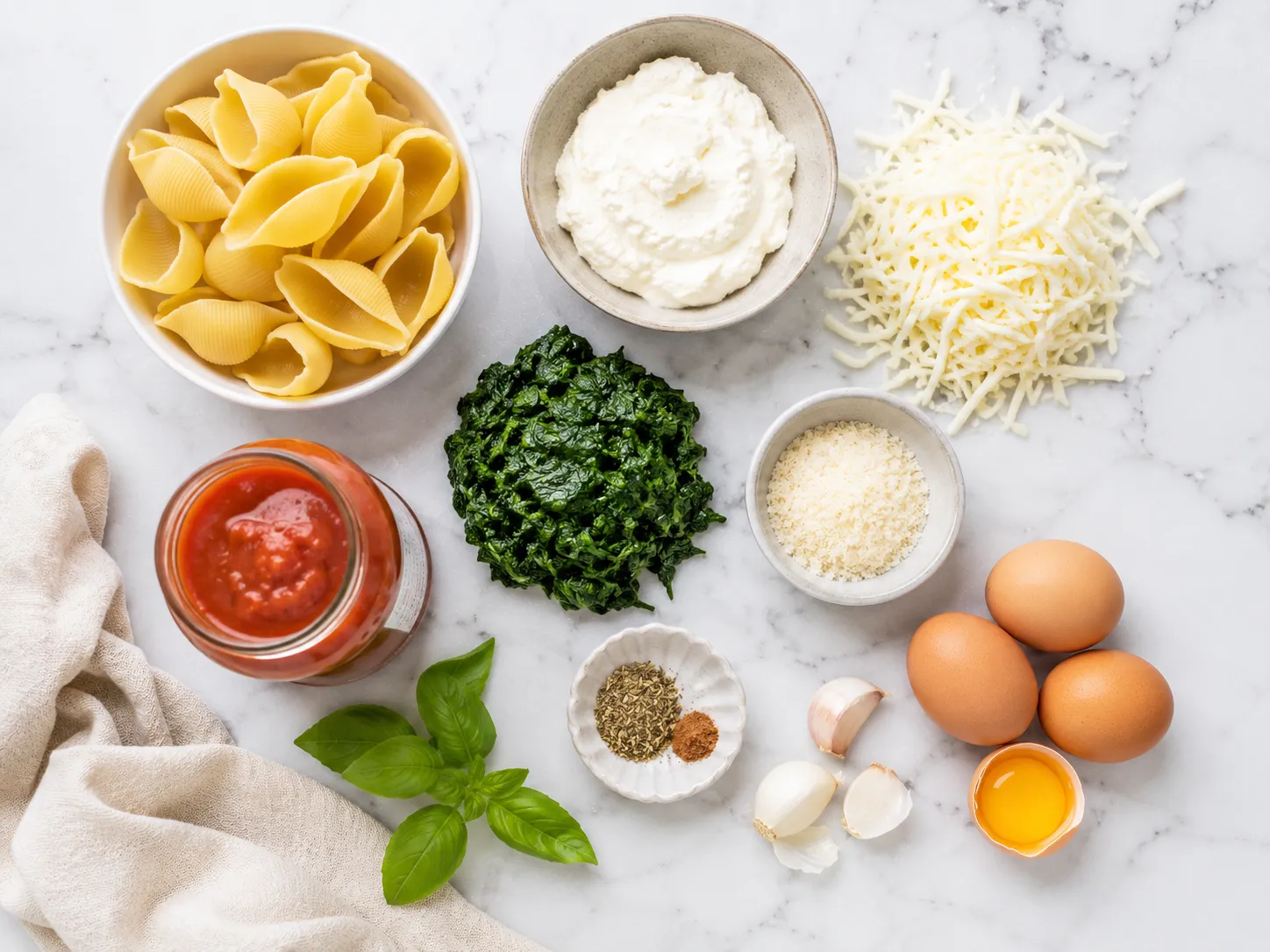
- 20 jumbo pasta shells , About three quarters of a 12 ounce box
- water , For boiling the pasta
- 1 tablespoon salt , For the pasta water
- 15 oz ricotta cheese , Whole milk ricotta gives the creamiest result
- 10 oz frozen spinach , Thawed and squeezed dry
- 1.5 cups shredded mozzarella , Divided
- 0.5 cup grated parmesan
- 1 large egg
- 3 cloves garlic , Minced
- 0.5 teaspoon Italian seasoning
- 0.25 teaspoon nutmeg
- salt and black pepper , To taste
- 3 cups marinara sauce
- fresh basil , For garnish
- extra parmesan , For topping
- Large stockpot
- Colander
- 9x13 inch baking dish
- Large mixing bowl
- Small skillet
- Box grater
- Spoon or piping bag for filling
- Aluminum foil
- Boil the shells until just shy of al dente.
- Mix ricotta, spinach, cheeses, egg, and seasonings.
- Stuff each shell generously with filling.
- Layer sauce, shells, and cheese in the baking dish.
- Bake covered, then uncovered, until bubbly and golden.
- Preheat the oven to 375°F, or 190°C, so it is fully heated by the time the shells are stuffed and ready to go in. Getting the oven up to temperature early saves you from waiting once the assembly work is done.
- Bring a large pot of salted water to a boil over high heat. Salting the water properly now is the only chance the pasta itself gets seasoned, so do not skip it.
- Add the jumbo pasta shells and cook them about two minutes short of the package instructions, since they will finish softening in the oven. Drain and rinse briefly under cool water so they stop cooking and do not stick together while you work through the stuffing step.
- Spread the drained shells out on a clean tray or baking sheet in a single layer while they cool slightly. Piling them in the colander for too long causes them to stick and tear when you try to separate them later.
- While the shells cook, squeeze the thawed spinach in a clean kitchen towel until no more liquid comes out. This step matters more than it looks, because wet spinach waters down the whole filling and leaves you with a runny, loose texture after baking.
- In a large bowl, combine the ricotta, squeezed spinach, one cup of the mozzarella, the parmesan, egg, minced garlic, Italian seasoning, and nutmeg. Season with salt and pepper, then mix until everything is evenly combined and no dry pockets of ricotta remain.
- Spread one cup of marinara sauce across the bottom of the baking dish, covering it fully so the shells do not stick or dry out while they bake. A thin, even layer is enough, you do not need it thick at this stage.
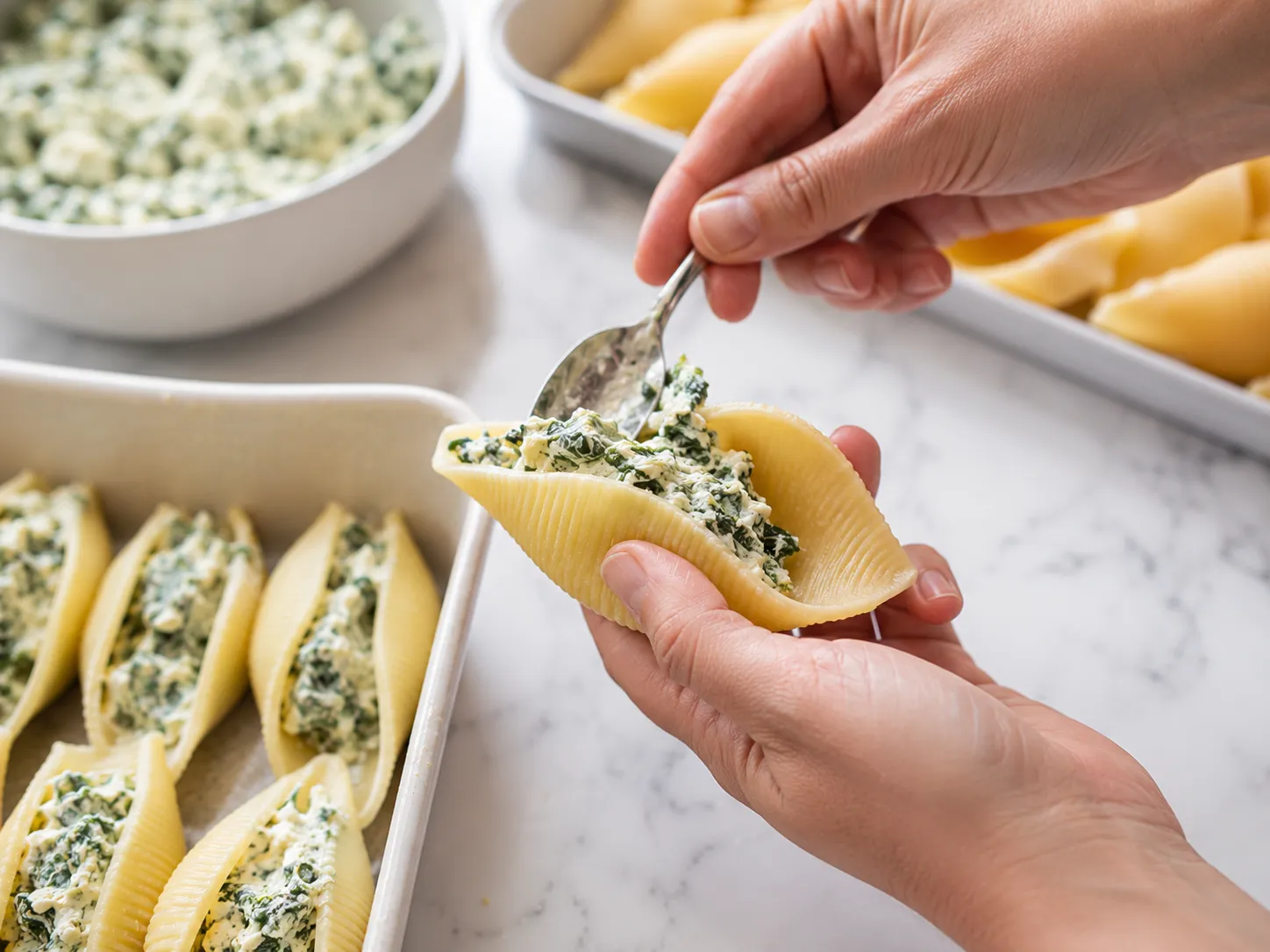
- Using a spoon or a piping bag, fill each cooked shell with about two tablespoons of the ricotta mixture. Avoid overstuffing, since too much filling can push out and spill over as the shells bake and expand slightly.
- Arrange the stuffed shells in the baking dish, open side up, placed close together in a single layer so they support each other and stay upright while baking.
- Spoon the remaining marinara sauce over the top of the shells, making sure each one gets at least some coverage so nothing dries out in the oven.
- Sprinkle the remaining mozzarella and a little extra parmesan evenly across the top of the dish, paying attention to the edges where cheese tends to run thin.
- Cover the dish tightly with foil and bake for 25 minutes so the filling heats through without the top drying out or the cheese browning too early.
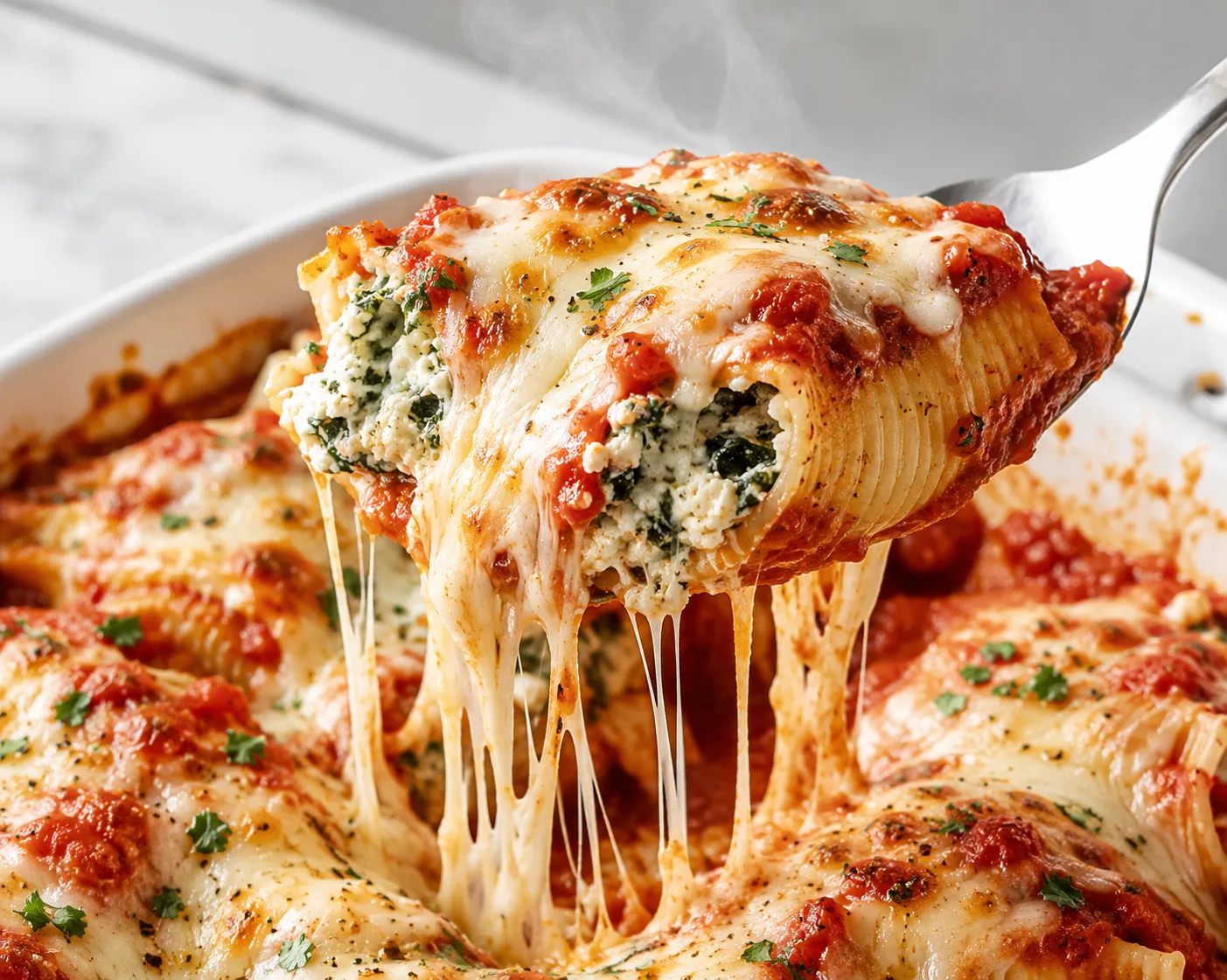
- Remove the foil and bake for another 10 minutes, until the cheese is fully melted and turning golden at the edges. Watch it during the last few minutes, since ovens vary and the cheese can go from golden to overly browned quickly.
- Let the dish rest for 10 minutes before serving. This gives the filling time to set so the shells hold together properly when you plate them instead of sliding apart.
- Garnish with fresh basil right before serving, tearing the leaves by hand rather than chopping them for a slightly rustic look.
- Boil a few extra shells, since a couple almost always tear during cooking no matter how careful you are.
- Squeeze the spinach really well. Excess water is the most common reason the filling ends up runny after baking.
- Whole milk ricotta gives a creamier filling than the low fat version, so use it if you have the option.
- Let the boiled shells sit for a few minutes before stuffing them, since hot shells tear more easily than ones that have cooled slightly.
- A piping bag, or a large zip top bag with the corner snipped off, fills the shells faster and cleaner than working with a spoon.
- Taste the filling before you stuff the shells. It is much easier to adjust the salt now than after everything is baked.
- If your marinara sauce seems thin, simmer it on the stove for a few minutes first so the finished dish does not turn watery.
- Grate your own mozzarella and parmesan instead of using pre shredded bags. Pre shredded cheese is coated to prevent clumping, and it does not melt as smoothly.
- Line up all your ingredients before you start boiling water. Stuffed shells move fast once the shells are drained, and having everything measured out ahead keeps the process calm.
- If you are feeding a crowd, this recipe doubles cleanly. Just use two baking dishes rather than one deep one, so the shells still bake evenly.
- Overcooking the shells before baking. They will turn mushy once the whole dish spends more time in the oven.
- Skipping the layer of sauce on the bottom of the dish. Without it, the shells tend to stick and dry out at the edges.
- Overfilling each shell. It makes them harder to close properly and messier to serve once plated.
- Baking uncovered the entire time. The filling needs that covered stretch to heat through evenly without drying out on top.
- Not letting the dish rest before serving. Cutting in too soon means the shells fall apart instead of holding their shape.
- Using cold ricotta straight from the fridge without letting it sit out for a few minutes first, since cold ricotta is harder to mix smoothly into the filling.
- Crowding the shells too tightly against the sides of the dish, which traps steam unevenly and leaves some shells softer than others.
- Using a watery, thin marinara straight from the jar without checking it first. A thin sauce spreads out and leaves the bottom of the dish soupy instead of saucy.
- Swap the frozen spinach for fresh spinach, sautéed until wilted and drained well before mixing it in.
- Use cottage cheese instead of ricotta for a lighter filling with a bit more protein per serving.
- Add cooked, crumbled Italian sausage or ground beef to the filling for a heartier, meatier version of the dish.
- Stir a pinch of red pepper flakes into the filling if you want a little background heat.
- Try a simple vodka sauce or alfredo sauce in place of marinara for a different flavor direction entirely.
- Use a dairy free ricotta and dairy free shredded cheese to make the whole dish plant based.
- Add a layer of sautéed mushrooms underneath the shells for extra texture and a deeper, earthier flavor.
- Stir a couple tablespoons of pesto into the ricotta filling for a brighter, herbier flavor throughout.
- Use manicotti tubes or jumbo rigatoni instead of shells if that is what you have on hand, adjusting the filling method slightly to fit the shape.
- Mix in sun dried tomatoes, chopped small, for a slightly tangy, sweet note running through the filling.
- Garlic bread or a crusty baguette, useful for scooping up extra sauce from the plate
- A simple green salad with vinaigrette to balance out the richness of the cheese
- Roasted broccoli or asparagus on the side for a bit of texture and color
- A light Caesar salad if you want something a little more classic alongside pasta
- A glass of dry red wine, such as Chianti, which pairs naturally with tomato based sauces
- Steamed green beans with a little lemon, for a lighter vegetable option that does not compete with the sauce
- Store leftovers in an airtight container in the refrigerator for up to four days.
- Freeze unbaked, fully assembled shells for up to two months. Bake straight from frozen, adding about 15 extra minutes to the covered baking time.
- Reheat single portions in the microwave for one to two minutes, checking and stirring halfway through.
- Reheat larger portions in the oven at 350°F, covered with foil, for about 15 minutes until warmed through.
- Add a splash of extra marinara before reheating so the shells do not dry out.
- Avoid reheating more than once, since the ricotta filling loses some of its texture with repeated reheating.
- If freezing already baked leftovers, cool them completely first and freeze in a single layer before transferring to a container, so the shells do not fuse together.
- Label frozen portions with the date. Stuffed shells hold their flavor well for about two months, but the texture starts to slip a little after that.
Yes. Assemble the shells in the baking dish, cover tightly, and refrigerate up to a day before baking. Add a few extra minutes to the covered baking time if the dish goes into the oven cold.
Yes. Sauté about 10 ounces of fresh spinach until it wilts, then drain it well and chop it before mixing it into the filling.
This usually happens from overcooking. Pull them a couple of minutes before the package time, since they finish softening in the oven anyway.
Yes. Freeze them unbaked, right in the dish, wrapped tightly. Bake from frozen, adding about 15 extra minutes to the covered baking time.
Cottage cheese works well and gives a slightly lighter texture with a bit more protein per serving.
Yes, at least for the first part. Covering it keeps the filling from drying out before the shells are fully heated through.
Jumbo shells are usually not sold in a no boil version, so stick with regular jumbo shells and boil them slightly under the package time as instructed.
The sauce should be bubbling at the edges and the cheese on top should be melted and lightly golden. Since the shells and filling are already cooked before assembly, you are mainly heating everything through and melting the cheese.
- This recipe scales easily. Double the filling and use two baking dishes if you are cooking for a crowd.
- Leftover filling works well in another batch of stuffed shells later in the week, or warmed as a simple dip with crackers.
- A box of jumbo shells usually cooks up a few extra beyond the 20 you need, which is normal and gives you backup for any that tear.
- Add the fresh basil after baking, not before, so it keeps its color and flavor instead of wilting into the sauce.
- If you like a saucier dish, add an extra half cup of marinara on top before the final uncovered bake.
- Homemade marinara works just as well as store bought here. If you have a favorite tomato sauce recipe, this dish is a good place to use it.
- Keep the baking dish loosely covered with foil while it rests after baking, so the top stays warm without continuing to brown.
Good baked pasta does not need to be complicated, and this spinach ricotta stuffed shells recipe proves that a handful of simple ingredients can turn into something people ask for again and again. Once you have made the filling once or twice, the whole process moves quickly enough for a regular weeknight, and it holds up just as well when you are cooking for company. Keep a batch of assembled shells in the freezer for busier weeks, and you will always have something warm and reliable ready to bake whenever you need it. It is a dish worth keeping in regular rotation.