
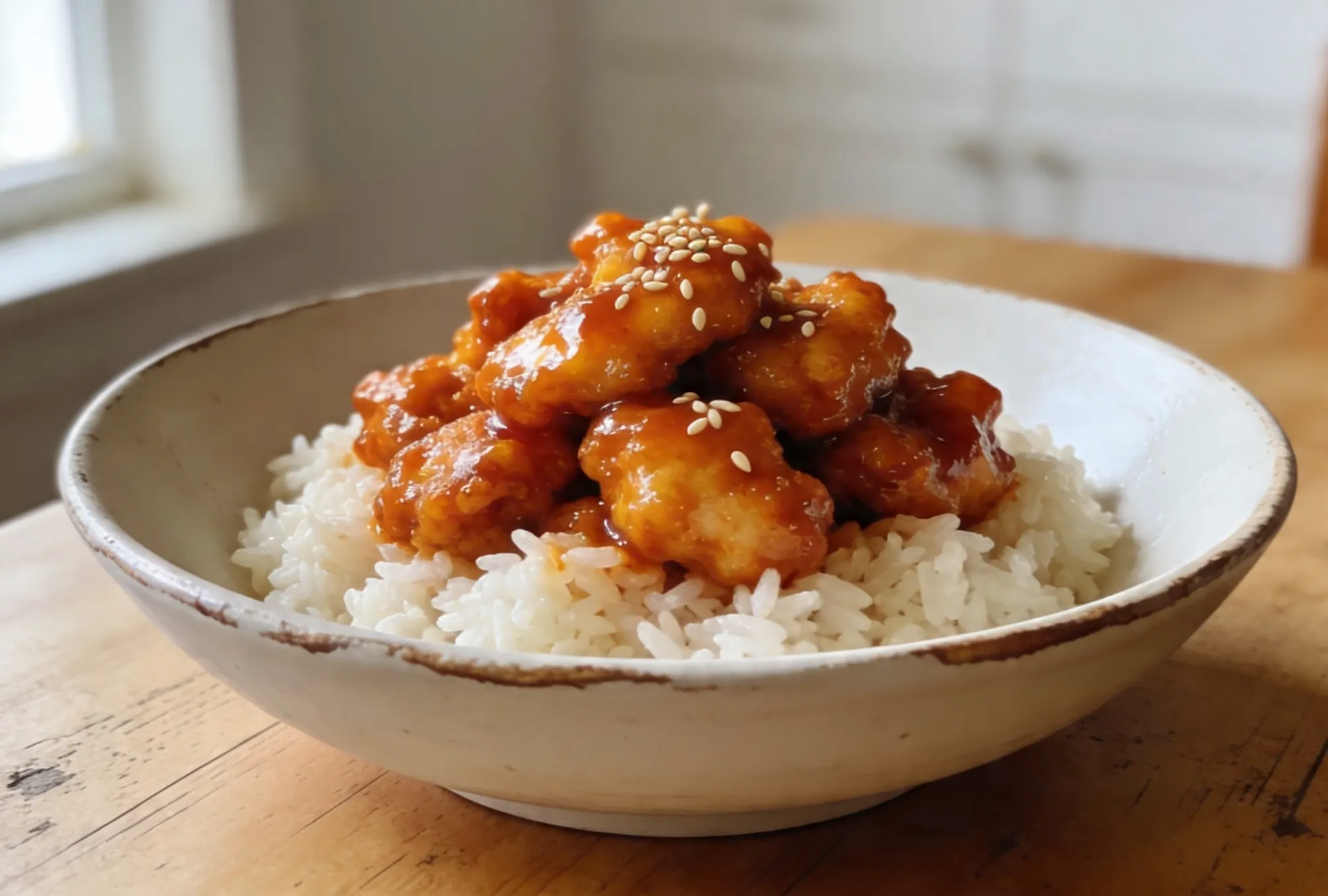
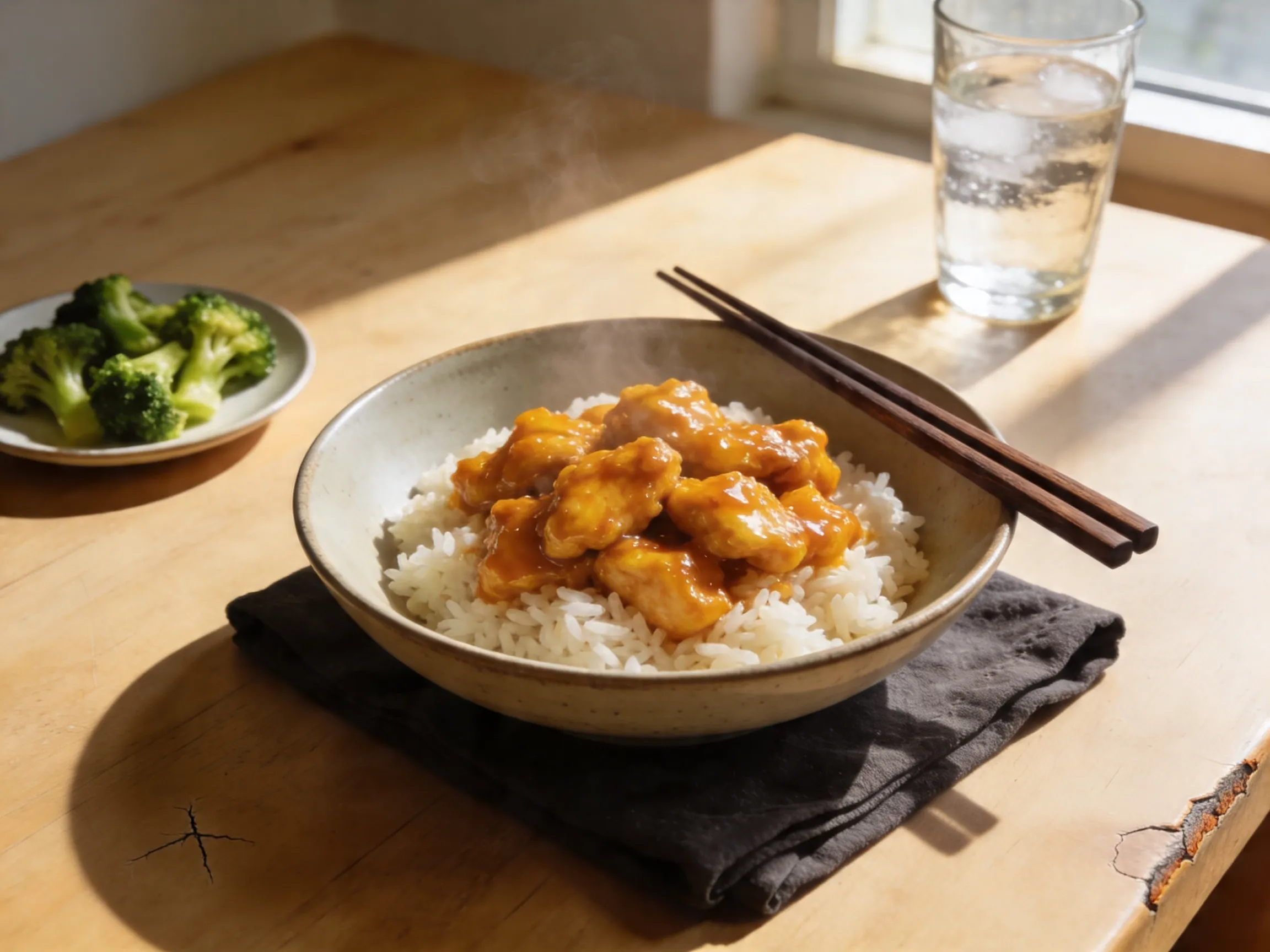
Takeout orange chicken is convenient. But this version is crispier, the sauce actually tastes like orange, and you know exactly what went into it. Thirty-five minutes, one pan, and no mystery ingredients. If Panda Express is your comfort order, this recipe will replace it.
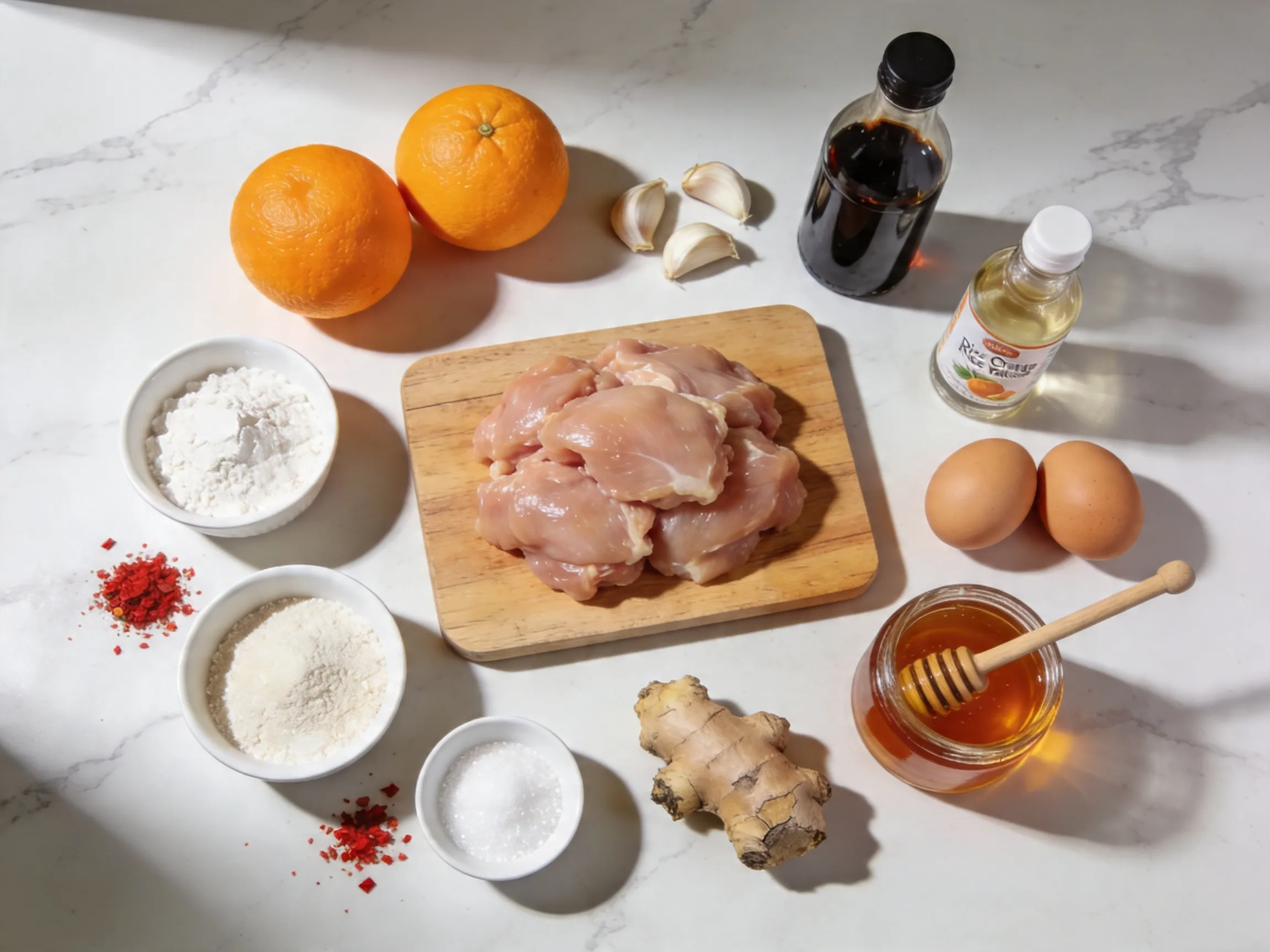
- 5 lbs boneless skinless chicken thighs, cut into 1-inch pieces
- 1/2 cup cornstarch
- 1/4 cup all-purpose flour
- 1/2 tsp salt
- 1/2 tsp black pepper
- 1/2 tsp garlic powder
- 2 eggs, beaten
- Vegetable or canola oil, for frying
- 3/4 cup fresh orange juice (about 2 large oranges)
- 1 tbsp orange zest
- 3 tbsp soy sauce
- 2 tbsp rice vinegar
- 3 tbsp sugar
- 1 tbsp honey
- 3 cloves garlic, minced
- 1 tsp fresh ginger, grated
- 1 tsp sesame oil
- 5 tbsp cornstarch + 2 tbsp cold water (mixed into a slurry)
- 1/2 tsp red pepper flakes (optional, for heat)
- Deep skillet or wok
- Instant-read cooking thermometer
- Two mixing bowls (one for egg, one for dry coating)
- Small saucepan
- Wire rack and rimmed baking sheet
- Tongs
- Microplane or fine grater (for zesting)
- Citrus juicer or hand reamer
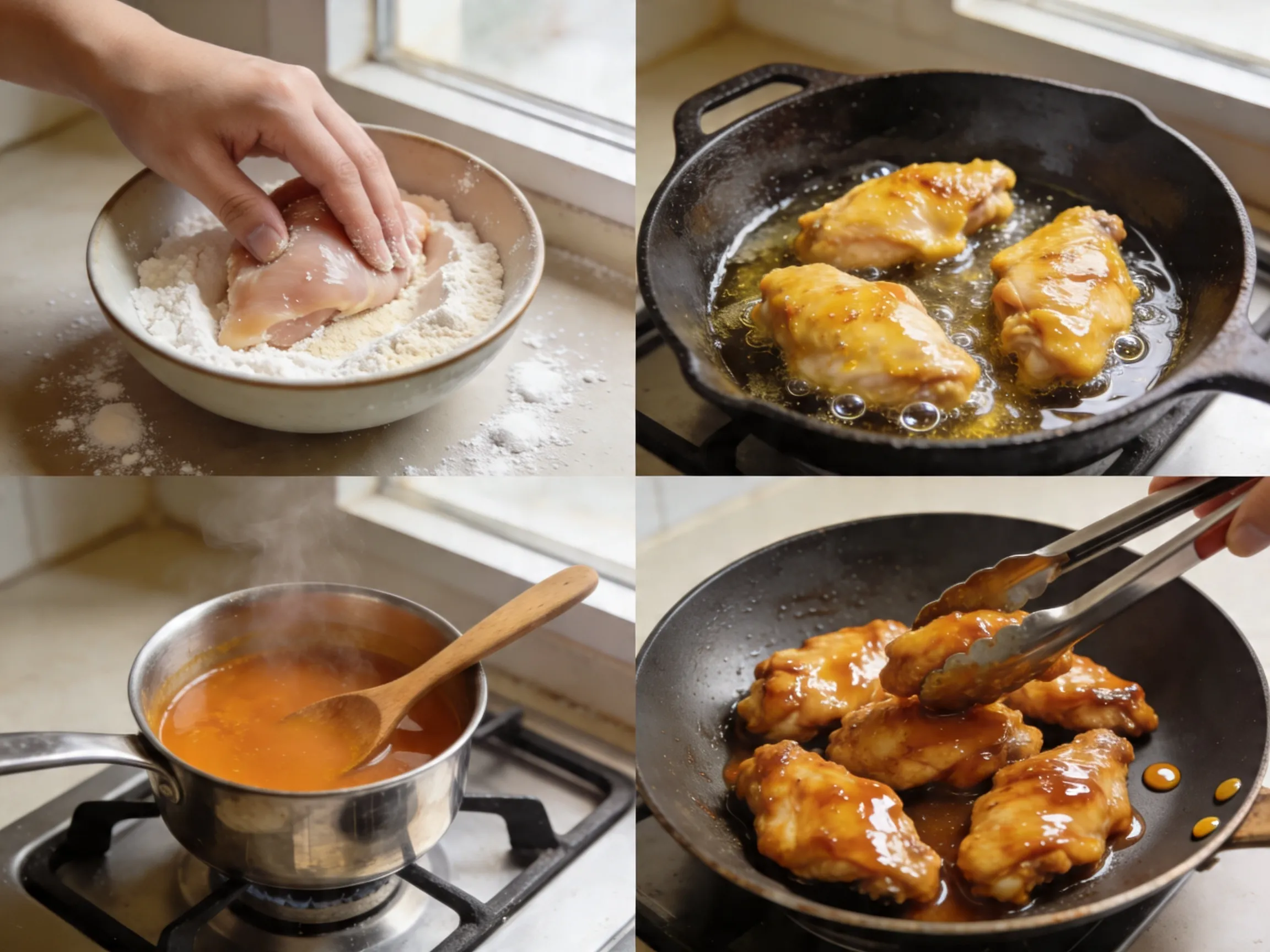
- Season and coat the chicken in cornstarch and flour.
- Dip in egg, then fry in batches until golden.
- Simmer the orange sauce on the side.
- Thicken the sauce with cornstarch slurry.
- Toss the hot chicken in the sauce. Serve right away.
- Cut chicken thighs into 1-inch pieces. Pat each piece dry with a paper towel — this step matters more than most people think.
- In a wide bowl, whisk together cornstarch, flour, salt, pepper, and garlic powder.
- Beat the eggs in a separate bowl.
- Dip each chicken piece into the egg first, then press it into the flour-cornstarch mix. Make sure it is fully coated.
- Pour about 2 inches of oil into a deep skillet or wok. Heat it to 350°F over medium-high heat.
- Fry the chicken in batches, about 4 to 5 minutes per batch, until deep golden brown. Flip once halfway through. Keep batches small so the oil stays hot.
- Lift the chicken out with tongs and set it on a wire rack. Let it rest while you make the sauce.
- In a small saucepan over medium heat, combine orange juice, zest, soy sauce, rice vinegar, sugar, honey, garlic, ginger, and sesame oil.
- Stir and bring to a gentle simmer. Let it cook for 2 minutes so the flavors come together.
- Pour in the cornstarch slurry. Stir continuously for 1 to 2 minutes. The sauce will go from thin to glossy and thick.
- Stir in red pepper flakes if you are using them, then pull the pan off the heat.
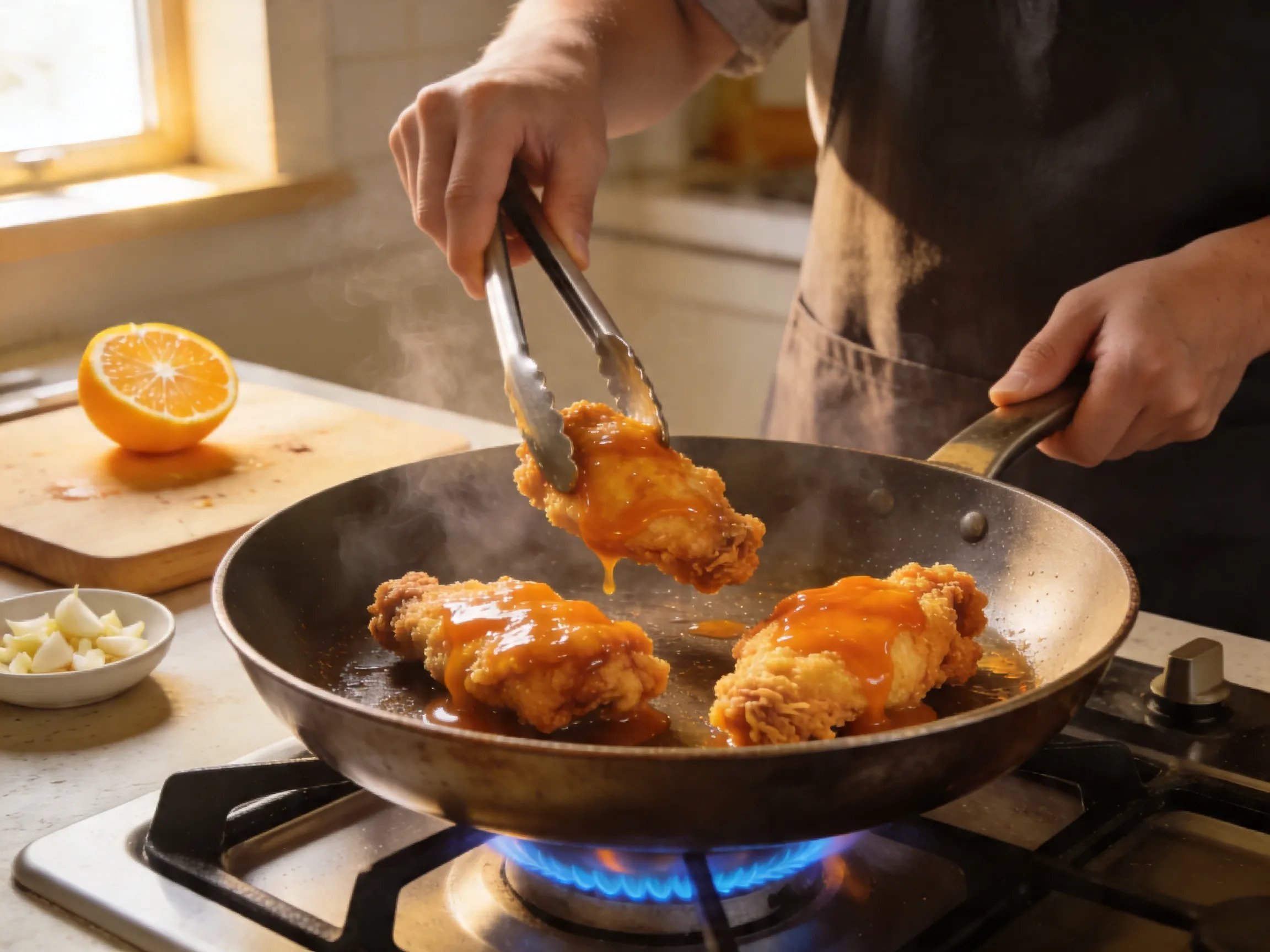
- Add the fried chicken to the saucepan or a large bowl. Pour the sauce over and toss quickly until every piece is coated.
- Serve immediately over steamed rice.
- Use thighs, not breasts. Thighs hold up to high heat and stay tender inside the crispy shell. Breasts can turn rubbery.
- Always pat the chicken dry. Any surface moisture will cause the coating to slip off in the oil.
- Try double-frying. After the first fry, let the chicken rest for 5 minutes, then fry again for 90 seconds. The coating gets noticeably crispier.
- Squeeze your own orange juice. Bottled juice works in a pinch, but fresh juice gives the sauce a brightness that bottled simply does not have.
- Sauce just before serving. Once coated, the breading starts to soften. Toss it and plate it immediately.
- Use a thermometer for the oil. Below 340°F and the chicken absorbs oil instead of frying. Above 375°F and the outside burns before the inside cooks.
- Not drying the chicken — the coating will slide right off in the hot oil. Use paper towels and be thorough.
- Crowding the pan — too many pieces at once drops the oil temperature fast. You end up with soggy, pale chicken instead of crisp and golden.
- Cooking the sauce too long after adding the slurry — it thickens quickly. Take it off heat while it still looks slightly fluid. It will continue to set up as it cools.
- Using eggs straight from the fridge — cold eggs do not coat as evenly. Set them out for 10 minutes before you start.
- Cutting pieces too large — big chunks take longer to cook through, which means either underdone centers or an overcooked crust. Keep pieces close to 1 inch.
- Gluten-free: Swap the all-purpose flour for rice flour and use tamari in place of soy sauce.
- Air fryer: Spray coated chicken lightly with oil. Air fry at 400°F for 12 to 14 minutes, flipping once at the halfway mark.
- Less sweet: Cut the sugar to 1.5 tbsp and add a splash more rice vinegar to balance it.
- More heat: Stir in 1 tsp chili garlic sauce or add a few dried red chilies to the sauce while it simmers.
- Whole30 or Paleo: Use coconut aminos instead of soy sauce. Skip the sugar and use extra honey or a couple of Medjool dates blended into the juice.
- Chicken breast: It works, but reduce fry time by about a minute. Breast dries out fast at high heat.
- Steamed jasmine or white rice
- Fried rice
- Lo mein noodles
- Steamed broccoli or snap peas
- Quick Asian cucumber salad
- Egg rolls or spring rolls on the side
- Fridge: Keep chicken and sauce in separate containers. Both stay good for up to 3 days.
- Freezer: Freeze the fried, unsauced chicken. Lay pieces flat on a sheet pan first, freeze until solid, then transfer to a bag. Lasts up to 2 months.
- Reheat in the oven: Spread on a baking sheet at 375°F for about 10 minutes. The crust comes back nicely.
- Reheat in the air fryer: 380°F for 5 to 6 minutes is faster and gives the same result.
- Skip the microwave if you want any crunch left. It steams the coating and turns it soft in under a minute.
Yes, up to 3 days ahead. Store it in the fridge in a sealed container. Warm it gently on the stove before using.
You can. Bake coated pieces on a greased wire rack at 425°F for 20 minutes, flipping once. Not as crispy as fried, but it works.
Navel oranges are the easiest and give a good sweet-tart balance. Blood oranges work well too. Avoid Valencia — they tend to run too tart.
No. The base recipe has no heat. The red pepper flakes are optional and only add a mild warmth, not sharp spice.
Either the chicken had surface moisture or the oil was not hot enough. Dry the chicken well and check your oil temperature before the first batch goes in.
Yes. Use 100% orange juice with no added sugar. Fresh tastes brighter, but bottled works fine when you are short on time.
- Corn-starch does more work than flour here. It is what gives the coating that firm, light crunch. Do not reduce it.
- The sauce keeps thickening off the heat. Pull it while it still moves when you tilt the pan.
- Making this for a crowd? Fry in batches and hold finished pieces in a 200°F oven on a wire rack. They will stay crisp for up to 20 minutes.
- Drain on a rack, not paper towels. Towels trap the steam underneath and soften the bottom of the coating fast.
Deep skillet or wok
Instant-read cooking thermometer
Two mixing bowls (one for egg, one for dry coating)
Small saucepan
Wire rack and rimmed baking sheet
Tongs
Microplane or fine grater (for zesting)
Citrus juicer or hand reamer