
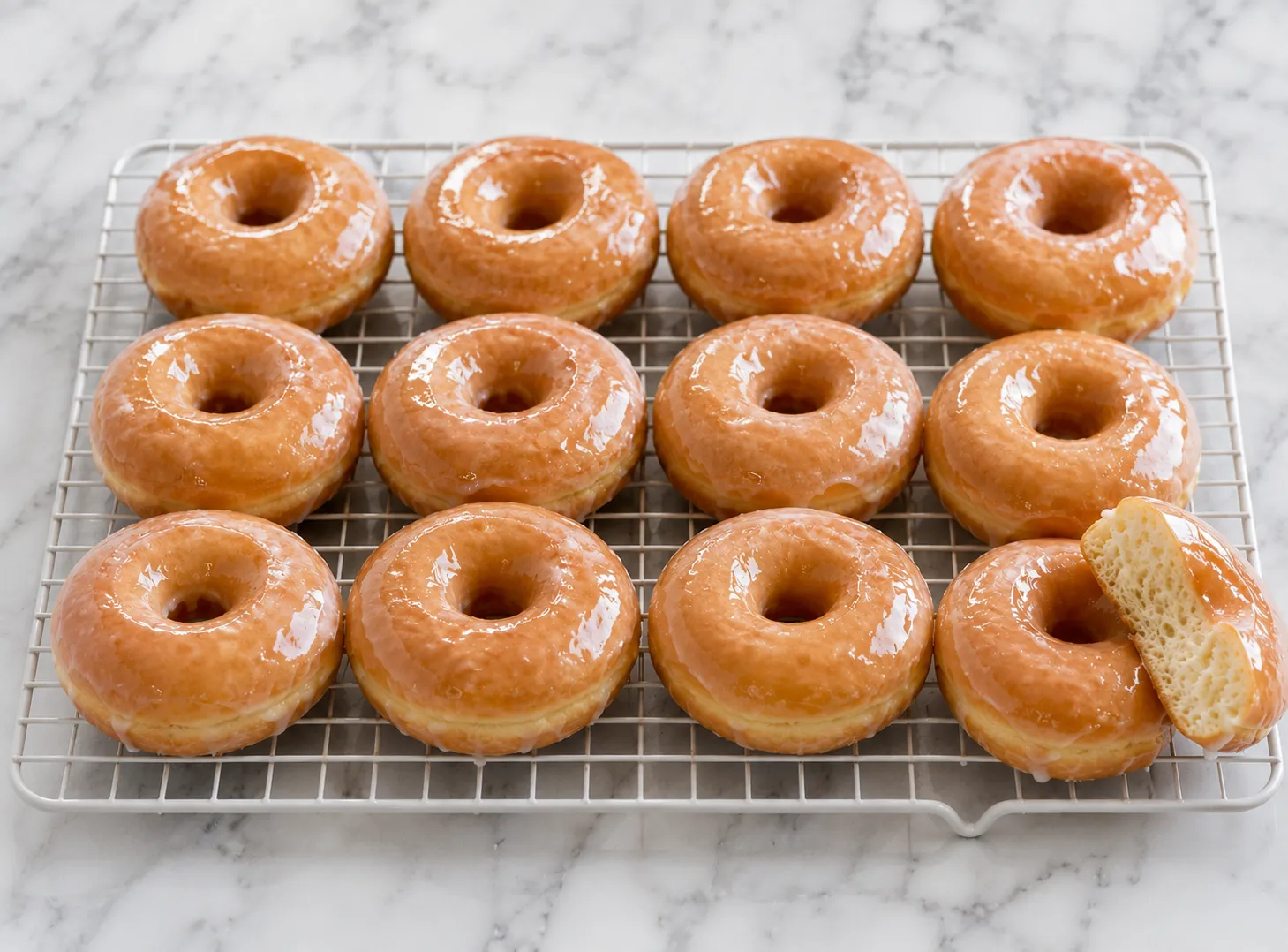
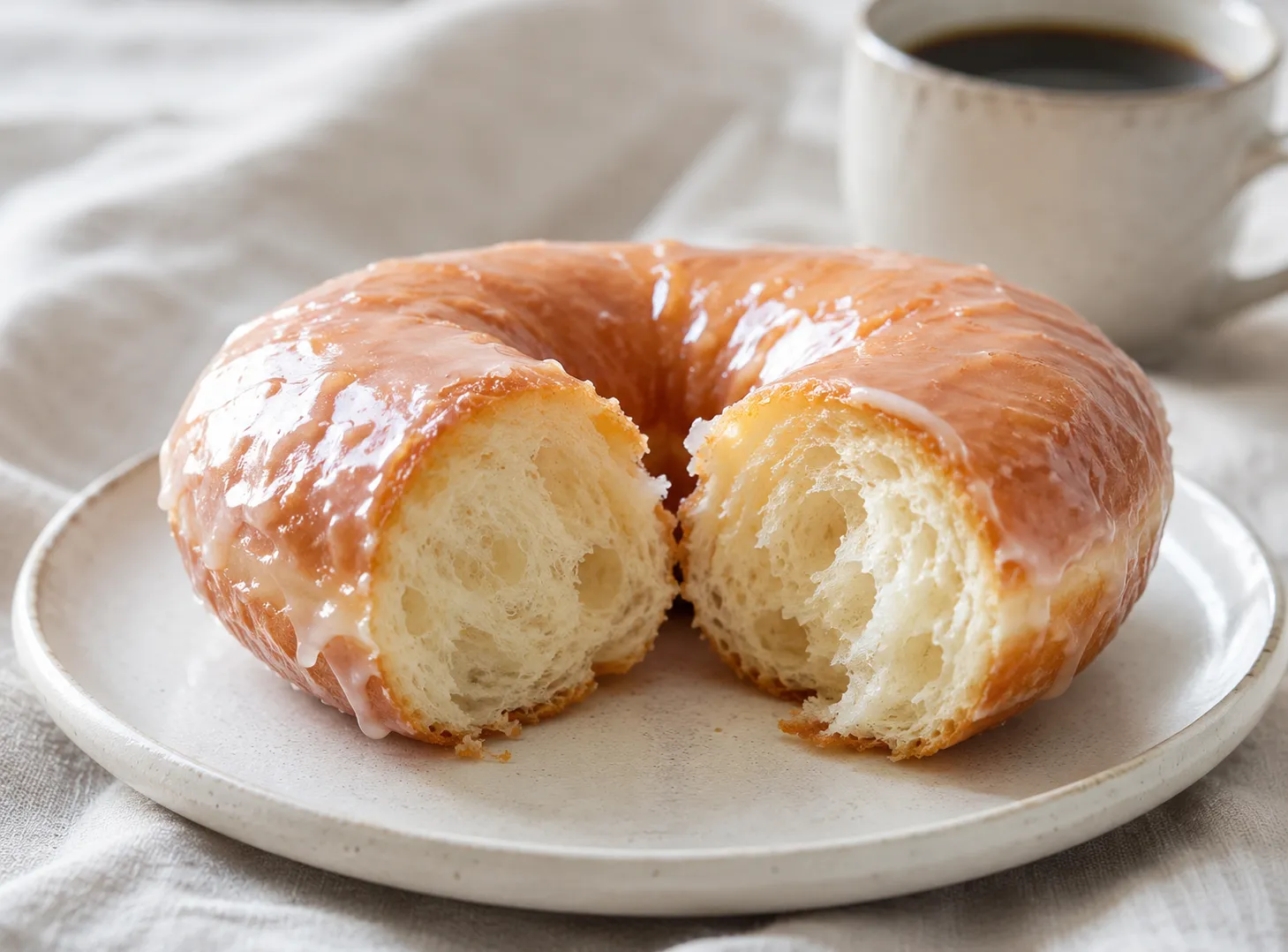
This donut recipe delivers light, pillowy donuts with a thin glaze that sets with a slight crackle on the outside and stays soft underneath. The dough is a simple yeasted recipe that comes together with pantry staples. No special equipment is required beyond a pot and a thermometer. If you have ever bought a glazed donut from a shop and thought you could never recreate that texture at home, this recipe will change that. The rise time does most of the work. Your hands-on effort is minimal, and the results are genuinely worth the wait.
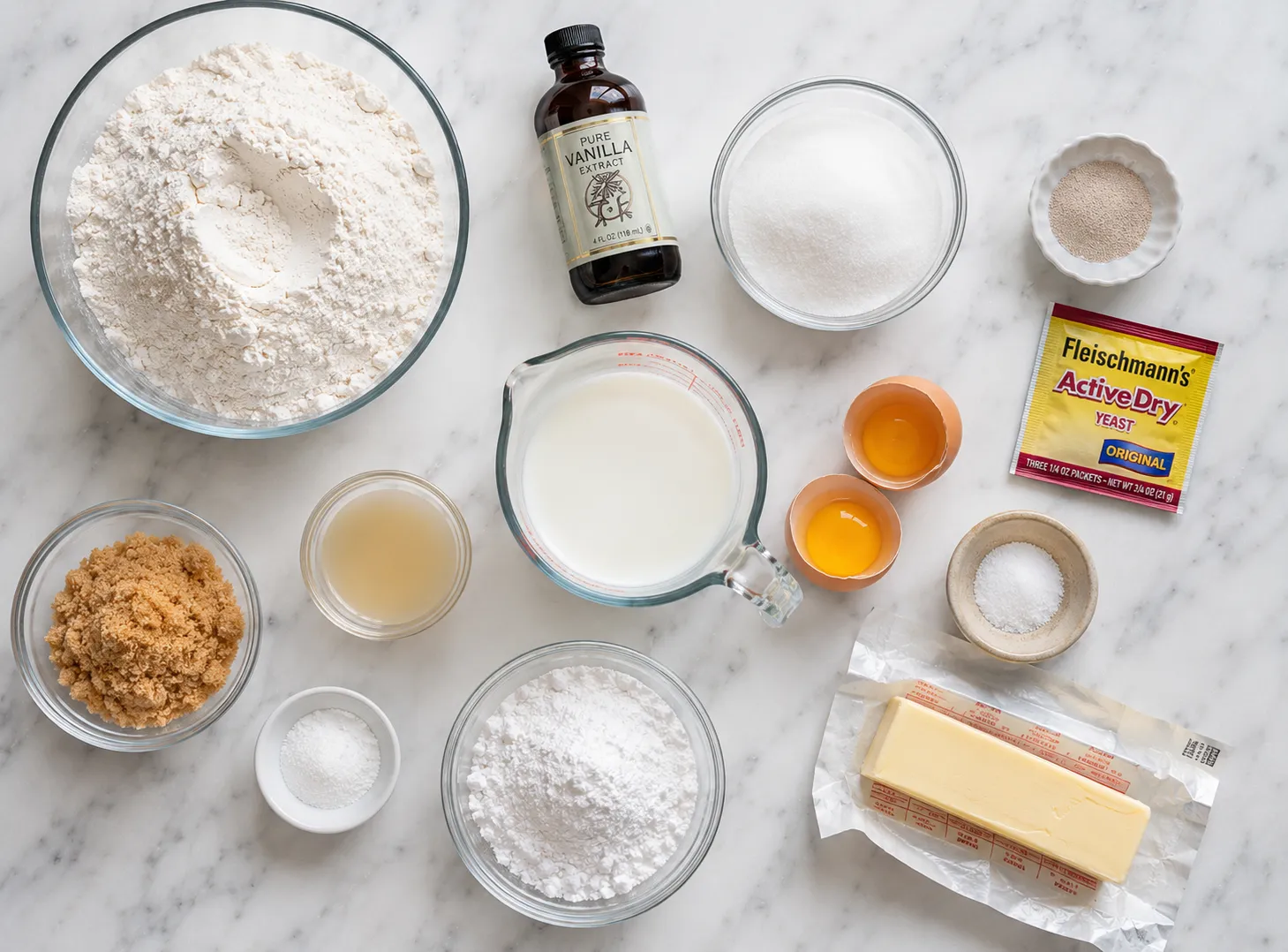
- 1 cup whole milk, warm (around 110°F) , Should feel like warm bathwater on your wrist. Not hot.
- 2.25 tsp active dry yeast , Not instant yeast. See recipe notes for instant yeast swap.
- 3 tbsp granulated sugar
- 2 large eggs
- 4 tbsp unsalted butter, softened
- 1 tsp pure vanilla extract
- 3.5 cups all-purpose flour , Add one cup at a time. Dough should be slightly tacky, not stiff.
- 0.5 tsp salt
- 4 cups neutral oil (vegetable or canola) , Use a high smoke point oil. Refined coconut oil also works.
- 2 cups powdered sugar, sifted , Sift before using. Lumps do not mix out easily once liquid is added.
- 3 tbsp whole milk , Add more by the teaspoon if glaze is too thick.
- 0.5 tsp vanilla extract
- Stand mixer with dough hook, or large mixing bowl for hand kneading
- Rolling pin
- Donut cutter or two round cutters (3-inch and 1-inch)
- Heavy-bottomed pot or Dutch oven
- Candy or deep-fry thermometer
- Spider strainer or slotted spoon
- Wire rack with baking sheet underneath
- Parchment-lined baking sheets for proofing
- Shallow bowl for glazing
- Activate yeast in warm milk with sugar. Let sit until foamy.
- Mix in eggs, butter, vanilla, then flour and salt to form a soft dough.
- Knead until smooth and elastic, then let rise until doubled, about 1 to 1.5 hours.
- Roll to half an inch thick, cut into donuts, and let rest 30 to 45 minutes.
- Fry in 355°F oil about 60 to 90 seconds per side until golden brown.
- Dip warm donuts in glaze, set on a rack, and let the glaze firm up for 10 to 15 minutes.
- Pour warm milk into a large bowl. Sprinkle in the yeast and sugar. Stir gently and let it sit for 5 to 10 minutes. When the surface looks foamy and the mixture smells yeasty, the yeast is active. If nothing happens, start over with a fresh packet.
- Add the eggs, softened butter, and vanilla extract to the yeast mixture. Stir until combined.
- Add the flour and salt one cup at a time, mixing between each addition. Stop when a shaggy, slightly sticky dough has formed.
- Turn the dough out onto a lightly floured surface. Knead by hand for 8 to 10 minutes until the dough is smooth and springs back when poked. Alternatively, use a stand mixer with the dough hook on medium for 6 minutes.
- Place the dough in a lightly oiled bowl. Cover with plastic wrap or a clean towel and set in a warm spot. Let it rise for 1 to 1.5 hours until doubled in size.
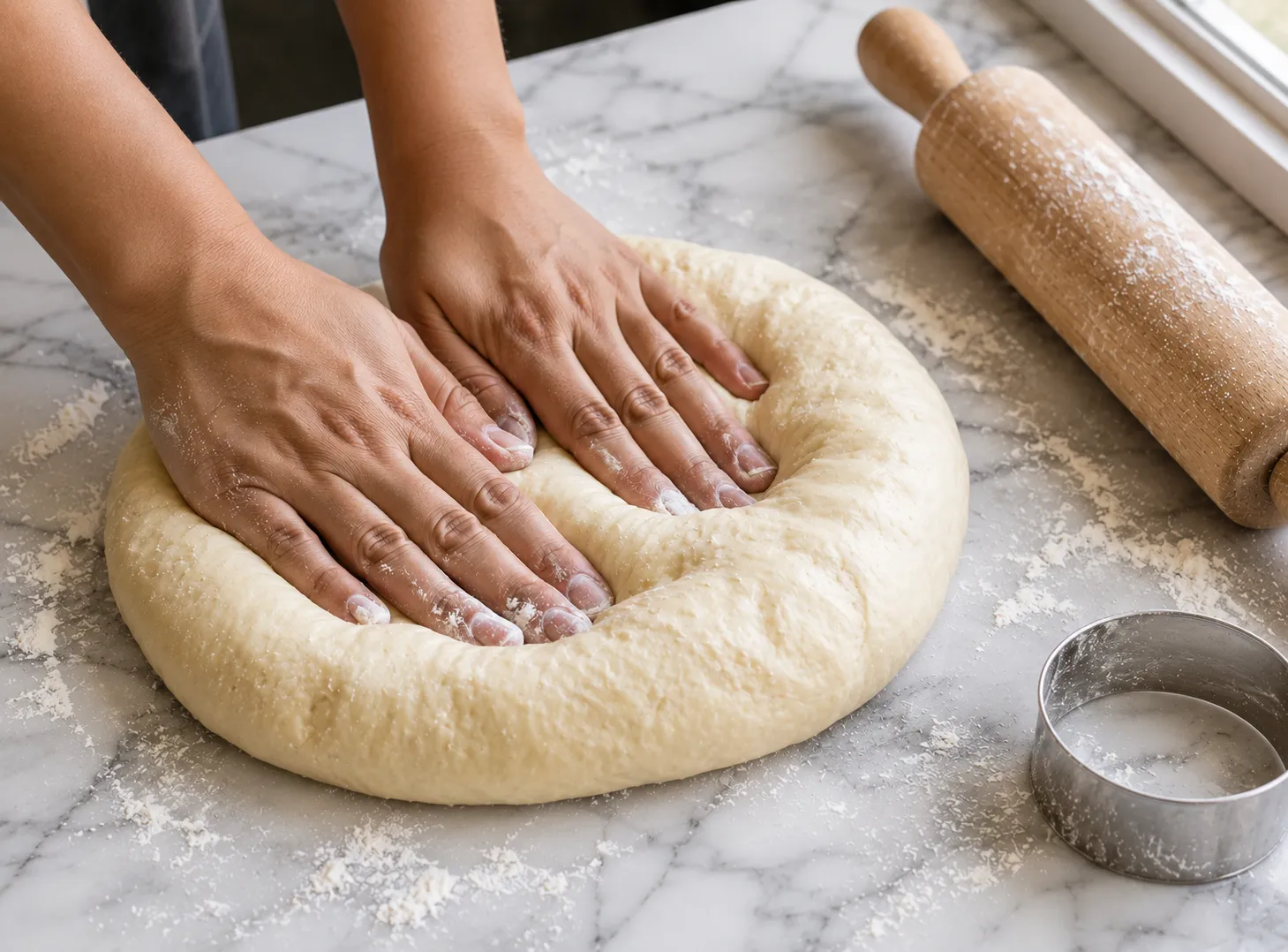
- Punch the dough down. Turn it out onto a floured surface and roll to about half an inch thick.
- Use a 3-inch cutter for the outer ring and a 1-inch cutter for the center hole. Re-roll scraps once to get more donuts. Set cut donuts and holes on parchment-lined baking sheets, spaced 2 inches apart.
- Cover loosely with a towel. Let the cut donuts proof for 30 to 45 minutes. They should look noticeably puffier before they go into the oil.
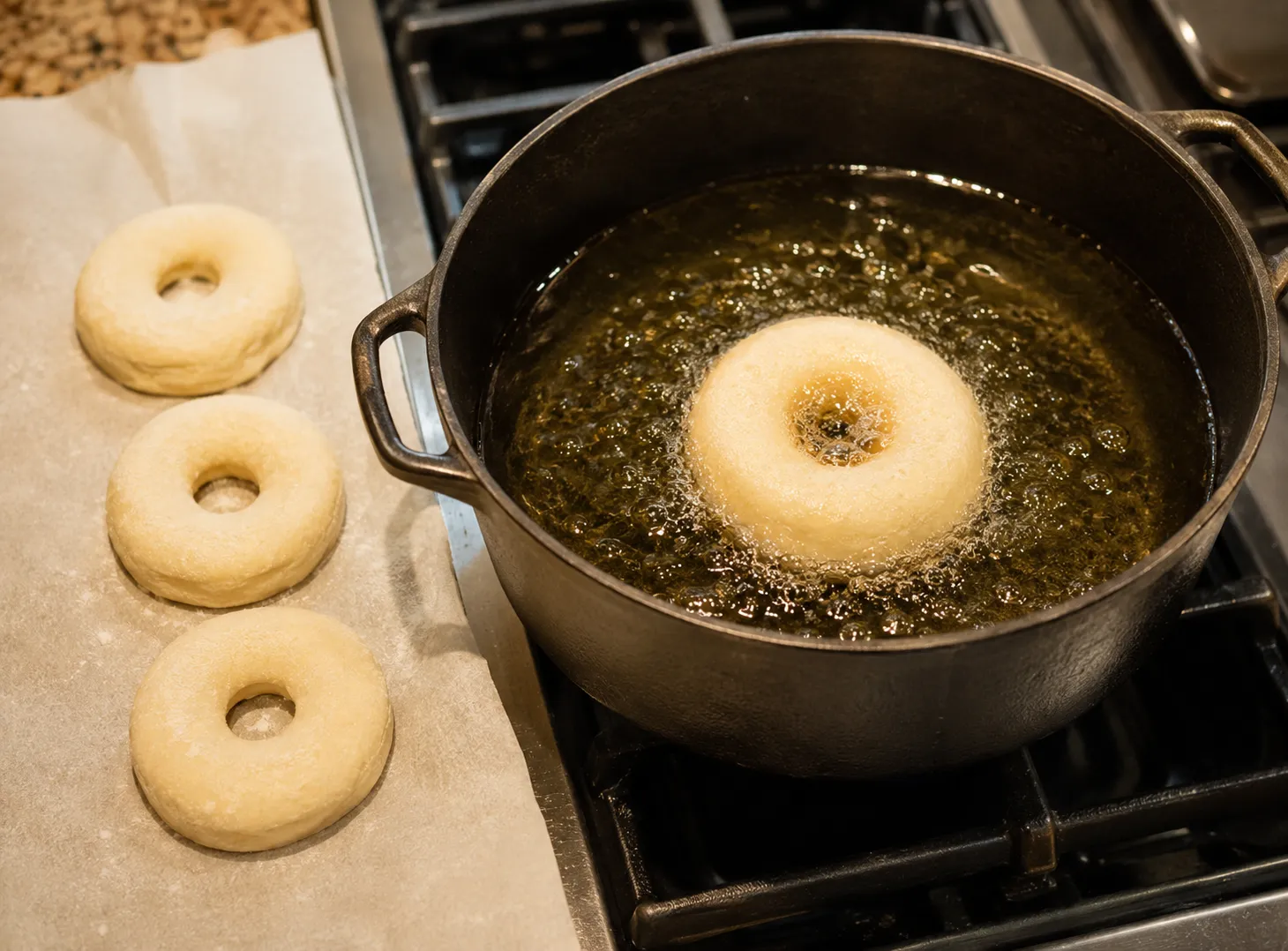
- Pour oil into a heavy-bottomed pot. Heat over medium until it reaches 350°F to 360°F. Use a thermometer and keep checking as you fry.
- Lower 2 to 3 donuts into the hot oil using a slotted spoon or spider strainer. Do not crowd the pot. Fry for 60 to 90 seconds per side until deep golden brown.
- Lift each donut out and transfer to a wire rack set over a baking sheet. Let the oil drip off and the donuts cool for 2 to 3 minutes before glazing.
- Whisk the sifted powdered sugar, milk, and vanilla together in a shallow bowl until completely smooth. The glaze should coat a spoon and drip off slowly. If it is too thick, add milk one teaspoon at a time.
- Dip each warm donut into the glaze, top side down. Flip it, let the excess drip off, and place it back on the wire rack. Let the glaze set for 10 to 15 minutes before serving.
- Use a thermometer for the oil every time. The difference between 340°F and 360°F shows in the finished donut.
- Warm milk activates yeast. Milk that is too hot kills it. Aim for 105°F to 115°F.
- The second rise is not optional. Cutting it short gives you dense donuts instead of fluffy ones.
- Glaze the donuts while they are still warm. The glaze absorbs slightly into the surface and sets with a better finish.
- Do not re-roll dough scraps more than once. The texture tightens with each roll.
- Fry the donut holes too. They take about 45 seconds and are usually gone before the glazed donuts are ready.
- Frying at the wrong oil temperature. Below 350°F produces greasy donuts. Above 370°F burns the outside before the middle is cooked through.
- Skipping the second proof. This is the step that creates the texture that makes a homemade donut recipe worth making.
- Adding too much flour. The dough should feel soft and slightly tacky. A stiff dough bakes up heavy.
- Crowding the pot. Too many donuts at once drops the oil temperature and makes them absorb more oil.
- Dipping cold donuts in the glaze. The glaze will pool and clump instead of coating evenly.
- Chocolate glaze: Replace the milk in the glaze with heavy cream and whisk in 2 tablespoons of cocoa powder.
- Cinnamon sugar coating: Skip the glaze entirely. Toss the hot donuts in a bowl of half a cup of sugar mixed with 1 teaspoon of cinnamon.
- Maple glaze: Replace half the milk in the glaze with pure maple syrup.
- Filled donuts: Do not cut the center hole. Fry as full rounds. Once slightly cooled, pipe in jam, pastry cream, or chocolate filling using a piping bag.
- Dairy-free: Substitute oat milk or almond milk in both the dough and the glaze. Use plant-based butter.
- Air fryer: Brush donuts lightly with oil and air fry at 350°F for 4 to 5 minutes per side. The inside will be less tender than the fried version but still good.
- Hot black coffee or a drip coffee with milk
- A latte or flat white
- Iced coffee or cold brew
- A glass of cold whole milk
- Fresh fruit on the side if you want something to balance the sweetness
- Donut holes on the same plate as a bonus
- Room temperature: Keep in an airtight container for up to 2 days.
- Refrigerator: Not recommended. Cold air dries out the crumb and the glaze gets sticky.
- Freezer: Freeze unglazed donuts in a single layer on a baking sheet first, then transfer to a zip bag. Keeps for up to 2 months.
- Reheating: Microwave for 10 to 15 seconds. Apply fresh glaze if needed after reheating.
- Glazed donuts do not freeze well. The glaze separates and turns wet after thawing.
Yes. After the first rise, cover the bowl tightly and refrigerate overnight. The next morning, let the dough sit at room temperature for 30 minutes before rolling and cutting.
You can bake them at 375°F for 10 to 12 minutes, but the texture will be closer to a soft roll than a fried donut. Frying is what gives this donut recipe its signature lightness.
The most likely cause is cutting the second rise short. The cut donuts need 30 to 45 minutes of proofing before they go in the oil. If they are not puffy and light before frying, they will be dense after.
Use a neutral oil with a high smoke point. Vegetable oil, canola oil, and refined coconut oil all work well. Avoid olive oil or any oil with a strong flavor.
Look for a deep golden brown on both sides. At the right oil temperature, that takes about 60 to 90 seconds per side. If they are browning faster, your oil is too hot.
Yes. Use a smaller cutter and reduce the fry time to 45 to 60 seconds per side. Watch closely because small donuts brown quickly.
- This recipe uses active dry yeast. If you only have instant yeast, skip the activation step and add it directly to the flour along with the sugar and salt.
- The dough is meant to be soft and slightly tacky. Do not be tempted to add extra flour.
- Sift the powdered sugar for the glaze before mixing. Lumps are hard to dissolve once liquid is added.
- If you do not have a donut cutter, a wide-mouth mason jar lid and a small bottle cap work as substitutes.
- Donut holes from the cut-out centers cook in about 45 seconds in the hot oil. They are worth keeping.
Homemade glazed donuts are not difficult. They take time because the dough needs to rise twice, but neither rise requires any effort from you. The frying goes quickly once you have the oil at the right temperature, and the glaze takes about two minutes to put together. If you want to save time in the morning, make the dough the night before and let it do the first rise in the refrigerator overnight. Roll, cut, and proof in the morning. The donuts will be on the table in under an hour from that point. This donut recipe is the kind you make once and then keep coming back to. Once you know how easy homemade glazed donuts actually are, the shop-bought ones start feeling like a compromise. Make a full batch, share them while they are still warm, and watch how fast they go.