
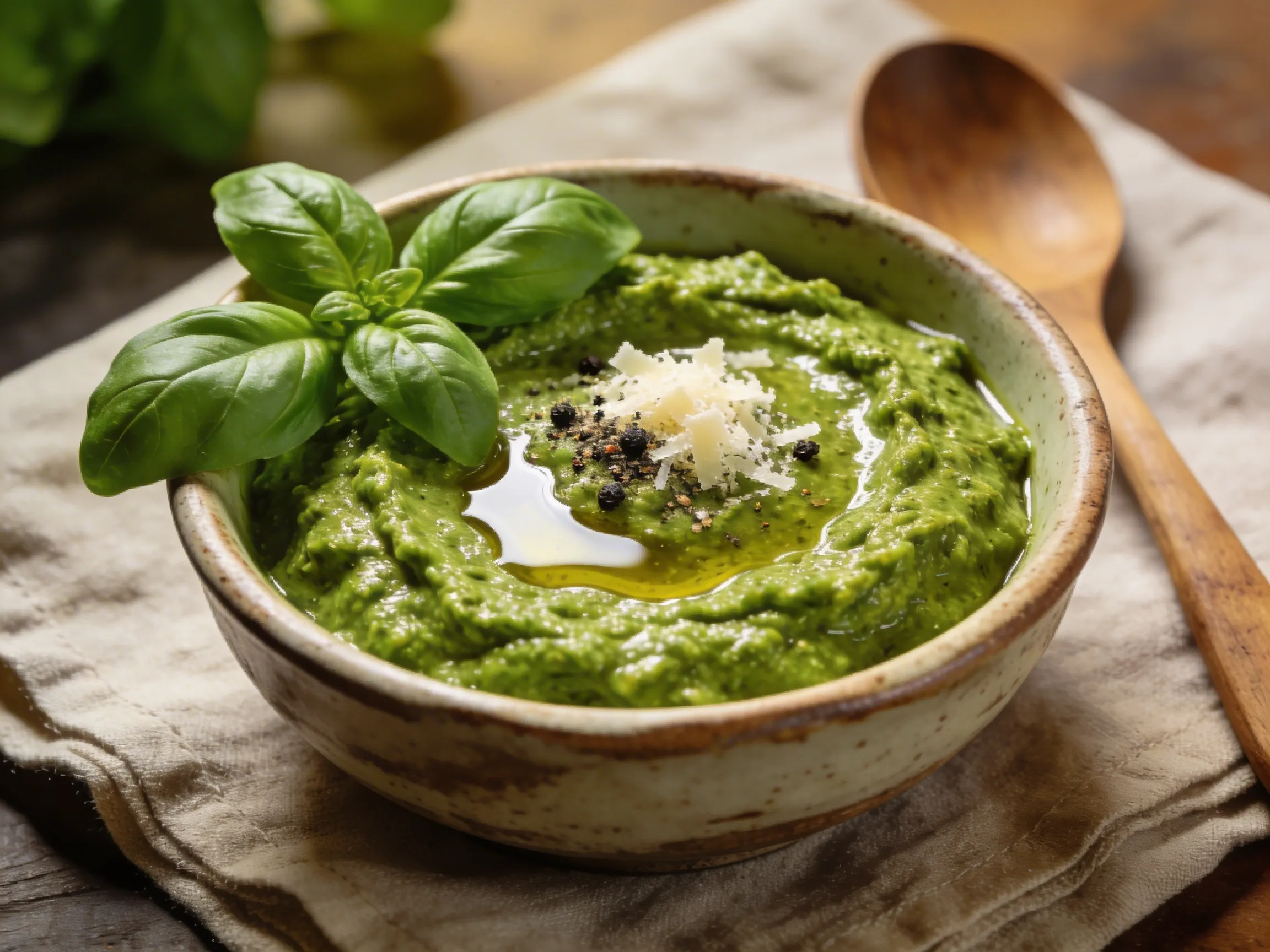
This homemade basil pesto is the kind of recipe you make once and never forget. It comes together in 5 minutes with just a handful of fresh ingredients, and the flavor is so much better than anything from a jar. Use it on pasta, sandwiches, grilled meats, pizza — honestly, on almost everything.

- 2 cups fresh basil leaves , packed
- 1/3 cup pine nuts
- 2 cloves garlic
- 1/3 cup parmesan cheese , freshly grated
- 1/3 cup extra virgin olive oil
- 1 tbsp lemon juice , optional
- 1/2 tsp salt
- 1/4 tsp black pepper
- Food processor
- Small skillet
- Measuring cups
- Measuring spoons
- Rubber spatula
- Airtight jar
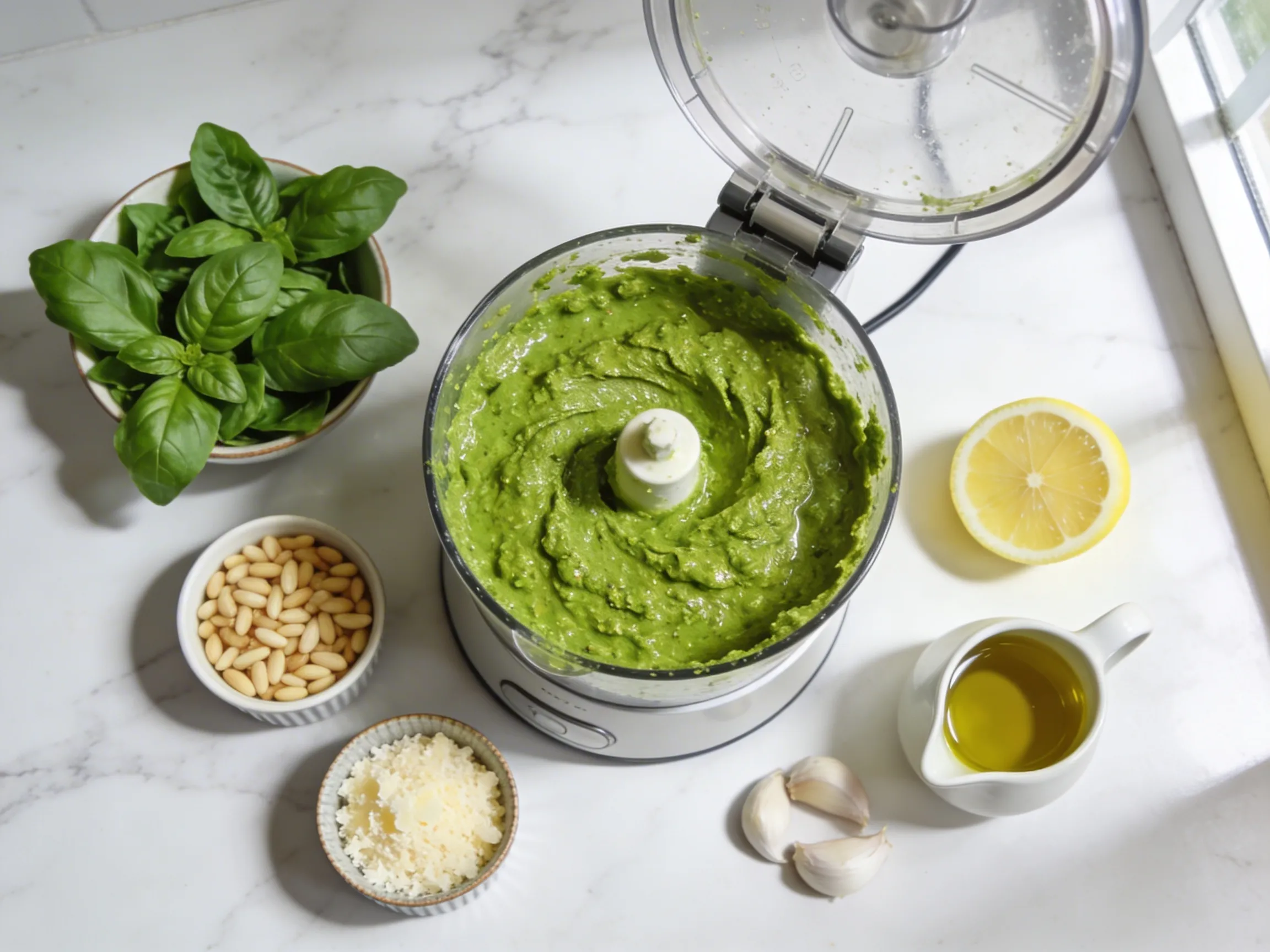
- First, wash your basil and dry it really well. Wet basil will water down the whole sauce, so take a minute to pat it dry or spin it in a salad spinner. Toss the basil, pine nuts, garlic, and Parmesan into a food processor and give it a few pulses until it looks roughly chopped. Then slowly pour in the olive oil while the processor is running and keep going until you hit the texture you like some people want it smooth, others prefer it a little chunky. Taste it, adjust the salt and pepper, add a squeeze of lemon if you want a bit of brightness, and that is it. Five minutes, done.
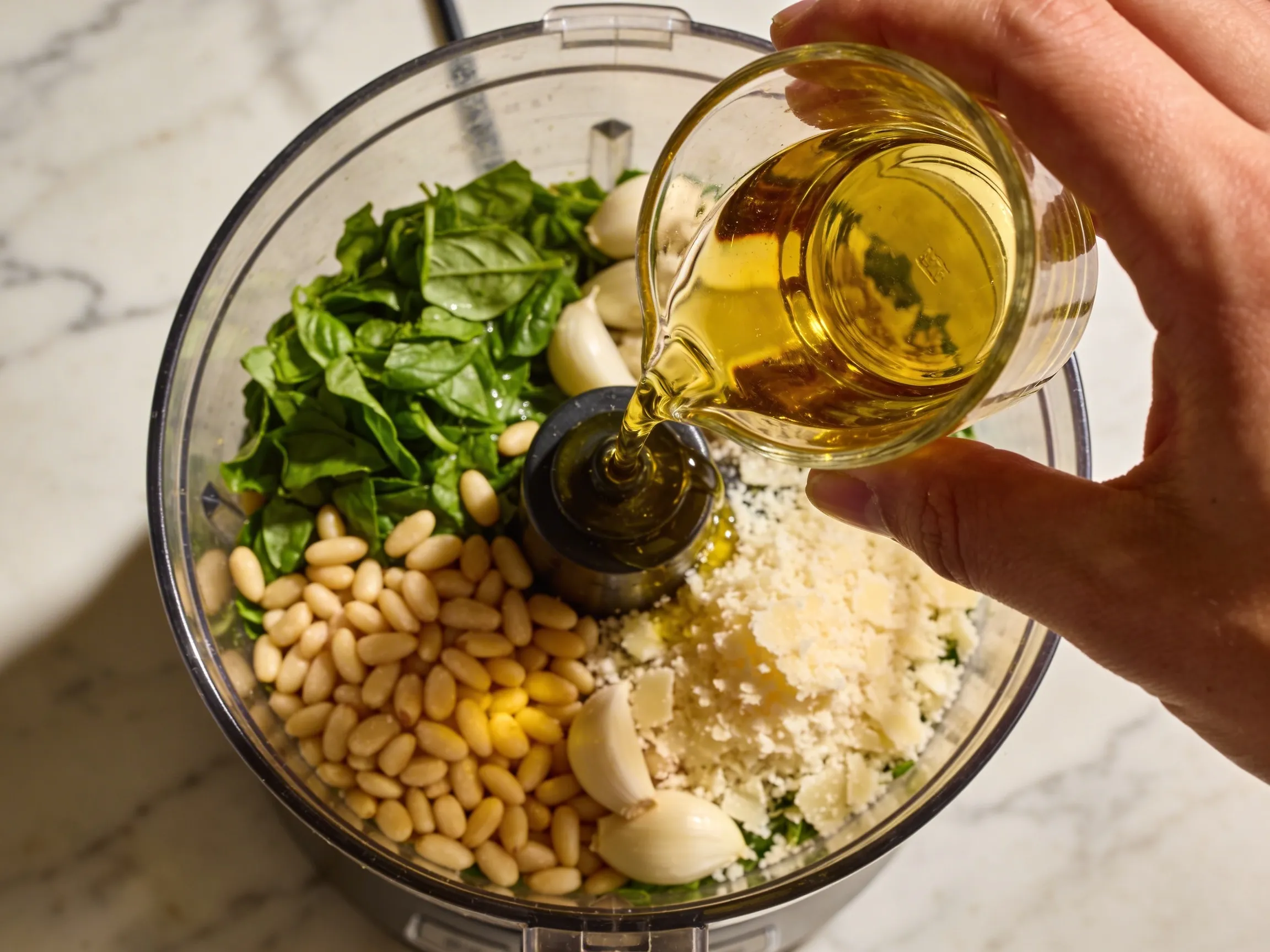
- Wash the basil leaves and dry them thoroughly.
- If desired, lightly toast the pine nuts in a dry skillet for 1 to 2 minutes and let them cool.
- Add basil, pine nuts, garlic, and Parmesan to a food processor.
- Pulse until the mixture is roughly chopped.
- Slowly drizzle in the olive oil while pulsing until smooth or slightly textured.
- Add lemon juice, salt, and black pepper.
- Pulse once or twice more and taste the pesto.
- Serve immediately or store in an airtight jar in the refrigerator.
- Dry your basil leaves really well before blending — this is the step most people skip and then wonder why their pesto looks watery.
- Toast the pine nuts in a dry pan for a minute or two. It adds a warm, nutty depth that makes a noticeable difference.
- Pour the olive oil in slowly. Rushing this step can make the pesto turn out greasy instead of silky.
- Grate your own Parmesan. Pre-grated cheese has a dry, powdery texture that just does not blend as smoothly.
- If you are tossing it with pasta, save a splash of pasta water. Stirring that starchy water into the pesto makes the sauce cling to the noodles beautifully.
- Using wet basil is probably the most common mistake. Always dry the leaves before they go into the blender.
- Overblending makes the basil heat up slightly from the friction, which can dull the flavor and darken the color. Pulse, do not process continuously.
- Using a cheap or flavorless olive oil is a problem here because you can really taste it. Use something you would actually enjoy on its own.
- Adding too much salt too early is easy to do since Parmesan is already salty. Season at the end, not the beginning.
- Heating the pesto directly in a hot pan will turn it brown and kill the fresh flavor. Always stir it into warm food off the heat or at very low temperature.
- Swap pine nuts with walnuts, almonds, or cashews — walnuts give a slightly earthy, bitter edge that works really well.
- Replace half the basil with baby spinach if you want a milder, less intense flavor, or if fresh basil is expensive in your area.
- Add a small handful of arugula for a peppery kick.
- Skip the Parmesan and use nutritional yeast instead for a completely dairy-free version that still has that savory depth.
- Double the garlic and add an extra squeeze of lemon if you want something bolder and more punchy.
- Toss with spaghetti, linguine, penne, or gnocchi.
- Spread on sandwiches, burgers, wraps, or panini.
- Serve with grilled chicken, salmon, shrimp, or roasted vegetables.
- Use as a pizza or flatbread base.
- Spoon over grain bowls, potatoes, or soups for extra flavor.
- Pesto keeps in the fridge for up to 3 days in a sealed jar. The trick to keeping it green is pouring a thin layer of olive oil over the surface before you seal it — this prevents air from reaching the basil and turning it dark.
- For longer storage, freeze it in an ice cube tray. Once the cubes are solid, transfer them to a zip-lock bag and pull out however many you need. Frozen pesto keeps well for up to 3 months.
- Never heat pesto in a hot pan directly. Instead, stir it into hot pasta or warm food off the heat, and add a splash of pasta water to bring it all together smoothly.
Absolutely. Walnuts are the most popular swap and they work really well. Almonds and cashews are also great options depending on what you have.
Usually it comes down to three things — the basil was wet before blending, you overblended it and generated heat, or air got to the surface while it was stored. A thin layer of olive oil on top before refrigerating helps a lot.
Yes, and it freezes beautifully. Pour it into an ice cube tray, freeze until solid, then bag the cubes. Pull out as many as you need whenever you want fresh pesto flavor without starting from scratch.
It is one of the best things you can put on a sandwich or pizza base. The flavor holds up really well and adds a freshness that tomato sauce sometimes lacks.
Up to 3 days if stored in a sealed jar with olive oil covering the surface. After that the flavor starts to fade and the color dulls.
Yes. A mortar and pestle is actually the traditional method and gives you a slightly coarser, more textured pesto that many people prefer. It takes more effort but the result is genuinely good.
It will work in a pinch, but freshly grated Parmesan blends much more smoothly and has a richer, more complex flavor. If you can, grate it yourself.
- Drying the basil well is the one step that really matters do not skip it.
- Freshly grated Parmesan makes a noticeably smoother sauce compared to pre-packaged cheese.
- The lemon juice is optional but it really does brighten everything up, especially if the basil is slightly mature.
- This pesto is at its best the day you make it, but it freezes well if you want to have some on hand for later.