
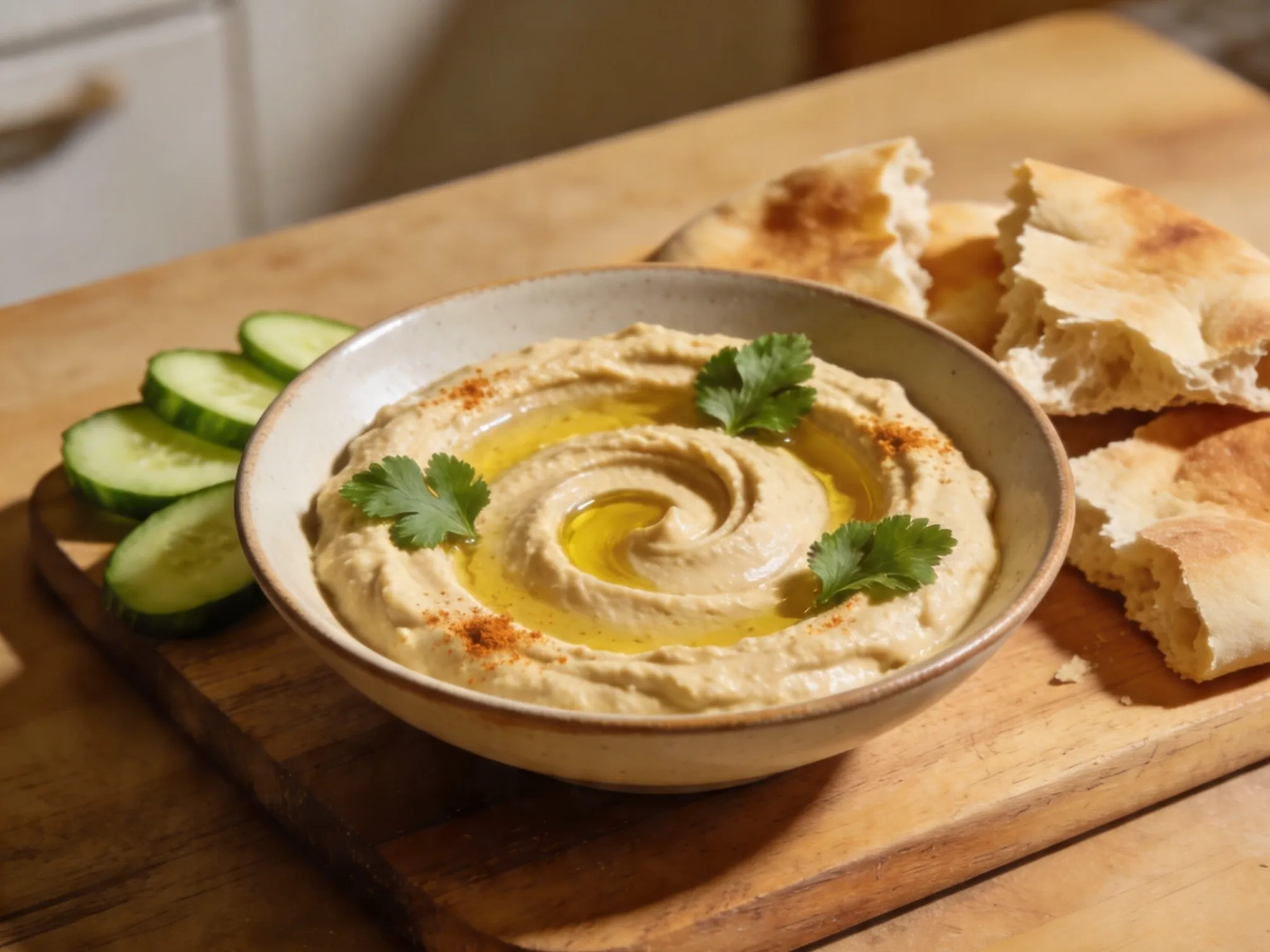
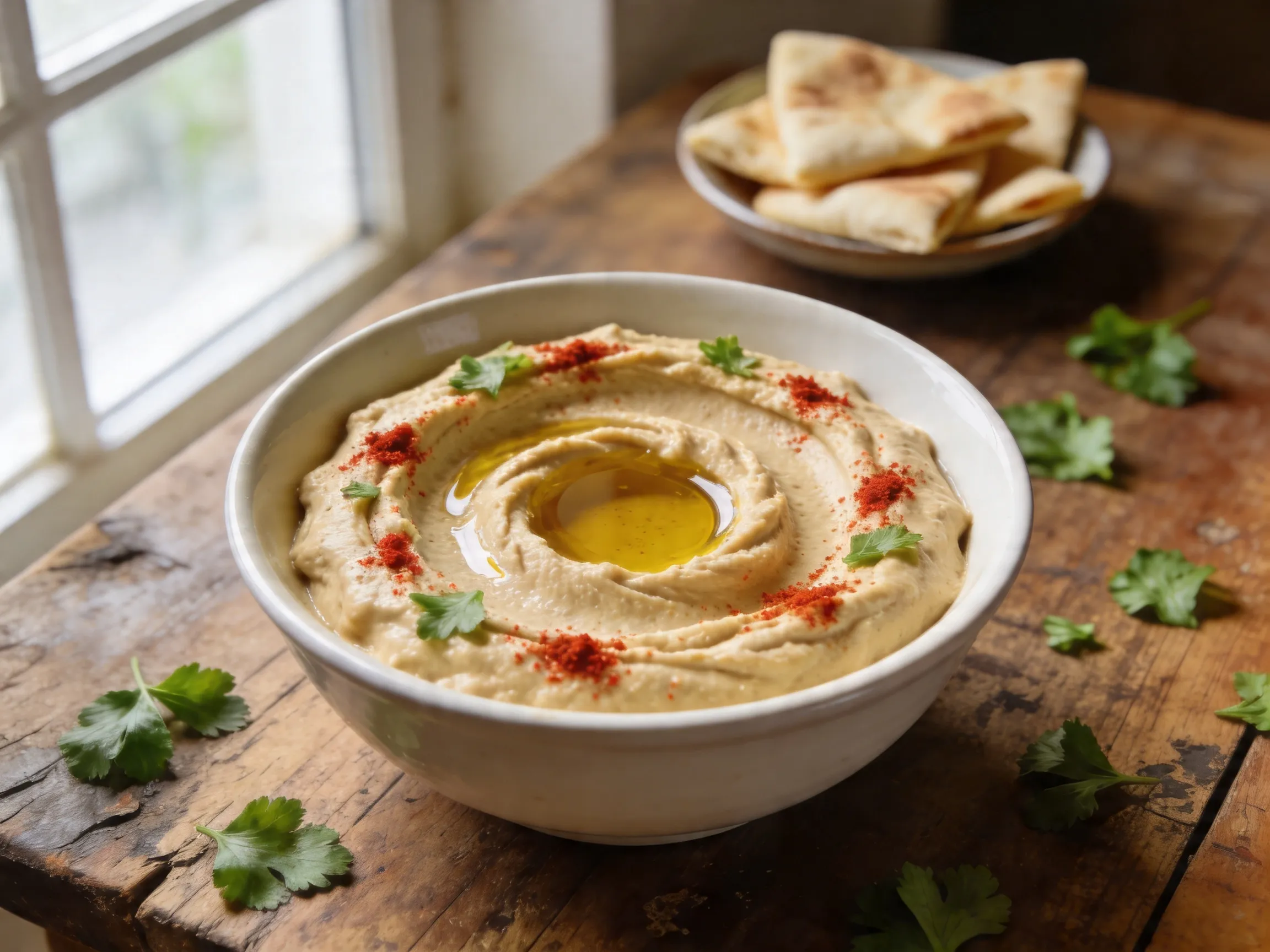
Most people have tried hummus from a supermarket tub. It is fine — but it is also a little bland, slightly watery, and nowhere near what you get at a good Middle Eastern restaurant. The homemade version is a different thing entirely. This hummus recipe uses simple ingredients and one key technique to get that thick, silky, restaurant-quality texture at home. It comes together in about 10 minutes, keeps well in the fridge for days, and works as a dip, a spread, or a base for a full mezze plate. If you have a food processor and a can of chickpeas, you are already most of the way there.
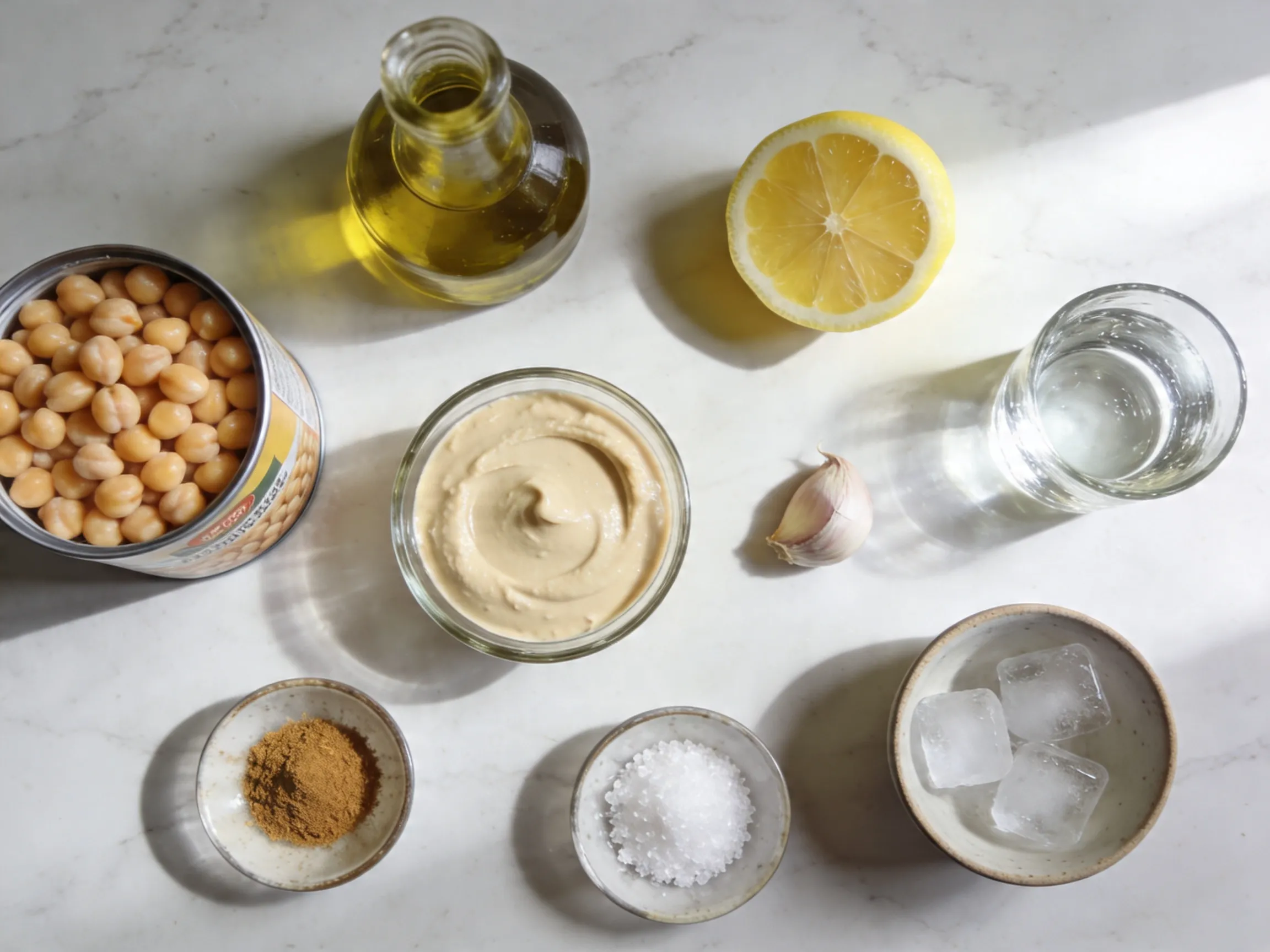
- 1 can (400g / 15 oz) chickpeas, drained , reserve the liquid
- 1/4 cup good-quality tahini
- 1 1/2 tablespoons fresh lemon juice , about 1/2 lemon
- 1 small garlic clove, minced
- 2 tablespoons extra virgin olive oil , plus more to finish
- 1/2 teaspoon fine salt
- 1/2 teaspoon ground cumin
- 3 to 4 tablespoons cold water or reserved chickpea liquid
- 2 to 3 ice cubes , optional, for smoother texture
- Paprika or sumac , optional, for dusting
- Fresh parsley , optional, for scattering
- Food processor or high-powered blender
- Citrus juicer
- Rubber spatula
- Knife and cutting board or garlic press
- Measuring spoons
- Airtight container for storage
- Blend tahini and lemon juice first to build the creamy base.
- Add garlic, olive oil, and salt and blend briefly.
- Add chickpeas and cumin and blend until smooth.
- Add cold water or chickpea liquid gradually to reach the right consistency.
- Blend for longer than feels necessary, taste, adjust, and serve.
- Add tahini and lemon juice to the food processor. Blend for a full minute. It will turn pale, thick, and creamy. This step is the foundation of smooth hummus — do not rush it or skip it.
- Add the minced garlic, olive oil, and salt. Blend for another 30 seconds until fully combined.
- Add the drained chickpeas and ground cumin. Blend for 1 minute. The mixture will look thick and slightly rough at this stage — that is normal.
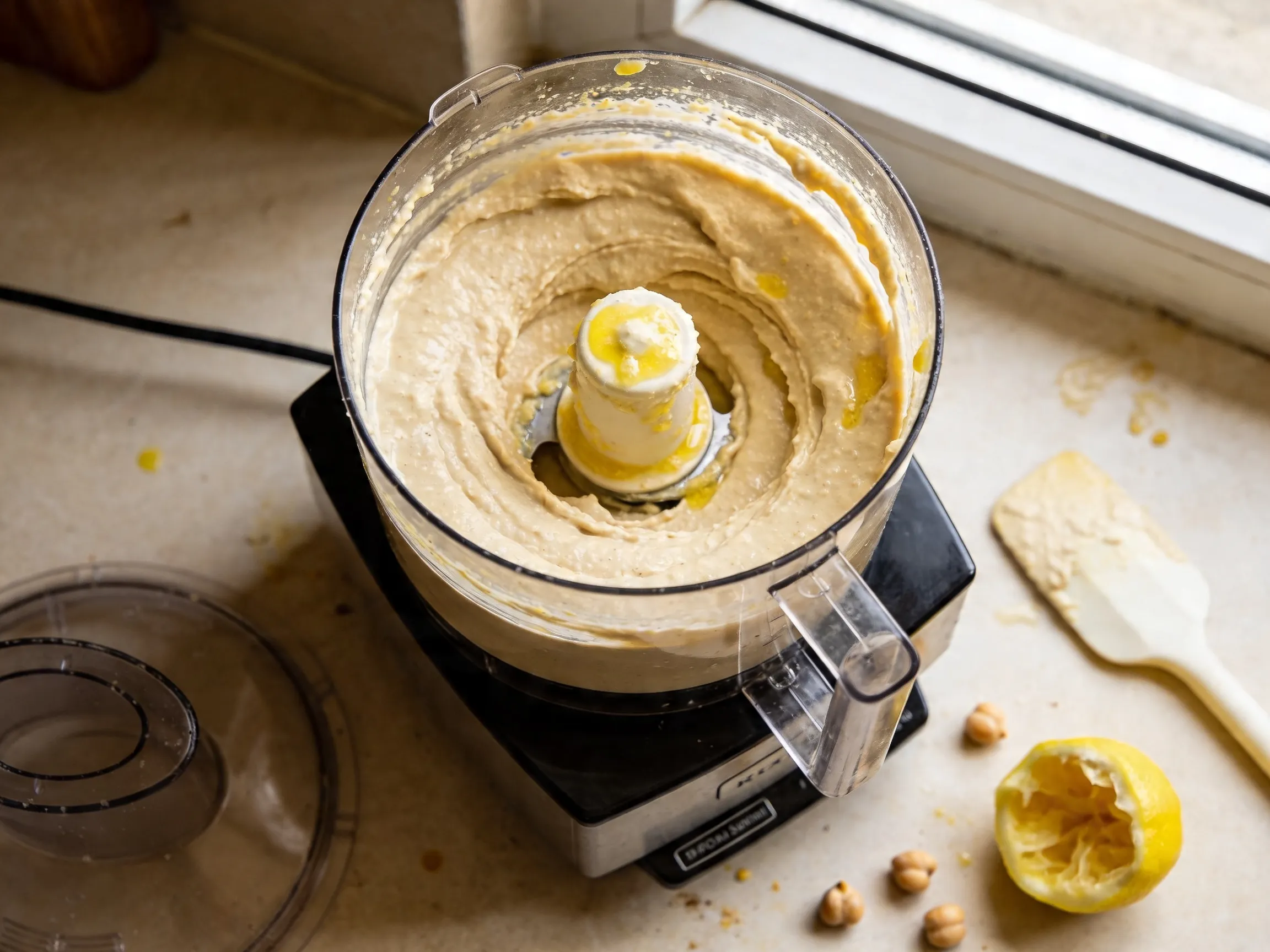
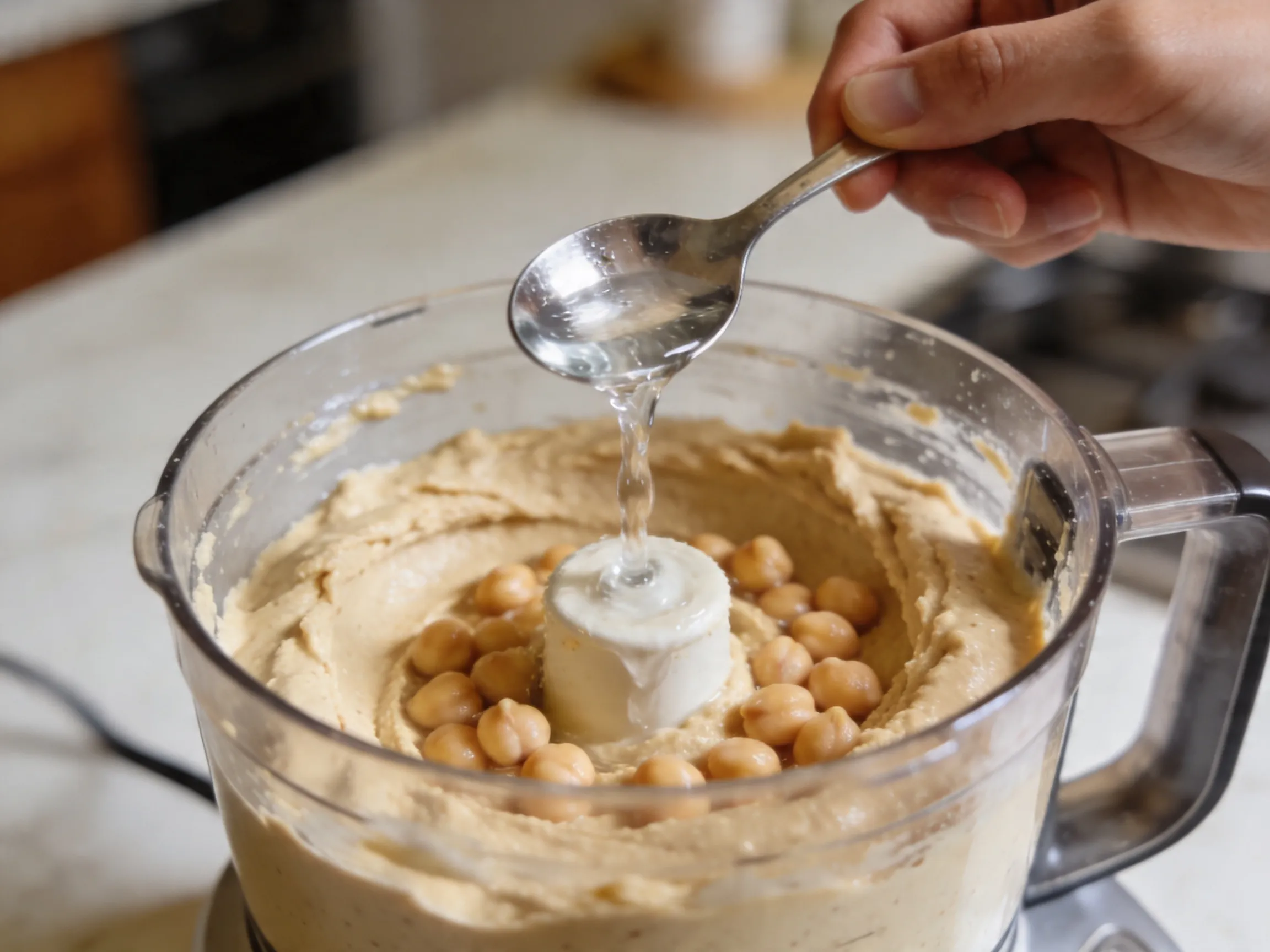
- With the processor still running, pour in cold water or reserved chickpea liquid one tablespoon at a time. Stop adding when the hummus reaches a smooth, spreadable consistency. If you want an extra-silky result, drop in 2 to 3 ice cubes at this stage.
- Keep blending for another 2 to 3 full minutes. It feels longer than necessary — but this is what separates smooth hummus from gritty hummus. Do not cut this step short.
- Stop and taste. If it needs brightness, add a little more lemon juice. If it tastes flat, add a pinch more salt. If it is too thick, add water one teaspoon at a time and blend again.
- Spoon into a wide shallow bowl. Use the back of a spoon to create a swirl across the top. Drizzle olive oil generously into the swirl, dust with paprika or sumac, and scatter over fresh parsley. Serve immediately or cover and refrigerate.
- Always blend tahini and lemon juice together before anything else. The two emulsify and create the thick, creamy body the rest of the recipe depends on.
- Keep it cold throughout. Use cold water, cold chickpea liquid, or ice cubes during blending. Warm liquid creates a dense, heavy result.
- If you have 5 extra minutes, peel the skins off the chickpeas before blending. It sounds fussy, but the texture difference is real. Pinch each chickpea and the skin slips right off.
- Use chickpeas at room temperature, not straight from a cold fridge. Cold chickpeas do not blend as smoothly.
- If you own a high-powered blender, use it instead of a food processor. The result is noticeably silkier.
- Give the finished hummus 20 to 30 minutes to rest before serving if you can. The garlic mellows, the flavors settle, and the texture firms up slightly to the ideal consistency.
- Skipping the tahini-lemon blend at the start. Adding chickpeas too early means you miss the emulsification that creates the creamy base.
- Using bottled lemon juice. It tastes processed and slightly chemical. Fresh lemon juice is a small detail that has a big impact here.
- Stopping the blender too soon. Most people stop after 1 minute because it looks done. It is not. Keep going for the full 3 to 4 minutes total.
- Adding too much garlic. One small raw clove is the right amount. Raw garlic gets sharper as the hummus sits, so more is not better.
- Not tasting the tahini first. Tahini varies a lot by brand. Some are smooth and nutty. Others are bitter and grainy. If it does not taste good on its own, it will not taste good in the hummus.
- Using hot or warm water. It makes the texture gluey. Always cold.
- Roasted garlic hummus: Replace the raw garlic with 3 to 4 roasted cloves. The flavor is much gentler, slightly caramelized, and works well for people who find raw garlic too sharp.
- Roasted red pepper hummus: Add half a jarred roasted red pepper before blending. It adds sweetness, color, and mild smokiness.
- Spicy hummus: Stir in half a teaspoon of harissa paste or blend in a small piece of fresh red chili.
- Herb hummus: Add a generous handful of fresh parsley, basil, or coriander to the blender. The hummus turns green and has a fresh, bright flavor.
- No tahini: Use sunflower seed butter as a substitute, or simply leave it out. The flavor is less nutty and the texture is slightly different, but it still works.
- Made with dried chickpeas: Soak 150g of dried chickpeas overnight, then boil until very soft — about 1 to 1.5 hours. Use the cooking liquid in place of water. The flavor is deeper and slightly earthier than canned.
- Lower oil version: Reduce olive oil to 1 teaspoon or leave it out entirely. Add extra aquafaba to keep the texture smooth.
- Warm pita bread or toasted pita chips
- Raw vegetables — cucumber spears, carrot sticks, bell pepper strips, celery
- Falafel, either homemade or store-bought
- Spread thickly inside wraps or flatbread sandwiches
- Alongside grilled chicken, lamb kofta, or shawarma
- As part of a mezze spread with tabbouleh, olives, and roasted vegetables
- On thick toast with a soft-boiled egg and a pinch of chili flakes
- Fridge: Store in an airtight container for up to 5 days. Press a sheet of plastic wrap directly onto the surface of the hummus before sealing to prevent it from drying out or forming a skin.
- Freezer: Freeze in individual portions for up to 3 months. Thaw overnight in the fridge. Stir well before serving — the texture may look separated at first but comes back together quickly.
- To refresh leftovers: Add a splash of cold water and a small drizzle of olive oil, then stir. It loosens back up to the right consistency within a minute.
- Hummus does not need to be reheated. Serve cold from the fridge or let it come to room temperature for 15 to 20 minutes before serving.
Underblending and low-quality tahini are the two most common reasons. Blend for a minimum of 3 to 4 minutes total and use a fresh, smooth tahini — if it is coarse or separated in the jar, no amount of blending will fix it.
Yes, and the flavor is slightly richer. Soak overnight, boil until very soft, and use the cooled cooking liquid in place of cold water.
Almost always the tahini. Taste it before using — if it is bitter on its own, it will be bitter in the hummus. Too much raw garlic can also cause this, especially after the hummus has rested for a few hours.
They keep the mixture cold during blending, which helps the tahini and oil stay emulsified and creates a lighter, airier texture. Small step, noticeable difference.
Yes to both. All base ingredients are naturally plant-based and gluten-free. Check your tahini label if you have a severe gluten sensitivity.
Up to 2 days ahead works well. The flavor improves after a night in the fridge. Keep toppings separate and add them just before serving.
- Tahini is the ingredient that makes or breaks this recipe. A good Middle Eastern or Lebanese brand will be naturally smooth, pale, and mildly nutty. Cheaper supermarket versions can be gritty and bitter. It is worth spending a little more.
- Aquafaba — the liquid from the chickpea can — is more flavorful than plain water and adds a subtle savory depth to the finished hummus. Use it whenever you have it.
- Always thin the hummus gradually. Add liquid one teaspoon at a time. It is easy to make it too loose and very hard to fix once you have gone too far.
- This recipe doubles without any adjustments to ratios or technique.
- For a gathering, take the hummus out of the fridge 20 minutes before serving. Room-temperature hummus has better flavor and a softer texture than cold.
Homemade hummus is one of the simplest things you can make from scratch — and the gap between homemade and store-bought is wider than most people expect until they try it.
The recipe itself is straightforward. The technique is what matters. Blend the tahini and lemon first. Keep everything cold. Give it enough time in the blender. Those three things will get you there every time.