
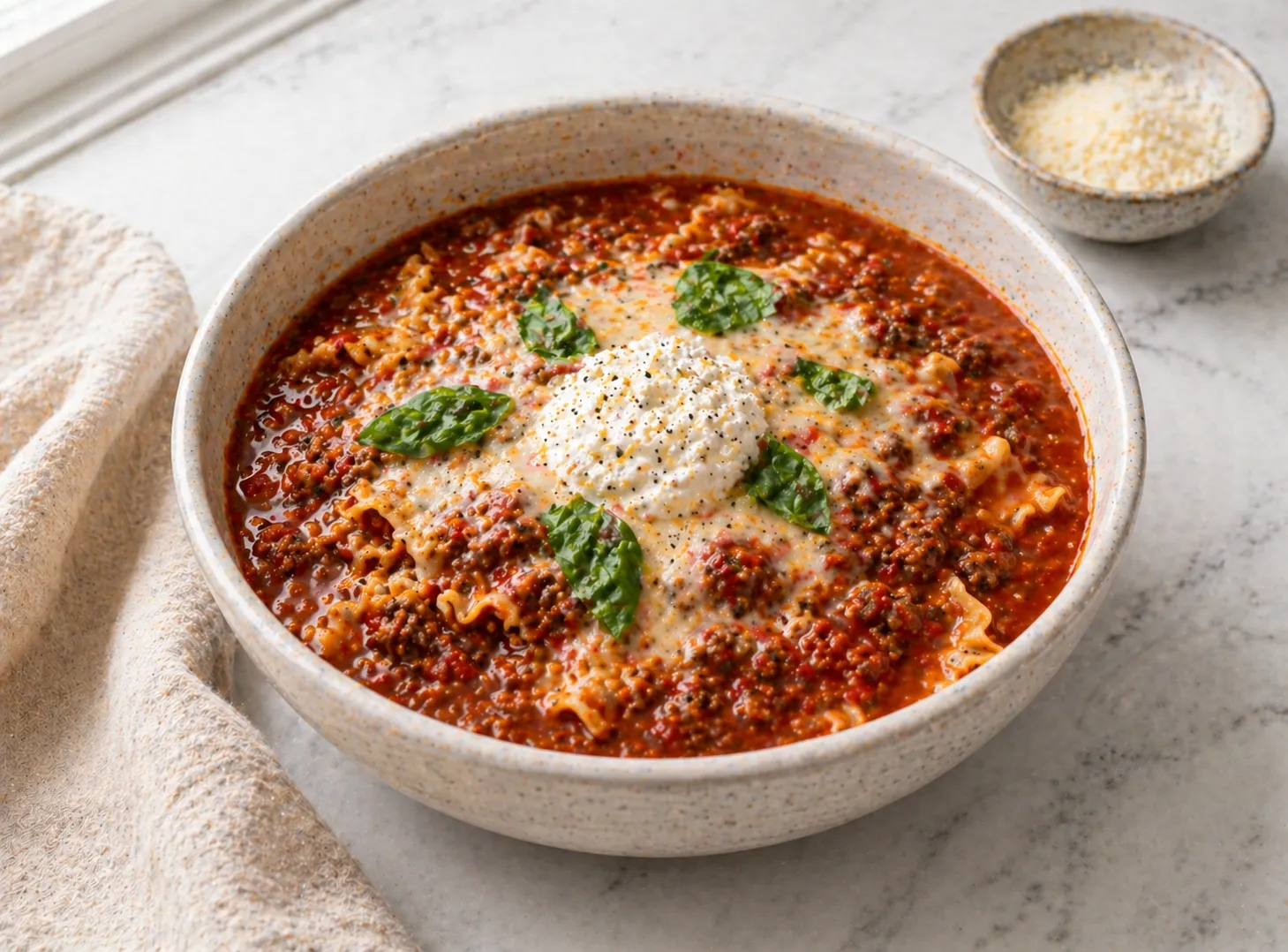
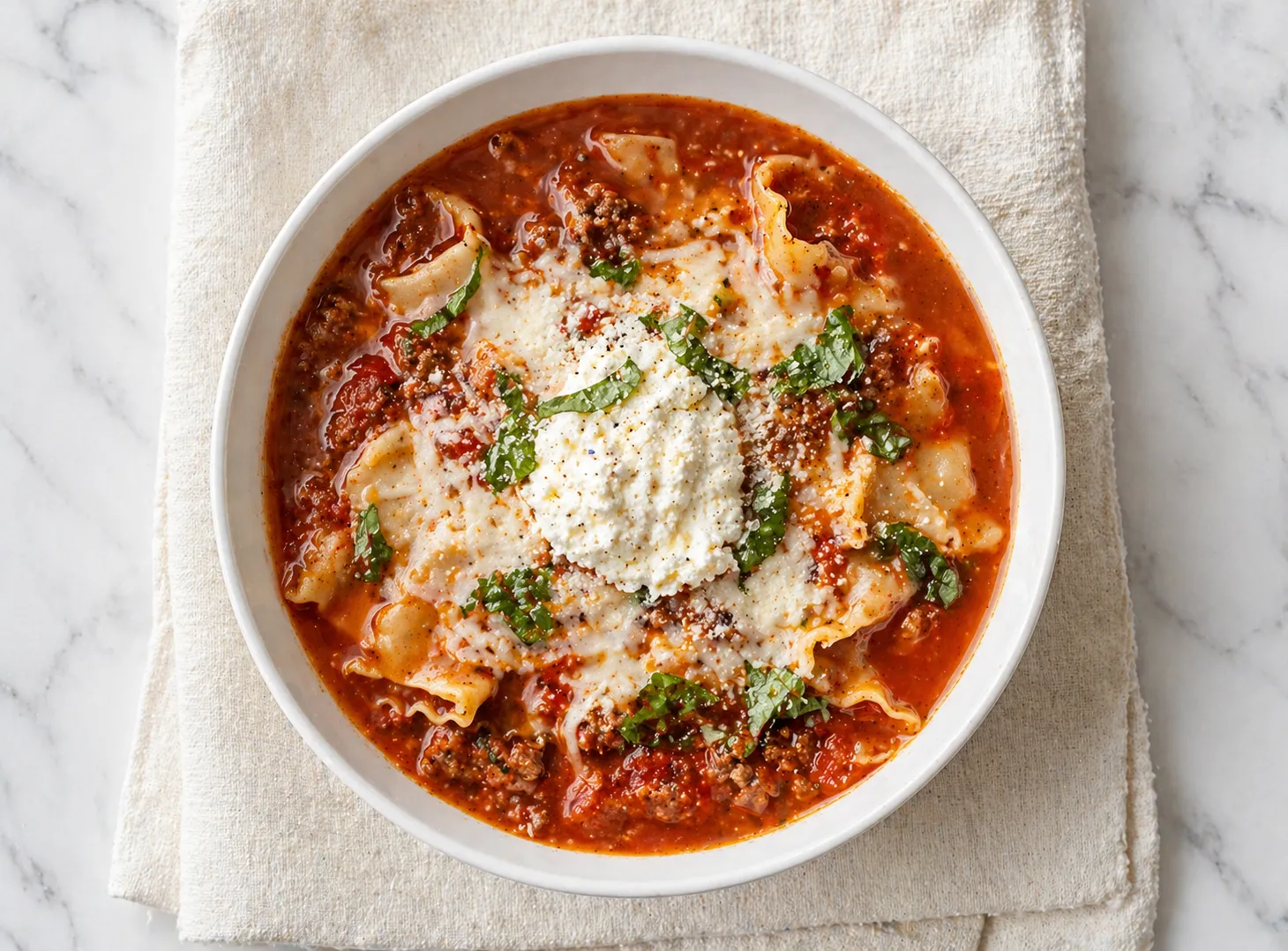
Lasagna soup gives you everything you love about classic lasagna — the rich tomato sauce, creamy ricotta, melted cheese, and soft pasta — without the layering, the baking dish, or the hour-long wait. It comes together in one pot in about 45 minutes. The flavor is deep, the texture is satisfying, and cleanup is minimal. If lasagna feels like too much effort on a weeknight, this recipe solves that completely.
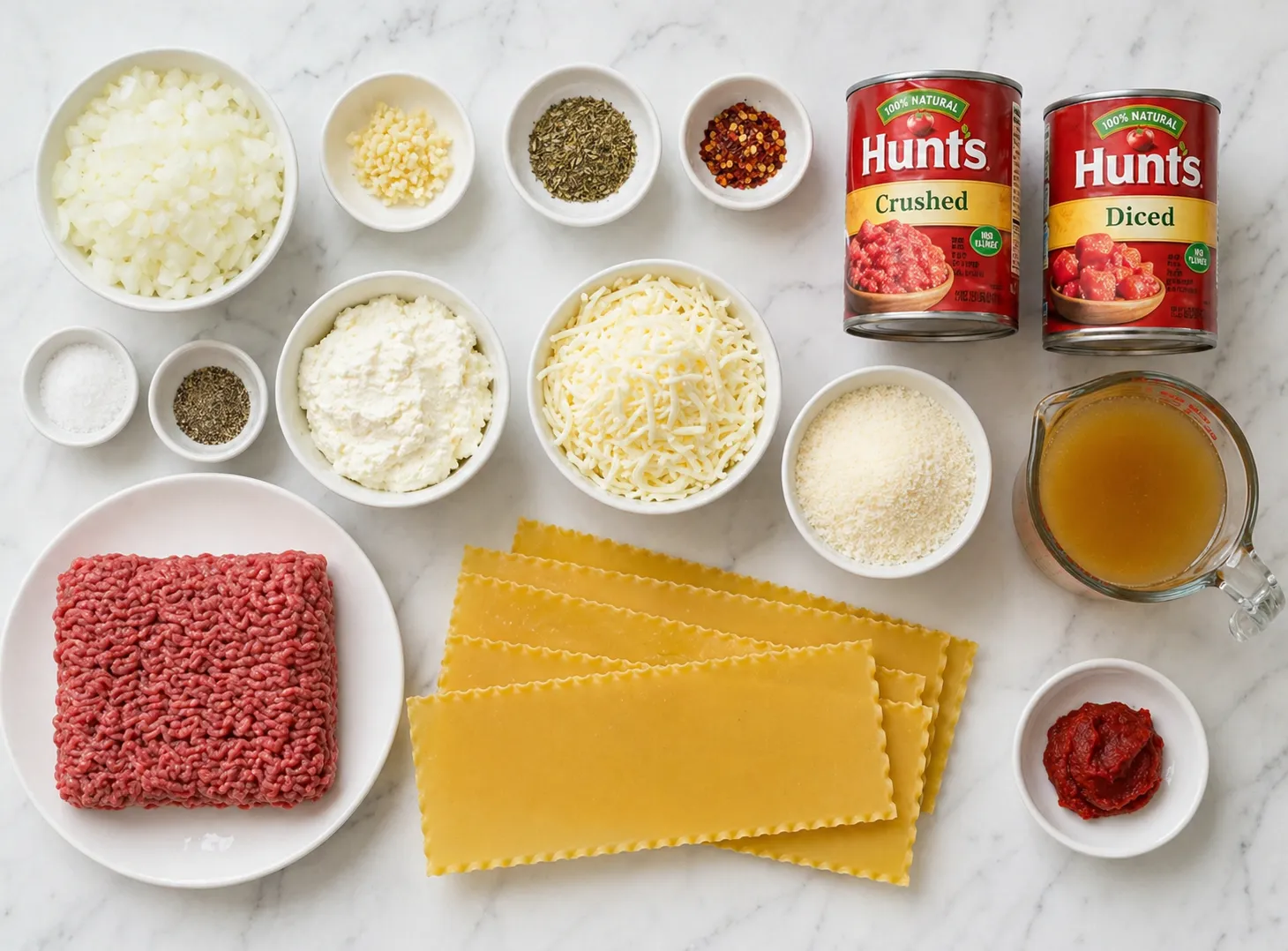
- 1 lb ground beef or Italian sausage
- 1 medium yellow onion, diced
- 4 cloves garlic, minced
- 1 tablespoon olive oil
- 1 teaspoon Italian seasoning
- 1/2 teaspoon red pepper flakes, optional
- 1/2 teaspoon salt
- 1/4 teaspoon black pepper
- 1 can (28 oz) crushed tomatoes
- 1 can (14.5 oz) diced tomatoes
- 4 cups chicken broth or beef broth
- 2 tablespoons tomato paste
- 1 teaspoon sugar
- 8 to 10 lasagna noodles, broken into rough pieces
- Any short pasta works as a substitute
- 1 cup whole milk ricotta
- 1 cup shredded mozzarella
- 1/4 cup grated Parmesan
- Fresh basil or parsley for serving
- Large Dutch oven or heavy soup pot, 5 to 6 quart minimum
- Wooden spoon or silicone spatula
- Sharp knife and cutting board
- Can opener
- Ladle for serving
- Small bowl for mixing the ricotta topping
- Measuring cups and spoons
- Box grater if you are using a block of Parmesan
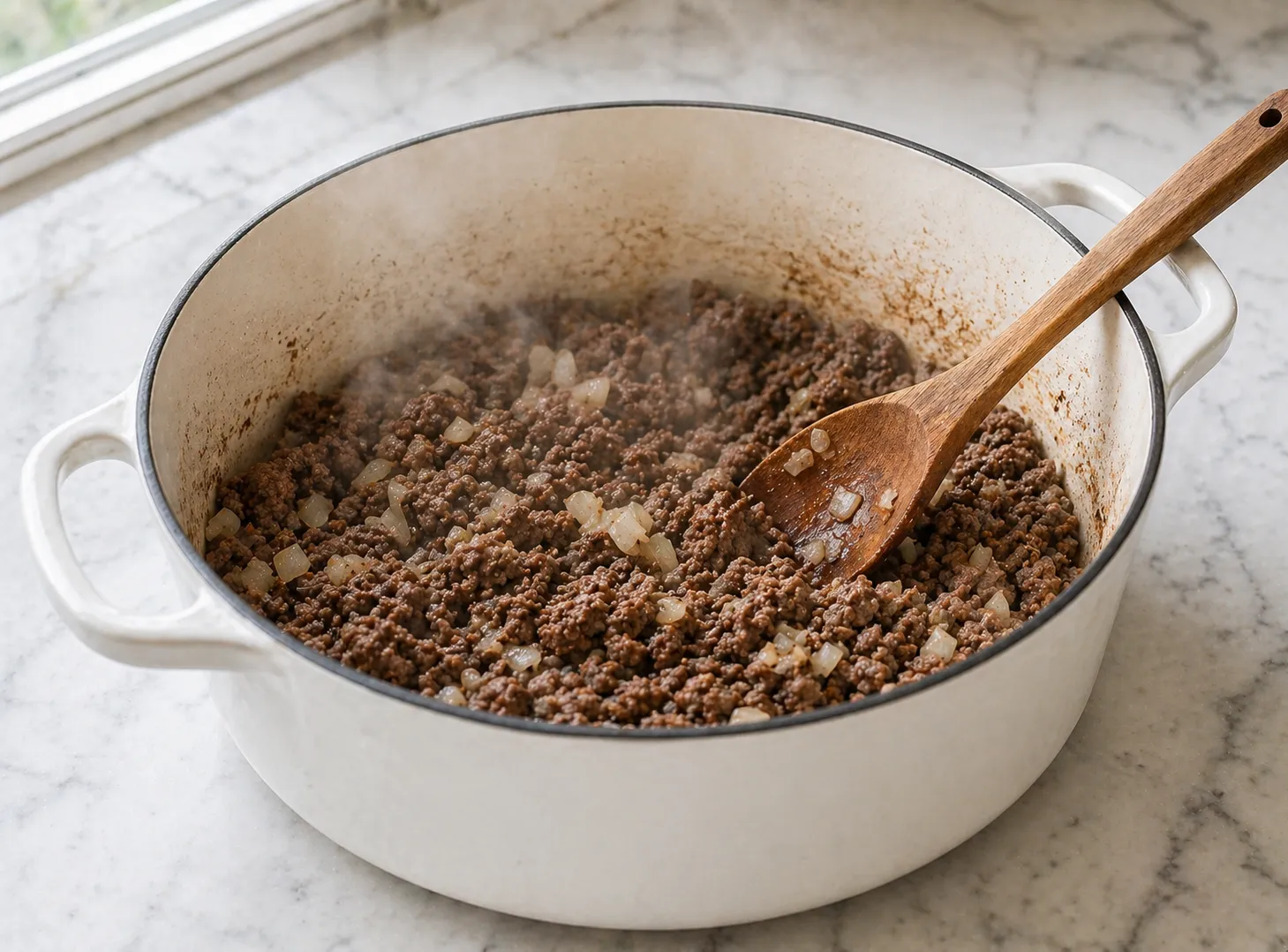
- Brown the meat with onion and garlic.
- Build the tomato broth.
- Add the noodles and simmer until tender.
- Mix the cheese topping while the soup cooks.
- Serve with a generous spoonful of ricotta on top.
- Set a large Dutch oven or heavy pot over medium-high heat. Add the olive oil.
- Add the diced onion and cook for 3 minutes until softened.
- Stir in the garlic and cook for 30 seconds.
- Add the ground beef or sausage. Break it apart with a spoon and cook until no pink remains, about 6 to 8 minutes.
- Drain excess fat from the pan if needed.
- Stir in the tomato paste and let it cook for 1 minute. This step deepens the flavor of the whole broth.
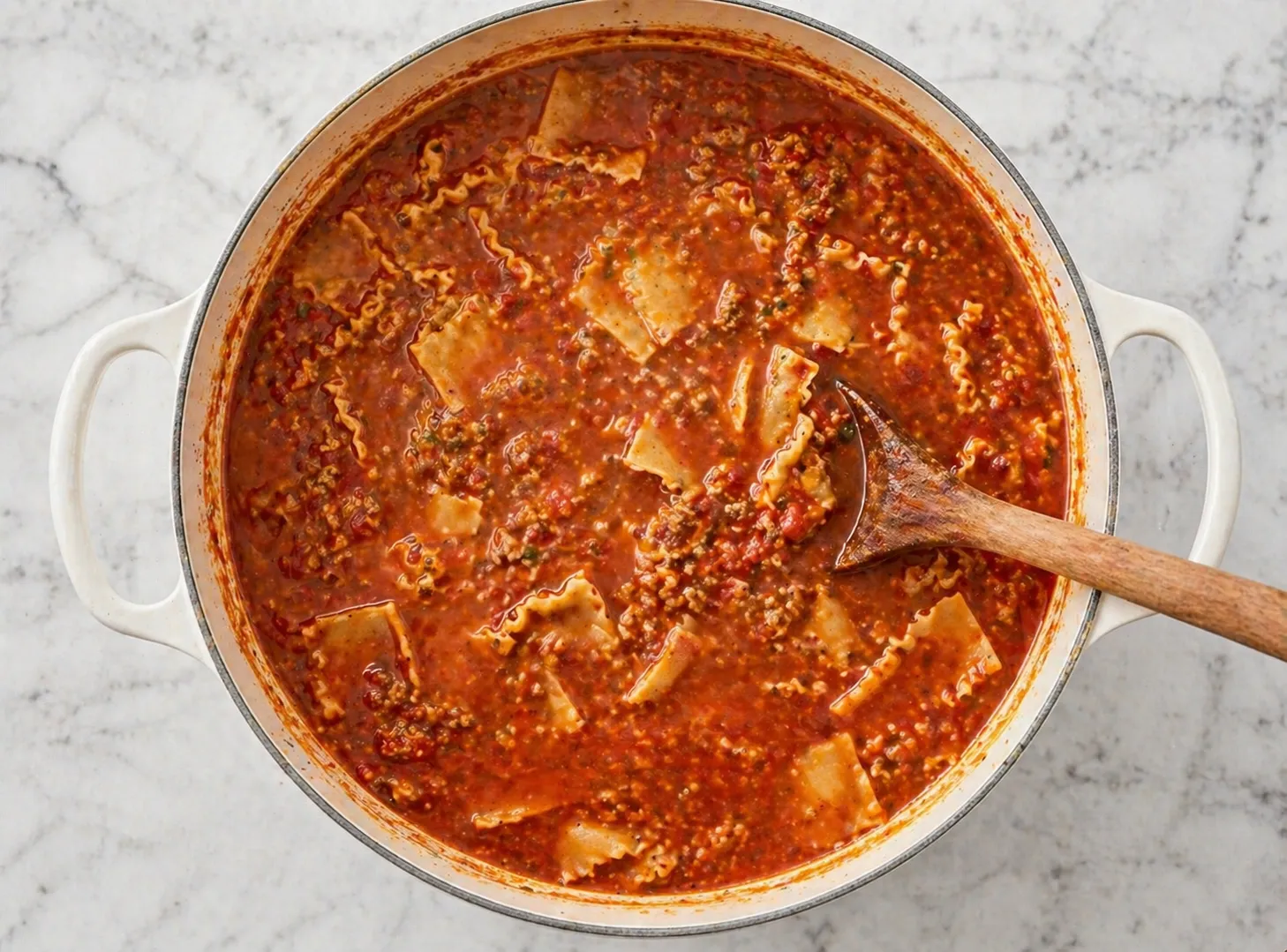
- Pour in the crushed tomatoes, diced tomatoes, and broth. Stir everything together.
- Add the Italian seasoning, red pepper flakes, salt, pepper, and sugar.
- Bring the pot to a boil.
- Add the broken lasagna noodles and stir right away so they do not stick together.
- Reduce heat to medium and simmer uncovered for 12 to 15 minutes, stirring occasionally, until the noodles are just tender.
- While the soup simmers, combine the ricotta, half the mozzarella, and the Parmesan in a small bowl. Add a small pinch of salt and stir to combine.
- Taste the broth and adjust salt and pepper as needed.
- Remove the pot from heat and let it rest for 5 minutes before serving.
- Ladle the soup into bowls. Add a spoonful of the ricotta mixture into the center of each bowl.
- Top with the remaining shredded mozzarella and fresh herbs. Serve while hot.
- Break the noodles into roughly 2-inch pieces. Uneven sizes work fine and give each bowl a good mix of textures.
- Use whole milk ricotta. It holds up better in the bowl and has a creamier, fuller taste than low-fat versions.
- Pull the noodles just before they are fully done. They continue cooking in the hot broth even after the heat is off.
- Let the meat develop a real sear before you start adding liquids. That browning adds flavor you cannot get back later.
- Drop a Parmesan rind into the broth while it simmers. It adds a quiet savory depth that is hard to place but easy to notice.
- Taste the broth before adding noodles. That is your best window to correct seasoning while it is still easy to adjust.
- If the soup thickens too much, stir in a small splash of broth or water. It loosens up quickly.
- Adding noodles before the broth is ready. Build the base fully first and bring it to a boil before the pasta goes in.
- Skipping the 5-minute rest. It lets the soup settle and the flavors come together before you serve.
- Relying only on pre-shredded mozzarella. It melts fine, but the ricotta topping is what makes each bowl feel like lasagna. Do not skip it.
- Leaving excess fat in the pan after browning the meat. Too much grease makes the broth heavy and slick. Drain it before adding any liquid.
- Overcooking the noodles. They absorb broth fast, especially in leftovers. Watch the pot during that last stretch of simmering.
- Under-seasoning the broth. Canned tomatoes vary a lot in salt content. Always taste before serving, not just before adding noodles.
- Italian sausage (mild or hot) works in place of ground beef and adds more seasoning and richness to the broth.
- Ground turkey or chicken makes a lighter version without changing the overall structure of the recipe.
- Skip the meat entirely and add mushrooms, zucchini, or a couple handfuls of baby spinach for a vegetarian pot.
- Gluten-free pasta works here. Just follow the package cook time since it often differs from regular pasta.
- Stir in a splash of heavy cream at the very end for a richer, slightly pink broth.
- Cottage cheese (well drained) is a workable swap for ricotta if that is what you have on hand.
- Rotini, penne, or farfalle all work if you do not have lasagna noodles.
- Stir fresh spinach into the pot in the last 2 minutes of cooking if you want extra greens without changing the flavor.
- For a dairy-free version, use a cashew-based ricotta and skip or swap the mozzarella.
- Thick-cut garlic bread or toasted sourdough for soaking up the broth
- A simple green salad with lemon dressing to cut through the richness
- Roasted broccolini or steamed green beans on the side
- A light red wine like Chianti or Barbera if you are pouring drinks
- Extra Parmesan and red pepper flakes on the table so everyone can adjust their own bowl
- Storage:
- Cool the soup fully before storing. Transfer to airtight containers and refrigerate for up to 4 days.
- To freeze, store the broth base without the noodles. It keeps well for up to 3 months. Cook fresh noodles when you are ready to serve.
- Reheating:
- Warm on the stovetop over medium heat, stirring as it heats. Add a splash of broth or water since the noodles will have absorbed liquid overnight.
- Microwave in 60-second intervals, stirring between each, until hot all the way through.
- Avoid bringing it to a hard boil when reheating. It breaks down the noodles faster than you want.
Yes. Cook the broth base ahead and store it separately from the noodles. Boil fresh noodles when you reheat and you will get a much better texture.
You can. Reduce the simmer time to about 8 to 10 minutes and check them early since they cook faster than regular noodles.
The broth freezes well for up to 3 months. Leave the noodles out before freezing and add fresh pasta when you reheat.
Yes. Brown the meat first on the stovetop, then transfer everything except the noodles and cheese to the slow cooker. Cook on low for 6 hours or high for 3. Add broken noodles in the last 30 minutes of cooking.
Store noodles and broth separately when you can. If they are already mixed, add extra broth when reheating and serve right away.
A 5 to 6 quart Dutch oven or soup pot is the right size. You need enough room for the broth to bubble comfortably without risk of spilling.
- Broken lasagna noodles are traditional for this soup, but any pasta you have in the cabinet works just as well.
- The teaspoon of sugar in the broth is small but it does a real job cutting through the acidity of canned tomatoes. The soup will not taste sweet.
- Keep the ricotta topping as a dollop on top, not stirred in. That way every spoonful picks up a bit of everything.
- If you use Italian sausage instead of ground beef, taste the broth before adding extra salt. Sausage already carries a lot of seasoning.
- Leftovers often taste even better the next day once the broth has had time to develop overnight.
- The recipe doubles easily for a larger group. Use a bigger pot and give the broth a little extra time to come to a boil.
This lasagna soup recipe works because it does not try to be more than what it is. You get all the comfort and flavor of classic lasagna in a fraction of the time, without any of the fuss of layering or baking. The broth is rich, the pasta soaks it up well, and the ricotta on top pulls the whole bowl together in a way that feels genuinely satisfying. It is the kind of recipe that goes from stovetop to table fast, feeds a crowd without stress, and earns its place as a regular weeknight dinner. Make it once and you will understand why it keeps showing up on so many dinner tables when the weather turns cold and people want something real to eat. That is really all there is to say about it.