
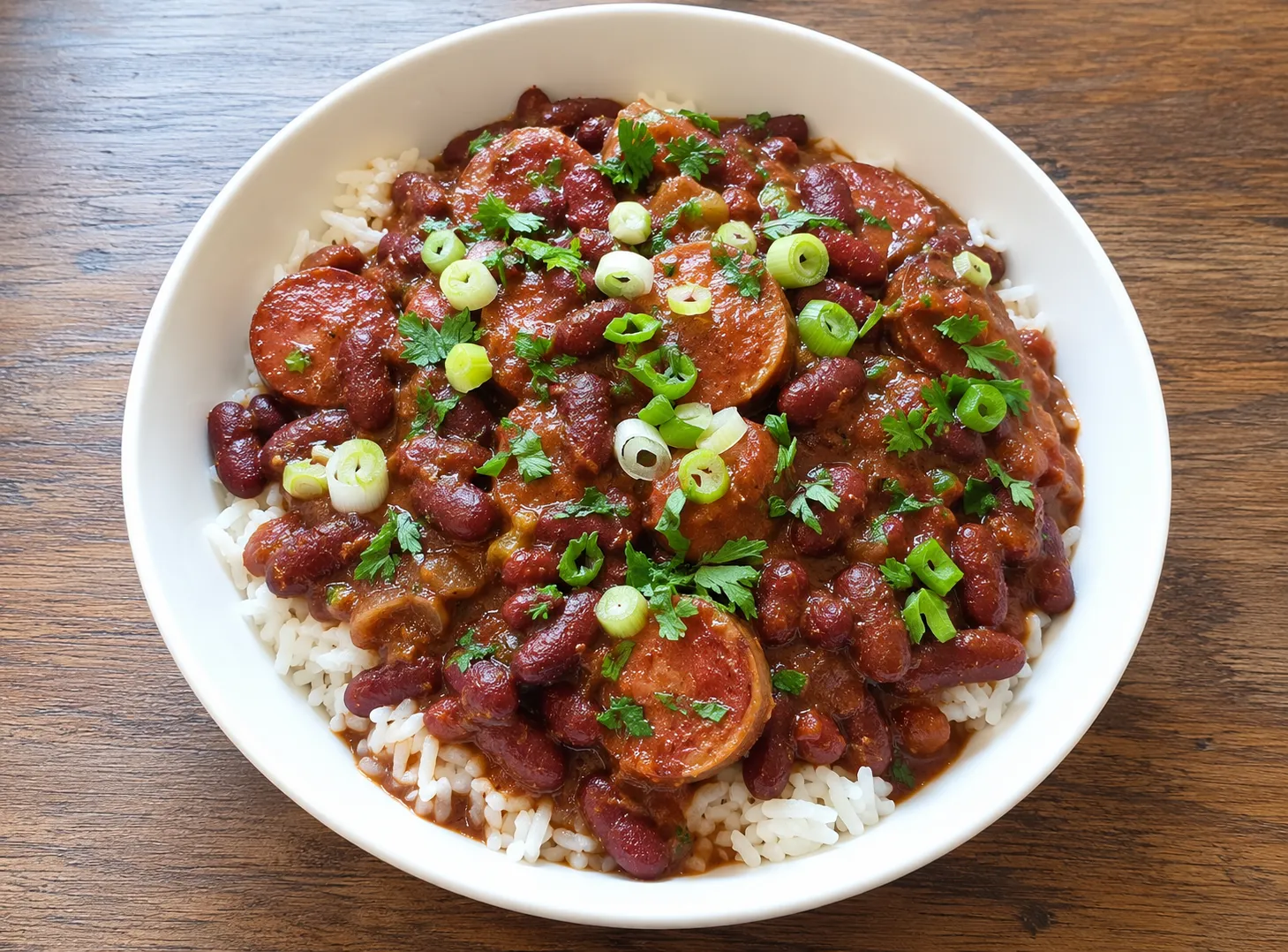
Red beans and rice is one of those meals that costs almost nothing to make but tastes like it took real effort. The beans slowly break down into a thick, smoky sauce that coats every grain of rice. It is filling without being heavy, and the leftovers are honestly better than the first serving. If you have dried beans in your pantry and an hour to spare, this recipe is worth making tonight.
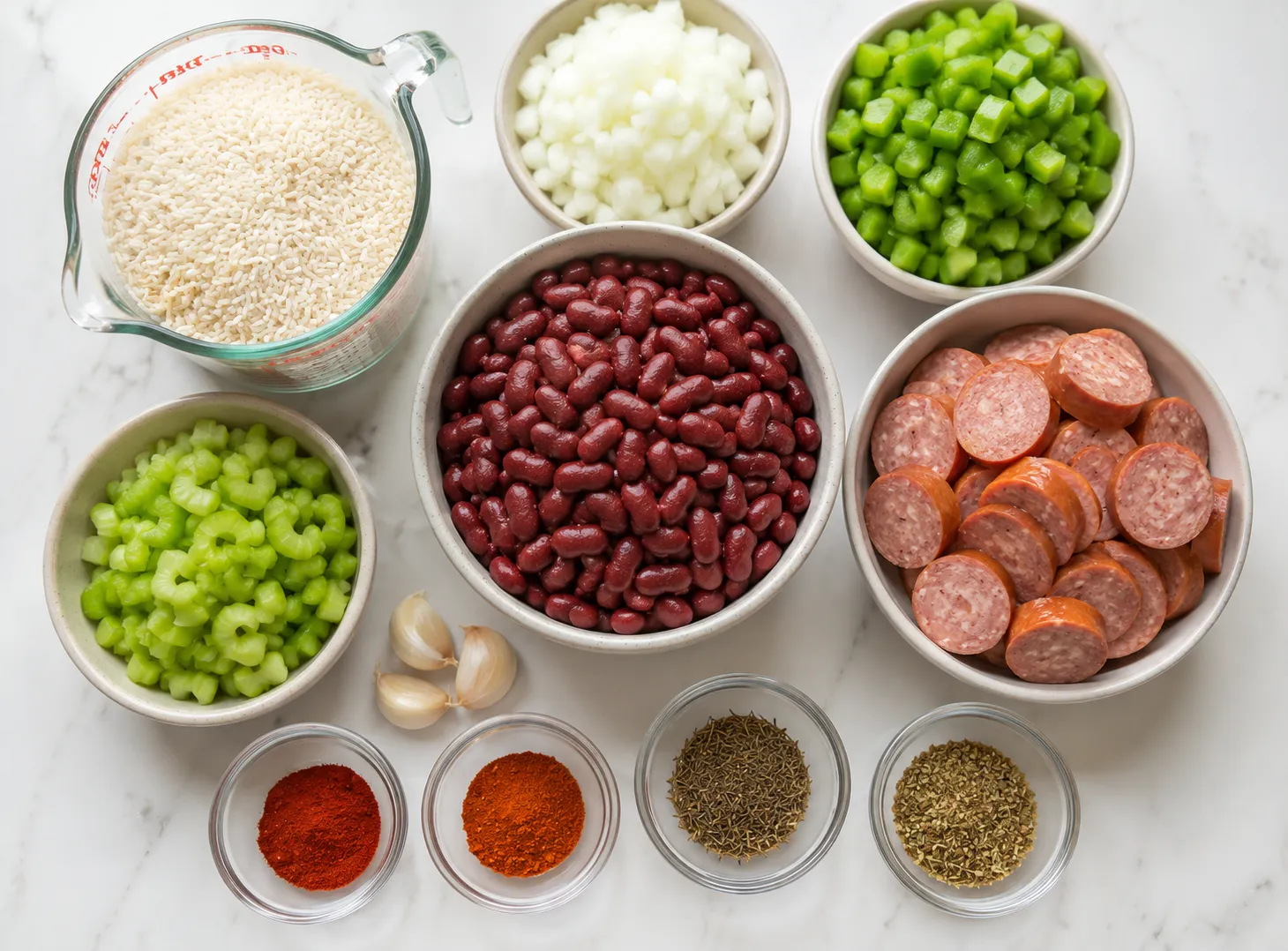
- 1 pound dried red kidney beans, soaked overnight
- 1 pound andouille sausage, sliced into rounds
- 1 medium yellow onion, diced
- 1 green bell pepper, diced
- 3 celery stalks, diced
- 6 garlic cloves, minced
- 2 tablespoons vegetable oil
- 6 cups chicken broth
- 2 bay leaves
- 1 teaspoon smoked paprika
- 1 teaspoon dried thyme
- 1 teaspoon dried oregano
- 1 teaspoon cayenne pepper, adjust to taste
- 1 teaspoon onion powder
- 1 teaspoon garlic powder
- Salt and black pepper to taste
- Hot sauce to taste
- 2 cups long-grain white rice
- 4 cups water or chicken broth
- 1 teaspoon salt
- 1 tablespoon butter
- Sliced green onions
- Fresh parsley, chopped
- Hot sauce on the side
- Crusty bread, optional
- Large Dutch oven or heavy-bottomed pot, at least 6 quarts
- Medium saucepan with a tight-fitting lid for the rice
- Wooden spoon for stirring and mashing
- Cutting board and a sharp chef's knife
- Colander for draining beans
- Measuring cups and spoons
- Ladle for serving
- Soak and drain the dried beans.
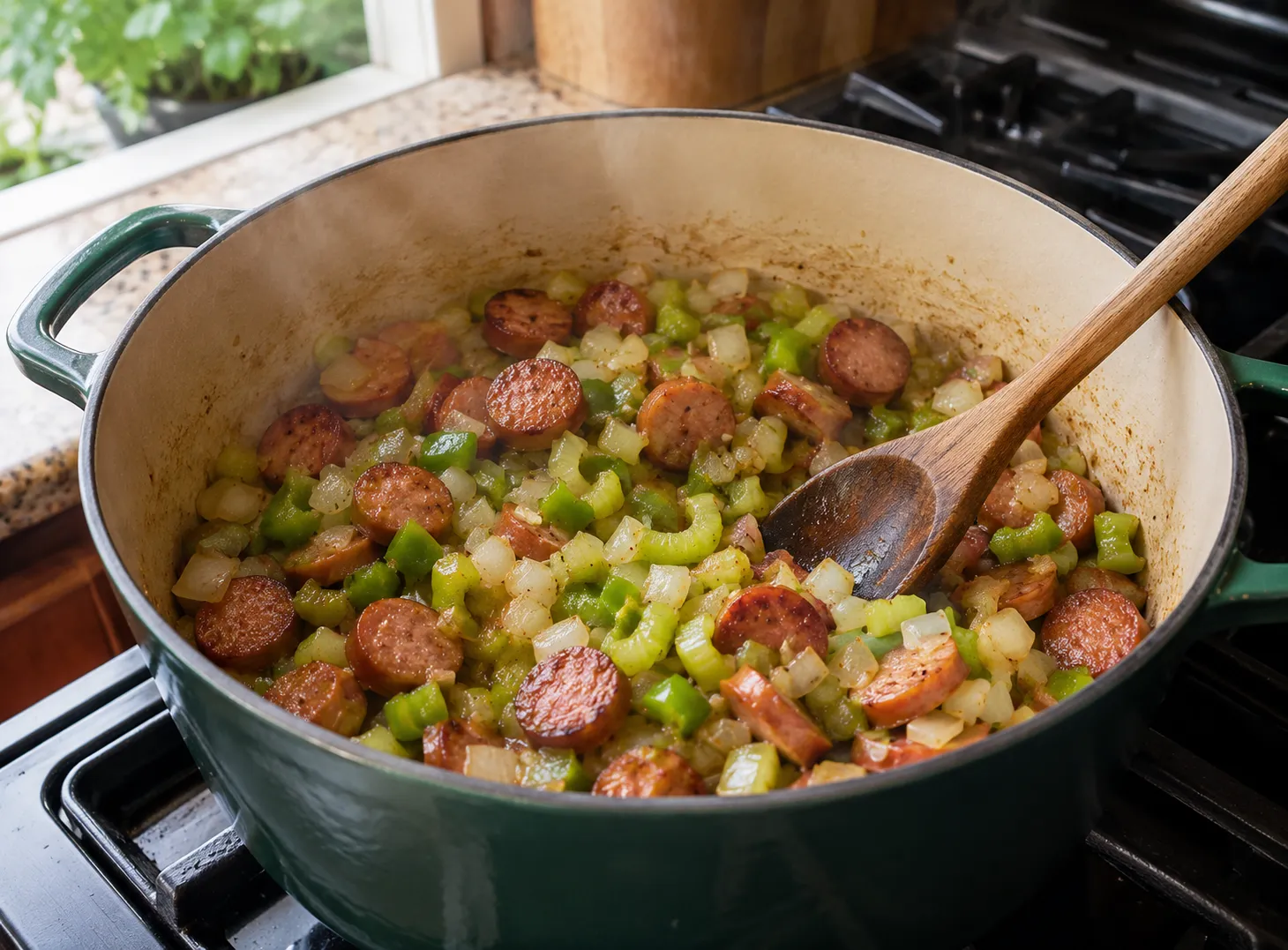
- Brown the sausage, then cook down the onion, pepper, and celery in the same pot.
- Add beans, broth, and seasoning. Simmer on low until the beans are completely tender.
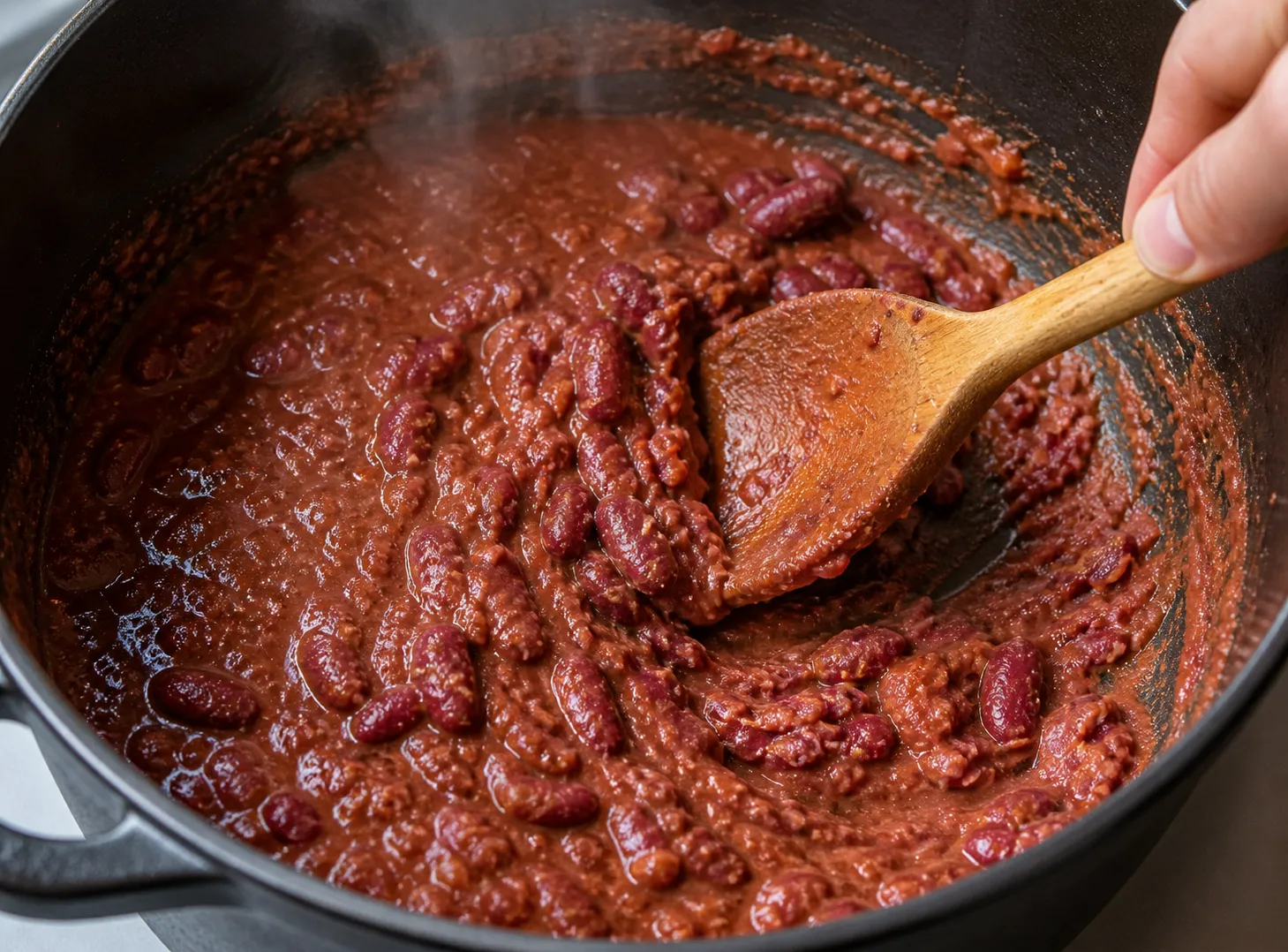
- Mash a portion of the beans to thicken the sauce.
- Cook the rice separately and serve alongside.
- Drain the soaked beans and rinse under cold water. Set aside.
- Heat the vegetable oil in a large Dutch oven or heavy pot over medium-high heat.
- Add the sausage slices and cook for 3 to 4 minutes per side until browned. Remove to a plate and set aside.
- Lower the heat to medium. Add the onion, bell pepper, and celery to the same pot. Cook for 6 to 8 minutes, stirring occasionally, until softened and starting to turn golden at the edges.
- Add the garlic and cook for 1 minute, stirring so it does not burn.
- Add the smoked paprika, thyme, oregano, cayenne, onion powder, and garlic powder. Stir and cook for 30 seconds to toast the spices.
- Return the sausage to the pot. Add the drained beans.
- Pour in the chicken broth and add the bay leaves. Stir everything together and bring to a boil over high heat.
- Once boiling, reduce to a low simmer. Cover loosely and cook for 1 hour to 1 hour 15 minutes, stirring every 20 minutes or so.
- Check the beans for doneness. They should be fully soft and creamy inside with no chalky center.
- Use the back of a wooden spoon to mash roughly one quarter of the beans against the side of the pot. Stir the mashed beans into the sauce to thicken it.
- If the sauce is too thick, add a splash of broth. If it is too thin, simmer uncovered for another 10 minutes.
- Season with salt, black pepper, and hot sauce. Fish out and discard the bay leaves.
- While the beans are in their final simmer, make the rice. Combine the rice, liquid, salt, and butter in a medium saucepan and bring to a boil.
- Reduce heat to the lowest setting, cover, and cook for 18 minutes without lifting the lid.
- Remove from heat and let the rice sit, covered, for 5 minutes. Fluff with a fork.
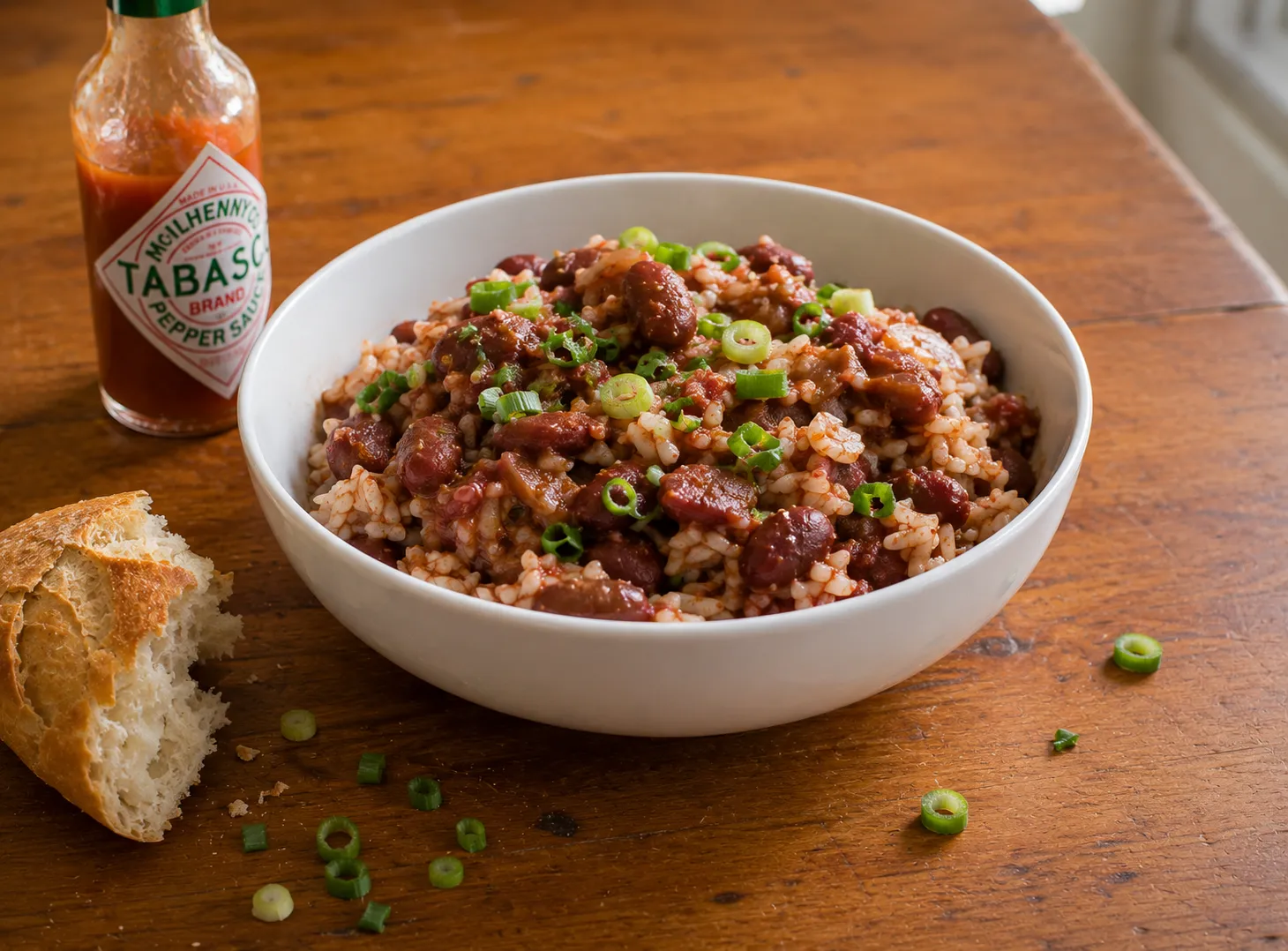
- Spoon beans over rice and top with green onions and fresh parsley. Serve with hot sauce on the side.
- Soak the beans overnight in cold water. It cuts the cooking time down and gives you a more even texture once cooked.
- Brown the sausage before anything else. The caramelized bits left on the pot bottom season everything that goes in after.
- A Dutch oven works best here. The thick walls hold heat steadily and reduce the risk of scorching on the bottom.
- Cook the holy trinity, which is onion, bell pepper, and celery, low and slow. Rushing it means less flavor in the final dish.
- Mash the beans by hand rather than using a blender. You want texture and body in the sauce, not a puree.
- Wait until the very end to add salt. The beans absorb salt from the broth throughout cooking, and salting too early can leave the skins tough.
- Let the finished pot rest for 10 minutes before serving. The sauce continues to thicken as it sits.
- Good broth makes a noticeable difference here. Use homemade or a low-sodium store-bought variety so you control the salt level.
- Skipping the soak. Dry beans take much longer without it and can cook unevenly.
- Salting too early. It can prevent the beans from fully softening, no matter how long they cook.
- Cooking at too high a heat. A hard rolling boil splits the beans and reduces the sauce too fast. Keep it at a gentle simmer.
- Walking away without stirring. Beans settle and the bottom of the pot can scorch if left too long unattended.
- Using old dried beans. Beans past their prime, usually more than two years old, may never soften. Check the date on the bag before you start.
- Lifting the rice lid mid-cook. Steam is doing the work. Every time you peek, you lose it.
- Over-mashing the beans. Mash a quarter, stir, and see how the sauce looks before mashing more. You want creaminess, not paste.
- Going heavy on the cayenne upfront. Start with the amount listed and add more at the end once you taste the full seasoning.
- No andouille sausage on hand? Smoked sausage, kielbasa, or even chorizo all work. Each shifts the flavor slightly but none of them disappoint.
- For a vegetarian version, skip the sausage and add an extra can of beans. An extra teaspoon of smoked paprika helps replace some of that smoky depth.
- Short on time? Use two 15-ounce cans of kidney beans, drained and rinsed. Reduce the simmering time to about 30 minutes.
- Brown rice works in place of white but adds around 20 extra minutes of cook time and a nuttier flavor. Plan accordingly.
- A smoked ham hock added to the pot with the beans brings a richer, more traditional Southern flavor.
- For a lower-carb option, serve the beans over cauliflower rice. The sauce is thick enough that it holds up well.
- A diced jalapeno added with the holy trinity builds heat into the base of the dish rather than just the finish.
- Want it even smokier? A small drizzle of liquid smoke added with the broth does a lot without being obvious.
- Cornbread, plain or with jalapeno and cheddar stirred in
- Collard greens or sauteed mustard greens
- Fried okra
- Coleslaw, especially if the beans are on the spicier side
- Crusty French bread for wiping the bowl clean
- A simple green salad with something acidic in the dressing to cut through the richness
- Pickled vegetables or sliced pickles on the side
- Sweet iced tea or a cold beer
- Store beans and rice in separate containers. Rice stored in the bean sauce turns mushy within a day.
- Leftover beans keep in the refrigerator for up to 5 days. The flavor genuinely improves after day one.
- Cooked rice keeps refrigerated for 4 days.
- Freeze the beans in portions for up to 3 months. Label each container with the date.
- Thaw frozen beans overnight in the refrigerator before reheating.
- Reheat beans on the stovetop over medium-low heat with a splash of broth or water to loosen the sauce. Stir as it warms through.
- Reheat rice in the microwave with a damp paper towel set over the bowl. It traps just enough steam to keep the grains from drying out.
- Avoid reheating everything together multiple times. Quality drops with each round.
Yes. The cook time increases by 30 to 60 minutes. Keep the heat low and check the liquid level more often since it will reduce more during the longer cook.
Yes. Brown the sausage and cook the vegetables on the stove first, then transfer everything to the slow cooker. Cook on low for 7 to 8 hours or high for 4 to 5 hours.
With the amounts listed, it lands at a medium heat level. Cut the cayenne to a quarter teaspoon and leave out the hot sauce garnish if you want something mild.
Creole versions often include tomatoes and a broader spice profile. Cajun versions are typically simpler and smokier. This recipe sits closer to the Cajun side but borrows from both.
Usually it comes down to old beans, hard tap water, or salt added too early. Start with fresh dried beans, use filtered water if your tap water is very hard, and season at the end.
Yes and it reheats well. The beans actually taste better after sitting overnight. Cook the rice fresh when you are ready to serve.
- Dried beans give a creamier result than canned for a long-simmered dish like this. The texture difference is worth the extra planning.
- The mashing step is what separates a good red beans and rice from a great one. Without it, the sauce stays thin.
- Andouille is the traditional choice for a reason. If you substitute, use something with a similar smoky quality or the base flavor shifts considerably.
- The beans thicken more as they cool. If the sauce looks slightly loose right after cooking, give it a few minutes before adjusting.
- This recipe doubles easily. Freeze half in meal-sized portions and you have a fast weeknight dinner waiting.
- If you want a smokier flavor without adding meat, half a teaspoon of liquid smoke stirred in with the broth works well.
This red beans and rice recipe is the kind of dish that earns a permanent spot in your weeknight rotation. It is inexpensive, built from pantry staples, and comes together without any complicated technique. The flavor is deep and satisfying, the beans are creamy, the sausage adds just the right smokiness, and the whole pot gets better as it sits. Make it once and you will understand why this dish has been a Southern kitchen staple for as long as it has. If you have leftovers, consider yourself lucky because the next-day bowl might actually be the best one.