
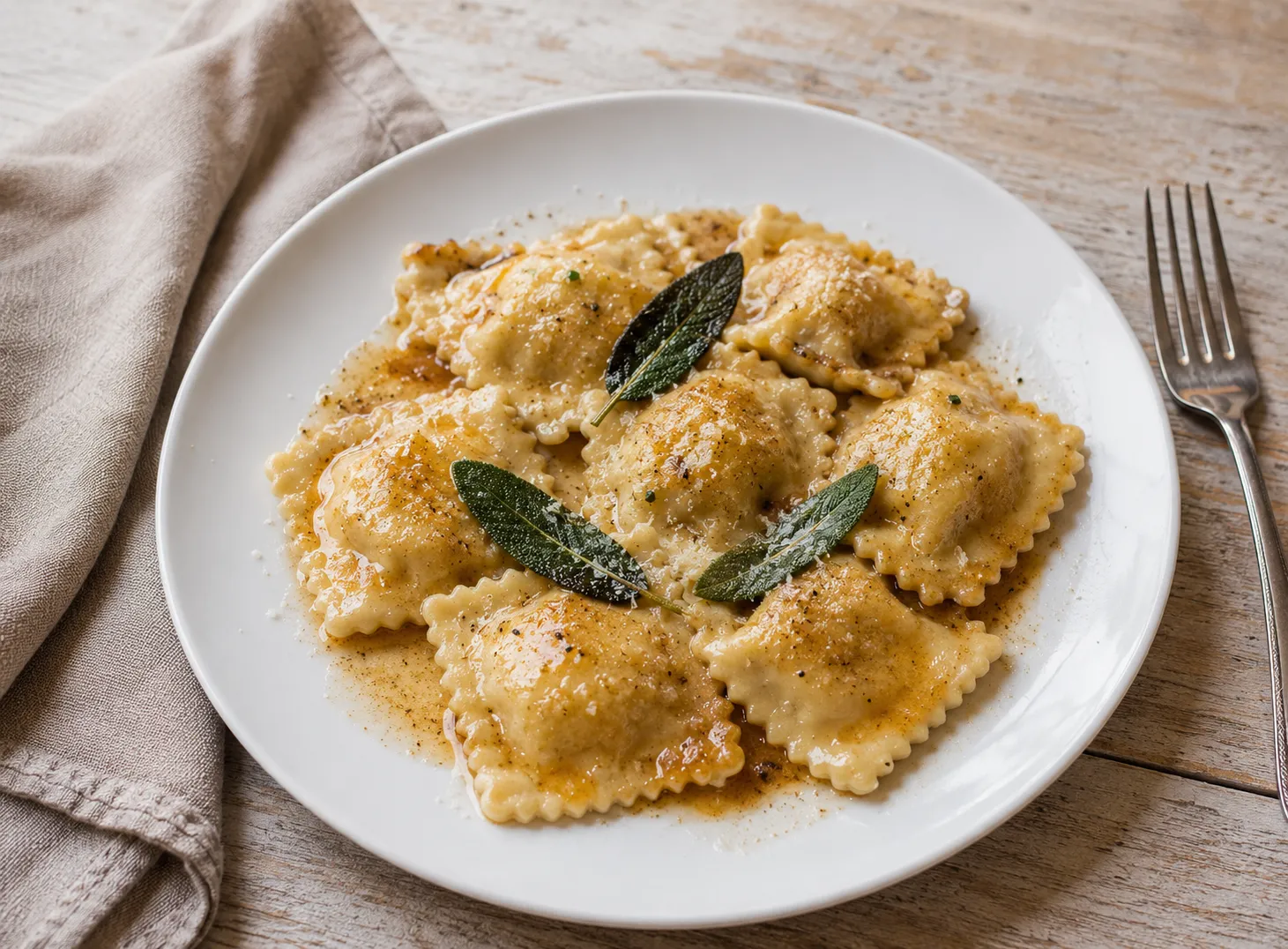
Homemade ravioli is one of those things that looks harder than it actually is. The dough comes together with just four ingredients. The filling takes about five minutes to mix. What you get at the end is fresh, pillowy pasta that tastes nothing like the boxed kind. This ravioli recipe is worth making on a slow weekend, and once you do it once, the process starts to feel natural.
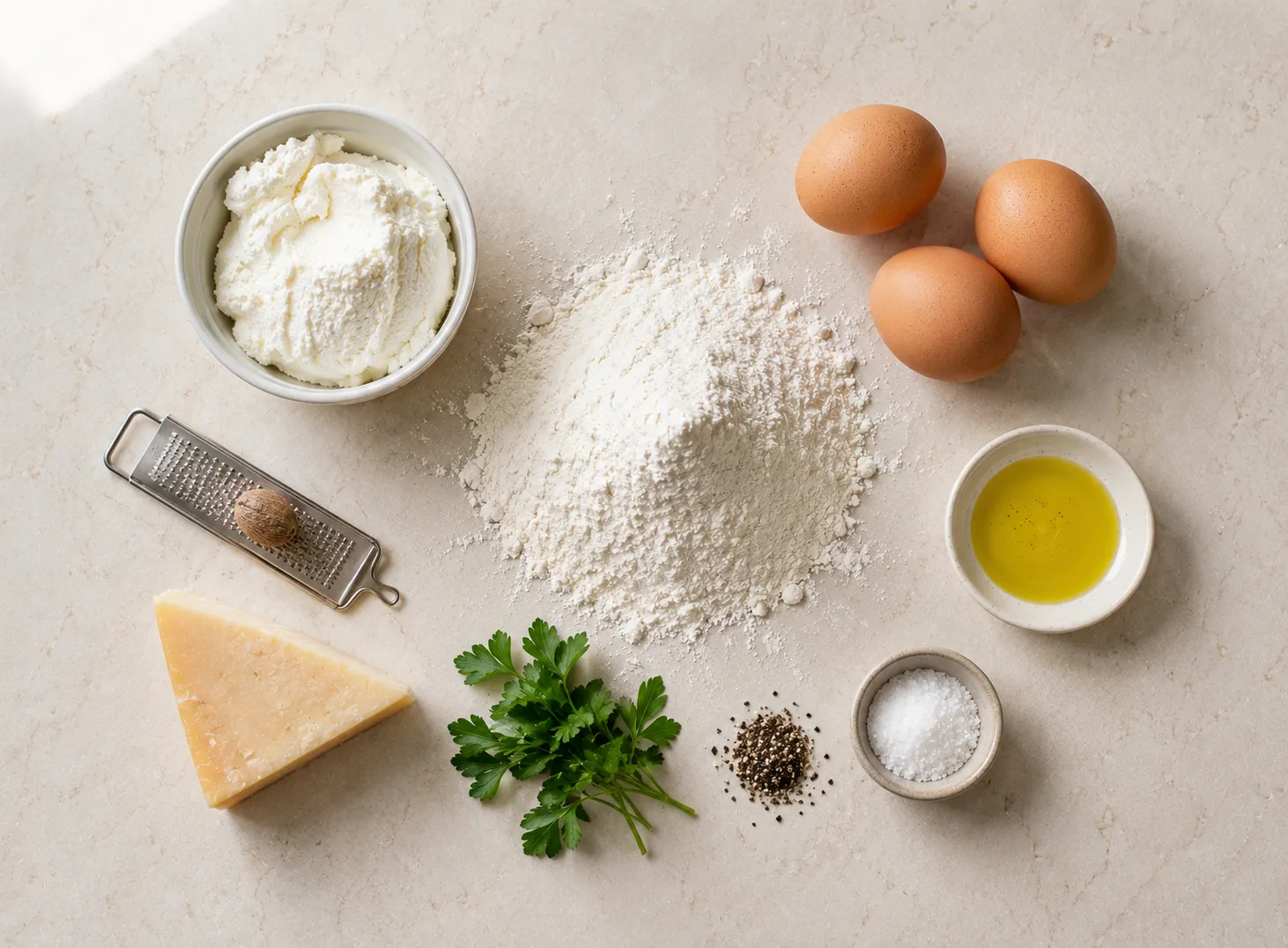
- 2 cups all-purpose flour, plus extra for dusting
- 3 large eggs, at room temperature
- 1 tablespoon olive oil
- 1/2 teaspoon salt
- 1 cup whole milk ricotta, well drained
- 1/2 cup freshly grated Parmesan
- 1 large egg yolk
- 1/2 teaspoon salt
- 1/4 teaspoon black pepper
- 1/4 teaspoon freshly grated nutmeg
- 1 tablespoon finely chopped fresh parsley, optional
- Unsalted butter and fresh sage leaves for a brown butter sauce
- Or marinara, cream sauce, or whatever you prefer
- Extra Parmesan for finishing
- Large mixing bowl
- Fork and bench scraper
- Pasta machine or rolling pin
- Ravioli cutter, pastry wheel, or sharp knife
- Large pot
- Slotted spoon
- Lightly floured tray or clean kitchen towel for resting
- Mix and knead the dough, then let it rest.
- Make the ricotta filling while the dough rests.
- Roll the dough into thin sheets.
- Fill, seal, and cut the ravioli.
- Boil until cooked through and serve right away.
- Mound the flour on a clean work surface. Make a wide well in the center. Crack the eggs into the well and add the olive oil and salt.
- Beat the eggs with a fork, gradually pulling flour in from the inner edges of the well. Do this slowly so the eggs do not run out.
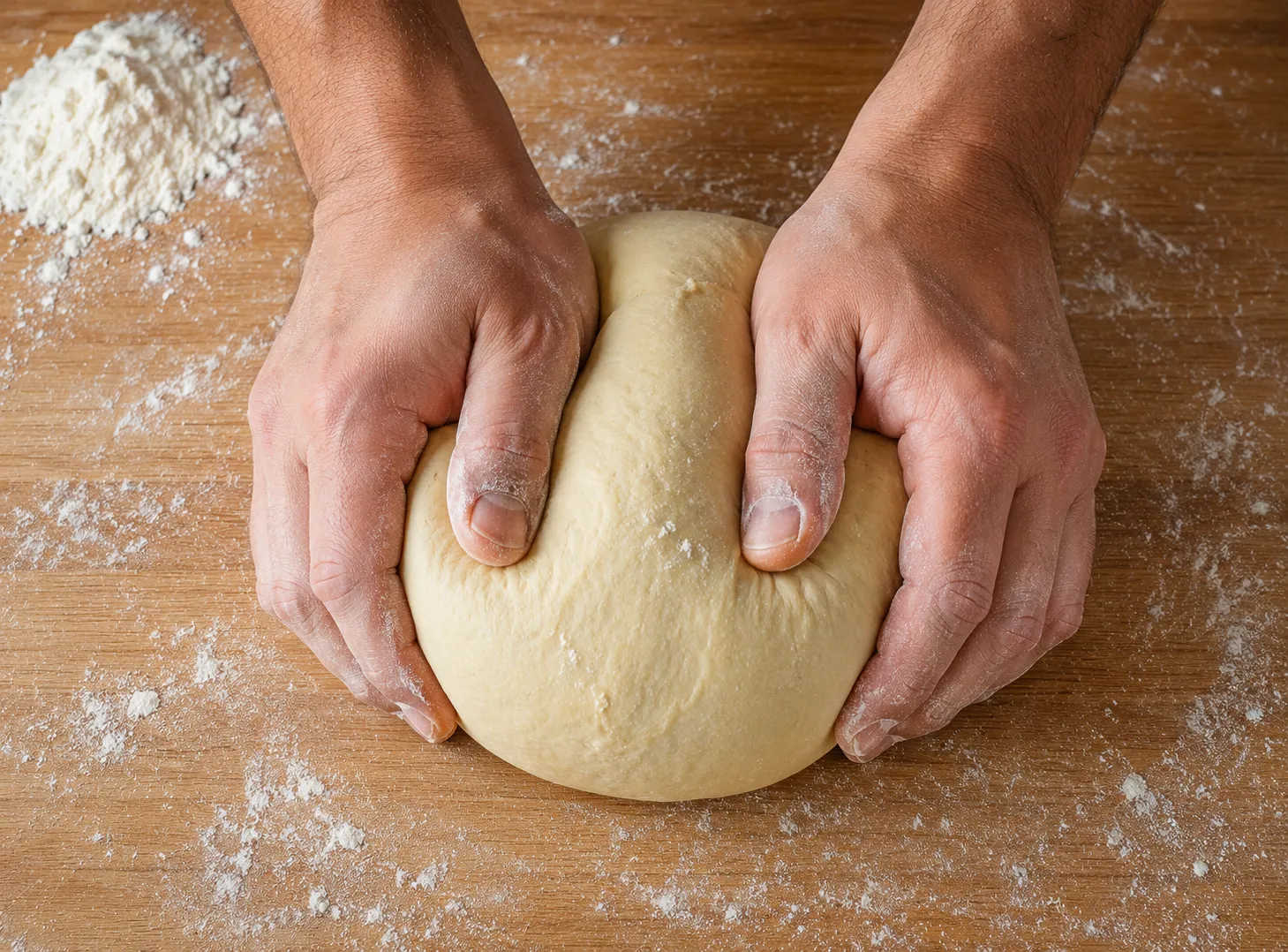
- Once the mixture becomes too thick to use a fork, switch to your hands. Bring everything together into a rough dough.
- Knead for 8 to 10 minutes until the dough is smooth and slightly springy. If it sticks to your hands, add a small dusting of flour. If it feels dry and crumbly, dampen your hands slightly and keep going.
- Wrap the dough in plastic wrap or cover it with an overturned bowl. Let it rest at room temperature for 30 minutes minimum. The dough will be noticeably easier to roll after resting.
- While the dough rests, make the filling. Combine the drained ricotta, Parmesan, egg yolk, salt, pepper, and nutmeg in a bowl. Stir until smooth. Taste and adjust salt. Add the parsley if using. Transfer to a piping bag or a zip-lock bag with a small corner snipped off.
- Divide the rested dough into 4 equal pieces. Keep 3 pieces covered and work with one at a time.
- Flatten the piece with your palm into an oval shape. Run it through the pasta machine on the widest setting. Fold it in thirds like a letter, then run it through again. Repeat two more times on that same setting. This smooths the texture.
- Move down one setting at a time, passing the sheet through once at each level. Stop at setting 5 or 6, or when the sheet is thin enough that you can barely see your hand through it when held up to the light.
- Lay the sheet on a floured surface. If it is very long, cut it into two strips so it is easier to handle.
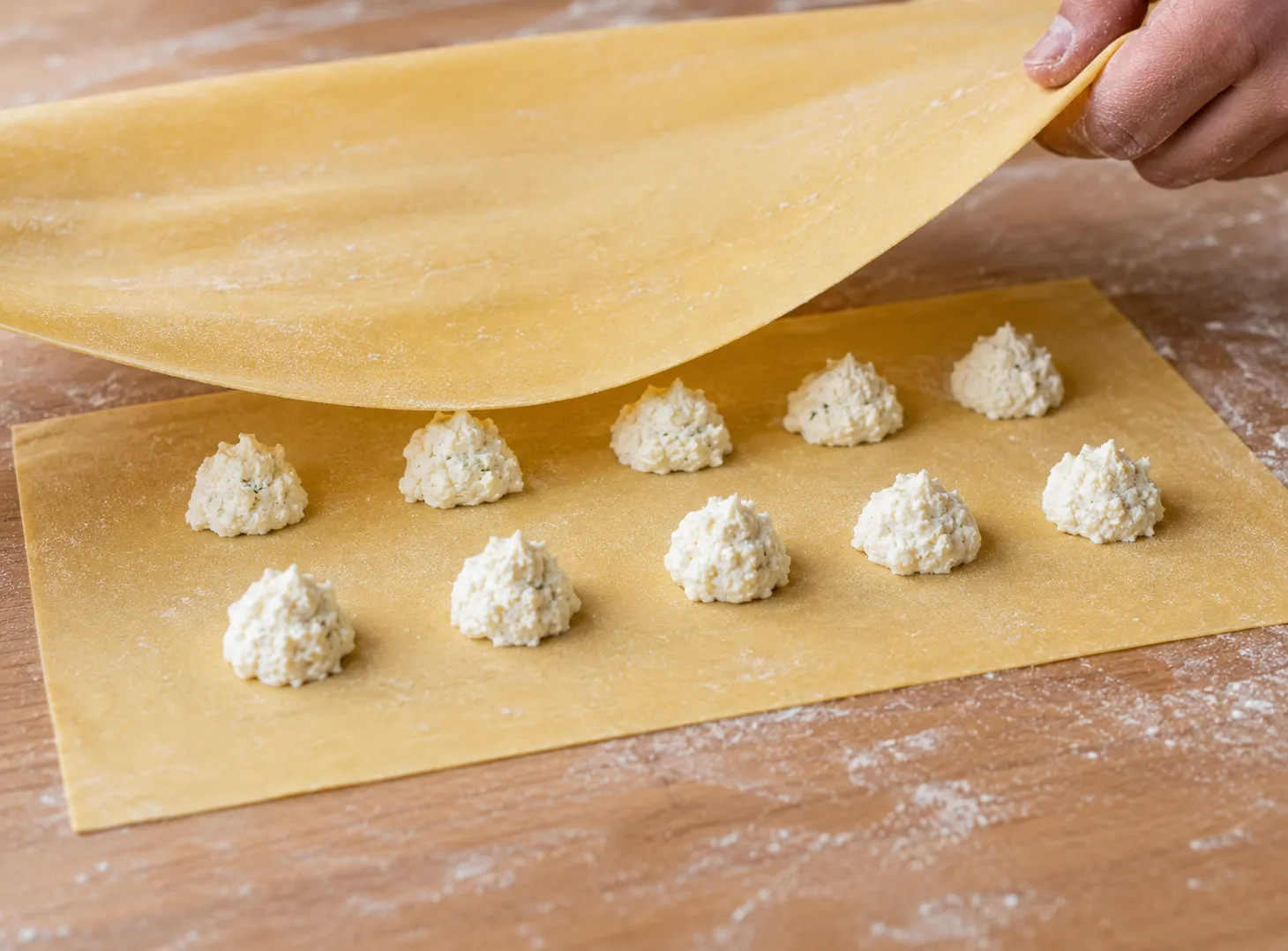
- Pipe small mounds of filling onto one strip, about 1 teaspoon each, spaced roughly 2 inches apart and centered with about 1 inch of clearance from the edge.
- Use your fingertip or a small brush to dab water around each mound of filling. This helps the top layer stick properly.
- Lay the second strip of dough over the top. Starting from one end, press firmly around each mound to push out any air. Work toward the edges as you go.
- Cut between each mound using a ravioli cutter or sharp knife. Press all edges firmly with your fingers or the back of a fork to seal completely.
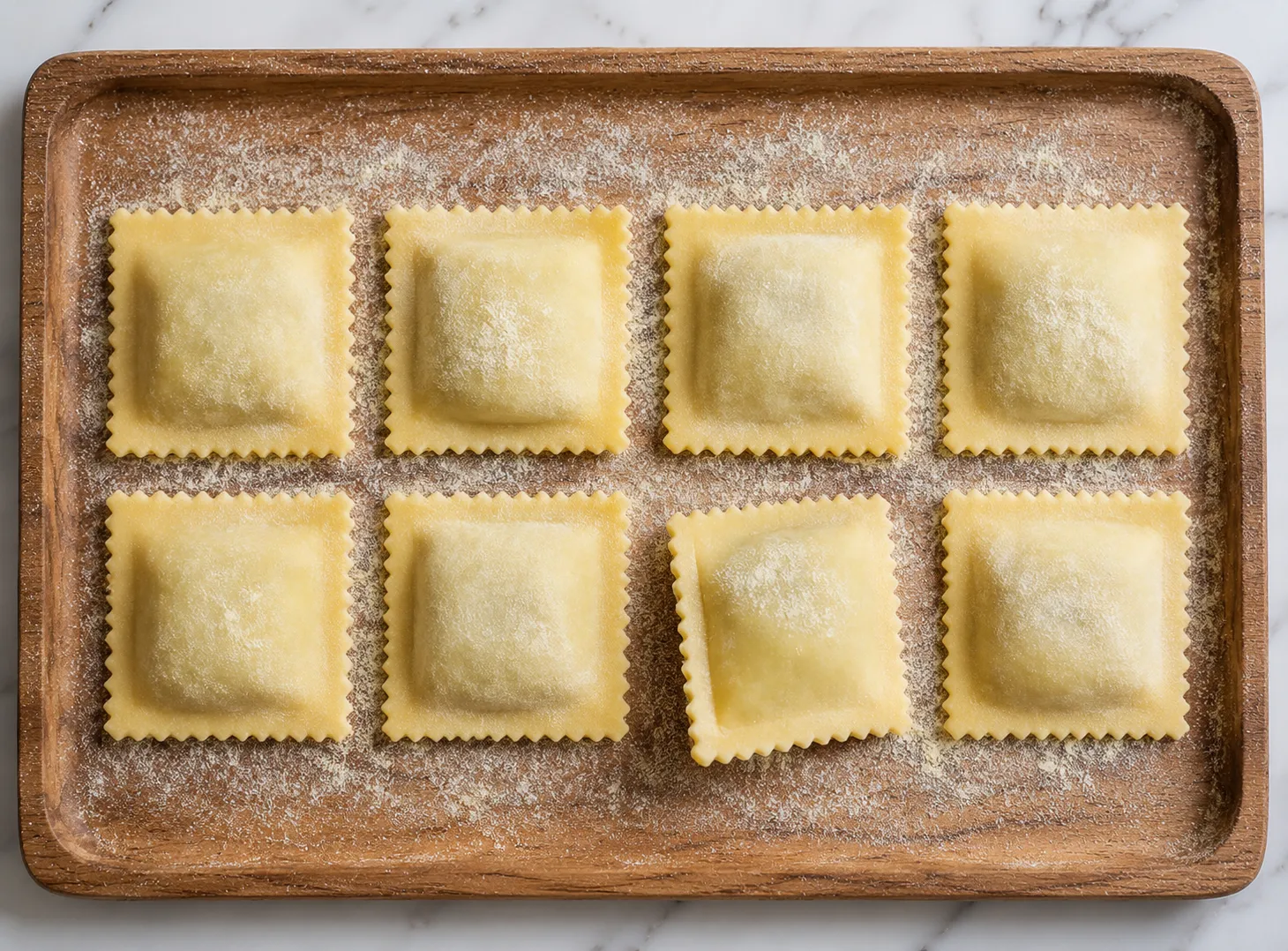
- Set the finished ravioli on a floured tray in a single layer. Do not stack them.
- Repeat with the remaining dough and filling.
- Bring a large pot of well-salted water to a boil. The water should taste mildly salty. Add the ravioli in batches, do not crowd the pot.
- Cook for 3 to 4 minutes. They will float when nearly done. Give them another 30 to 60 seconds after they float, then taste one at the edge to check.
- Lift out with a slotted spoon and toss immediately with your sauce. Serve hot.
- Drain the ricotta before using it. Spoon it into a fine strainer or a layer of cheesecloth and let it sit for 15 to 20 minutes. Wet ricotta makes the filling too loose and can cause the pasta to go soggy.
- Use eggs at room temperature. They mix into the flour more easily and help the dough come together faster.
- Do not skip the rest time. Thirty minutes is the minimum. The gluten needs time to relax or the dough will keep springing back when you roll it.
- Keep unused dough covered the whole time you work. Fresh pasta dough dries out fast, and dry edges crack and tear.
- Roll thinner than you think you need to. The dough puffs slightly when cooked, and thick edges become chewy and heavy.
- Cook in small batches. Overcrowding drops the water temperature and the ravioli cook unevenly.
- Finish the ravioli in the sauce, not just plated with sauce spooned over. Even 30 seconds of tossing in a warm pan makes the whole dish come together better.
- Skipping the rest time: The dough will resist rolling and tear easily. Rest it properly.
- Rolling too thick: Thick pasta gives you gummy, doughy edges. Roll until you can nearly see through the sheet.
- Overfilling: More filling sounds better but causes blowouts in the pot. Keep mounds small and neat.
- Weak seals: Unsealed edges split open during cooking and the filling escapes. Press firmly and use water to help the layers bond.
- Trapping air: Air pockets inside the ravioli expand in boiling water and burst the pasta open. Always press from the filling outward when sealing.
- Leaving ravioli uncovered: They dry out and crack within minutes. Keep them on a floured tray and cover loosely if not cooking right away.
- Under-salted water: This is when the pasta itself gets its seasoning. The water should taste noticeably salty.
- Cooking at too hard a boil: A aggressive rolling boil tosses the ravioli around too much. A moderate boil is enough and gentler on the pasta.
- Spinach and ricotta filling: Add 1/3 cup finely chopped, well-drained cooked spinach to the ricotta mixture. Squeeze out as much water as possible before adding.
- Meat filling: Use browned and seasoned ground beef, pork, or Italian sausage. Let it cool before mixing with a small amount of Parmesan and an egg yolk to bind.
- Butternut squash filling: Roast squash until tender, mash it with butter, nutmeg, and Parmesan. Works especially well with brown butter sauce.
- Egg-free dough: Replace eggs with warm water, about 3/4 cup. The dough will be slightly less rich but still holds up well.
- Semolina blend: Substitute half the all-purpose flour with semolina for a firmer texture and better bite.
- Gluten-free option: A good 1:1 gluten-free flour blend works, but handle the dough more gently since it tears more easily.
- No pasta machine: A rolling pin on a smooth surface gets the job done. Work in small pieces and roll slowly and evenly.
- Brown butter and sage: The most natural pairing with a ricotta filling. Nutty, simple, and lets the pasta speak for itself.
- Simple marinara: A light tomato sauce works well without overwhelming the filling.
- Light garlic cream sauce: A small amount of cream with garlic and Parmesan coats the ravioli without feeling heavy.
- A simple green salad with sharp vinaigrette to cut through the richness of the pasta
- Crusty bread or garlic bread to catch the extra sauce
- Roasted vegetables like asparagus, broccolini, or zucchini on the side
- A dry white wine or a light red if you are making this a proper sit-down dinner
- Uncooked, refrigerator: Place in a single layer on a floured tray, cover loosely, and refrigerate for up to 24 hours.
- Uncooked, freezer: Freeze on a tray in a single layer until solid, then transfer to a sealed bag. Cook straight from frozen, adding 1 to 2 extra minutes to the cooking time. Keeps for up to 2 months.
- Cooked, refrigerator: Store in an airtight container with a little sauce mixed in to prevent sticking. Keeps for up to 3 days.
- Reheating: Warm gently in a pan with a splash of water or extra sauce over low heat. Avoid the microwave if possible since it makes the pasta rubbery.
- Do not refreeze cooked ravioli.
Yes. Wrap it tightly and refrigerate overnight. Take it out 20 minutes before you plan to roll it so it can come back to room temperature.
No. A rolling pin works. Roll in small sections on a floured surface and aim for a sheet thin enough to almost see through.
The most common reasons are air trapped inside or edges that were not sealed firmly enough. Press out all air pockets before sealing and crimp the edges well with your fingers or a fork.
You can for a quicker version. Wonton wrappers are thinner and cook in about 2 minutes. They are a reasonable shortcut, though the texture is different from fresh pasta.
They float to the surface when nearly cooked. Taste one at the edge after it floats. The pasta should be fully tender with no raw or doughy texture.
Yes, the dough scales well. Work in batches when rolling and filling so the sheets do not dry out before you get to use them.
- This recipe makes about 24 to 28 medium ravioli, enough for 4 as a main course.
- Taste the filling before you start filling the pasta. Adjust salt, pepper, and nutmeg to your preference since fillings can vary depending on the brand of ricotta and Parmesan used.
- 00 flour makes a slightly silkier dough than all-purpose. Either works in this recipe.
- Semolina on the resting tray does a better job than regular flour at preventing the ravioli from sticking together.
- If a sheet tears during rolling, patch it with a small scrap of dough pressed over the hole, then roll lightly over it.
- This dough can also be cut into fettuccine, pappardelle, or used for lasagne sheets.
Making ravioli from scratch takes more time than a weeknight pasta, but the gap in quality is real and noticeable. The texture is lighter, the edges are tender, and the filling actually stays where it belongs. This ravioli recipe is a good one to practice and then repeat. You will get faster every time, and the results are consistently worth the effort. Make it when you have a bit of time and want something that feels genuinely homemade, because that is exactly what it is.