
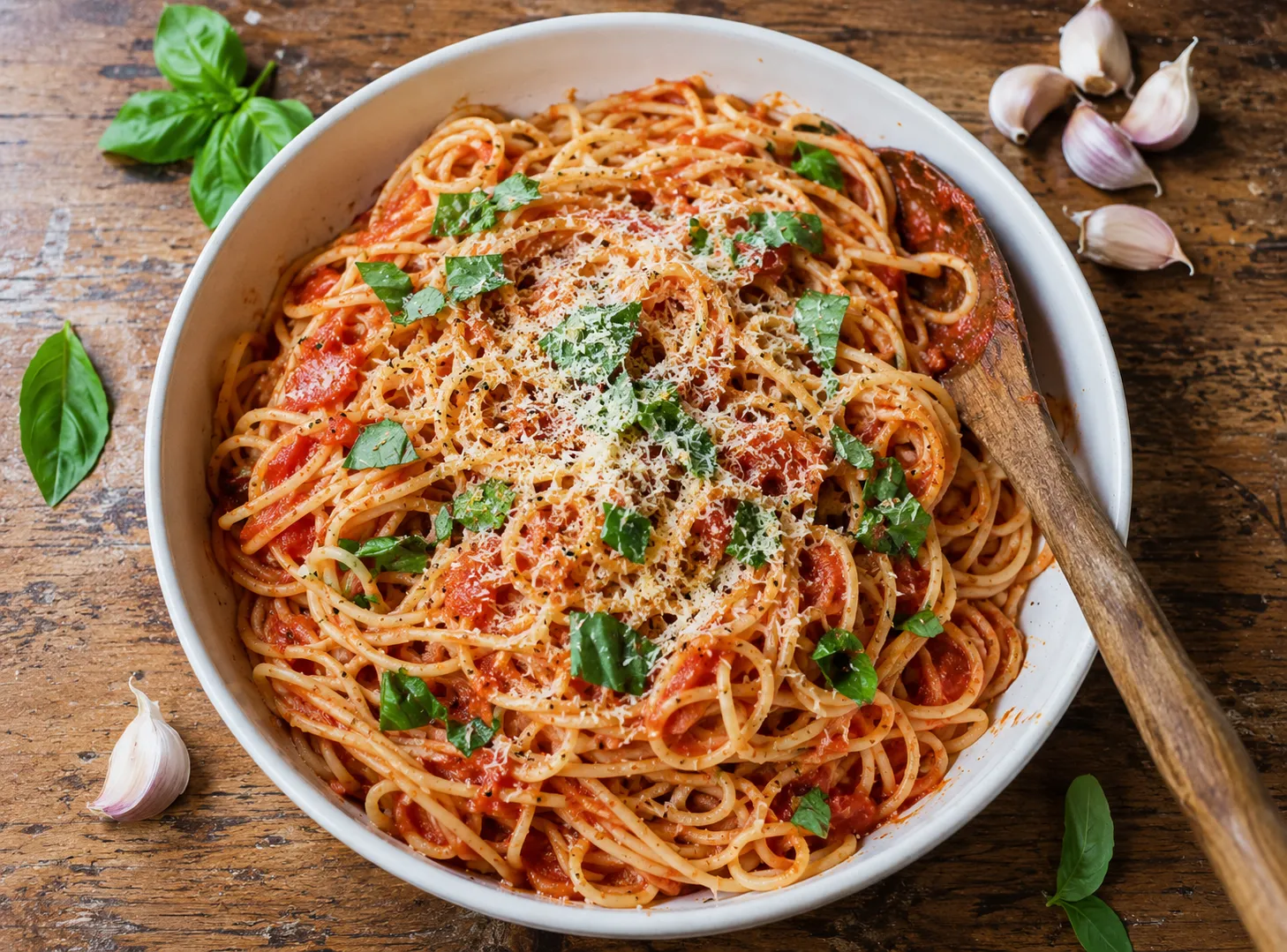
This pasta recipe is one of those meals that never lets you down. Twenty minutes, one pan, and ingredients you already have. The sauce is garlicky, slightly rich, and clings to the pasta the way a good sauce should. No complicated steps, no specialty ingredients. It works on a Tuesday when you are tired, it works when you have guests and forgot to plan, and it works when the kids need something on the table fast. This is the pasta recipe you will keep coming back to.
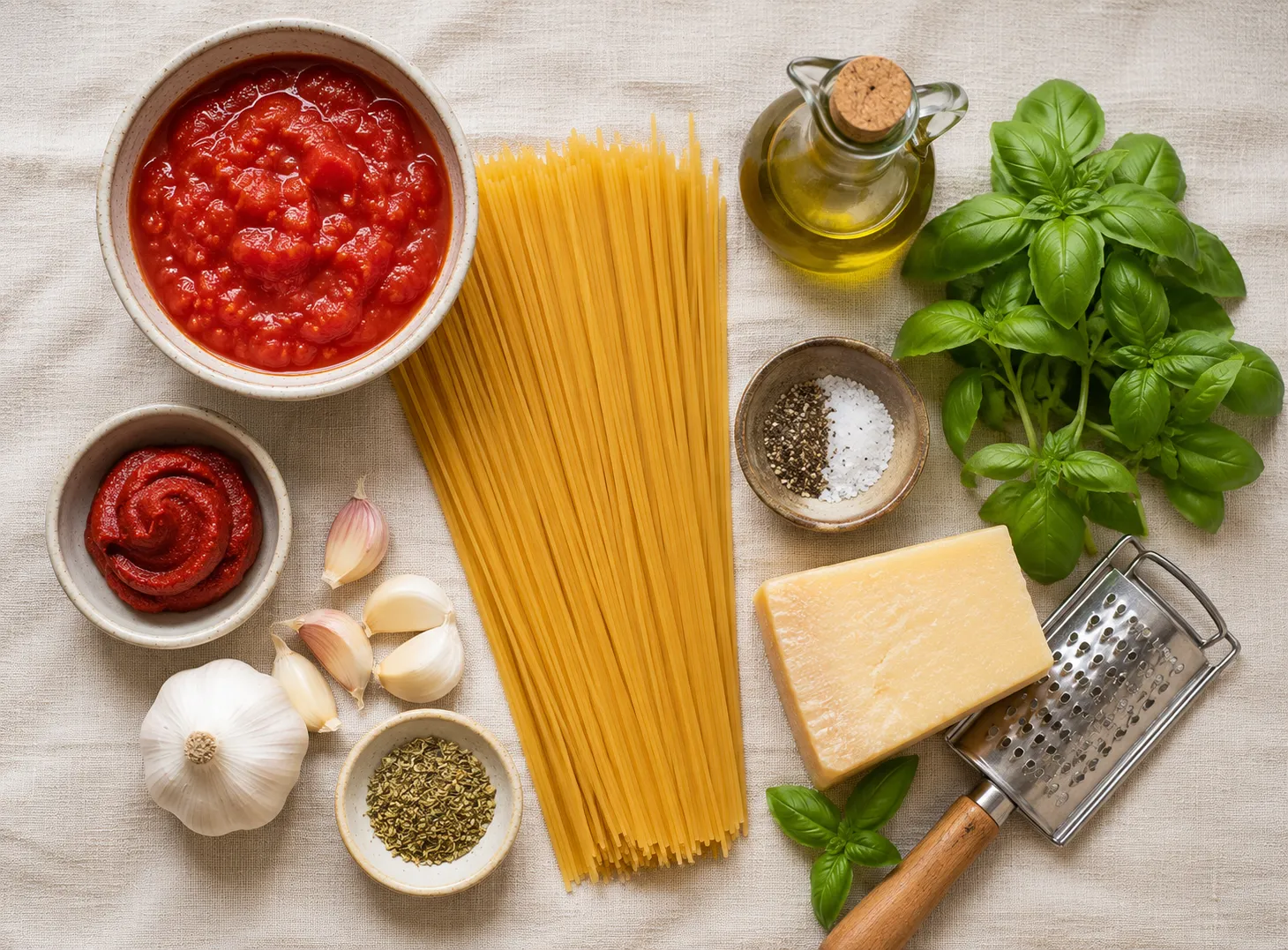
- 400g spaghetti or penne pasta
- Sauce
- 3 tbsp olive oil
- 6 garlic cloves, thinly sliced
- 2 tbsp tomato paste
- 400g canned crushed tomatoes
- 1 tsp dried oregano
- 1/2 tsp red pepper flakes, optional
- 1.5 tsp salt
- 1/2 tsp black pepper
- 1/2 cup pasta cooking water, reserved before draining
- 1 tbsp unsalted butter
- 60g parmesan cheese, finely grated
- 10 fresh basil leaves
- Large pot for boiling pasta
- Large skillet, 12-inch works best
- Wooden spoon or silicone spatula
- A mug or ladle for scooping pasta water
- Colander
- Box grater
- Boil well-salted water and cook pasta until just under done.
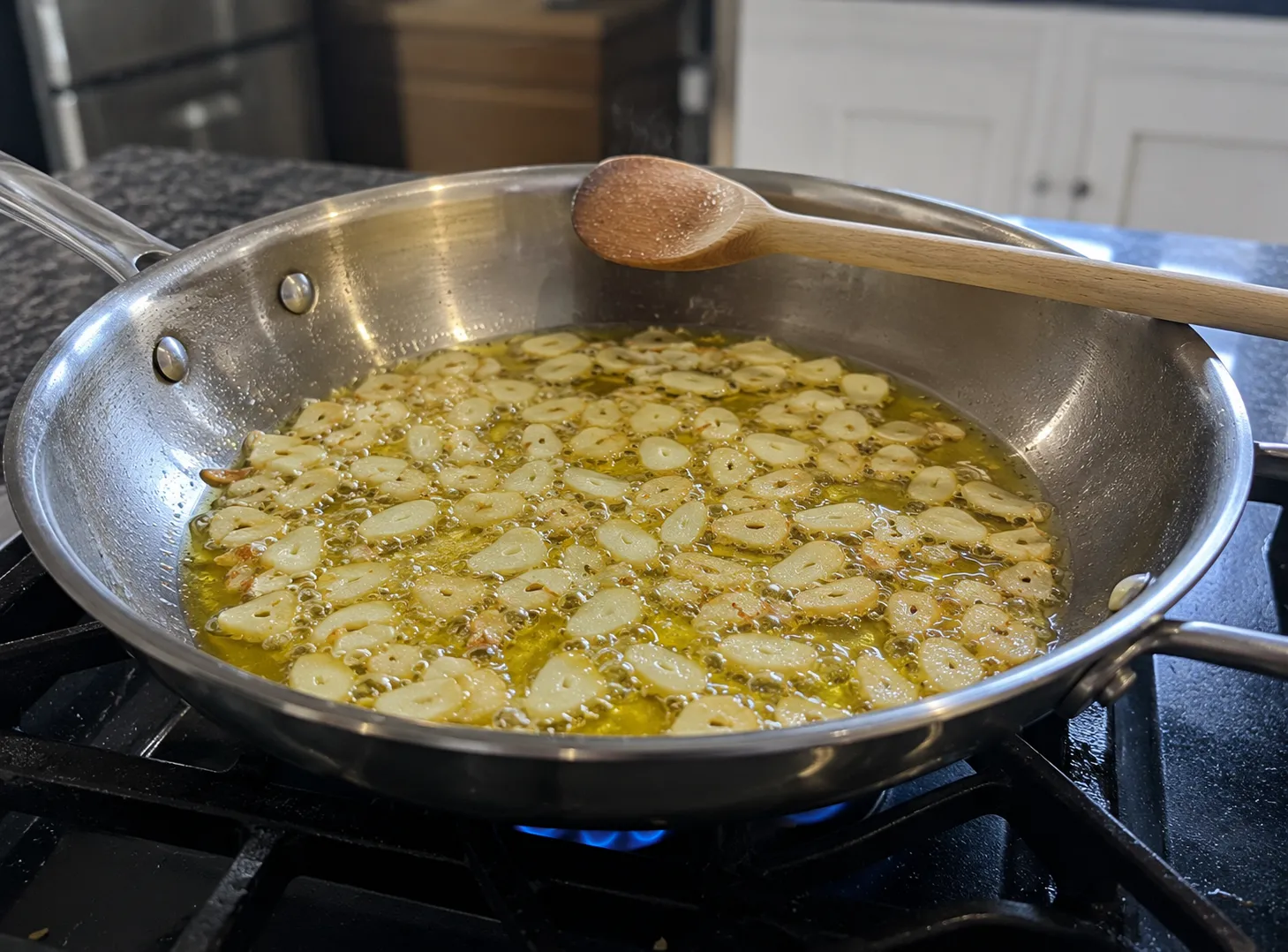
- Saute sliced garlic in olive oil until golden.
- Stir in tomato paste, then add crushed tomatoes and seasonings.
- Toss the drained pasta into the sauce with a splash of pasta water.
- Finish with butter, parmesan, and fresh basil. Serve immediately.
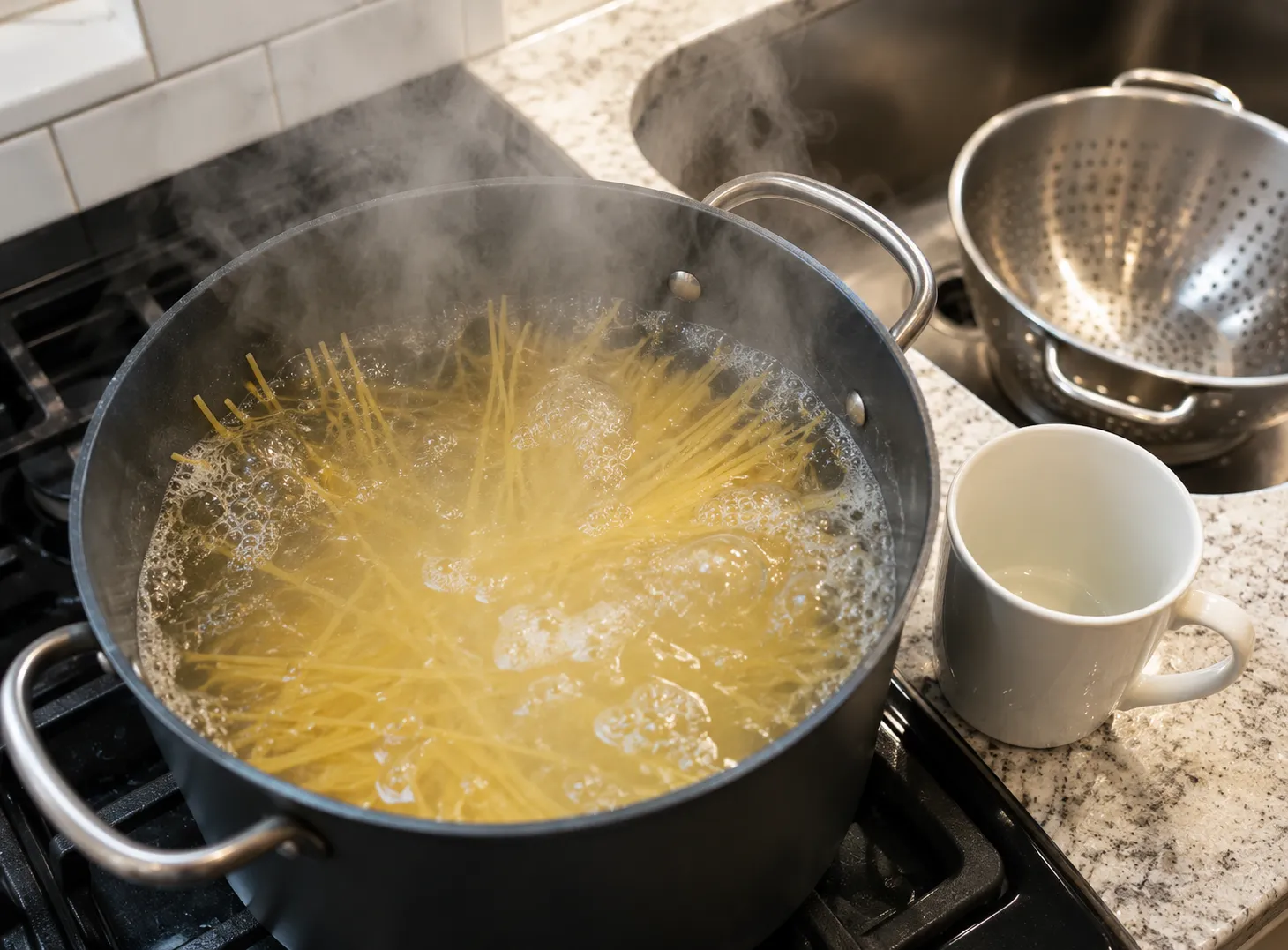
- Fill a large pot with water. Salt it well. The water should taste noticeably salty, not faint. Bring it to a full boil over high heat.
- Add the pasta. Cook according to the package time, but pull it out one minute early.
- Just before draining, scoop out half a cup of pasta water using a mug or ladle. Set it aside.
- Drain the pasta. Do not rinse it.
- While the pasta cooks, warm the olive oil in a large skillet over medium heat.
- Add the sliced garlic. Stir and watch it closely. You want it golden and fragrant, not brown. This takes about 90 seconds. If it starts darkening too fast, lift the pan off the heat for a moment.
- Add the tomato paste directly to the skillet. Stir it into the oil for about 30 seconds.
- Pour in the crushed tomatoes. Add the oregano, red pepper flakes, salt, and black pepper.
- Stir everything together. Let it simmer on medium-low for 5 minutes. The sauce will thicken slightly.
- Taste the sauce. Adjust the salt now, before the pasta goes in.
- Add the drained pasta straight into the skillet. Toss it over medium heat.
- Add the reserved pasta water a little at a time until the sauce coats every strand smoothly.
- Add the butter. Toss once more until it melts in.
- Take the pan off the heat. Add the grated parmesan and tear the basil leaves over the top.
- Plate it right away. Pasta sitting in a hot pan keeps cooking, so do not leave it.
- Salt the pasta water properly. It should taste noticeably salty. This is the main window for seasoning the pasta itself.
- Cook the pasta one minute less than the package says. It finishes in the sauce and picks up more flavor that way.
- Keep extra pasta water on hand. Even two or three tablespoons can rescue a sauce that thickened too much or turned dry.
- Grate the parmesan fresh. The pre-shredded kind has anti-caking coatings that stop it from melting smoothly.
- Use a wide skillet rather than a deep saucepan. The pasta and sauce combine faster and more evenly with more surface contact.
- Always taste the sauce before adding the pasta. Salt is easier to adjust at that stage.
- Rinsing the pasta after draining. The surface starch is what helps the sauce stick. Rinse it off and the sauce slides right off.
- Using too little oil when cooking the garlic. The garlic needs enough fat around it. Without it, it burns before it has a chance to soften.
- Skipping the tomato paste. Crushed tomatoes alone give you a thinner, flatter result. The paste adds body and a concentrated savory base.
- Adding cold butter straight from the fridge. It seizes instead of melting evenly. Leave it out for a few minutes first.
- Leaving the pasta sitting in the pan. The residual heat keeps cooking it. Get it onto plates as soon as it is done.
- No crushed tomatoes on hand: use a can of whole peeled tomatoes and crush them by hand or with a spoon as they cook.
- Want to add protein: cooked ground beef, crumbled Italian sausage, or sliced grilled chicken all work well stirred in or served on top.
- Creamy version: stir in 3 tablespoons of heavy cream after adding the crushed tomatoes.
- Gluten-free: substitute with your preferred gluten-free pasta. Chickpea and lentil varieties hold their shape well in a saucy dish.
- Vegan: leave out the butter and parmesan. A spoonful of nutritional yeast and a little extra olive oil give you similar richness.
- Add vegetables: spinach, sliced zucchini, or mushrooms can go in right after the garlic. Cook for two minutes before adding the tomatoes.
- Garlic bread or thick-cut crusty bread for mopping up sauce
- A green salad with a simple lemon dressing
- Roasted vegetables like broccolini, asparagus, or halved cherry tomatoes
- Caesar salad if you want something more filling alongside it
- Refrigerator: keeps well in an airtight container for up to 4 days.
- Freezer: the sauce on its own freezes for up to 3 months. Freeze it separately and cook fresh pasta when ready to eat.
- Stovetop reheat: add a small splash of water or broth to the pan. Warm on medium-low, stirring occasionally until heated through.
- Microwave reheat: cover the bowl loosely and heat in 45-second intervals, stirring between each one.
- Reheat only once. After a second reheat, the pasta softens considerably and the sauce starts to break.
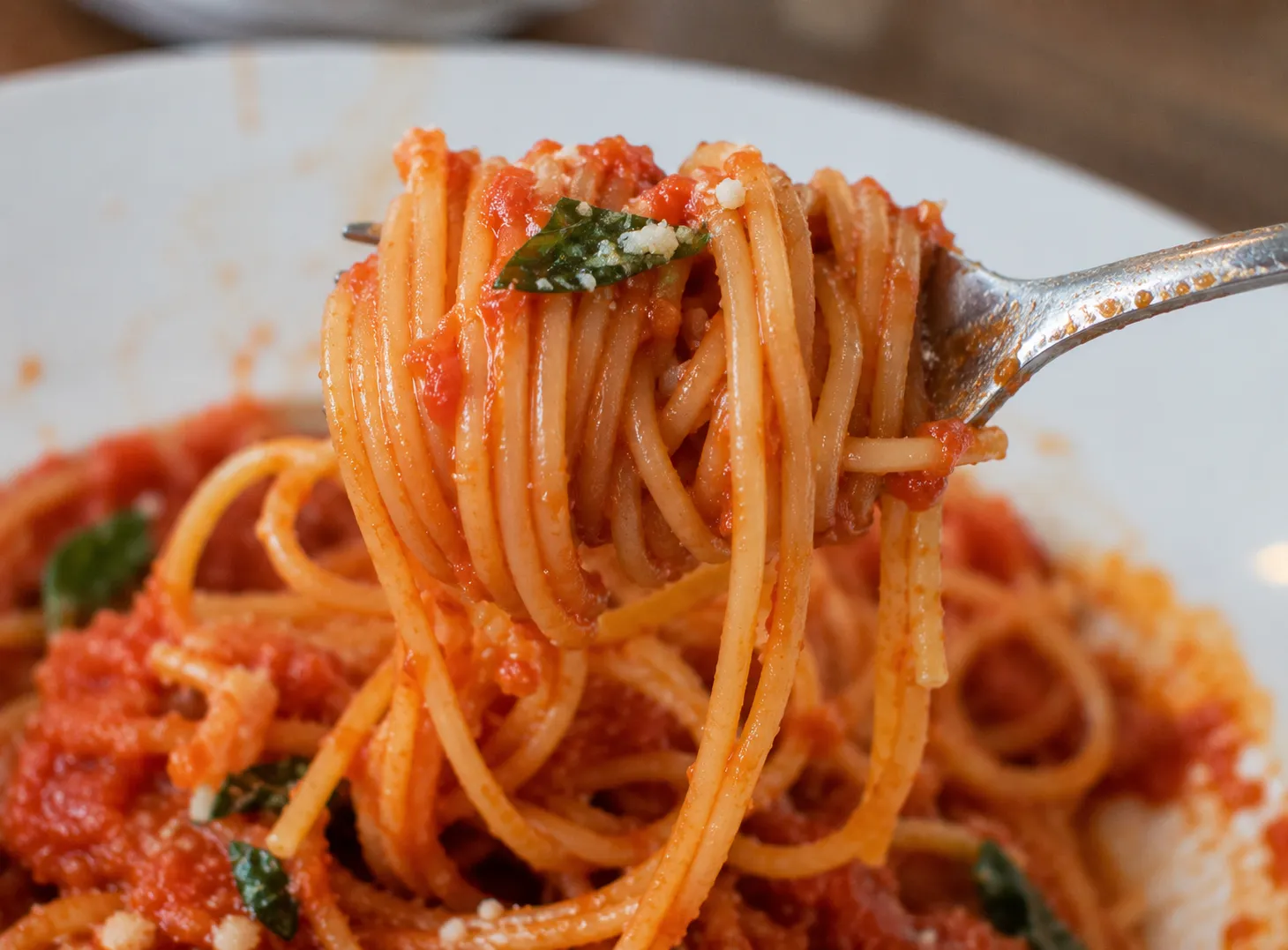
Yes. Penne, rigatoni, fusilli, and spaghetti all work well. Ridged or tube-shaped varieties tend to hold onto the sauce a bit better.
Yes. It keeps in the fridge for up to 3 days. Reheat it and toss with freshly cooked pasta when you are ready to serve.
Get it into the sauce right away. If there is a short wait, toss the drained pasta with a small drizzle of olive oil to keep it from clumping.
Not really. The red pepper flakes add mild background heat. Leave them out entirely for a completely mild dish that kids will eat without issue.
Yes. Use a large enough skillet so the pasta has room to move when you toss it. If the pan is too small, split it between two rather than crowding one.
Parmigiano-Reggiano is the standard and worth it here. Grana Padano is a solid, less expensive option with a very similar flavor and the same melting behavior.
- This pasta recipe comes together entirely from pantry and fridge staples. No special shopping trip needed.
- Tomato paste is not optional here. It is what gives the sauce its depth. Do not reduce the amount.
- Pasta water is starchy and lightly salted. It is what makes the sauce silky instead of watery. Add it gradually and stop when the consistency looks right.
- The tablespoon of butter at the end is small but makes a real difference. It rounds out the acidity from the tomatoes.
- Add the basil after the pan is off the heat. Even a few seconds of direct heat dulls the fresh flavor.
- The quantities scale easily. The technique stays the same whether you are cooking for two or for eight.
A twenty-minute pasta recipe does not need to be complicated to be good. This one is simple by design, and that is exactly why it holds up. The sauce is straightforward, the steps are easy to follow, and the result is something people actually want to eat again. Make it once and you will not need to search for another weeknight pasta recipe for a long time. It is reliably that good.