
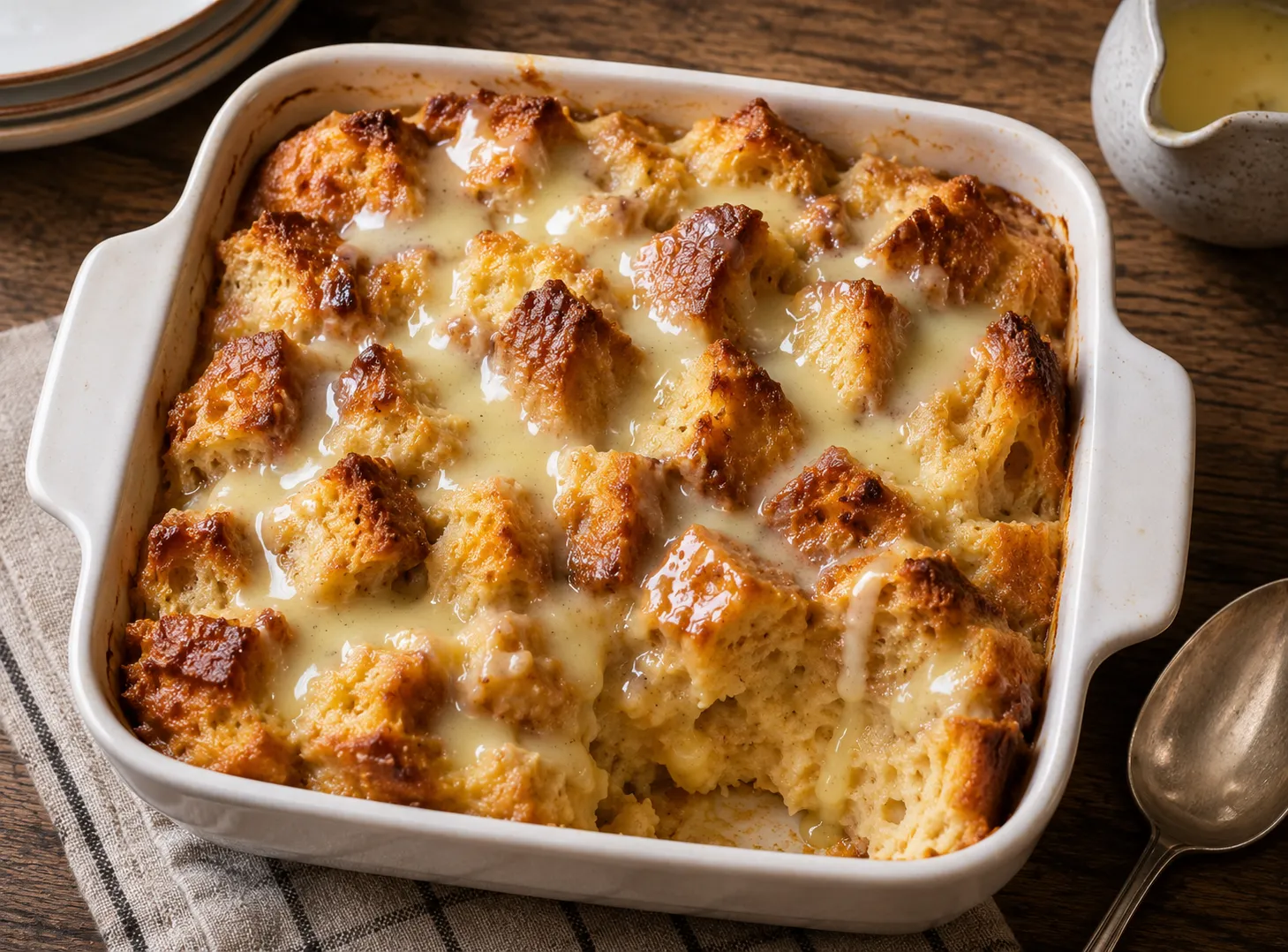
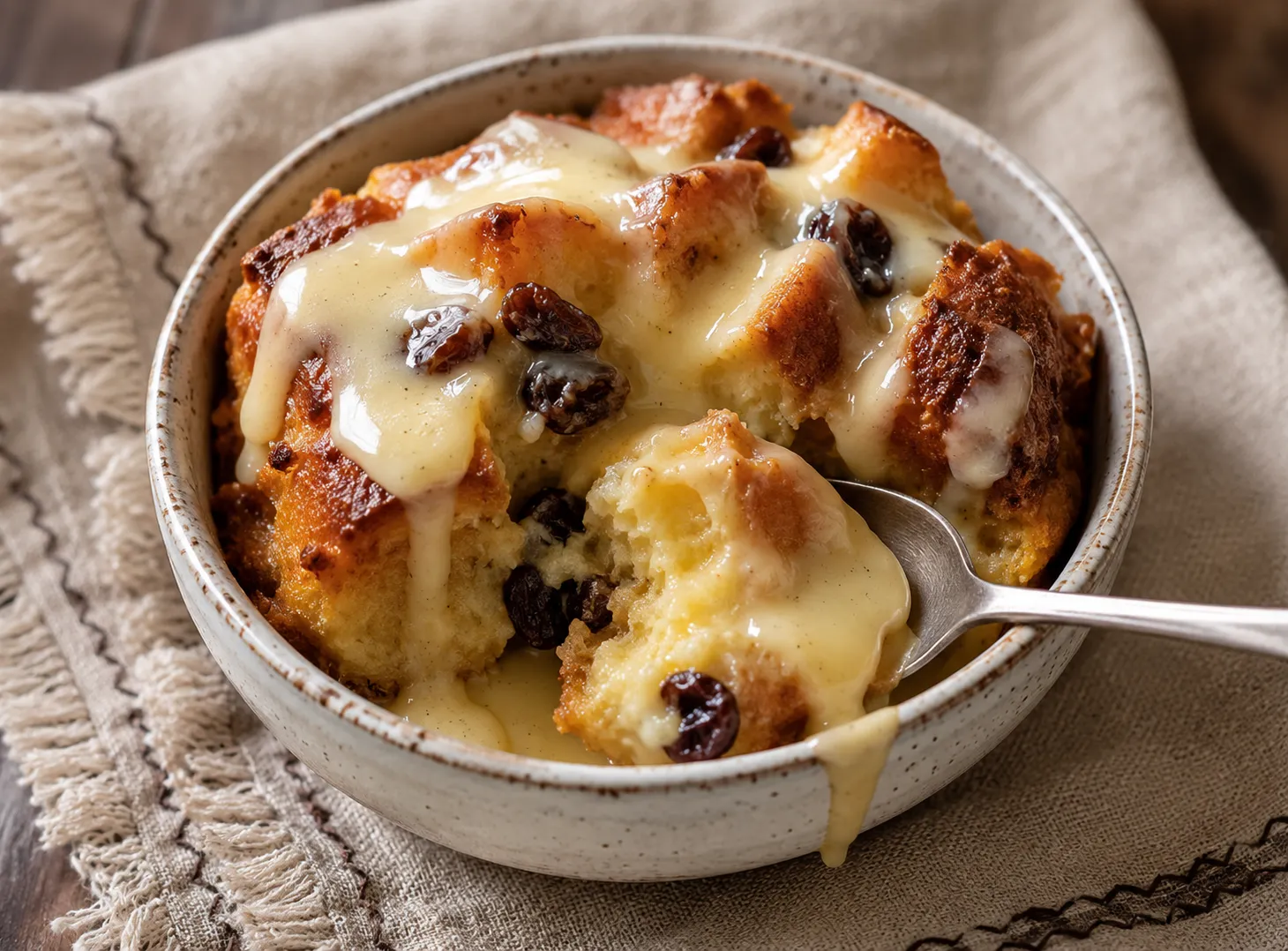
This bread pudding recipe turns day-old bread into a rich, custardy dessert that is deeply satisfying and surprisingly simple to pull off. The inside stays soft and tender. The top bakes up golden with a slight crust. The warm vanilla sauce finishes everything with a buttery, pourable sweetness that makes each bite worth it. No special equipment. No hard-to-find ingredients. No complicated technique. Just clean, honest baking that produces a dessert worth repeating. Made for home bakers who want a reliable, from-scratch recipe that actually delivers.
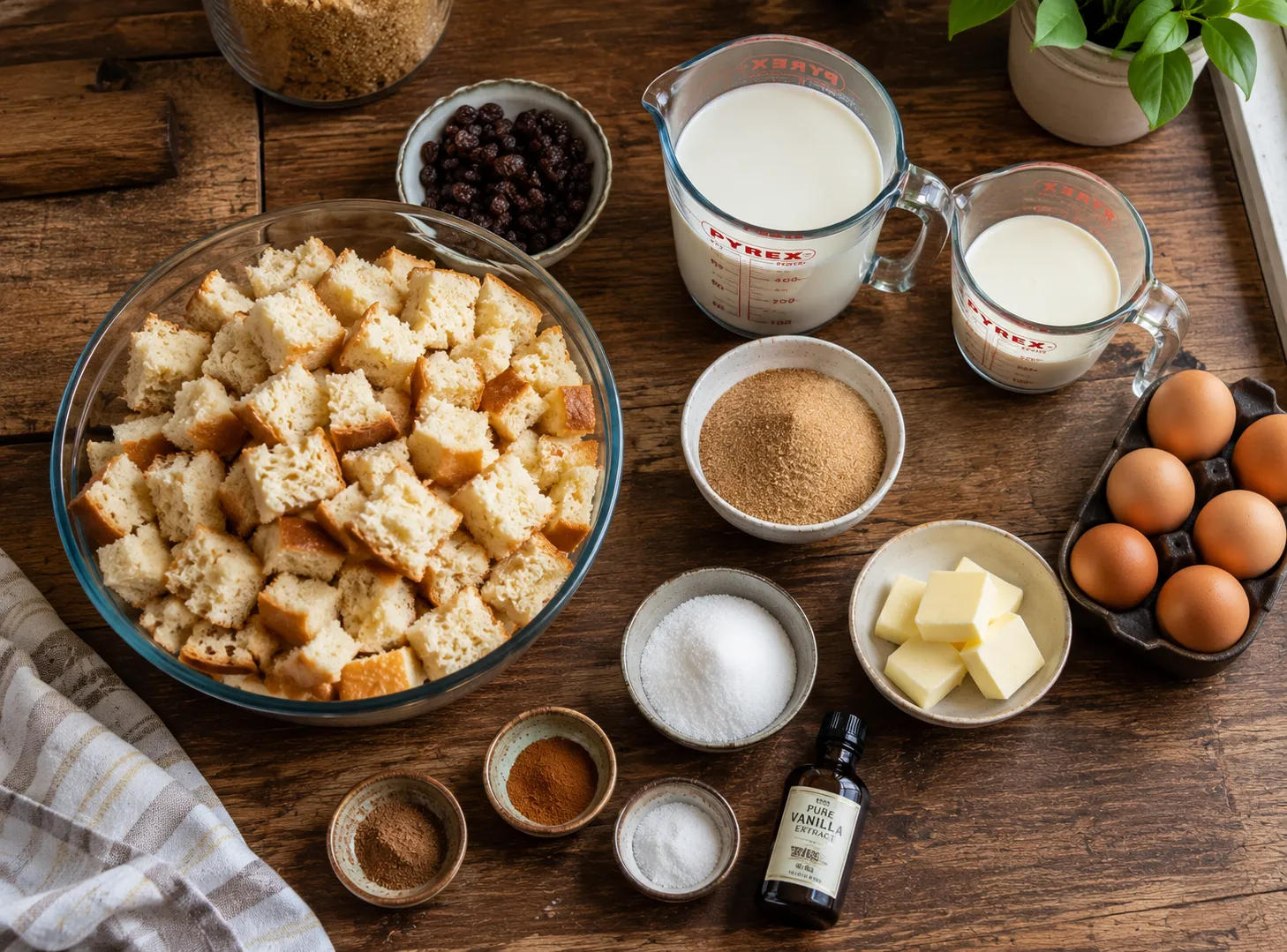
- 8 cups day-old white bread or brioche , cut into 1-inch cubes
- 2 cups whole milk
- 1 cup heavy cream
- 4 large eggs
- 3/4 cup granulated sugar
- 1/4 cup brown sugar , packed
- 2 teaspoons pure vanilla extract
- 1 teaspoon ground cinnamon
- 1/4 teaspoon ground nutmeg
- 4 tablespoons unsalted butter , melted
- 1/2 cup raisins , optional
- 1/2 cup unsalted butter
- 1 cup powdered sugar
- 1 large egg yolk
- 2 teaspoons pure vanilla extract
- 2 tablespoons heavy cream
- 9x13 inch baking dish
- Large mixing bowl
- Whisk
- Small saucepan
- Baking sheet
- Rubber spatula
- Measuring cups and spoons
- Dry the bread cubes in the oven so they can absorb the custard without going mushy.
- Whisk together the eggs, sugars, spices, milk, cream, and butter into a smooth custard.
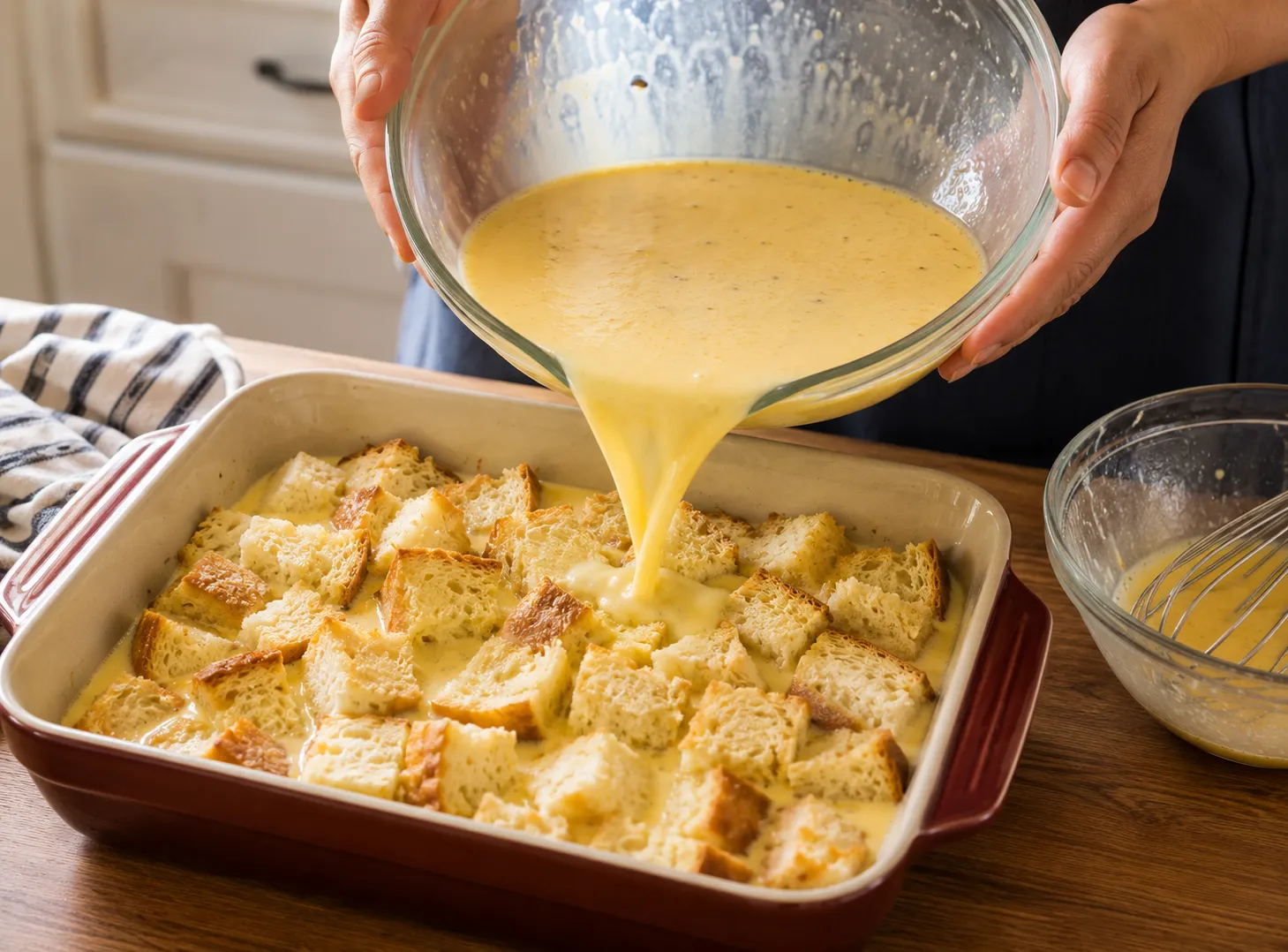
- Pour the custard over the bread in a greased baking dish and let it soak for at least 20 minutes.
- Bake uncovered at 350 degrees F until the top is golden and the center is just set.
- While the pudding rests, make the vanilla sauce on the stovetop and serve it warm over each portion.
- Preheat your oven to 350 degrees F (175 degrees C).
- Spread the bread cubes in a single layer on a baking sheet.
- Toast them in the oven for 8 to 10 minutes until they feel dry and slightly firm.
- Remove from the oven and set aside to cool briefly.
- In a large bowl, whisk together the eggs, granulated sugar, and brown sugar until smooth.
- Add the vanilla extract, cinnamon, and nutmeg. Whisk again.
- Pour in the whole milk and heavy cream. Mix until fully combined.
- Stir in the melted butter.
- Grease a 9x13 inch baking dish with butter or nonstick spray.
- Add the toasted bread cubes to the dish in an even layer.
- Pour the custard mixture over the bread slowly and evenly.
- Press the bread down gently with a spatula so the pieces are covered.
- If using raisins, scatter them over the top now.
- Let the dish sit and soak for at least 20 minutes. Overnight in the fridge works even better.
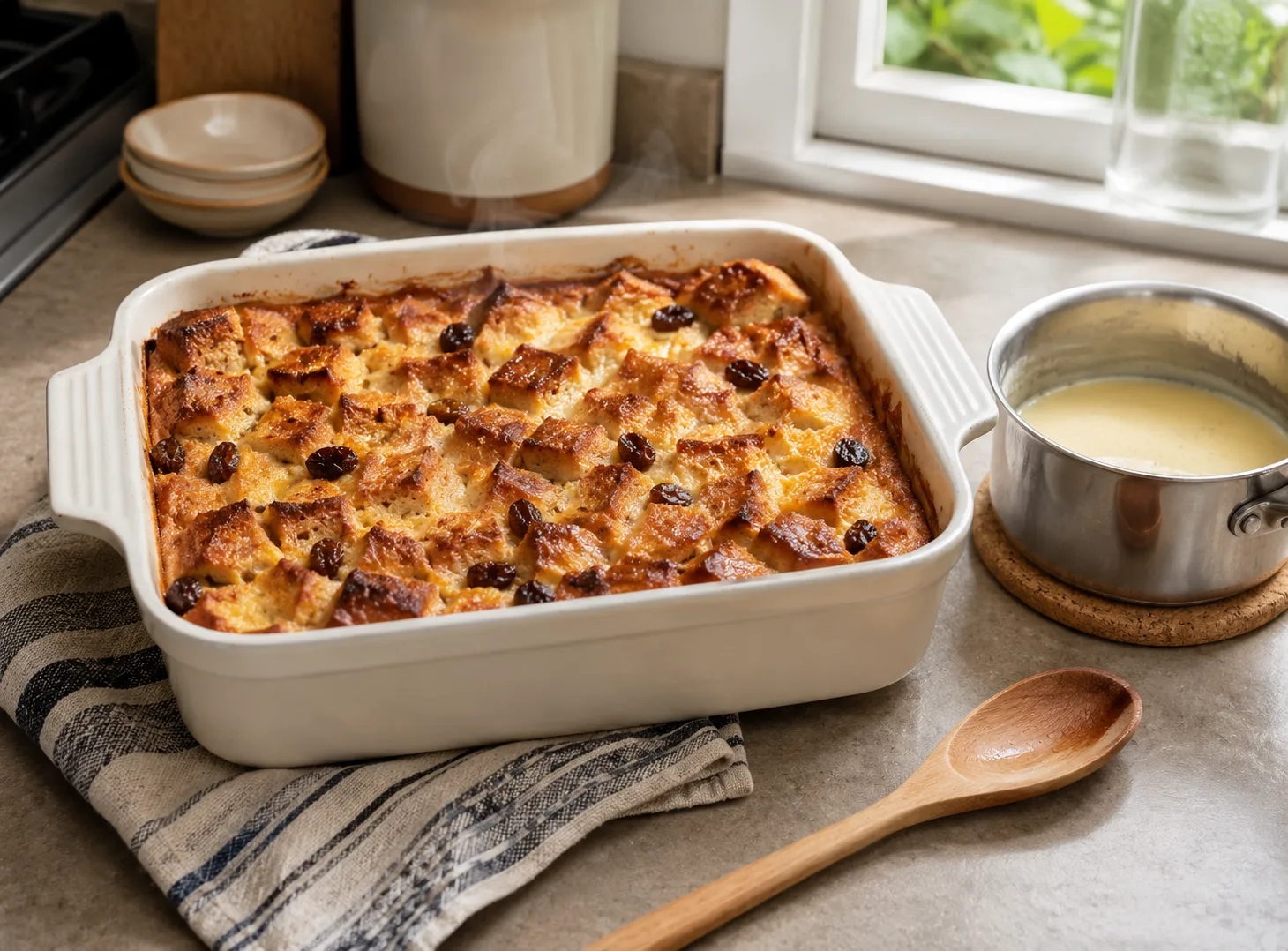
- Bake uncovered at 350 degrees F for 45 to 50 minutes.
- The top should be golden brown. The center should be just set with a very slight jiggle.
- While the pudding bakes, melt the butter for the sauce in a small saucepan over low heat.
- Remove the saucepan from heat and whisk in the powdered sugar until smooth.
- Add the egg yolk and whisk quickly so it does not cook from the residual heat.
- Return the saucepan to low heat. Stir constantly for about 1 minute.
- Remove from heat again. Stir in the vanilla extract and heavy cream.
- Keep the sauce warm until the pudding is ready.
- Let the baked pudding rest for 10 minutes after coming out of the oven.
- Spoon into bowls or cut into squares. Drizzle the warm vanilla sauce over each serving and serve right away.
- Use bread that is at least one day old. Fresh bread absorbs too much moisture too fast and the pudding ends up dense and wet instead of custardy.
- Brioche and challah give the richest result. Standard white sandwich bread works well too and keeps the cost down.
- The soak time matters. Twenty minutes is the minimum. Overnight in the fridge gives you a more even texture and a deeper flavor throughout.
- Press the bread down every few minutes while it soaks so all the pieces absorb the custard at the same rate.
- Take the pudding out while there is still a small jiggle in the very center. Carryover heat will finish it during the rest time.
- Make the vanilla sauce while the pudding is in its last 10 minutes of baking. It thickens as it sits and is best served warm.
- Using fresh bread. It does not dry out fast enough and makes the base heavy and sodden.
- Skipping the oven toast. This step adds structure. Without it, the cubes break down too much during the soak.
- Overbaking. The top firms up faster than the center. Pull it at the jiggle stage, not when it looks fully solid.
- Pouring the sauce on before serving. It gets absorbed fast and you lose the contrast between warm sauce and soft pudding.
- Adding the egg yolk to the sauce while the butter is still on the heat. Pull the pan off first, then whisk the yolk in quickly.
- Swap raisins for dried cranberries, chopped pecans, or dark chocolate chips depending on what you have.
- Use half-and-half in place of the heavy cream and whole milk combination if you want a slightly lighter custard.
- Stir one tablespoon of bourbon into the finished vanilla sauce for a Southern-style variation that works very well.
- Substitute croissants for the bread if you want a richer, more buttery texture in every bite.
- Use full-fat coconut milk instead of whole milk for a dairy-free version. The texture will be a little different but still good.
- Add one teaspoon of orange zest to the custard before pouring it over the bread for a quiet citrus note in the background.
- The vanilla sauce from this recipe is the natural first choice. Do not skip it.
- A scoop of vanilla ice cream on the side works well if you want to serve it as a more composed dessert.
- Lightly sweetened whipped cream adds a cool contrast to the warm pudding.
- Fresh berries cut through the richness with a bit of tartness.
- A cup of strong coffee or plain black tea alongside keeps the sweetness from feeling like too much.
- Keep leftover bread pudding covered in the refrigerator. It holds well for up to 4 days.
- Store the vanilla sauce separately in a sealed container in the fridge for up to 5 days.
- Reheat a single portion in the microwave for 60 to 90 seconds. Cover it loosely so the top does not dry out.
- For a larger portion, use a 325 degree F oven for about 15 minutes with foil over the top.
- The baked pudding freezes well without the sauce. Wrap it well and freeze for up to 2 months. Thaw overnight in the refrigerator before reheating.
- Do not freeze the vanilla sauce. It separates when thawed and does not come back together cleanly.
Fresh bread holds too much moisture from the start. The pudding ends up heavy and wet in the middle. Day-old or oven-dried bread is the right call here.
Yes. Assemble the dish completely, cover it, and refrigerate overnight before baking. Take it out of the fridge about 20 minutes before it goes into the oven.
It needs more time. Add 5 more minutes and check again. The center should be set with only a very small jiggle remaining. Let it rest after baking and it will finish firming up.
It is not required, but it does make a noticeable difference. Even a simple warm drizzle changes how the finished dish tastes and feels. It takes about 5 minutes to make.
Brioche, challah, and French bread give the richest texture. Day-old white sandwich bread is a reliable and affordable option that most people already have on hand.
The edges will look set and the top will be golden. The center should have a slight jiggle but not look liquid. It finishes setting during the 10-minute rest.
- Day-old bread is not a suggestion. The entire texture of the bread pudding recipe depends on using bread that has already dried out.
- If the top starts browning too quickly before the 45-minute mark, lay a piece of foil loosely over the dish and continue baking.
- This recipe scales up well for a larger group. Use a deeper baking dish and add 10 minutes to the bake time. Check the center before pulling it out.
- The vanilla sauce gets thicker as it cools. To thin it back out, warm it gently over low heat and add a small splash of heavy cream while stirring.
This bread pudding recipe does not ask much from you. The ingredient list is short, the steps are clear, and the result is a dessert that genuinely holds up. The custard sets the way it should. The top develops that slight crust that makes the texture worth talking about. The vanilla sauce finishes it in a way that feels like it belongs there, not like something poured on at the last minute. What makes this recipe worth coming back to is how forgiving it is. You can prepare it the night before and bake it fresh the next day. You can change the bread based on what you have. You can swap the mix-ins without anything falling apart. It adjusts well and it does not require you to hover over the oven. If you are looking for a dessert that delivers a reliable result without demanding a lot of your time or skill, this one earns its place. Make it once and you will have a feel for the whole process. Make it twice and the recipe card stays in the drawer.