
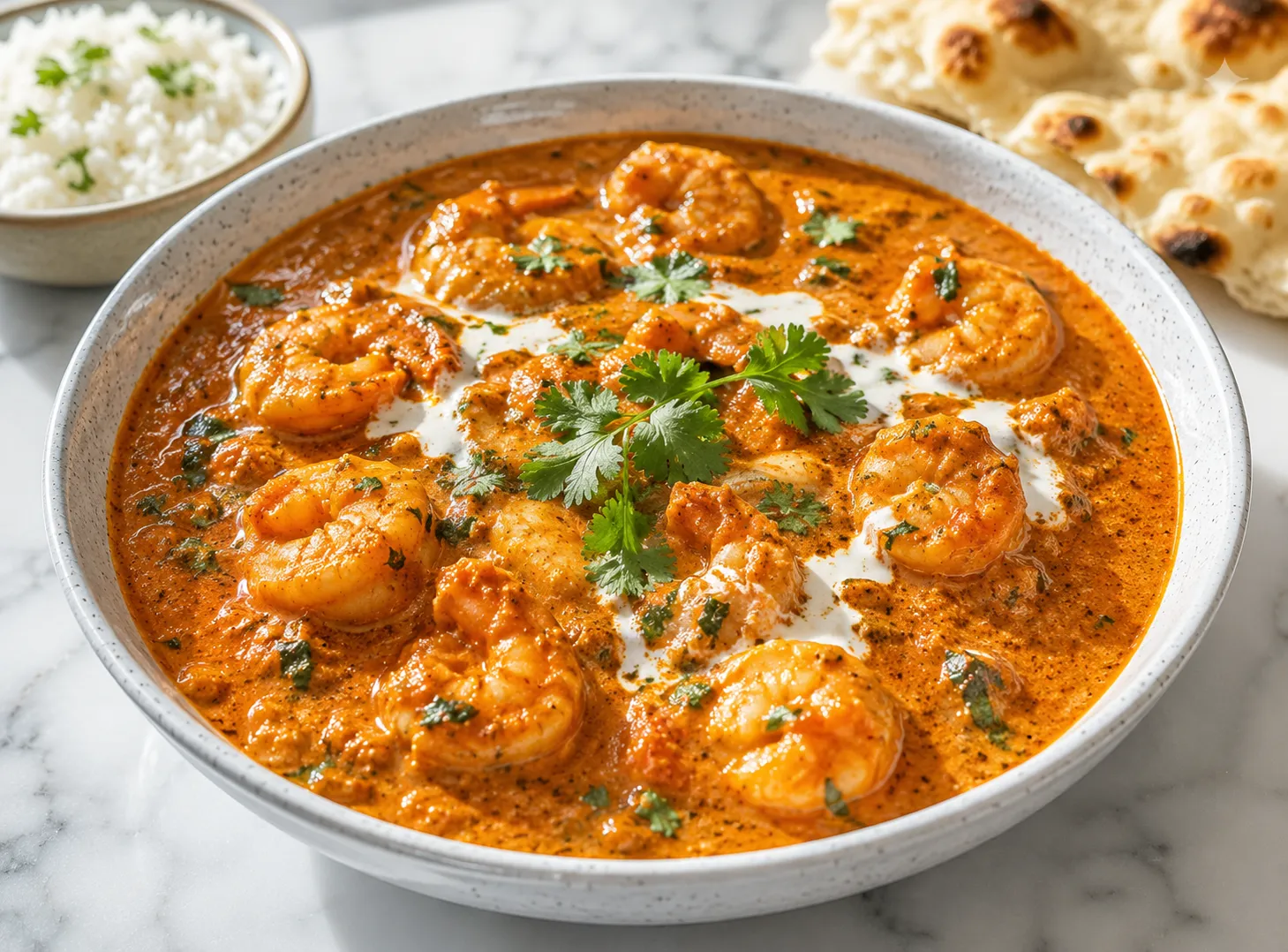
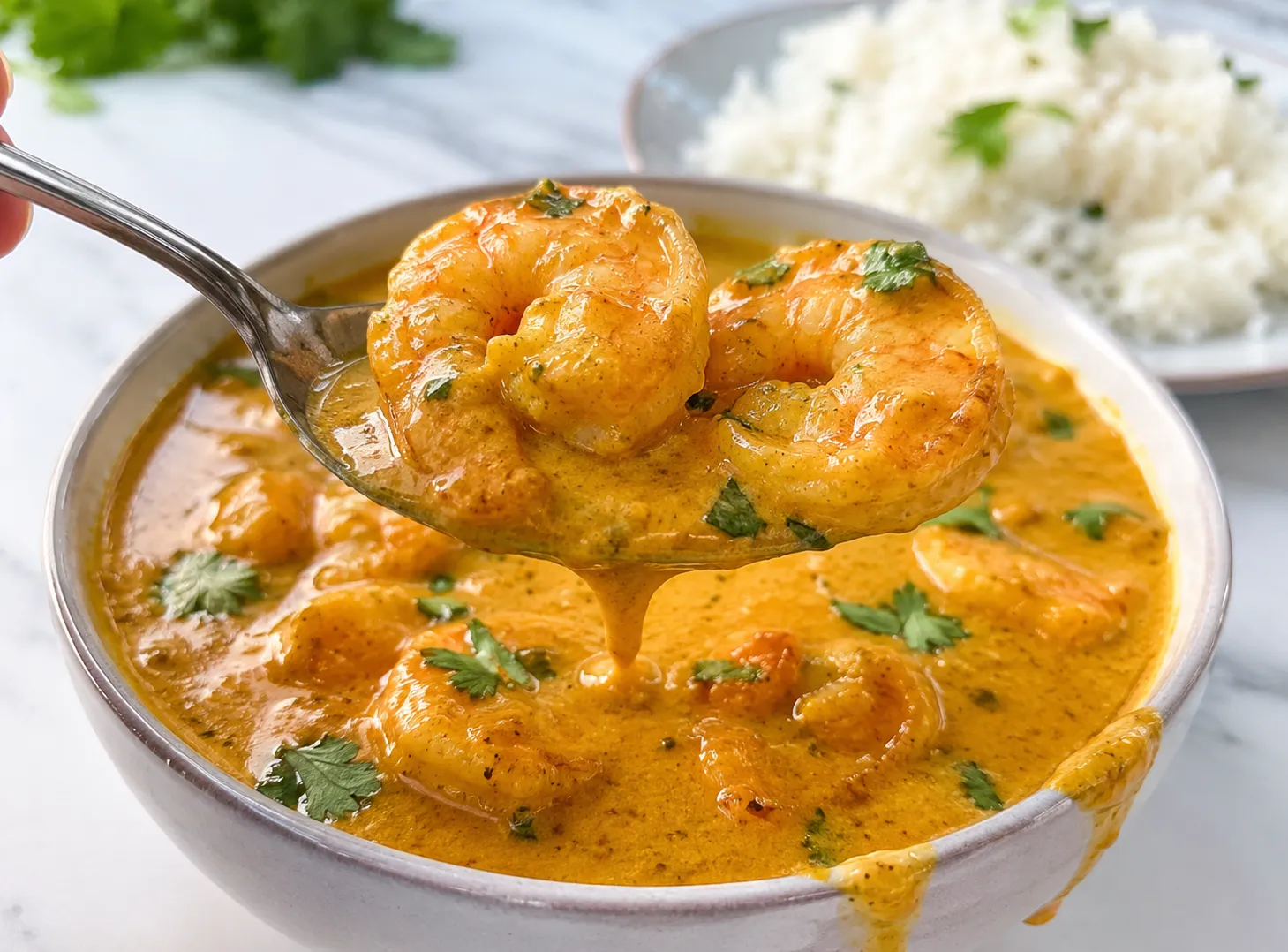
This shrimp curry recipe turns basic pantry spices and a can of coconut milk into something that tastes like it came from your favorite takeout spot. The shrimp cook in under five minutes, so the whole dinner comes together in about half an hour. The sauce is rich and a little tangy, built on garlic, ginger, and warm spices you can control to your own heat level. Serve it over rice or scoop it up with naan. It works for a fast weeknight dinner, and it works just as well when you have people over and want something that looks like more effort than it actually took.
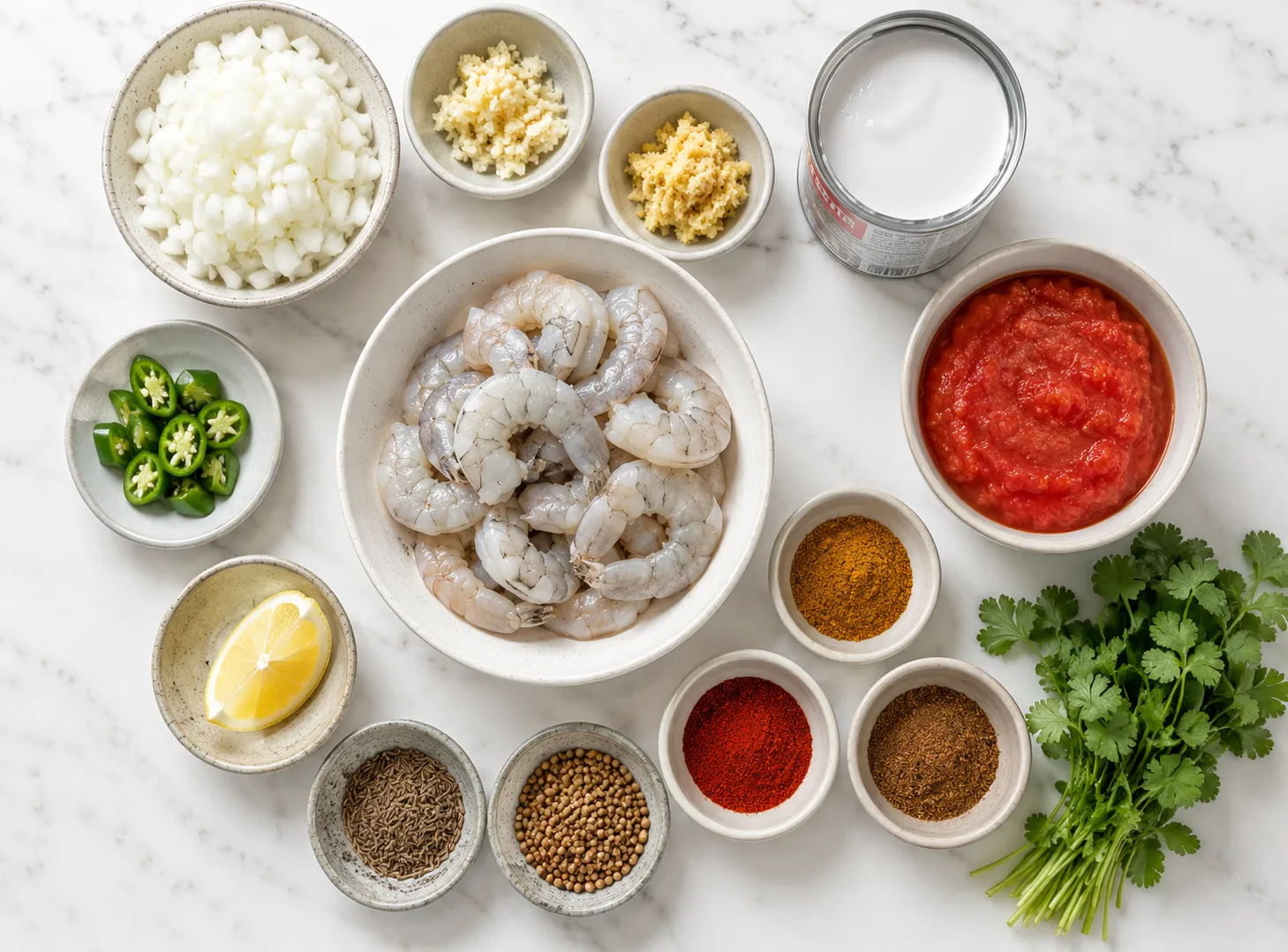
- 1.5 lbs large shrimp, peeled and deveined
- 0.5 teaspoon salt
- 0.25 teaspoon turmeric powder
- 2 tablespoons oil or ghee
- 1 medium onion, finely chopped
- 4 garlic cloves, minced
- 1 tablespoon ginger, minced
- 1 green chili, sliced , Optional
- 2 medium tomatoes, pureed
- 1 tablespoon tomato paste
- 13.5 oz coconut milk , One can, full fat recommended
- 1 teaspoon ground cumin
- 1 teaspoon ground coriander
- 1 teaspoon paprika
- 0.5 teaspoon garam masala
- 0.25 teaspoon turmeric
- 0.25 teaspoon cayenne , Adjust to taste
- salt , To taste
- 1 tablespoon lemon juice
- 2 tablespoons fresh cilantro, chopped
- Large skillet or wide saucepan
- Wooden spoon or silicone spatula
- Measuring spoons and cups
- Cutting board and knife
- Small bowl for mixing spices
- Season the shrimp and set it aside.
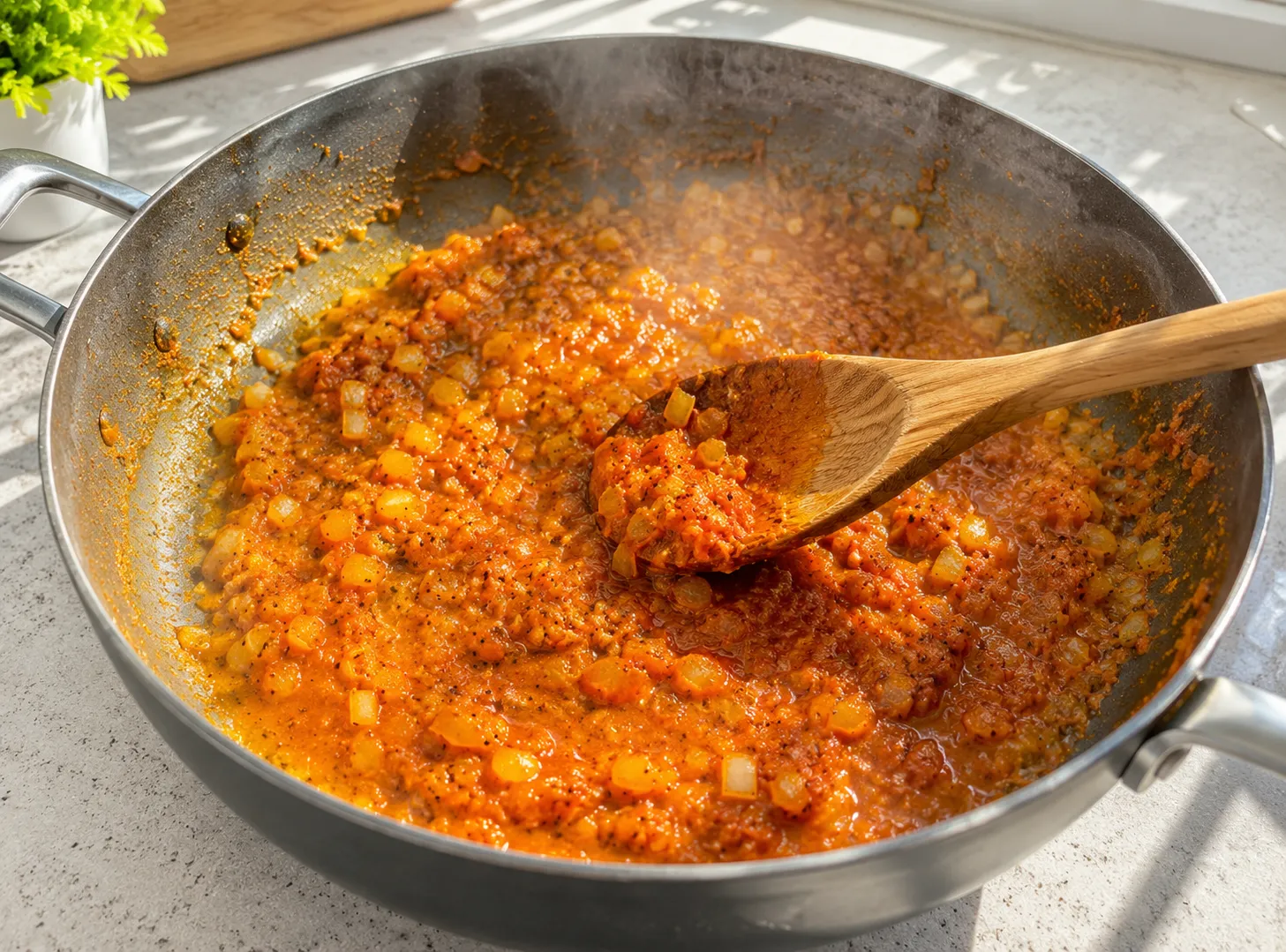
- Cook onion, garlic, ginger, and spices to build the base.
- Add tomatoes and coconut milk, then simmer until thick.
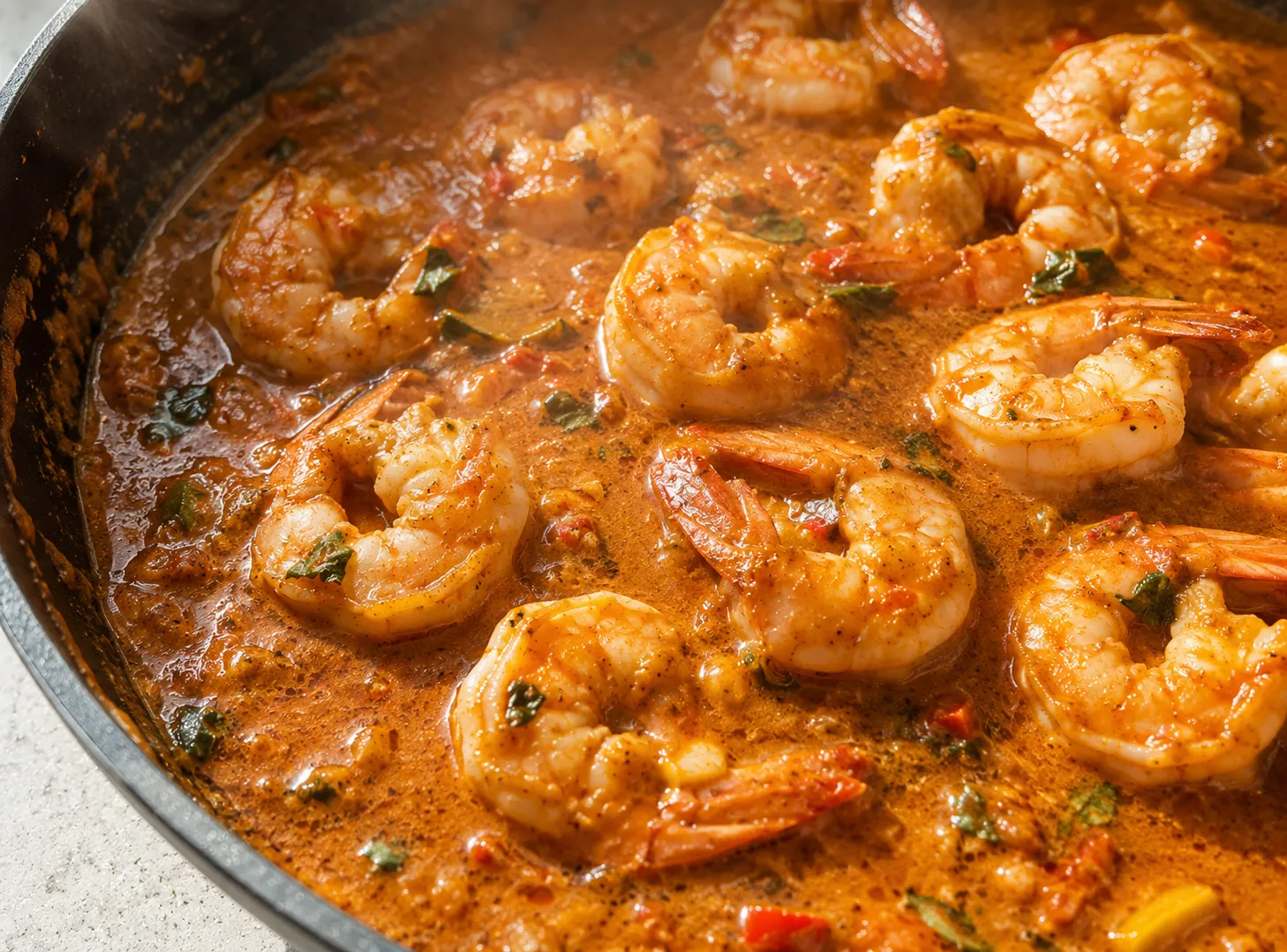
- Cook the shrimp right in the sauce.
- Finish with lemon juice and cilantro.
- Pat the shrimp dry with paper towels. Toss with salt and turmeric. Set aside while you get the sauce going.
- Heat oil in a large skillet over medium heat. Add the chopped onion and cook for 5 to 6 minutes, until it softens and turns light gold.
- Add garlic, ginger, and green chili. Stir for about a minute, just until fragrant. Watch the garlic closely so it doesn't burn.
- Stir in cumin, coriander, paprika, turmeric, and cayenne. Keep stirring for 30 seconds so the spices toast without scorching.
- Pour in the pureed tomatoes and tomato paste. Stir well and cook for 4 to 5 minutes, until the raw tomato smell fades and the mixture thickens a bit.
- Add the coconut milk and stir to combine. Bring it to a gentle simmer. Don't let it boil hard.
- Lower the heat and let the sauce simmer for 8 to 10 minutes, stirring now and then, until it thickens and a thin layer of oil starts to show at the edges.
- Season with salt and stir in the garam masala.
- Add the shrimp directly into the simmering sauce, spreading them into a single layer.
- Cook for 3 to 4 minutes, flipping halfway through, until the shrimp turn pink and opaque. Don't overcook them.
- Turn off the heat. Stir in the lemon juice and half of the cilantro.
- Let the curry rest for 5 minutes off the heat so the sauce settles and the shrimp finish gently.
- Garnish with the remaining cilantro before serving.
- Use shrimp that's fully thawed, not still icy in the middle, so it cooks evenly.
- Toast the spices for a few seconds before adding liquid. It wakes up the flavor quickly.
- Let the sauce simmer properly before the shrimp go in. Skipping this step leaves the curry tasting flat.
- Add the shrimp last. They only need a few minutes in hot sauce.
- Full fat coconut milk gives the creamiest result. Light coconut milk will taste noticeably thinner.
- Taste the sauce before adding shrimp so you have time to adjust salt or heat.
- Overcooking the shrimp, which makes them tough and rubbery.
- Adding shrimp too early, before the sauce has had time to develop flavor.
- Skipping the tomato reduction step, which leaves the curry tasting raw and thin.
- Boiling the coconut milk hard, which can cause it to separate.
- Using precooked shrimp, since it overcooks almost instantly in hot sauce.
- Skipping the taste test before serving, which is an easy way to miss a salt or heat adjustment.
- Swap shrimp for chicken thighs, cooked through before the finishing step.
- Use canned crushed tomatoes if fresh tomatoes aren't on hand.
- Add spinach or bell peppers for more vegetables in the dish.
- This version is already dairy free, since coconut milk is the only creamy element.
- Cut back on or skip the green chili and cayenne for a milder curry.
- Add a small splash of fish sauce for extra depth.
- Steamed basmati rice
- Warm garlic naan or roti
- A simple cucumber salad
- Lime wedges on the side
- Sauteed spinach or kale
- Cooling yogurt raita
Yes. Thaw it completely and pat it dry before seasoning so the sauce doesn't turn watery.
It has mild to medium heat as written. Adjust the cayenne and chili to make it milder or spicier.
Yes. Make the base up to a day ahead and refrigerate it. Reheat and add shrimp fresh when you're ready to serve.
Heavy cream works as a substitute, though the flavor will be less distinctly curry like.
No marinating needed. A quick toss with salt and turmeric is enough before cooking.
Yes. Use a wider pan so the shrimp cook in a single layer instead of steaming in a crowded pot.
- Shrimp size affects cook time, so adjust the minutes slightly for smaller or jumbo shrimp.
- The sauce should coat the back of a spoon before the shrimp go in.
- Fresh lemon juice brightens the whole dish, so don't skip it.
- Garam masala is best added near the end so its aroma stays strong.
This shrimp curry earns a regular spot in dinner rotation because it delivers real flavor without asking for much effort. The sauce does the heavy lifting, and the shrimp only need a few minutes to finish the job. It reheats well, adapts easily to whatever you have on hand, and works just as well on a quiet weeknight as it does for guests. Once you get comfortable building the base, toasting the spices, and timing the shrimp, this becomes one of those recipes you can make from memory without checking the card again.