
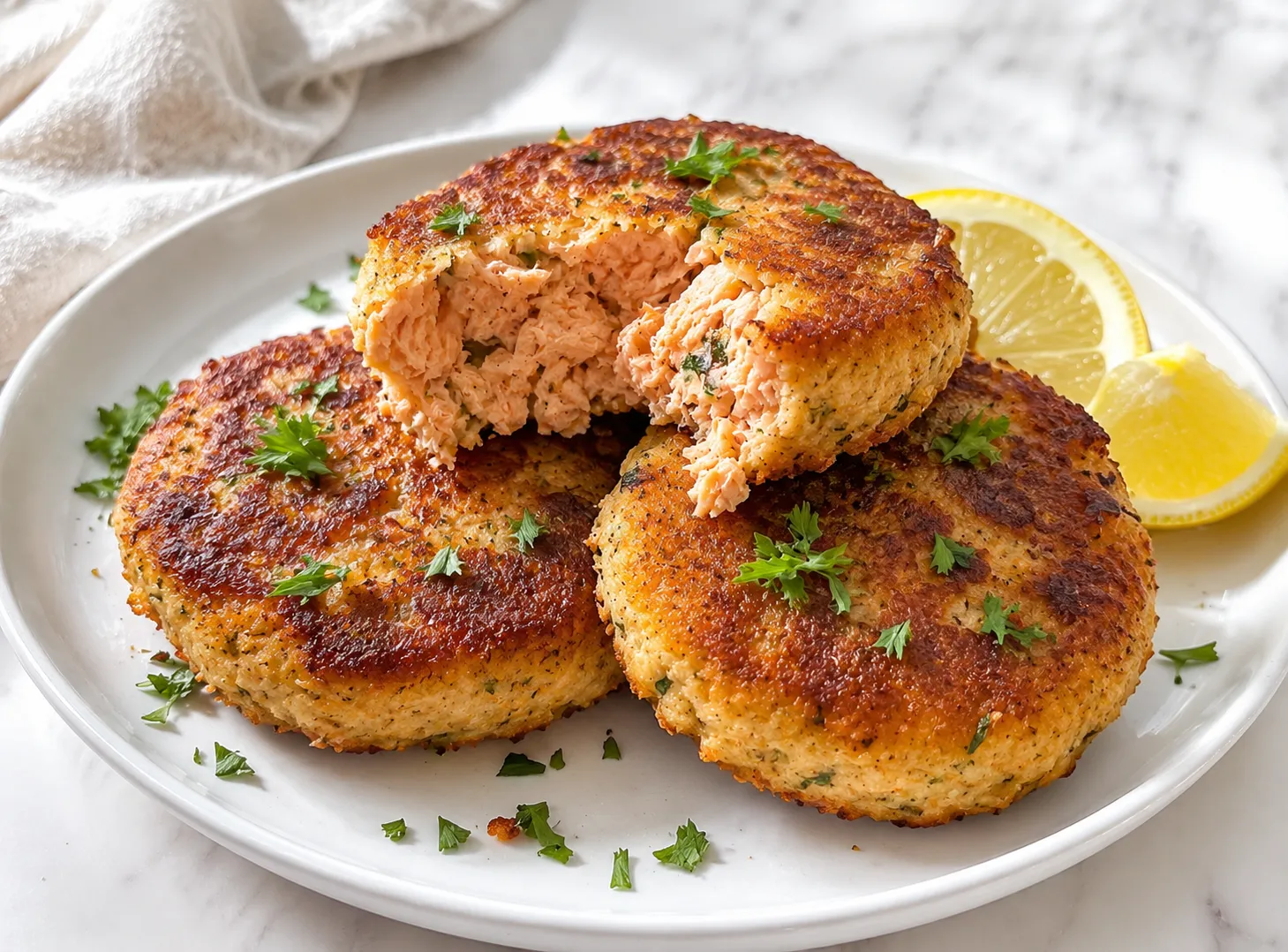
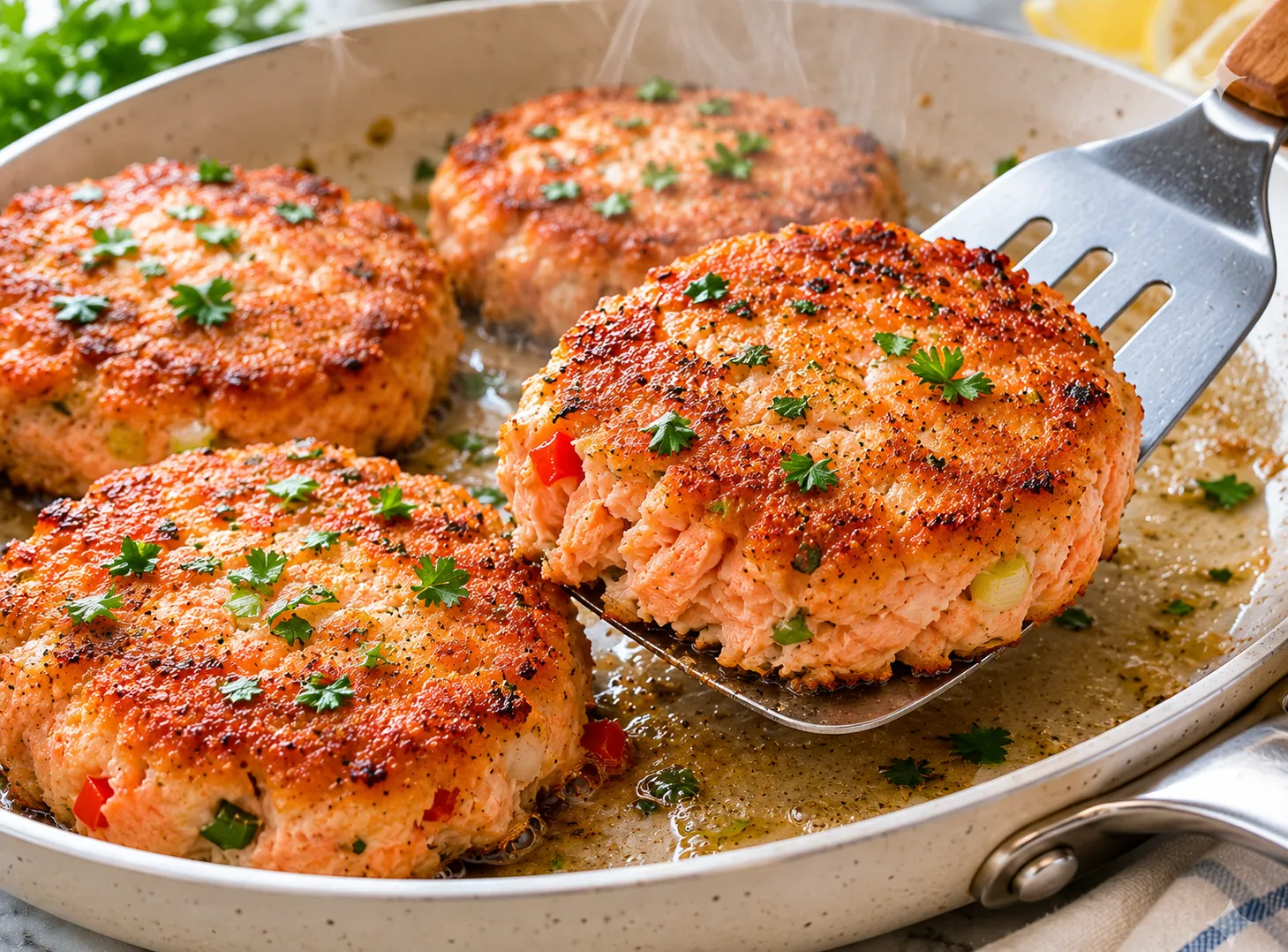
Salmon cakes turn a couple of fillets or a can from the pantry into a meal that feels worth the effort. Panko and egg hold everything together, a little mustard and lemon wake up the flavor, and a hot pan does the rest of the work. The outside crisps up fast while the center stays moist and flaky, which is the whole point of a good salmon cakes recipe. This version is quick enough for a weeknight, flexible enough to handle whatever herbs or seasoning you already have in the kitchen, and simple enough that a first time cook will not run into trouble making it. It also happens to be one of the best ways to use up salmon that is sitting in the fridge from a bigger dinner earlier in the week, so nothing goes to waste.
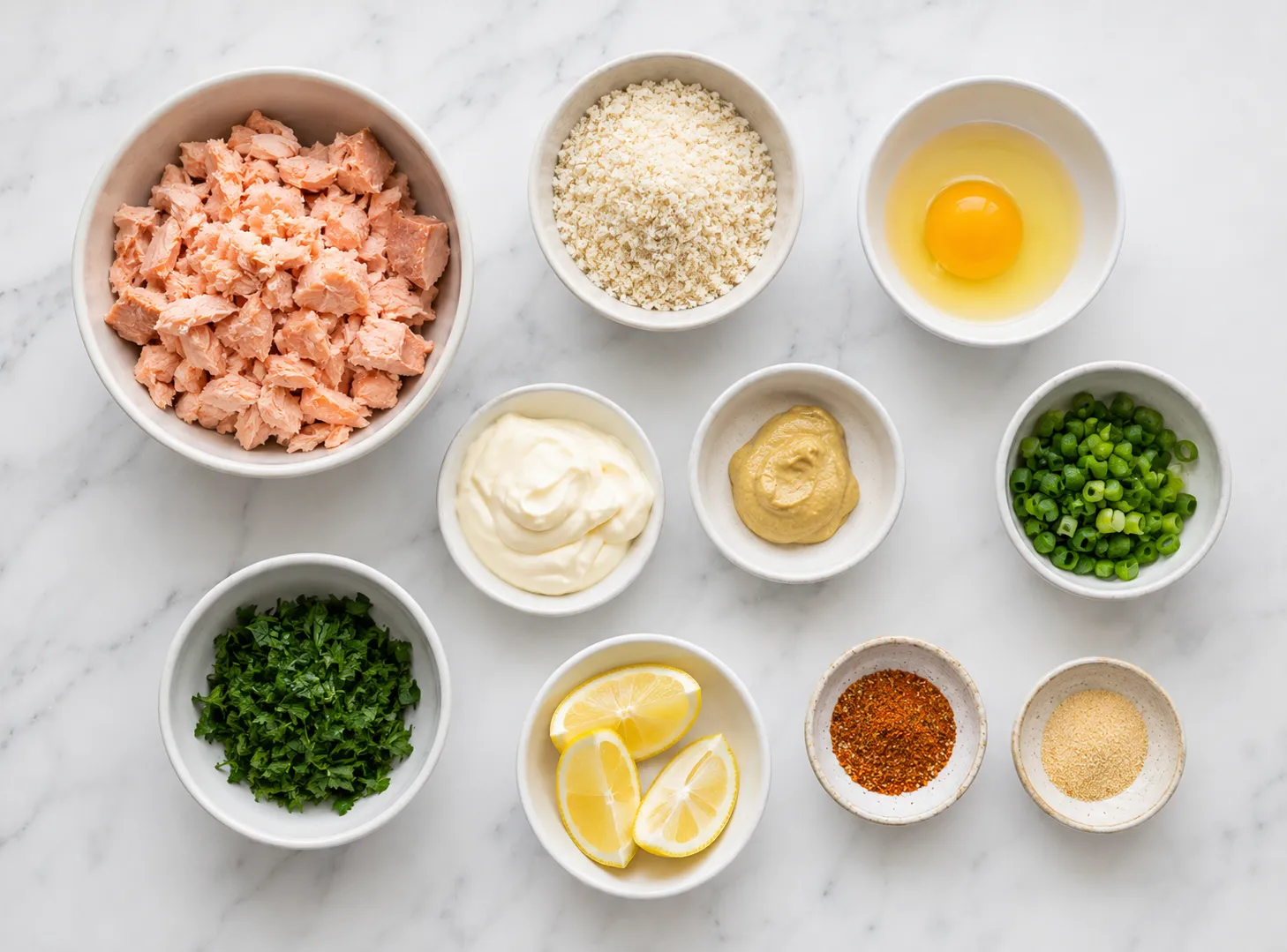
- 2 cups cooked salmon, flaked , about 1 pound fresh, or two 14.75 oz cans, drained
- 0.5 cup panko breadcrumbs
- 1 large egg
- 0.25 cup mayonnaise
- 2 tablespoons Dijon mustard
- 2 green onions, chopped
- 2 tablespoons fresh parsley, chopped
- 1 tablespoon lemon juice , fresh, not bottled, if you can manage it
- 1 teaspoon Old Bay seasoning , smoked paprika works as a substitute
- 0.5 teaspoon garlic powder
- salt and black pepper , to taste
- 2 to 3 tablespoons olive oil or butter
- Large mixing bowl
- Fork, for flaking salmon and mixing
- Measuring cups and spoons
- Skillet, nonstick or cast iron
- Spatula
- Baking sheet or plate, for chilling patties
- Paper towels, for draining
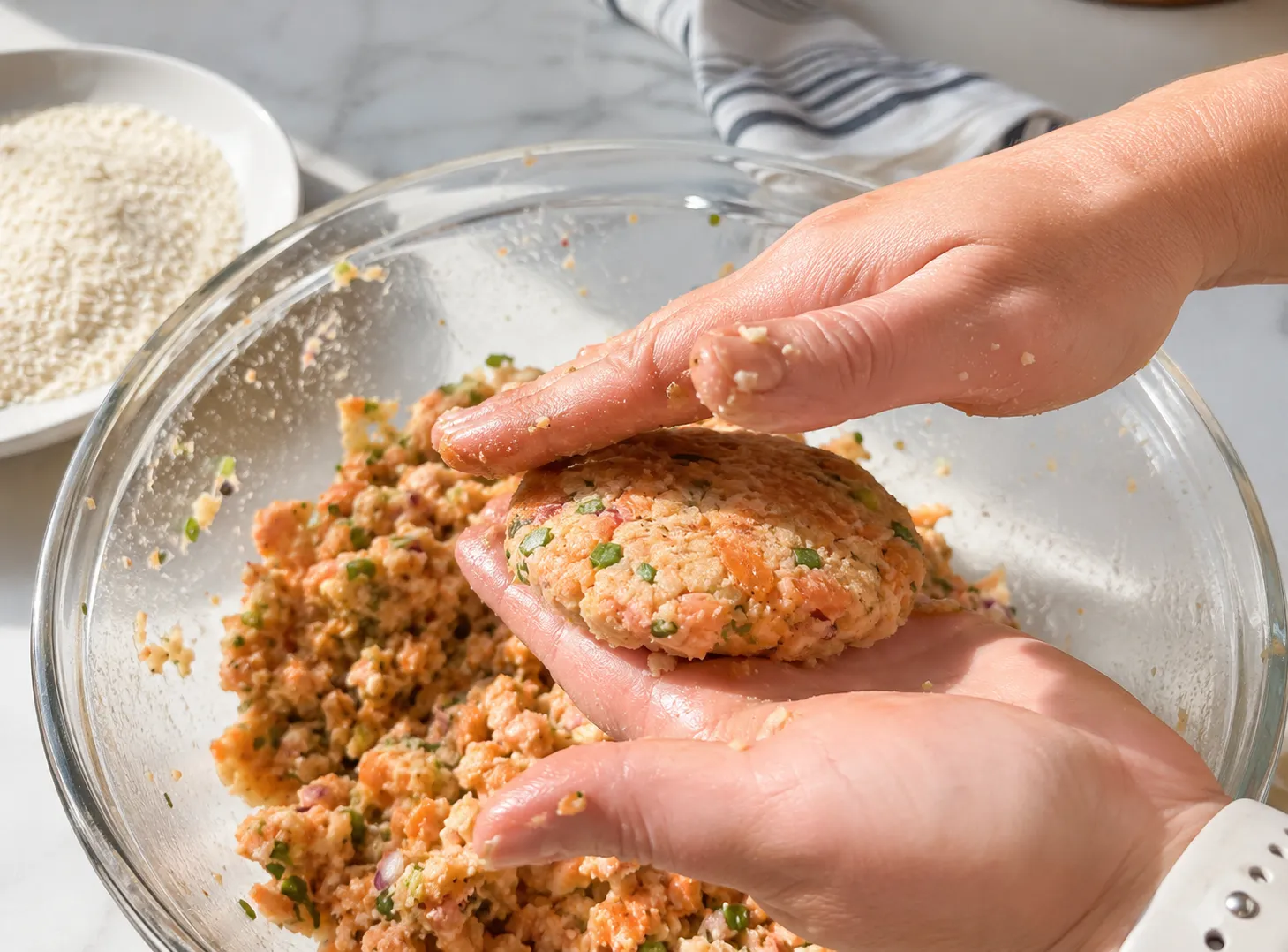
- Flake the cooked salmon and mix it with the panko, egg, and seasoning.
- Shape the mixture into eight even patties.
- Chill the patties in the fridge so they hold together while cooking.
- Pan fry the patties in hot oil until golden on both sides.
- Drain briefly on paper towels and serve while still warm.
- Cook fresh salmon first if that is what you are using, then let it cool before you flake it apart with a fork.
- Remove the skin and check carefully for small pin bones as you flake.
- If you are using canned salmon, drain it thoroughly and flake it, watching for the same small bones.
- Pat the flaked salmon with a paper towel if it still feels wet. Extra moisture works against you later on.
- In a large bowl, combine the salmon with the panko, egg, mayonnaise, mustard, green onions, parsley, lemon juice, Old Bay, garlic powder, salt, and pepper.
- Mix everything gently with a fork until it just holds together. Stop as soon as it does.
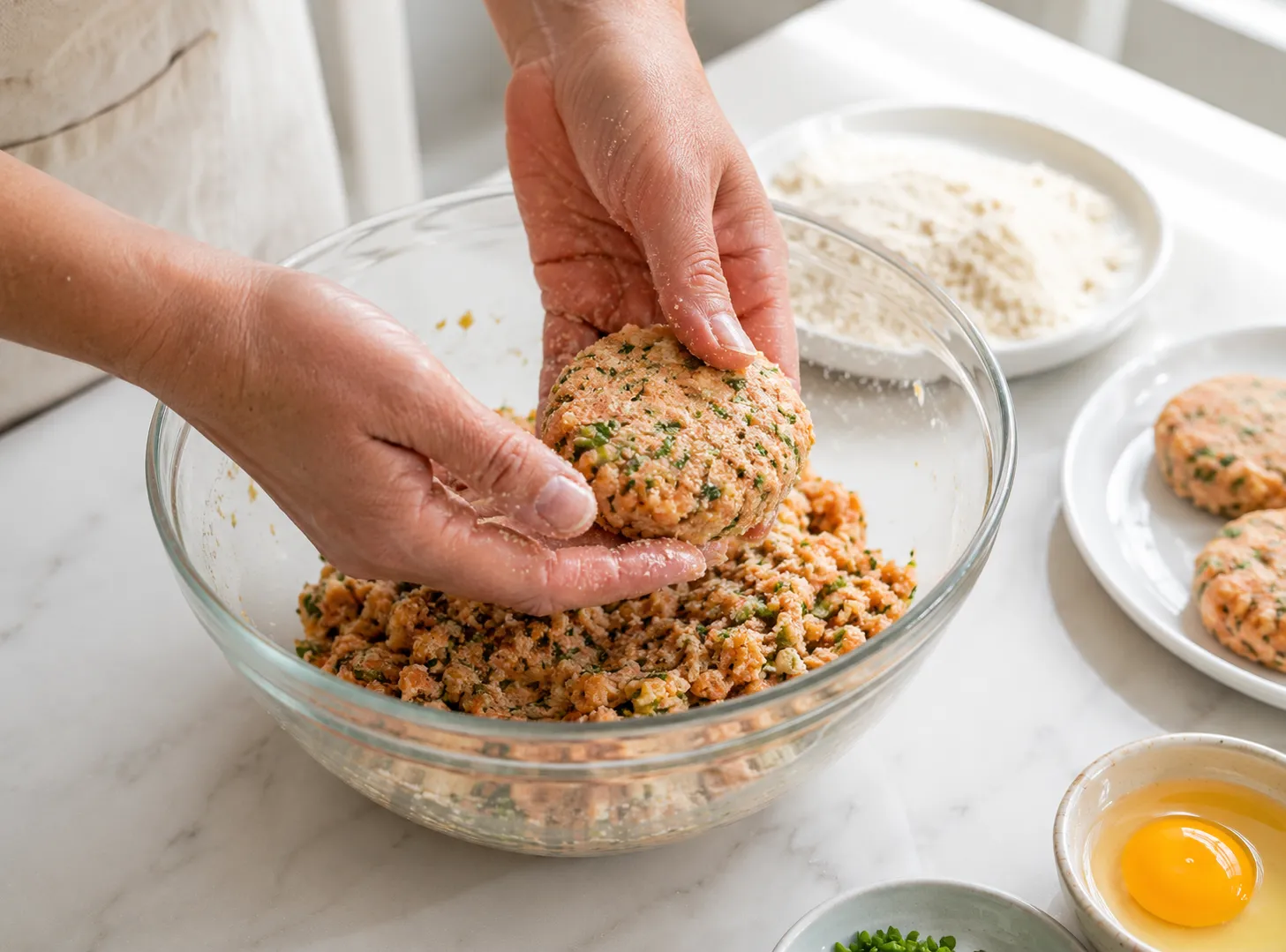
- Divide the mixture into eight even portions using a kitchen scale or your best guess.
- Shape each portion into a patty about three quarters of an inch thick, pressing the edges so they stay together.
- Arrange the patties on a plate or small baking sheet without letting them touch each other.
- Chill the patties in the fridge for 15 minutes. This step matters more than it looks like it should.
- Heat the oil or butter in a skillet over medium heat until it shimmers slightly.
- Lower the patties into the pan one at a time, leaving space between each so they brown instead of steam.
- Cook for 3 to 4 minutes per side, checking the underside before you flip so you only flip once.
- Let the patties rest on the paper towel for a minute or two so the crust sets before you move them again.
- Squeeze a little fresh lemon over the top just before serving if you want extra brightness.
- Move the finished patties to a paper towel lined plate, then serve them while the crust is still crisp.
- Pat canned salmon dry before mixing. Extra moisture is the most common reason patties fall apart in the pan.
- Chill the shaped patties even when you are short on time. Even ten minutes in the fridge makes a real difference.
- Use a wide metal or fish spatula so each patty flips in one clean piece.
- Flip only once per side. Constant flipping breaks the crust before it has time to set properly.
- Fry a small test piece first if you want to check the seasoning before shaping the whole batch.
- Keep the heat at medium for the whole cook. High heat browns the outside before the center is done.
- Let the oil fully come up to temperature before the first patty goes in, or it will soak up oil instead of crisping.
- Use fresh lemon juice instead of bottled. It makes a noticeable difference in the finished flavor.
- Taste a tiny bit of the raw mixture before shaping, and adjust salt or mustard if it needs it.
- Wipe the skillet between batches if you are cooking more than eight patties, since leftover crumbs can burn and stick to the next batch.
- Skipping the chill step, which is the single biggest reason salmon cakes break apart while cooking.
- Adding too much panko, which turns the texture dry and bread heavy instead of light and flaky.
- Crowding the pan, which traps steam under the patties and keeps the crust from forming properly.
- Flaking the salmon too fine, so the finished cakes lose all their natural texture.
- Not draining canned salmon well enough, which leaves the mixture too wet to hold its shape.
- Starting the patties in oil that has not fully heated, which leads to greasy, pale cakes.
- Salting the mixture before tasting it, especially with canned salmon that already carries some salt of its own.
- Pressing down on the patties with the spatula while they cook, which squeezes out moisture and leaves them dry.
- Skipping the paper towel step after frying, which leaves the bottoms greasy instead of crisp.
- Swap the panko for crushed crackers or almond flour if you want a gluten free version.
- Use canned tuna in place of salmon for a quicker and cheaper take on the same recipe.
- Add a pinch of cayenne or a bit of diced jalapeno if you like some heat.
- Replace the mayonnaise with plain Greek yogurt for a lighter, tangier binder.
- Stir in a tablespoon of capers for a briny touch that plays well with the lemon.
- Bake the patties instead of frying them. Place them on a lined sheet at 400 degrees for 12 to 15 minutes, flipping once.
- Air fry at 375 degrees for about 10 minutes, flipping halfway through, for a lighter version with less oil.
- Add a spoonful of finely chopped roasted red pepper for color and a touch of sweetness.
- Mix in a small handful of shredded cheddar or parmesan if you want a richer, more savory version.
- Use smoked salmon in place of half the fresh or canned salmon for a deeper, smokier flavor.
- A simple green salad with a lemon vinaigrette to keep things light.
- Roasted asparagus or green beans for an easy vegetable side.
- Garlic butter rice or a lemon herb pilaf to round out the plate.
- Coleslaw, which adds crunch and a bit of tang against the rich patties.
- Tartar sauce, remoulade, or a quick yogurt dill sauce for dipping.
- Toasted buns if you want to turn the cakes into a sandwich.
- Steamed or roasted baby potatoes for a heartier dinner plate.
- A squeeze of fresh lemon right before serving to brighten the whole dish.
- A fried or poached egg on top for a heartier breakfast style plate.
- Pickled red onions or a quick cucumber salad for something sharp and cool alongside the patties.
- Store cooked salmon cakes in an airtight container in the fridge for up to 3 days.
- Freeze cooled, cooked patties in a single layer, then move them to a freezer bag for up to 2 months.
- Reheat in a skillet over medium heat for 2 to 3 minutes per side to bring back the crisp crust.
- Reheat in the oven at 350 degrees for about 10 minutes if you are warming several at once.
- Avoid the microwave if you can help it. It softens the crust and can leave the inside rubbery.
- Thaw frozen patties in the fridge overnight before reheating them so they warm through evenly.
- Label the freezer bag with the date so you know how long the patties have been stored.
- Separate raw shaped patties with parchment paper if you want to freeze them before cooking instead of after.
Yes, canned salmon works well in this recipe. Drain it thoroughly and check through it for small bones before mixing it into the batter.
This usually comes down to skipping the chill step, too much moisture left in the salmon, or not enough binder in the mix. Chilling the shaped patties for at least 15 minutes solves most of the problem on its own.
Yes, you can shape the patties and keep them covered in the fridge for up to a day before cooking. The extra time in the fridge actually helps them hold together better.
Yes, bake them at 400 degrees for 12 to 15 minutes, flipping halfway through, until they turn golden and feel firm to the touch.
Pretty much. Some parts of the country call them patties and others call them cakes, but the ingredients and method stay nearly identical either way.
A neutral oil with a decent smoke point, like avocado or vegetable oil, works well here. Butter adds good flavor but browns quickly, so keep a closer eye on the pan if you use it.
Yes, shape the raw patties, separate them with parchment paper, and freeze them flat. Cook them straight from frozen, adding a couple of extra minutes per side, or thaw them in the fridge first.
Plain Greek yogurt or sour cream both work as a substitute. They keep the mixture moist and hold the patties together just as well as mayonnaise does.
- Fresh salmon gives a slightly firmer bite than canned, though both work well in this recipe.
- Old Bay is optional. Smoked paprika, cajun seasoning, or plain black pepper all work as substitutes if that is what you have on hand.
- This recipe doubles easily if you are feeding a crowd or prepping meals for the week ahead.
- Leftover baked or grilled salmon is a good shortcut here and cuts the prep time down by quite a bit.
- The patties freeze well, so it is worth making a double batch just for the freezer.
- A kitchen scale makes it easier to divide the mixture into eight even portions, though eyeballing it works fine too.
- If the mixture feels too wet to shape, add an extra tablespoon of panko rather than more egg.
Salmon cakes earn a spot in a regular dinner rotation because they solve a practical problem. They turn a small amount of salmon, whether fresh or left over from another meal, into something that actually feels like dinner instead of a reheated afterthought. The crisp edges and soft center make them satisfying without feeling heavy, and the short ingredient list means most people already have what they need sitting in the kitchen. Once you make a batch, you will notice how easily the recipe adapts to whatever herbs, seasoning, or leftovers you have on hand that week, which is exactly why it is worth keeping in the regular rotation for good. It also holds up well the next day, which is more than you can say for most fried food, so leftovers are genuinely worth looking forward to rather than something to eat out of obligation.