
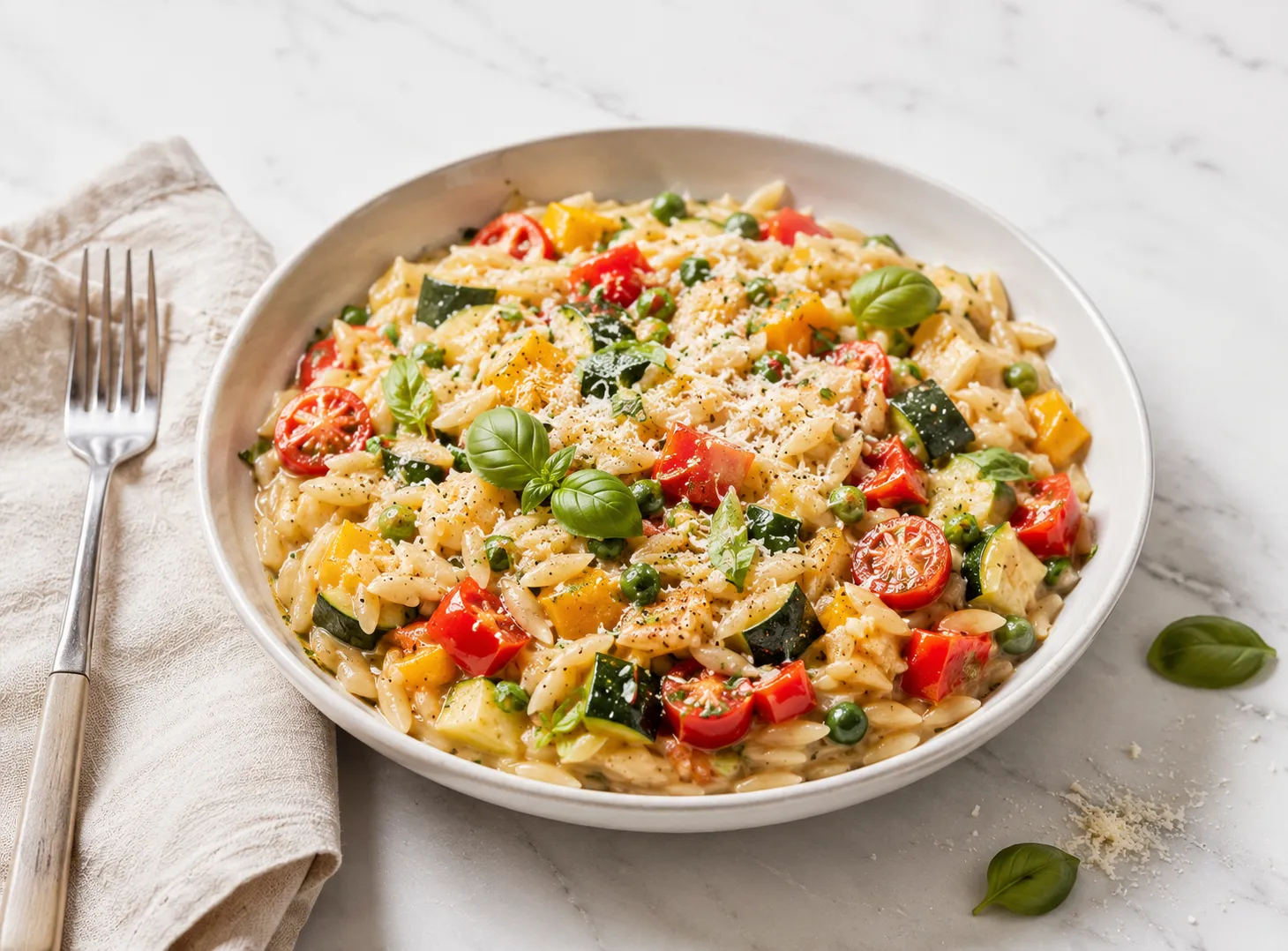
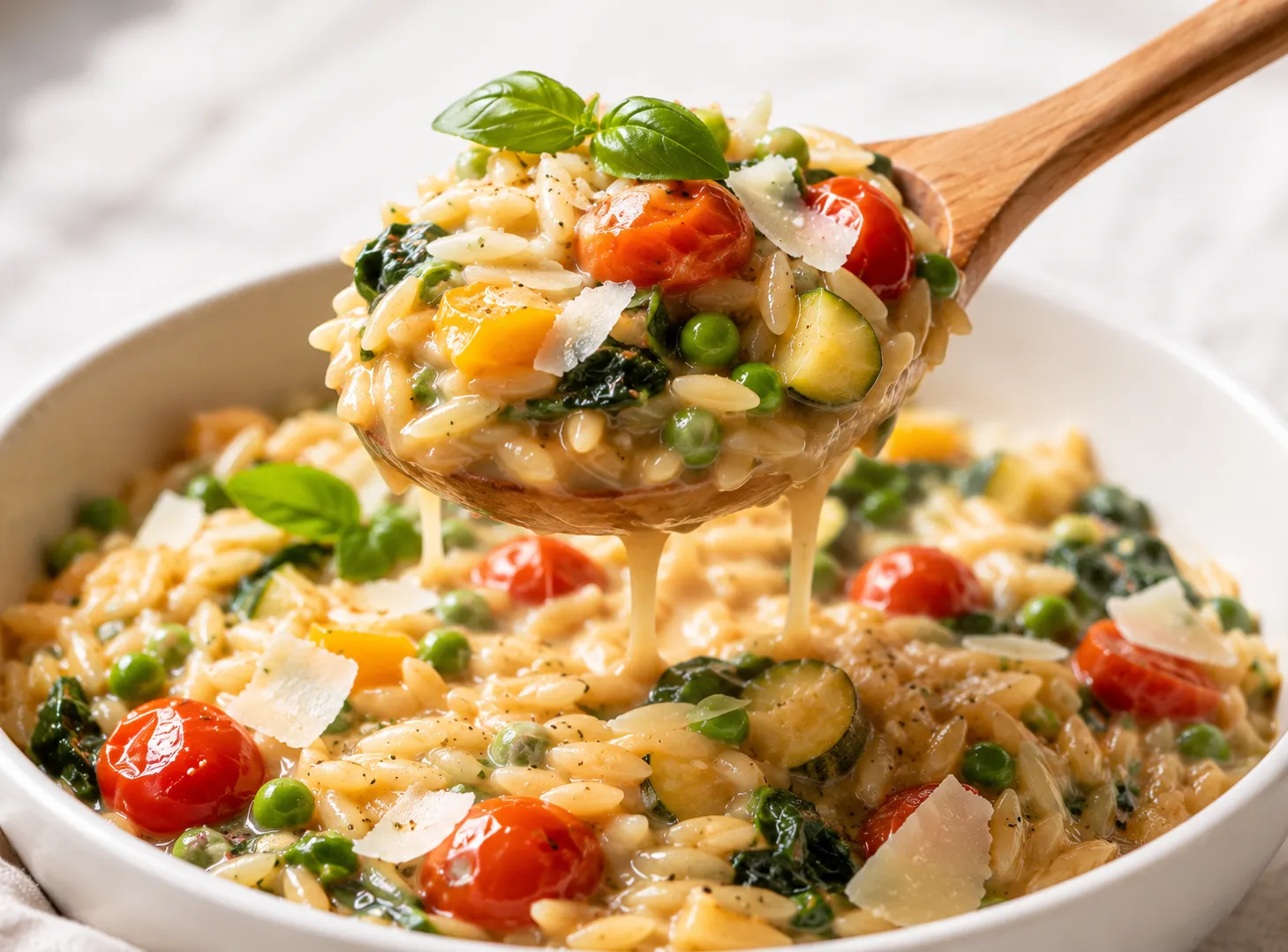
One pot orzo primavera is the kind of dinner you make when you want something fresh but don't have energy for a big production. Orzo cooks right alongside zucchini, squash, peppers, and tomatoes in the same pan, soaking up broth as it goes, so you end up with a creamy, veggie packed pasta and only one dish to wash. It comes together in about half an hour, works well for picky eaters since the vegetables are small and mild, and tastes even better the next day. A solid weeknight option when you want real food without a long ingredient list or a sink full of pots.
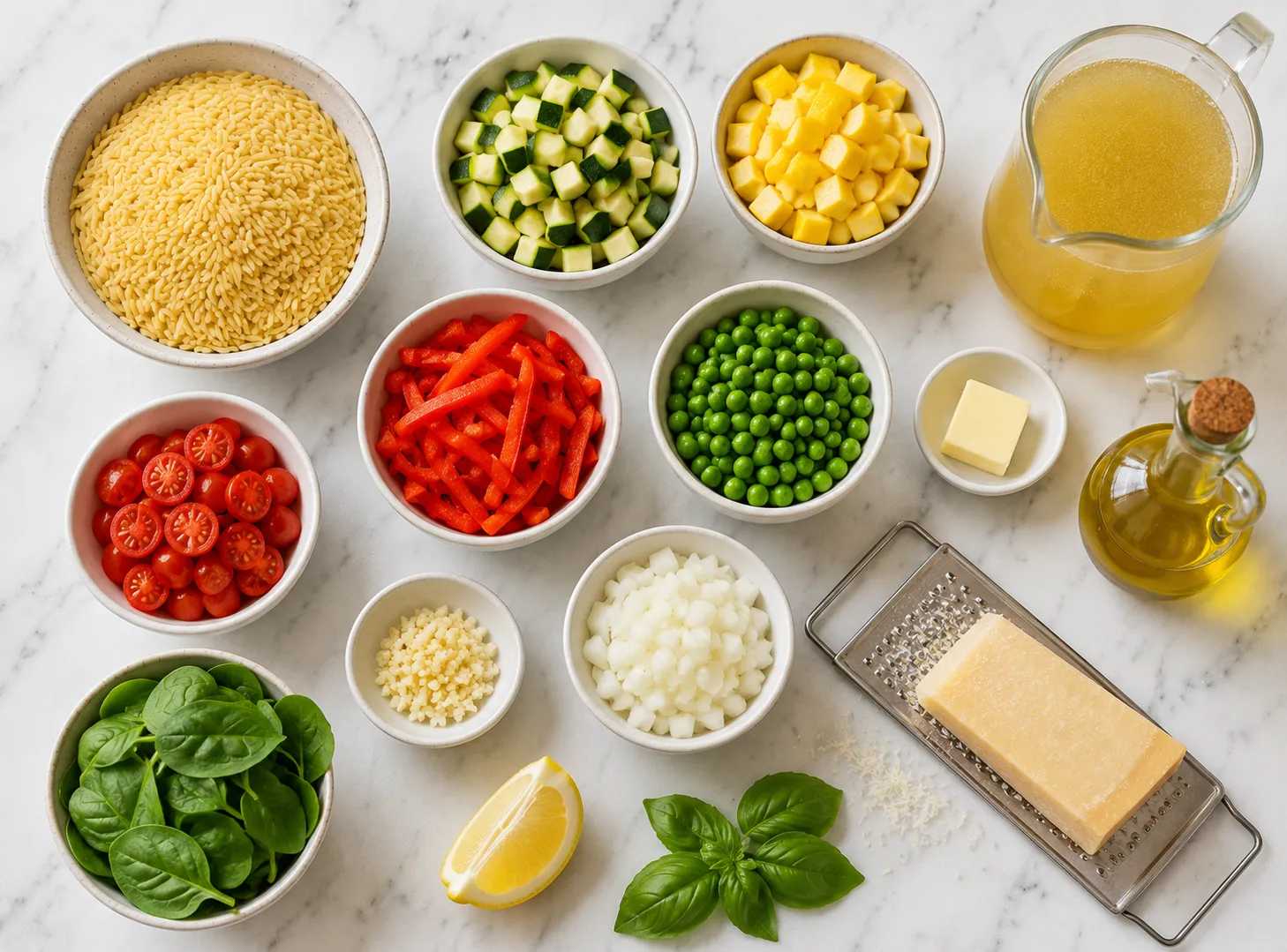
- 1 tablespoon olive oil
- 1 tablespoon butter
- 1 small yellow onion, diced
- 3 cloves garlic, minced
- 1.5 cups dry orzo pasta
- 2.5 cups vegetable broth
- 0.5 cup dry white wine , Optional. Extra vegetable broth works as a substitute.
- 1 small zucchini, diced
- 1 small yellow squash, diced
- 1 cup cherry tomatoes, halved
- 1 cup fresh or frozen peas
- 1 red bell pepper, diced
- 1 cup baby spinach
- 0.5 cup grated Parmesan cheese
- 2 tablespoons fresh lemon juice
- 2 tablespoons fresh basil, chopped
- salt and black pepper , To taste.
- red pepper flakes , Optional.
- Large deep skillet or sauté pan with a lid
- Wooden spoon
- Sharp knife
- Cutting board
- Measuring cups and spoons
- Box grater for the cheese
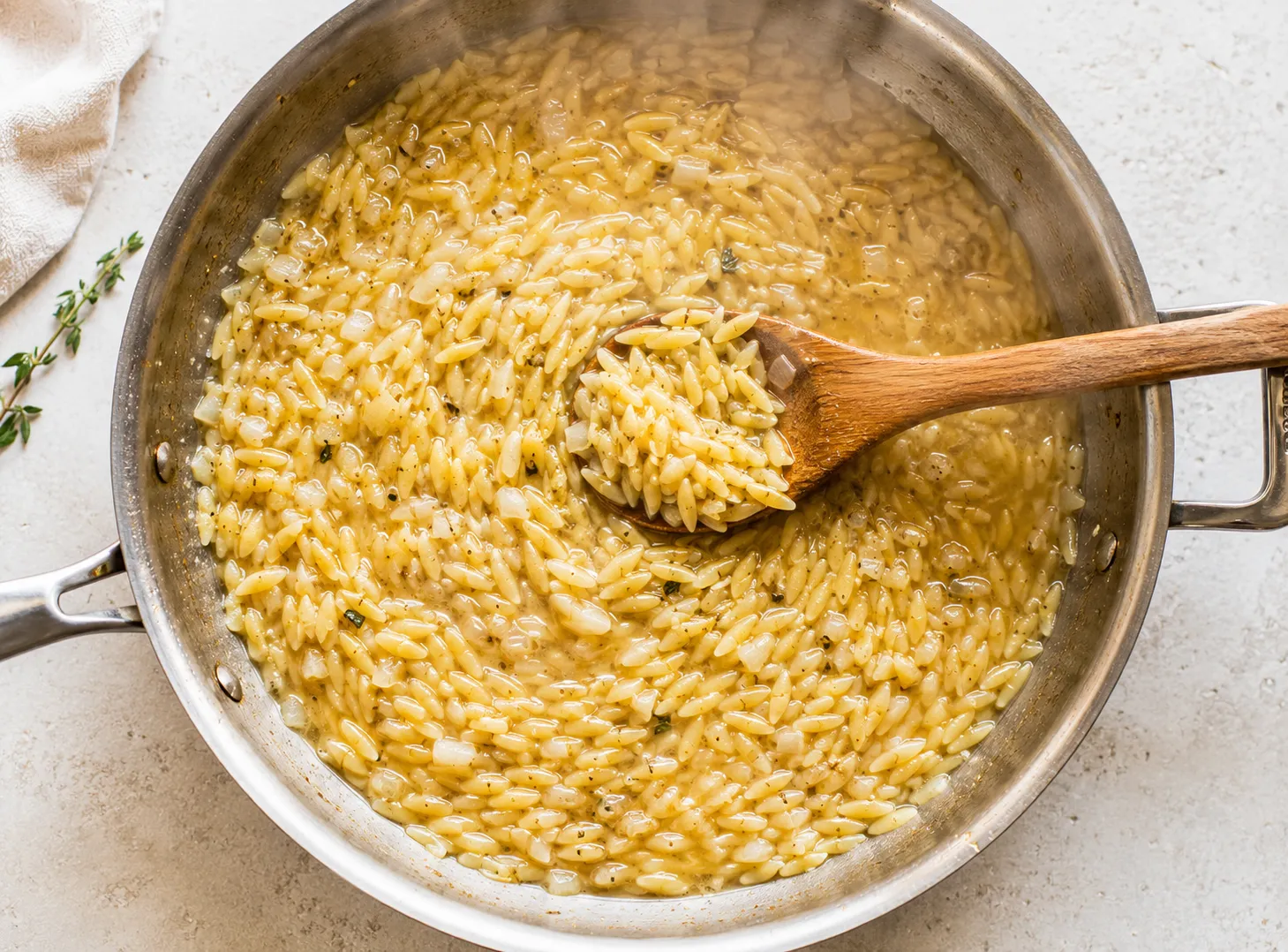
- Cook onion and garlic until soft.
- Add orzo, broth, and wine, then simmer until tender.
- Stir in the vegetables and cook briefly.
- Fold in spinach, Parmesan, and lemon juice.
- Let it rest a few minutes, then serve.
- Heat the olive oil and butter in a large skillet over medium heat.
- Add the diced onion and cook about 3 minutes, until it softens.
- Stir in the garlic and cook for 30 seconds, just until you can smell it.
- Add the dry orzo and toast it for a minute, stirring so it doesn't burn.
- Pour in the vegetable broth and wine, then stir to combine everything.
- Bring the pan to a gentle boil, then turn the heat down to low.
- Cover and let it simmer 8 to 10 minutes, stirring now and then so the orzo doesn't stick to the bottom.
- Add the zucchini, yellow squash, and bell pepper.
- Cook uncovered for about 5 minutes, until the vegetables start to soften.
- Stir in the cherry tomatoes and peas.
- Cook 2 more minutes, until everything is warmed through.
- Turn off the heat and stir in the baby spinach until it wilts.
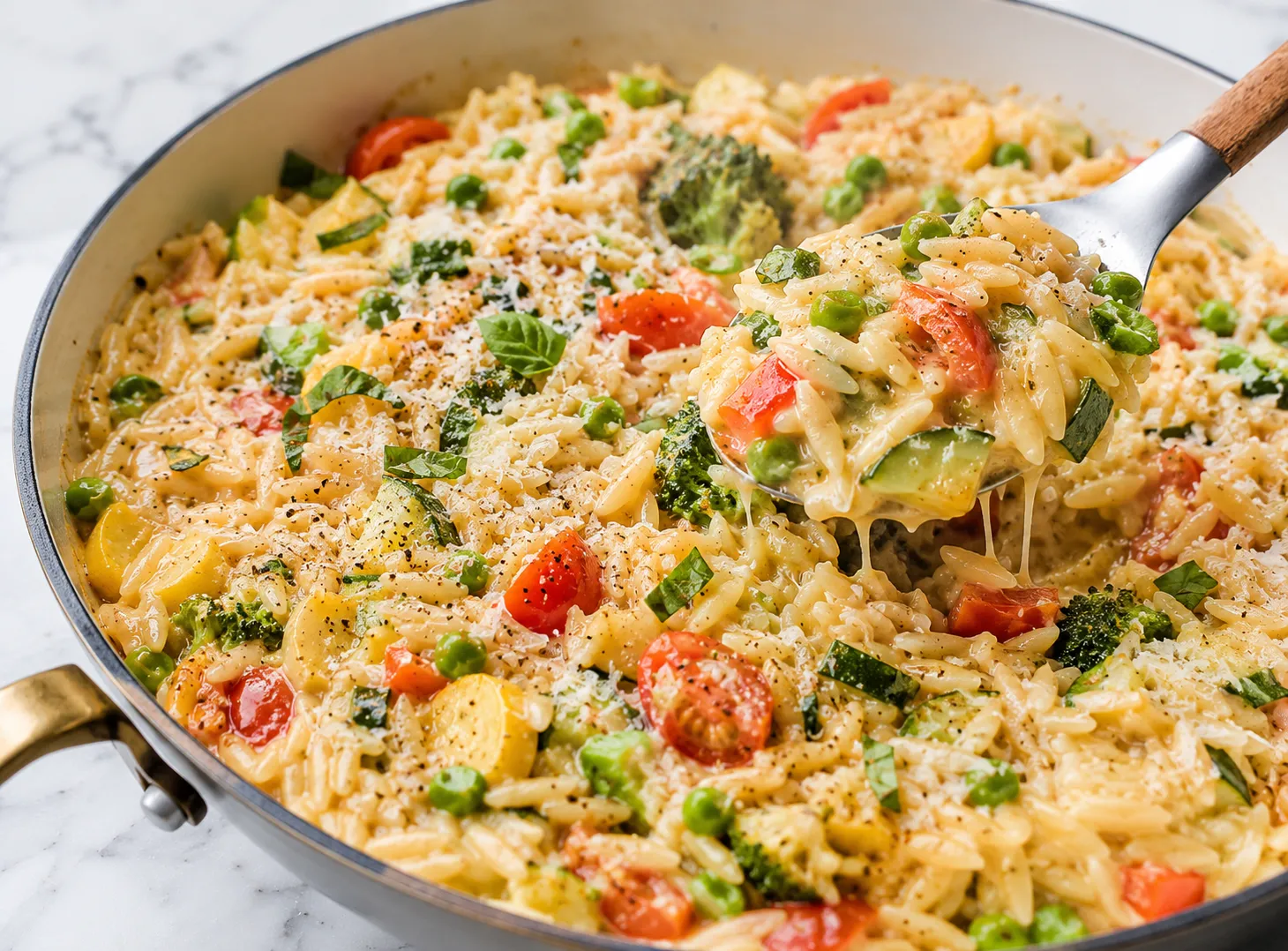
- Add the Parmesan and lemon juice, stirring until the sauce turns creamy.
- Season with salt, pepper, and red pepper flakes if you're using them.
- Let the pan sit for 5 minutes before serving.
- Top with fresh basil and a little extra Parmesan, then serve.
- Stir the orzo often while it simmers so it doesn't stick or clump.
- Keep the heat at low once the liquid goes in. High heat scorches the bottom before the orzo finishes cooking.
- Add the spinach after you turn off the heat. It wilts fine on its own and stays green instead of going mushy.
- Squeeze the lemon juice in right at the end. It wakes up the whole dish.
- Taste before adding more salt. Parmesan is salty on its own and it's easy to overdo it.
- Skipping the toasting step for the orzo. That minute in the pan adds real flavor.
- Adding all the vegetables too early, which turns them soft and watery by the time the orzo is done.
- Not using enough liquid, which leaves the orzo chalky and undercooked in spots.
- Leaving the pan unattended. Orzo can stick fast, especially in the last few minutes.
- Stirring in cheese while the pan is still very hot. It can clump instead of melting smoothly.
- Swap orzo for ditalini or another small pasta shape if that's what you have.
- Use chicken broth instead of vegetable broth for a heartier flavor.
- Add grilled chicken or shrimp if you want more protein.
- Try asparagus or broccoli instead of zucchini and squash.
- Use pecorino romano instead of Parmesan for a sharper bite.
- Leave out the butter and cheese and use olive oil only for a dairy free version.
- Garlic bread or a crusty baguette
- A simple green salad with vinaigrette
- Grilled chicken or salmon on the side
- Roasted asparagus or green beans
- A glass of chilled white wine
- Store leftovers in an airtight container in the fridge for up to 4 days.
- Reheat on the stove over low heat with a splash of broth or water to loosen it back up.
- Microwave in 30 second bursts, stirring in between, until heated through.
- Skip the freezer. Orzo turns mushy once it thaws.
You can, but hold off on the spinach and lemon juice until you reheat it so the texture stays fresh.
No. Extra vegetable broth works just as well if you'd rather skip it.
Yes, just add them a little later in the process since they cook faster than fresh ones.
Usually the heat is a bit too high, or it needs more frequent stirring during the simmer.
Yes. Use a wider pan and give it a few extra minutes to simmer.
Not as written, but gluten free orzo is an easy direct swap.
- Orzo keeps absorbing liquid as it sits, so don't cook it past tender or it'll turn thick and gluey.
- This recipe is forgiving with vegetables, so use whatever is in season or on hand.
- A leftover Parmesan rind simmered in the broth adds extra flavor if you have one around.
- A splash of broth or water helps loosen leftovers when you reheat them.
Some dinners don't need a long ingredient list or a stack of dirty pots to taste good, and this orzo primavera is one of them. It uses whatever fresh vegetables you have, comes together in one pan, and still feels like a real homemade meal instead of something rushed. It's the kind of recipe worth keeping on repeat for busy weeknights, since it takes barely more effort than boxed pasta but tastes a lot better. Once you've made it a couple times you'll probably stop measuring and just go by feel, swapping in whatever vegetables are sitting in the fridge that week.