
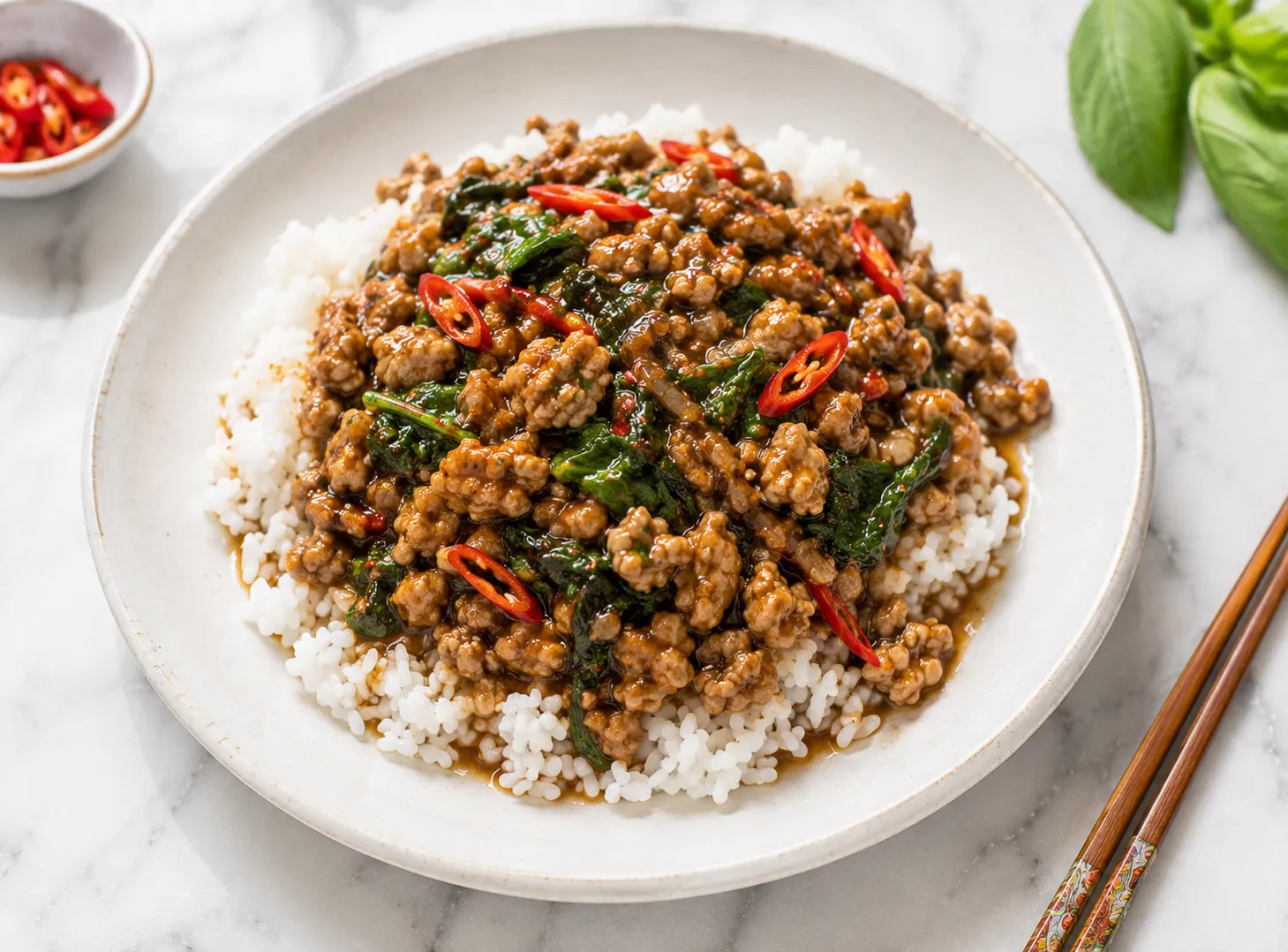
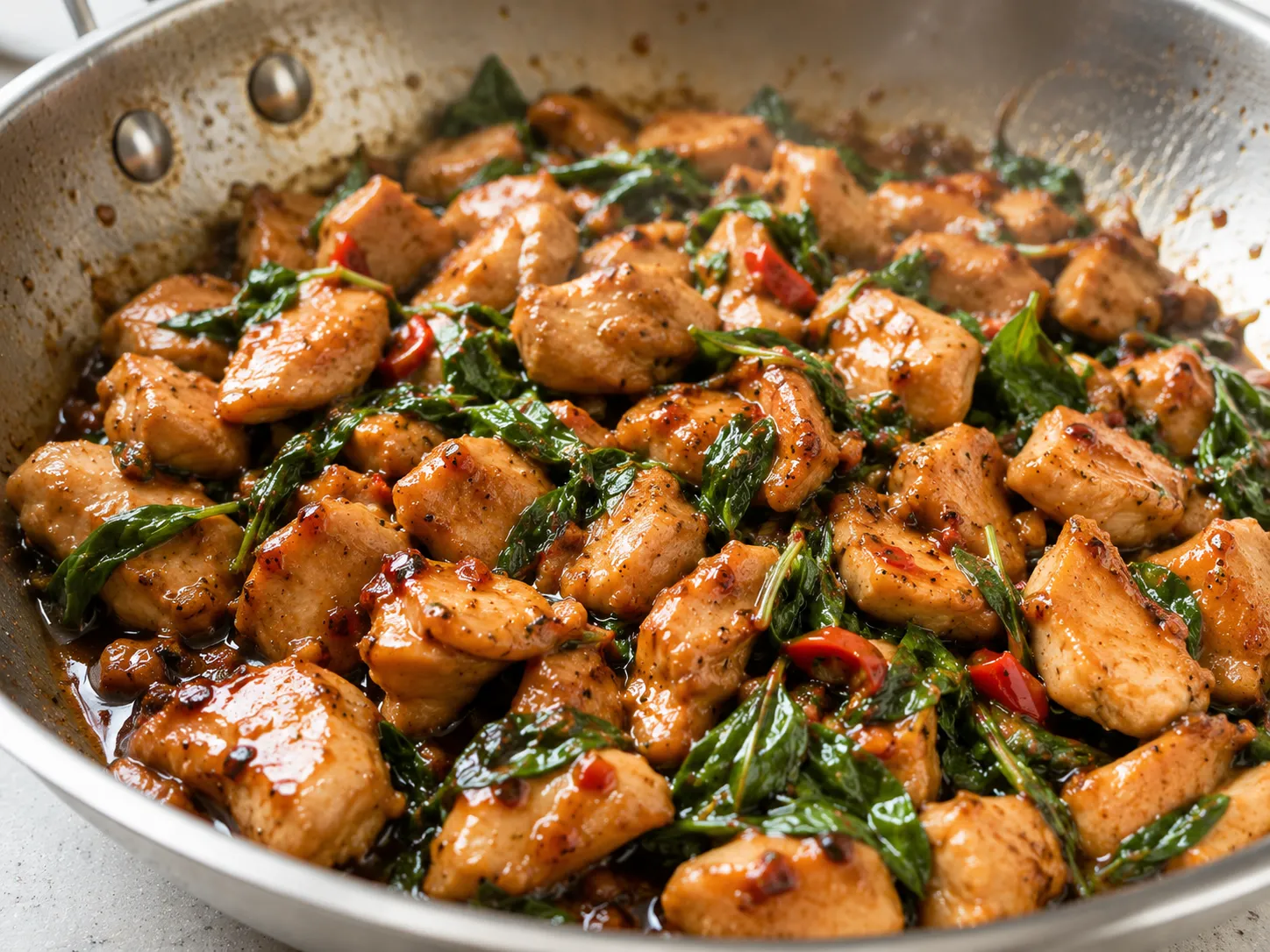
Thai basil chicken is the kind of dinner that comes together while your rice is still steaming. Ground chicken gets seared hard in a hot pan, then tossed with garlic, chilies, and a salty savory sauce that clings to every bite. Fresh Thai basil goes in right at the end so it stays green and fragrant instead of turning bitter. This version skips the hard to find ingredients and sticks to what most grocery stores actually carry, so you can have real Thai basil chicken on the table in twenty minutes flat, no takeout menu required. It is loud in flavor and forgiving if your knife skills are not restaurant neat.
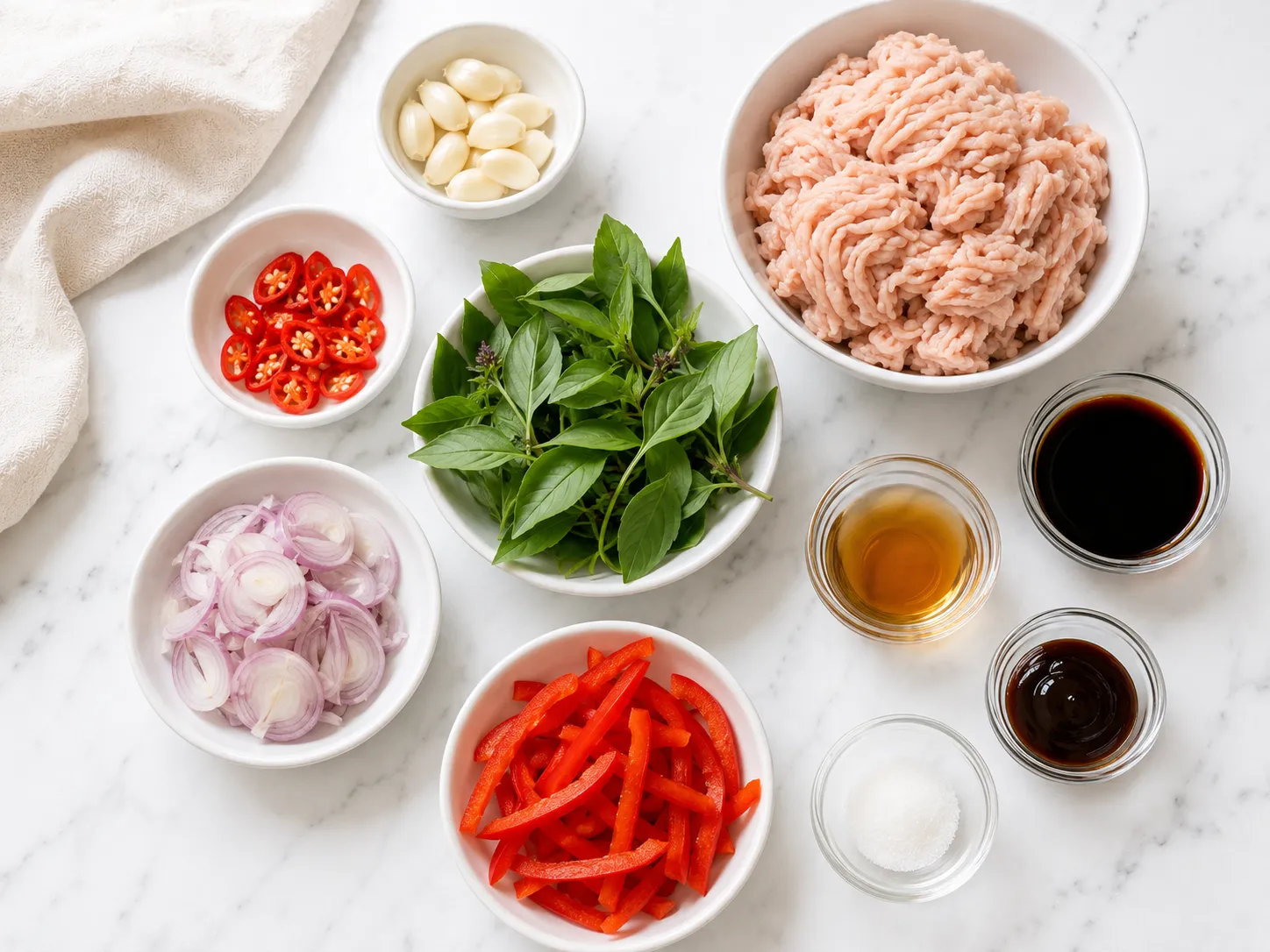
- 1 pound ground chicken , or finely chopped chicken thighs
- 4 cloves garlic , mashed or minced into a rough paste
- 2 to 4 Thai chilies , sliced thin, adjust the amount to your own heat tolerance
- 1 small shallot , thinly sliced
- 2 tablespoons vegetable oil , or another neutral oil with a high smoke point
- 2 tablespoons oyster sauce
- 1 tablespoon fish sauce , taste your brand before adding the full amount
- 1 tablespoon soy sauce
- 1 teaspoon dark soy sauce , optional, mostly for color
- 1 teaspoon sugar
- 2 tablespoons water or chicken stock
- 1 heaping cup fresh Thai basil leaves , packed, stems removed
- 1 red bell pepper , thinly sliced, optional
- steamed jasmine rice , for serving
- fried eggs , for serving, optional
- Wok or large heavy skillet
- Sharp chef knife
- Cutting board
- Small mixing bowl for the sauce
- Wooden spoon or metal spatula
- Measuring spoons
- Mortar and pestle, or the flat side of a knife, for the garlic and chili paste
- Mix the sauce ingredients in a small bowl.
- Mash the garlic and chilies into a rough paste.
- Sear the ground chicken in a hot pan.
- Add the sauce and vegetables and toss until glossy.
- Fold in the basil off the heat and serve.
- Combine the oyster sauce, fish sauce, soy sauce, dark soy sauce, sugar, and water in a small bowl. Stir until the sugar dissolves completely and set the bowl aside near the stove so it is within reach once the pan heats up.
- Mash the garlic and chilies together using a mortar and pestle, or crush them with the flat side of a knife on a cutting board. This breaks down the fibers and releases more flavor than mincing alone, and it only takes about a minute.
- Heat the vegetable oil in a wok or large skillet over high heat until it shimmers and just starts to smoke slightly. This step matters more than people think, since a cold pan is the main reason home versions of this dish turn out soggy.
- Add the garlic and chili paste along with the sliced shallot. Stir constantly for about 20 seconds, just until you can smell the garlic clearly. Do not let it brown or it will turn bitter and ruin the sauce.
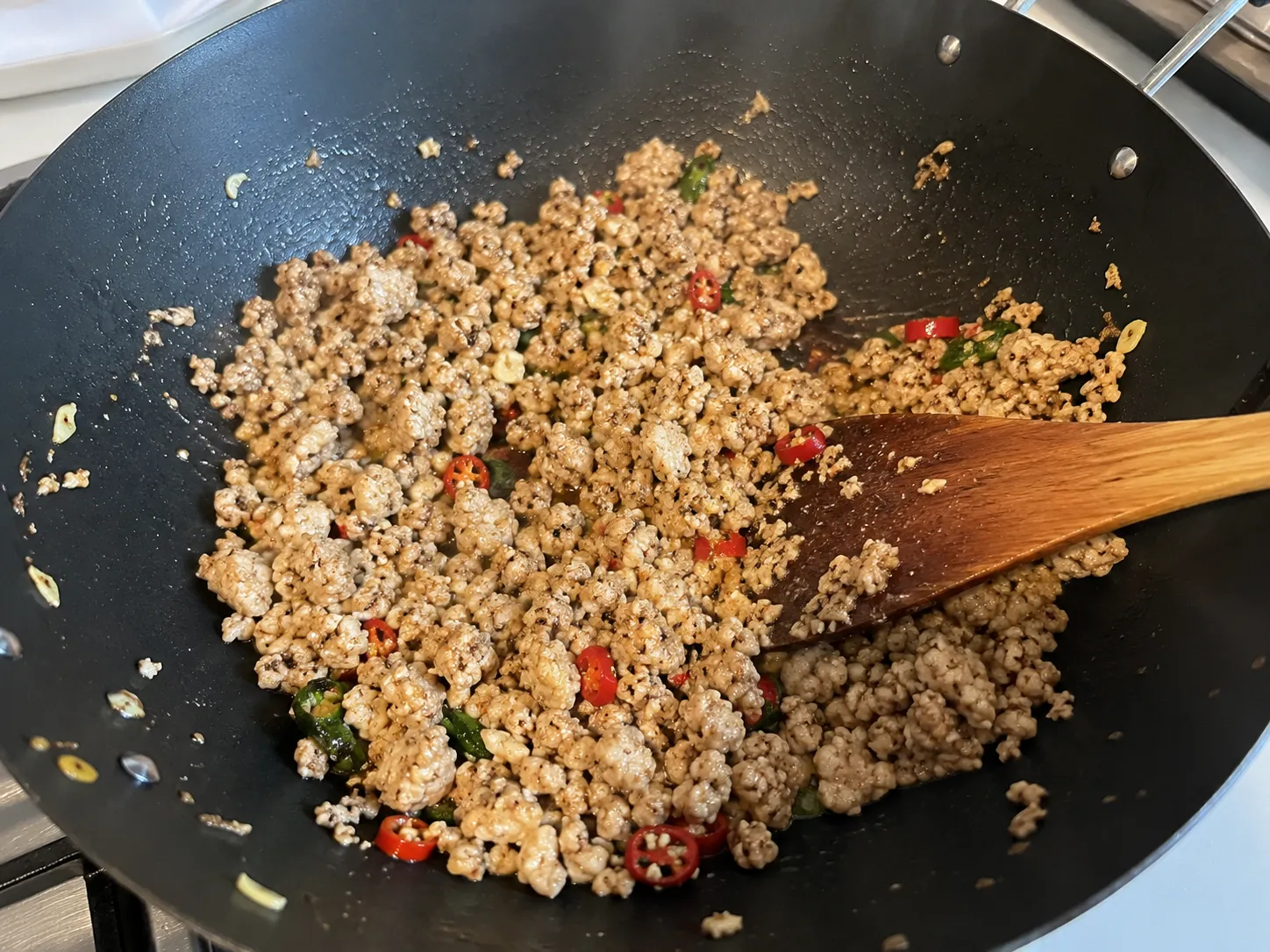
- Add the ground chicken to the pan. Spread it out in an even layer and let it sit undisturbed for 30 seconds before you touch it. This short pause helps it sear instead of steam, which is what gives the dish its deeper flavor.
- Break the chicken apart with your spatula and continue cooking for 4 to 5 minutes, stirring occasionally, until no pink remains and the edges look slightly caramelized.
- Add the sliced bell pepper if using and stir fry for about 1 minute, just until it softens slightly but still has some bite left in it.
- Pour the sauce mixture over the chicken. Toss everything together for 1 to 2 minutes until the sauce thickens slightly and coats each piece evenly, with almost no liquid pooling at the bottom of the pan.
- Turn off the heat completely. Add the Thai basil leaves and fold them in until wilted, about 15 seconds. The residual heat in the pan is enough to cook them without turning them dark or bitter, which is the whole point of adding basil last.
- Taste the dish and adjust with a small splash of fish sauce or a pinch of sugar if it needs it. Every brand of fish sauce is different, so trust your own tongue over the exact measurements.
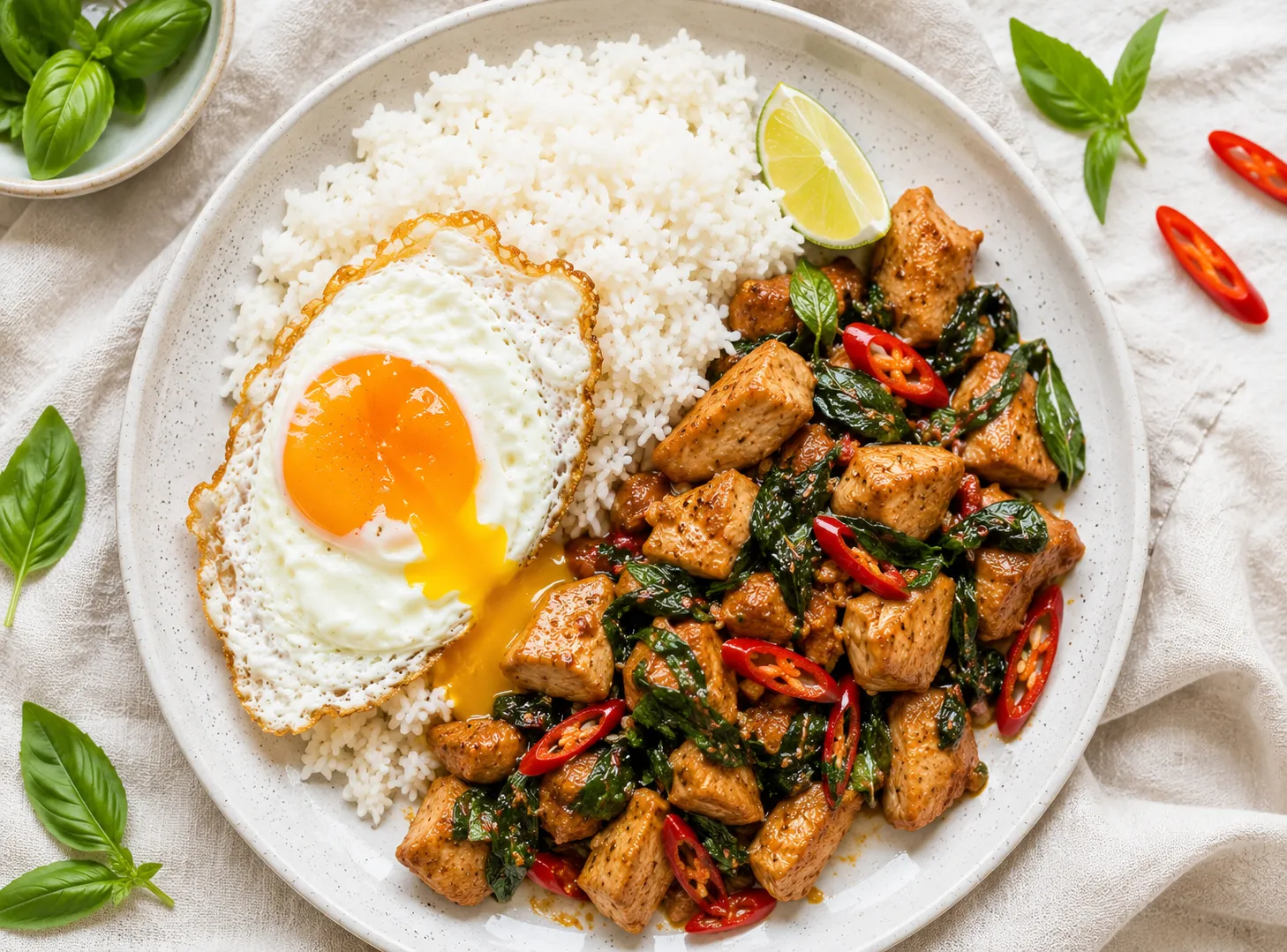
- Serve right away over hot jasmine rice, topped with a fried egg if you like a runny yolk mixed into the sauce. This dish does not hold well once plated, so serve it the moment it comes off the heat.
- Buy Thai basil specifically, not sweet Italian basil. The flavor is sharper and more peppery, and it holds its shape better in a hot pan.
- Get your pan as hot as your stove allows before the chicken goes in. This dish depends on speed and high heat, not a slow simmer.
- Let the chicken sit undisturbed for the first 30 seconds after it hits the pan. Constant stirring from the start keeps it from browning properly.
- Mash the garlic and chilies instead of mincing them with a knife. A paste releases more oil and aroma into the dish than small chopped pieces do.
- Add the basil only after the heat is off. A few extra seconds of cooking turns it dark and slightly bitter.
- Taste the sauce before you commit to the full amount of fish sauce, since brands vary a lot in saltiness.
- Prep every ingredient before you turn on the stove. This recipe moves fast once the pan is hot, and there is no time to chop garlic mid stir fry.
- If you like a stronger sauce, mix it the night before and let it sit in the fridge so the flavors settle together.
- A carbon steel or cast iron pan holds heat better than nonstick, which makes a real difference in how well the chicken sears.
- Using regular basil instead of Thai basil. It changes the entire character of the dish and the flavor falls flat.
- Crowding the pan with too much chicken at once. This traps steam and keeps the meat from searing properly.
- Adding the basil too early and letting it wilt into a soggy, dull green mess.
- Tossing raw minced garlic straight into hot oil without the shallot and chili paste step. It burns within seconds and turns bitter.
- Pouring in too much sauce at once. The dish should look glossy and coated, not soupy.
- Cooking on medium heat because high heat feels intimidating. Medium heat slows everything down and the chicken ends up gray instead of browned.
- Walking away from the pan once the chicken is in. This dish cooks in minutes, and a few seconds of distraction is enough to overcook the basil or scorch the garlic.
- Using cold chicken straight from the fridge. Let it sit at room temperature for about 10 minutes so it sears evenly instead of cooling down the pan.
- Chopping the garlic and chilies while the pan is already heating. Have everything cut, measured, and within arm's reach before you turn on the burner.
- Swap the ground chicken for ground pork, ground turkey, or thinly sliced beef.
- Make it vegetarian with crumbled firm tofu or sliced mushrooms, and use soy sauce or a vegetarian fish sauce alternative in place of regular fish sauce.
- Add green beans or Thai eggplant during the stir fry step for extra texture.
- Use more or fewer chilies depending on how much heat you actually want.
- Swap ground chicken for finely chopped chicken thighs if you prefer a slightly chewier texture, or chicken breast if you want something leaner.
- Finish with a squeeze of lime juice right before serving for a little extra brightness.
- For a heartier plate, add steamed broccoli or snap peas alongside the bell pepper.
- If you cannot find Thai chilies, serrano peppers or a pinch of dried chili flakes will get you close enough in a pinch, though the flavor will be slightly different.
- Some cooks like the oyster sauce increased slightly for a richer, sweeter finish, which works well if you are serving picky eaters.
- Steamed jasmine rice
- A fried egg with a runny yolk on top
- Sliced cucumber on the side to cool the heat
- A simple clear soup
- Fresh mango or pineapple for a sweet contrast
- Iced Thai tea
- Refrigerate leftovers in an airtight container for up to 3 days.
- Reheat in a hot skillet for 2 to 3 minutes instead of the microwave. The microwave tends to make the basil taste flat and the sauce separate.
- Freeze the cooked chicken mixture without the basil for up to 2 months, then stir in fresh basil after reheating.
- Cook the rice fresh each time instead of freezing it with the chicken, since frozen rice loses its texture and turns mushy once thawed.
- If you plan to meal prep this dish, keep the sauce and basil separate from the cooked chicken until the day you plan to eat it.
Yes. Use fewer Thai chilies, or remove the seeds and inner membrane before mashing them into the paste.
Regular sweet basil works if that is all you have, but the flavor will be noticeably milder and less peppery.
It is close to that dish. Restaurant versions vary quite a bit in how sweet, salty, or spicy they make the sauce.
Yes. Chop it finely by hand so it cooks quickly and picks up the sauce the same way ground chicken does.
No. A large heavy skillet works fine as long as you get it very hot before adding anything.
You can chop the aromatics and mix the sauce a day ahead and keep them refrigerated, but cook the dish itself right before serving for the best texture.
- This recipe leans savory and spicy rather than sweet, which is typical for authentic pad kra pao style dishes.
- Fish sauce brands differ quite a bit in saltiness, so taste before adding the full amount listed.
- Dark soy sauce is optional. It mainly adds color rather than a big flavor change.
- You can double the sauce mixture and keep extra in the fridge for the next time you make this.
- A fried egg on top is a common way this dish is served throughout Thailand, and it is worth trying at least once.
- If you are cooking for kids or anyone sensitive to heat, leave the chilies out of the mashed paste entirely and serve them on the side instead.
- The dish comes together quickly once the prep is done, so have your rice cooking or your other side dishes ready before you start the stir fry.
Thai basil chicken shows that bold flavor does not need a long ingredient list or a complicated method. The whole dish depends on a hot pan, a quick sauce, and basil added at just the right moment. Once you cook it a couple of times, the rhythm becomes second nature and you will not need to look at the recipe again. Keep the heat high, keep the chicken moving, and resist the urge to add the basil too early. Dinner is usually ready before the rice finishes steaming, which makes this one of those meals worth keeping in regular rotation.