
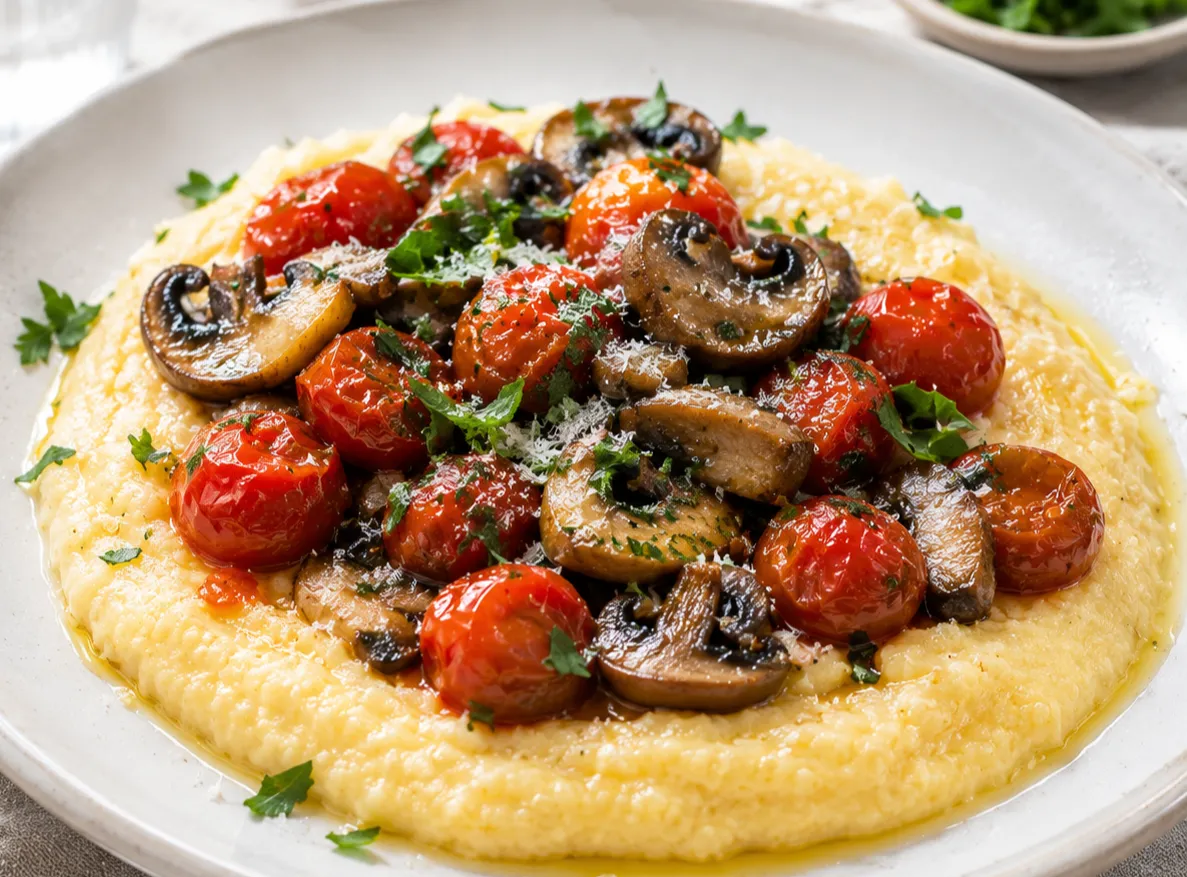
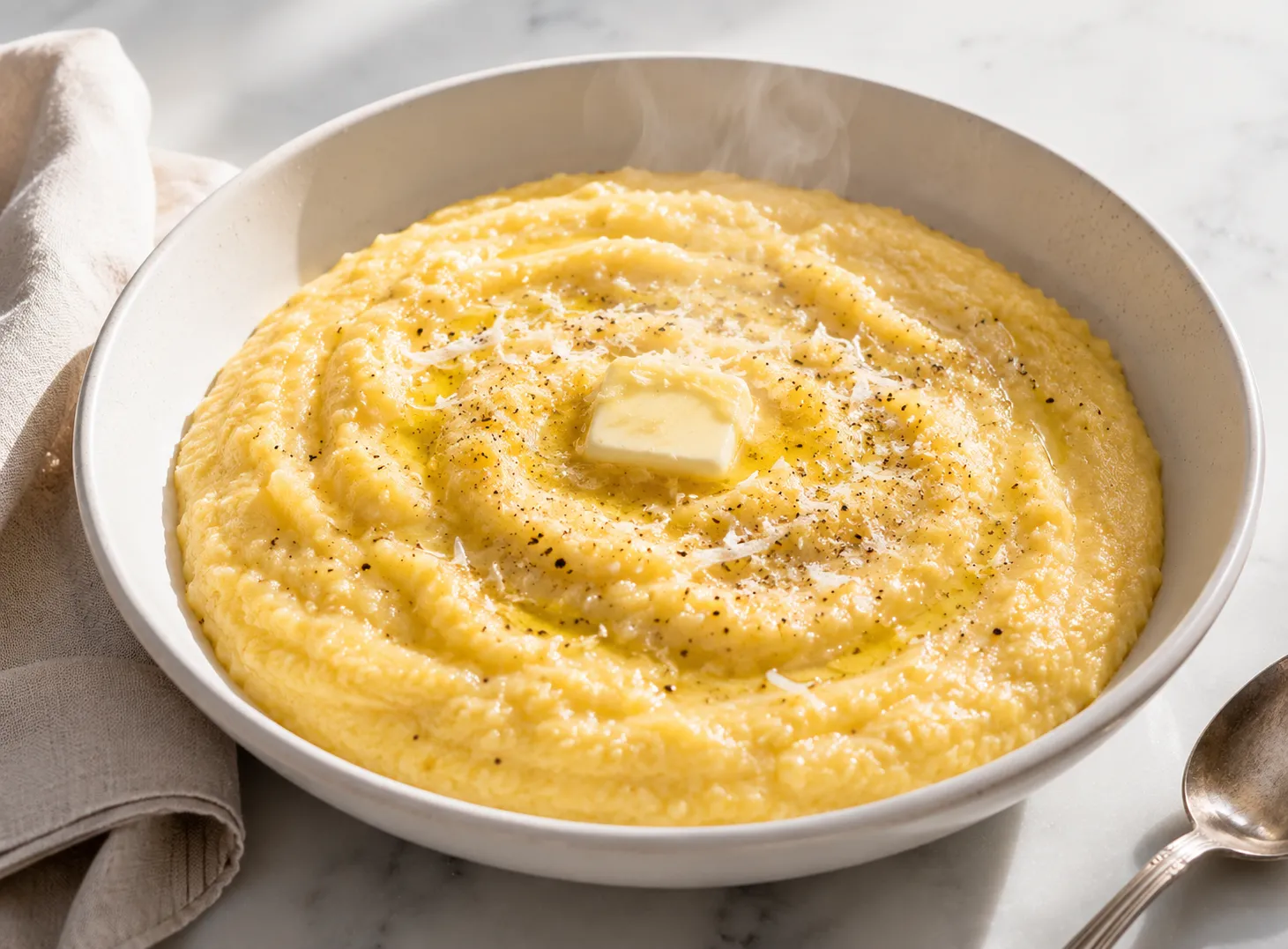
Creamy polenta turns basic cornmeal into a soft, rich side dish that pairs well with almost anything on your table. This version leans on butter, cream, and Parmesan for a texture that stays smooth from the first bite to the last. It takes under an hour, most of it hands off stirring time, and works well as a base for stews, roasted vegetables, or a fried egg on a slow morning. Once you get the ratio right, this becomes one of those recipes you make from memory, adjusting the cheese and stock depending on what you already have on hand.
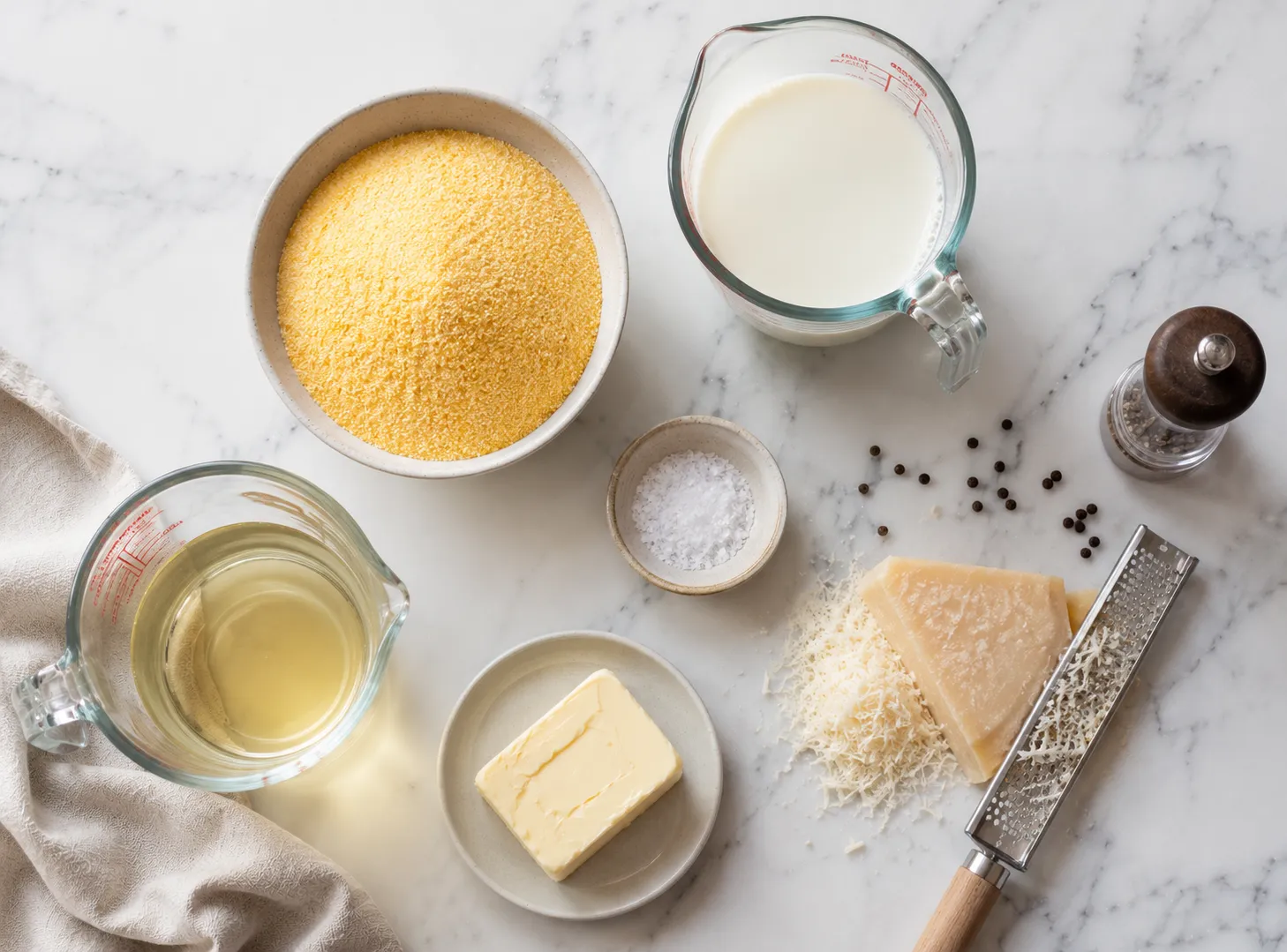
- 4 cups water or chicken stock
- 1 cup coarse cornmeal , Labeled as polenta on the package
- 1 teaspoon salt
- 2 tablespoons unsalted butter
- 0.5 cup whole milk or heavy cream
- 0.5 cup grated Parmesan cheese
- 2 tablespoons unsalted butter
- black pepper , To taste
- extra salt , To taste
- A heavy bottomed saucepan or Dutch oven
- A whisk
- A wooden spoon
- Measuring cups and spoons
- A ladle for serving, though it is not required
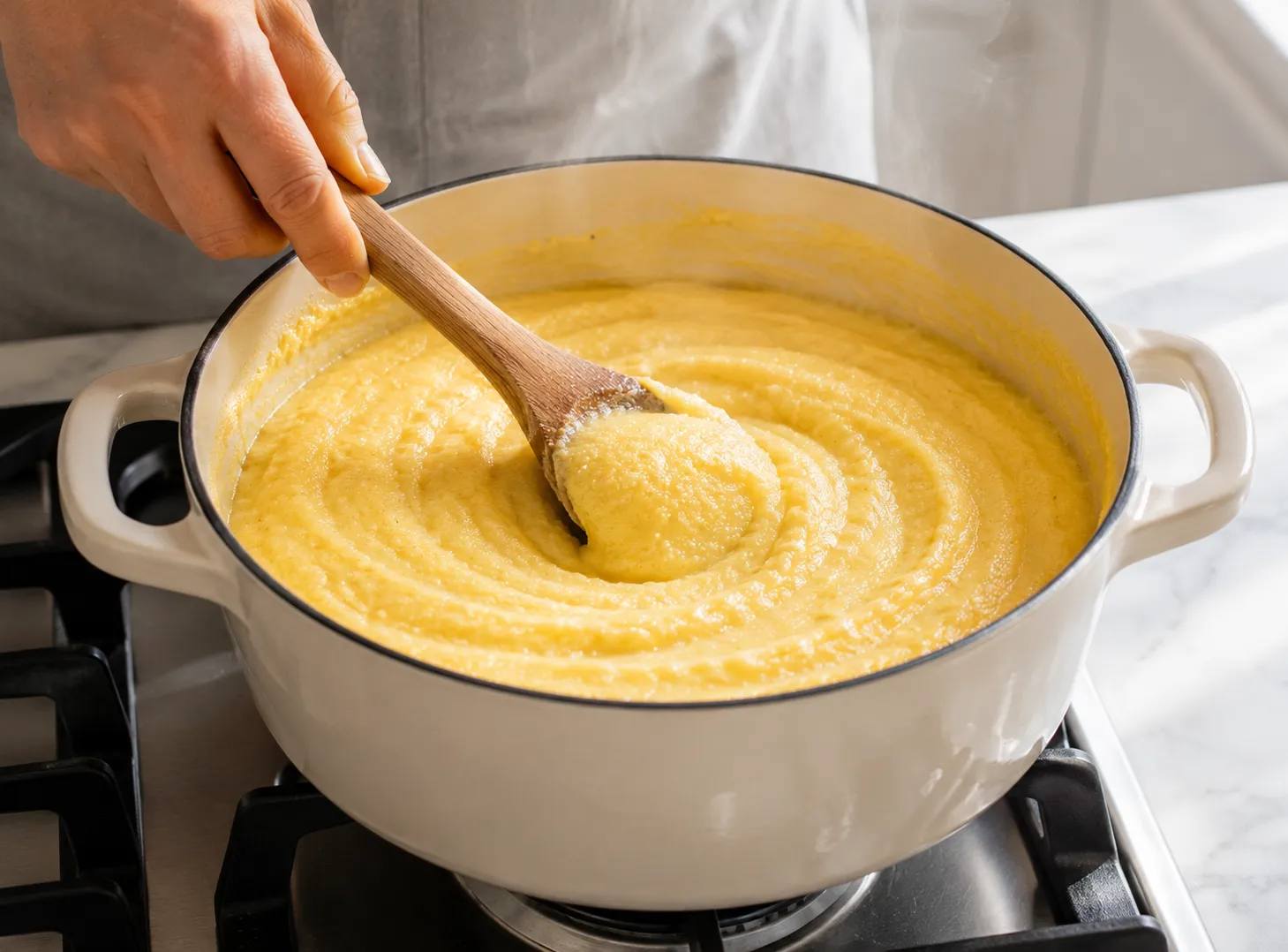
- Bring the liquid to a boil and season it.
- Whisk in the cornmeal slowly so it does not clump.
- Lower the heat and stir often until it turns thick and tender.
- Stir in butter, cream, and cheese until it turns silky.
- Let it rest briefly, then serve while warm.
- Pour the water or stock into a heavy bottomed saucepan. Add the salt and bring it to a rolling boil over medium high heat.
- Lower the heat slightly. While whisking the whole time, pour the cornmeal into the liquid in a slow, steady stream. This step keeps it from clumping.
- Once all the cornmeal is in, switch to a wooden spoon. Turn the heat down to low so the polenta only just simmers.
- Stir every few minutes so it does not stick to the bottom of the pan. Let it cook for 25 to 30 minutes, until the grains soften and the mixture starts pulling away slightly from the sides of the pan.
- Add the first portion of butter and stir until it melts in completely.
- Pour in the milk or cream and stir until the polenta turns glossy and loosens up a bit.
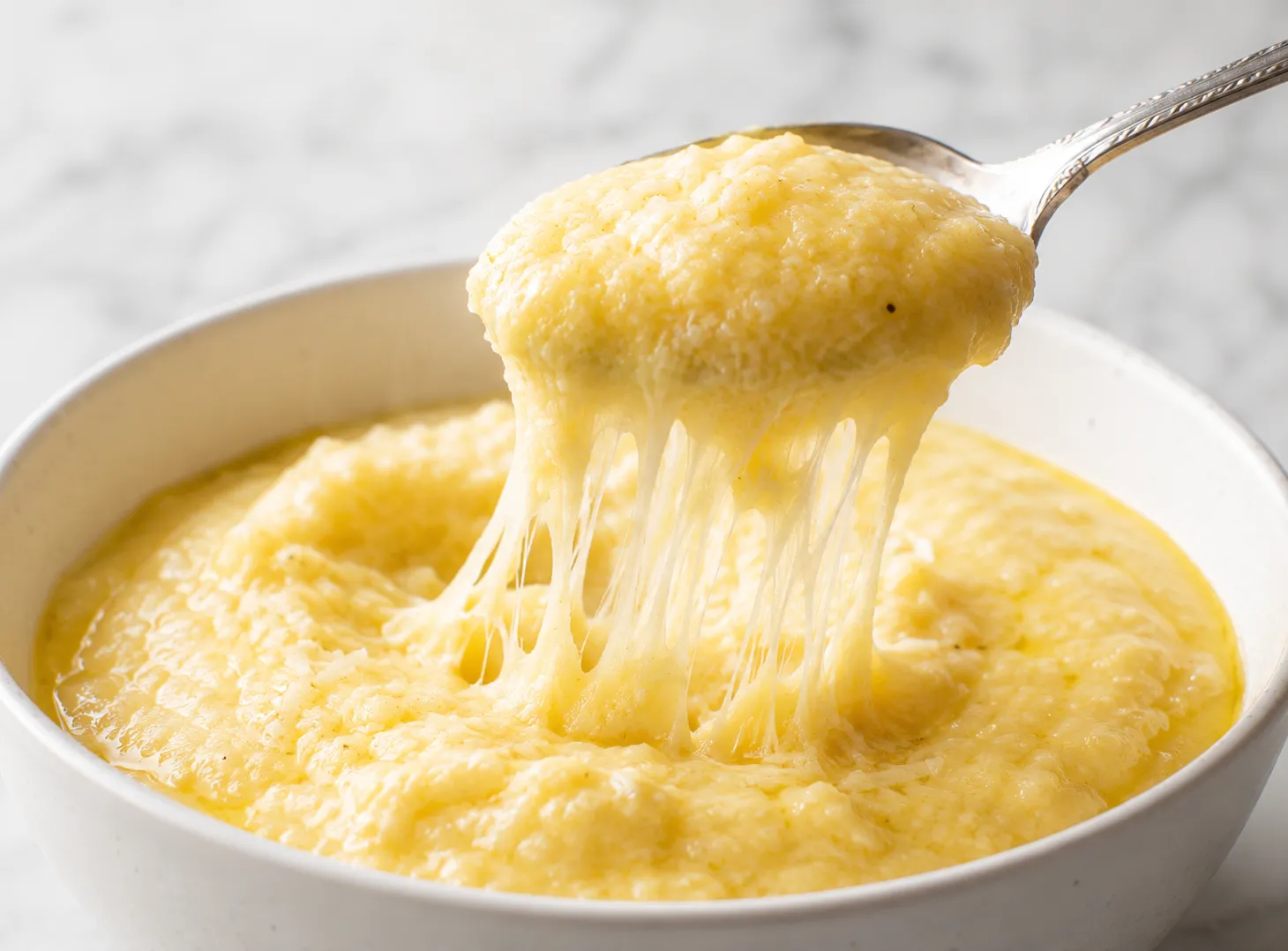
- Add the Parmesan in two batches, stirring well after each addition so it melts evenly instead of clumping.
- Taste it and adjust the salt and pepper as needed.
- Take the pan off the heat and let the polenta sit for 5 minutes. It will firm up slightly as it rests.
- Give it one last stir before serving. If it feels too thick, stir in a splash of warm milk.
- Buy coarse or medium ground cornmeal labeled specifically as polenta. Fine cornmeal tends to turn gluey instead of creamy.
- Whisk only at the start, while the cornmeal is going in. Once it thickens, switch to a spoon so it does not splatter on you.
- Keep the heat low and steady through the whole cooking process. High heat makes polenta sputter and burn on the bottom of the pan.
- Stir in the cheese off the heat, or on very low heat, so it melts smoothly instead of turning grainy or separating.
- If the polenta looks thin right after cooking, give it a minute. It thickens on its own as it sits, and again once it cools slightly.
- Adding all the cornmeal at once instead of a slow stream, which almost always leads to lumps that are hard to smooth out later.
- Walking away for long stretches without stirring, which lets the bottom scorch and gives the whole pot a burnt taste.
- Using pre shredded cheese straight from a bag. It contains anti caking additives that keep it from melting smoothly into the polenta.
- Cooking on high heat the entire time instead of lowering it after the initial boil.
- Skipping the rest time at the end, which leaves the polenta thinner and less rich than it should be.
- Swap the chicken stock for vegetable stock to make this fully vegetarian.
- Use plant based butter and a dairy free cream substitute for a vegan version that still holds a creamy texture.
- Stir in roasted garlic or sautéed mushrooms toward the end for extra depth.
- Try Pecorino Romano instead of Parmesan if you want something sharper and saltier.
- Add a spoonful of mascarpone at the very end for an even richer, silkier finish.
- Mix in fresh herbs like thyme or chives right before serving for a bit of color and freshness.
- Braised short ribs or a slow cooked beef stew
- Grilled or roasted chicken thighs
- Sautéed mushrooms with garlic
- Roasted vegetables such as zucchini or bell peppers
- A simple green salad with a light vinaigrette
- Italian sausage cooked with peppers and onions
- Store leftover polenta in an airtight container in the fridge for up to 4 days.
- Reheat on the stovetop over low heat, adding a splash of milk or water to loosen it back up.
- Stir often while reheating so the texture goes back to being creamy instead of stiff.
- Chilled polenta firms up considerably, which makes it easy to slice and pan fry into crispy polenta cakes another day.
- Freeze in a sealed container for up to 2 months. Thaw it overnight in the fridge before reheating.
Yes. Make it up to 2 days ahead, then reheat it gently on the stove with a little extra milk to bring back the creamy texture.
It usually means the cornmeal went in too fast. Add it in a slow stream while whisking, especially during the first minute or two.
Yes, though the cook time drops to around 5 minutes. Check the package for its exact liquid ratio since it can differ from regular polenta.
Yes. Polenta is made from corn, so as long as your stock and any add ins are also gluten free, the dish stays gluten free too.
For thick polenta, stir in warm milk a little at a time. For thin polenta, keep cooking it a few extra minutes over low heat while stirring.
Yes. Using milk, or a mix of milk and water, makes the finished polenta richer right from the start.
- Stone ground cornmeal gives the best texture, though it does take a little longer to cook through than finer grinds.
- A heavy bottomed pan matters here. Thin pans heat unevenly and make it much easier for the bottom layer to burn.
- Polenta keeps thickening even after you take it off the heat, so it is fine to remove it while it still looks slightly loose.
- This recipe doubles easily for larger gatherings. Use a bigger pot and plan to stir a bit more often since the volume is greater.
Creamy polenta is one of those recipes that rewards a little patience without asking much in return. Once you get comfortable with the ratio and the rhythm of stirring, it turns into something you can make almost without thinking, adjusting the cheese, stock, or butter depending on what is already in your kitchen. It works fine as a quiet side dish on a weeknight, and it holds up just as well as the centerpiece of a meal once you pile something saucy or roasted on top. Either way, it is worth keeping in regular rotation, especially once the weather turns cooler and something warm and soft on the plate starts to sound better than almost anything else.