
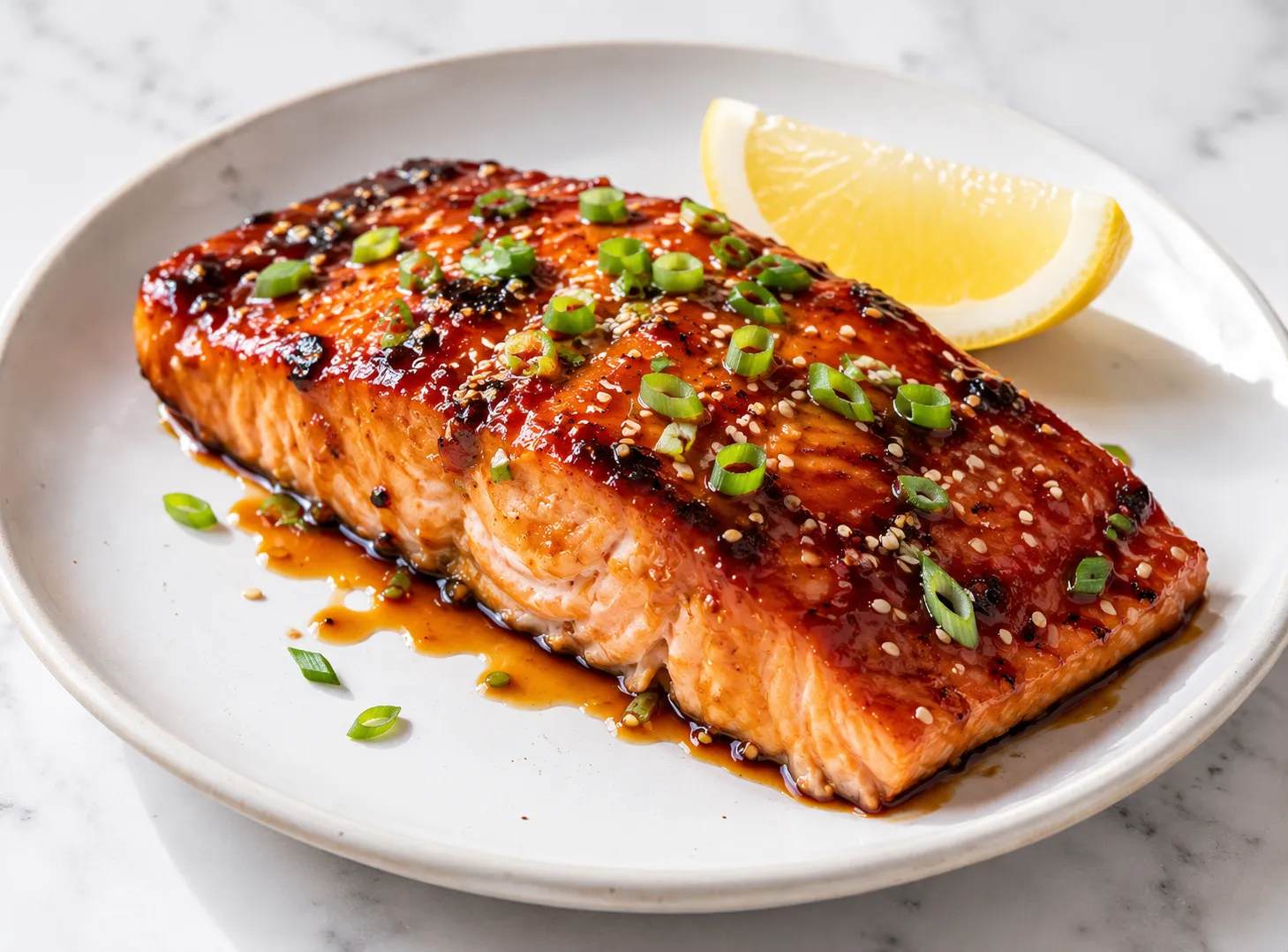
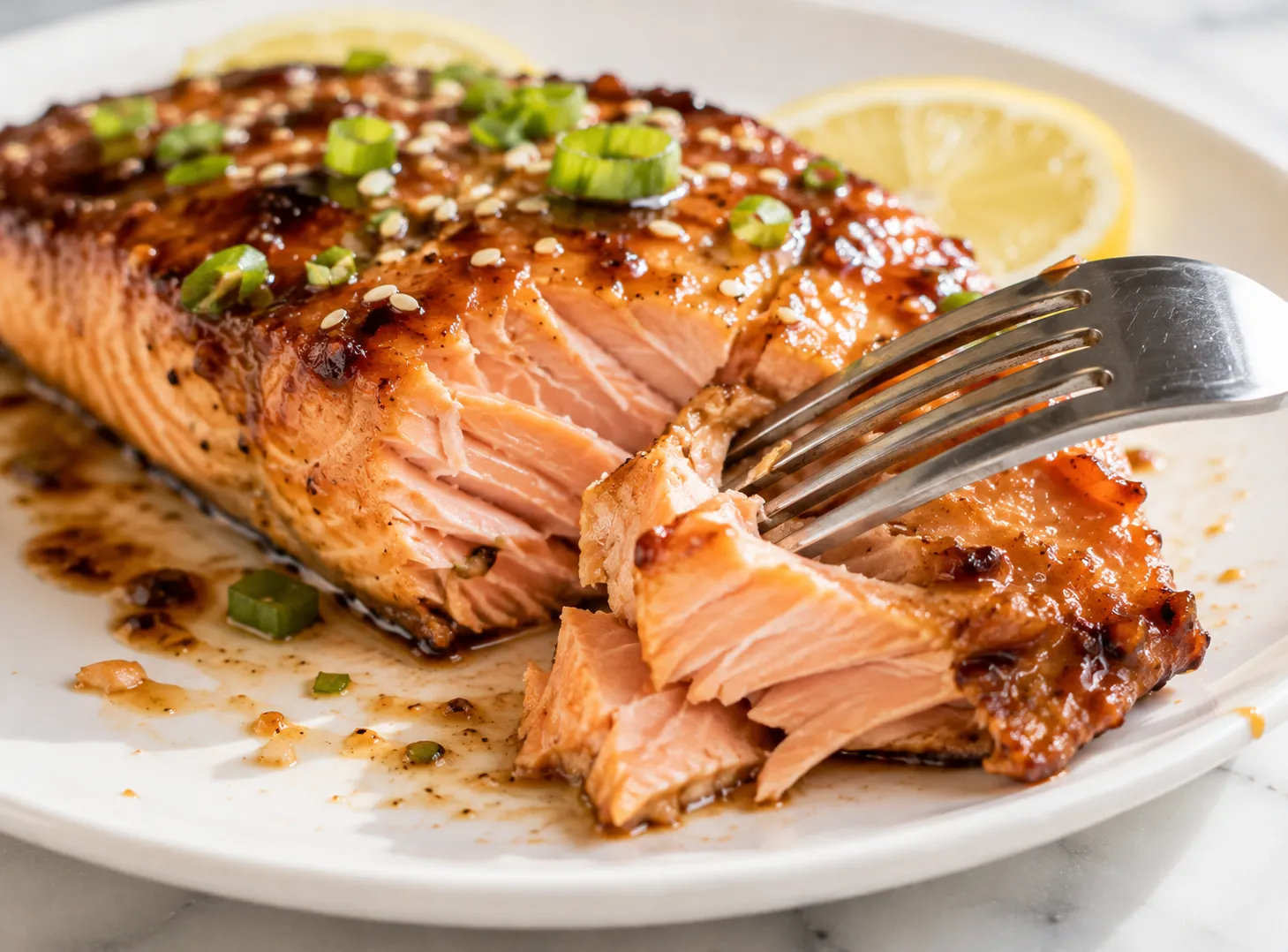
Honey glazed salmon is a fast, dependable dinner that turns a handful of pantry ingredients into a glossy, restaurant style glaze. The salmon sears until the edges turn golden, then simmers in a honey soy mixture that thickens right in the pan and clings to every bite. This honey glazed salmon recipe works well for busy weeknights since it comes together in about twenty five minutes using a single skillet. It also holds up for meal prep, since the glaze keeps the fish moist even after reheating the next day. Anyone new to cooking fish will find this version forgiving, quick to repeat, and easy to adjust to whatever is already sitting in the fridge or pantry that night.
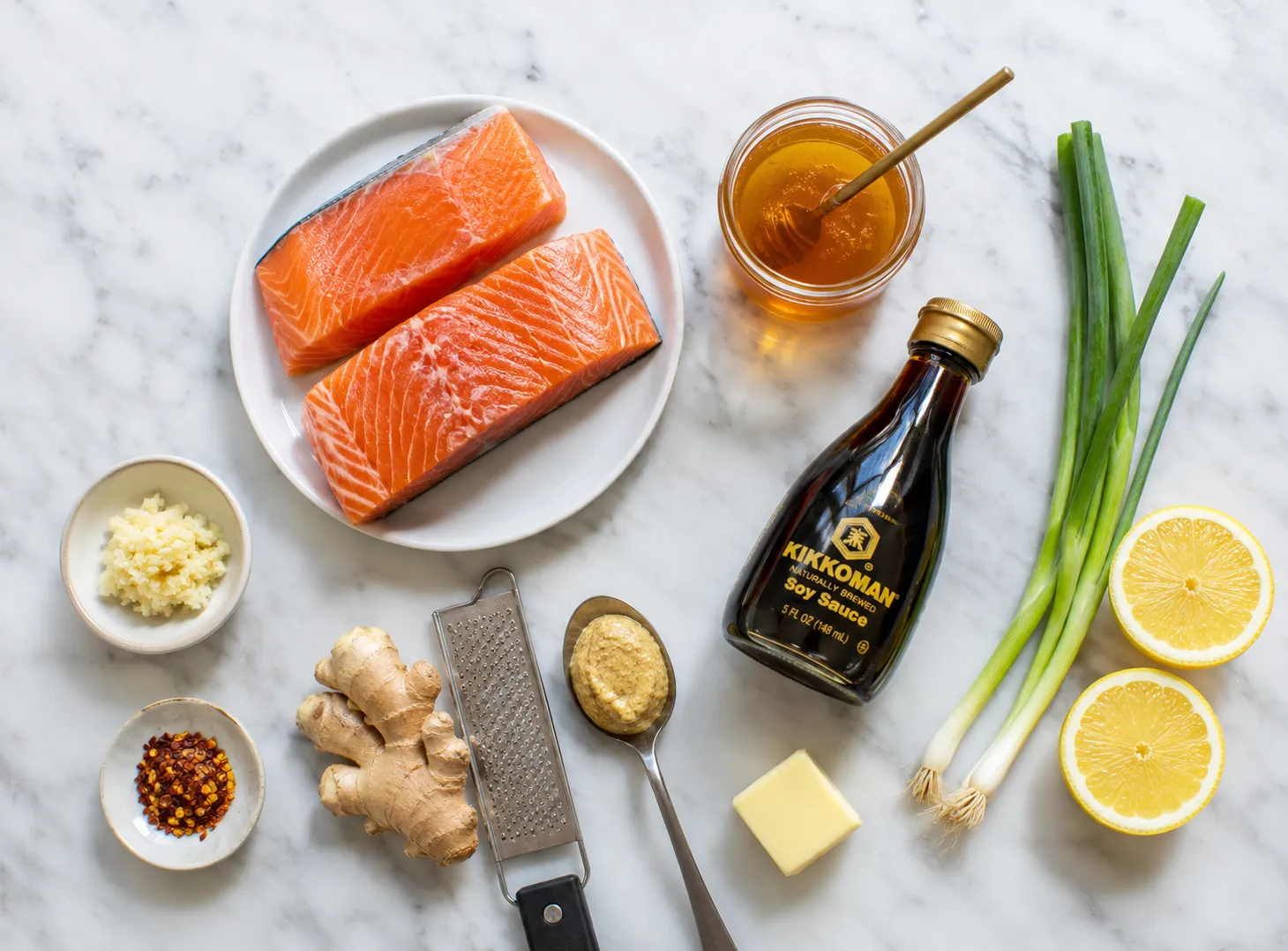
- 4 salmon fillets, about 6 oz each , Skin on or off, your choice
- to taste salt
- to taste black pepper
- 1 tablespoon olive oil , For searing
- 3 tablespoons honey
- 2 tablespoons soy sauce , Regular or low sodium
- 1 tablespoon rice vinegar
- 2 cloves garlic, minced
- 1 teaspoon fresh ginger, grated
- 1 teaspoon Dijon mustard
- 0.5 teaspoon red pepper flakes , Optional
- 1 tablespoon butter
- sliced green onions
- sesame seeds
- lemon wedges
- Large non stick skillet
- Small mixing bowl
- Whisk or fork
- Fish spatula or thin spatula
- Measuring spoons and cups
- Meat thermometer, optional but helpful
- Mix the honey glaze in a small bowl while the pan heats up.
- Season the salmon and sear it until the bottom turns golden.
- Flip the fillets, then pour the glaze straight into the pan.
- Spoon the glaze over the fish as it thickens and turns sticky.
- Let the salmon rest a minute or two, then plate and garnish.
- Take the salmon fillets out of the fridge about 10 minutes before cooking so they come closer to room temperature. This helps them cook more evenly.
- Pat each fillet dry with a paper towel. A dry surface is what gives you a real sear instead of a pale, steamed top.
- Season both sides with salt and black pepper.
- In a small bowl, whisk together the honey, soy sauce, rice vinegar, minced garlic, grated ginger, Dijon mustard, and red pepper flakes if you are using them. Set this glaze aside for now.
- Heat the olive oil in a large non stick skillet over medium high heat until it looks glossy and moves easily across the pan.
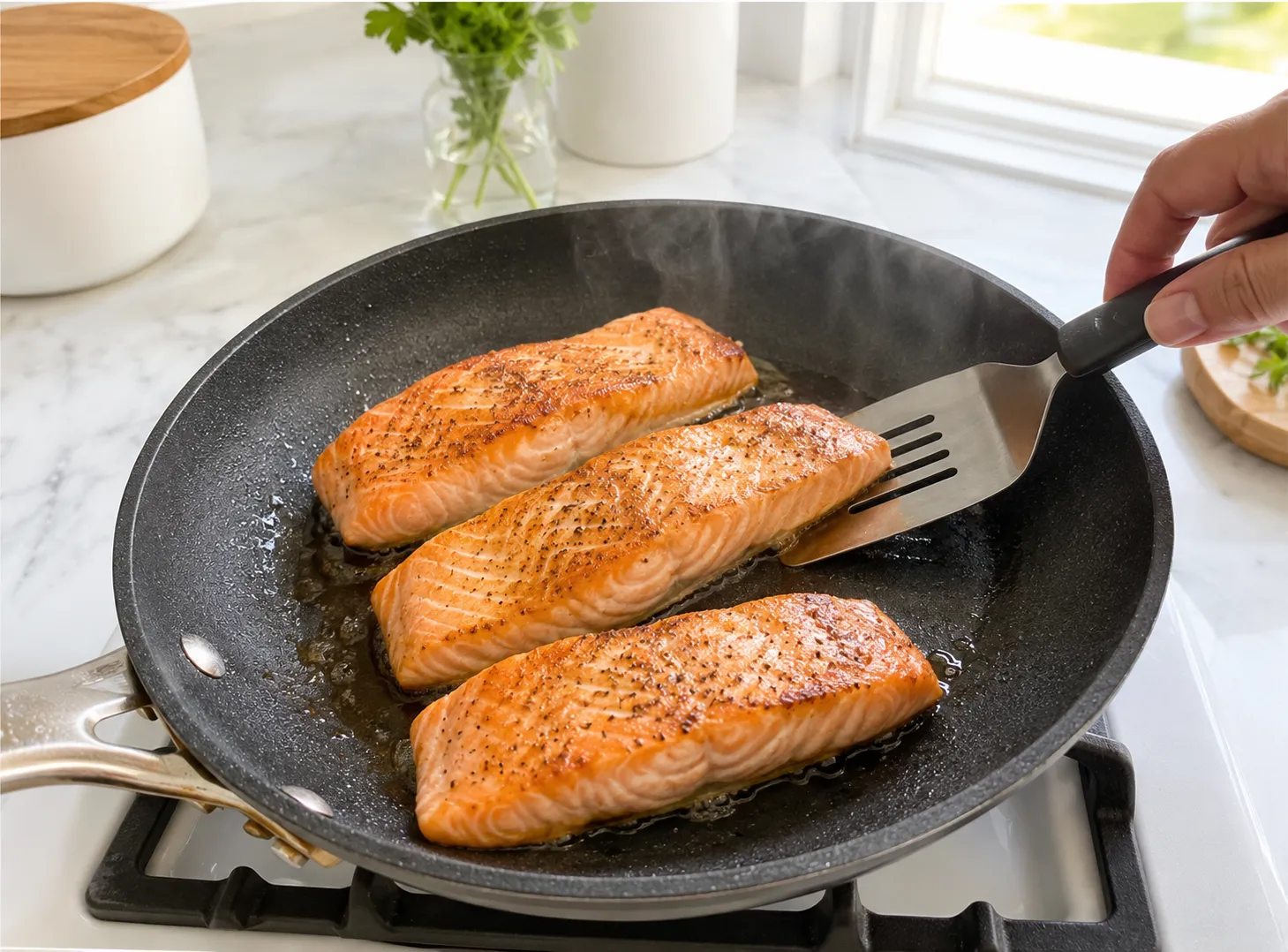
- Lay the salmon in the skillet, skin side down if your fillets have skin. Let it sear undisturbed for 4 to 5 minutes. Resist the urge to poke or move it during this time.
- Flip each fillet carefully with a fish spatula once the underside is deep golden and releases easily from the pan.
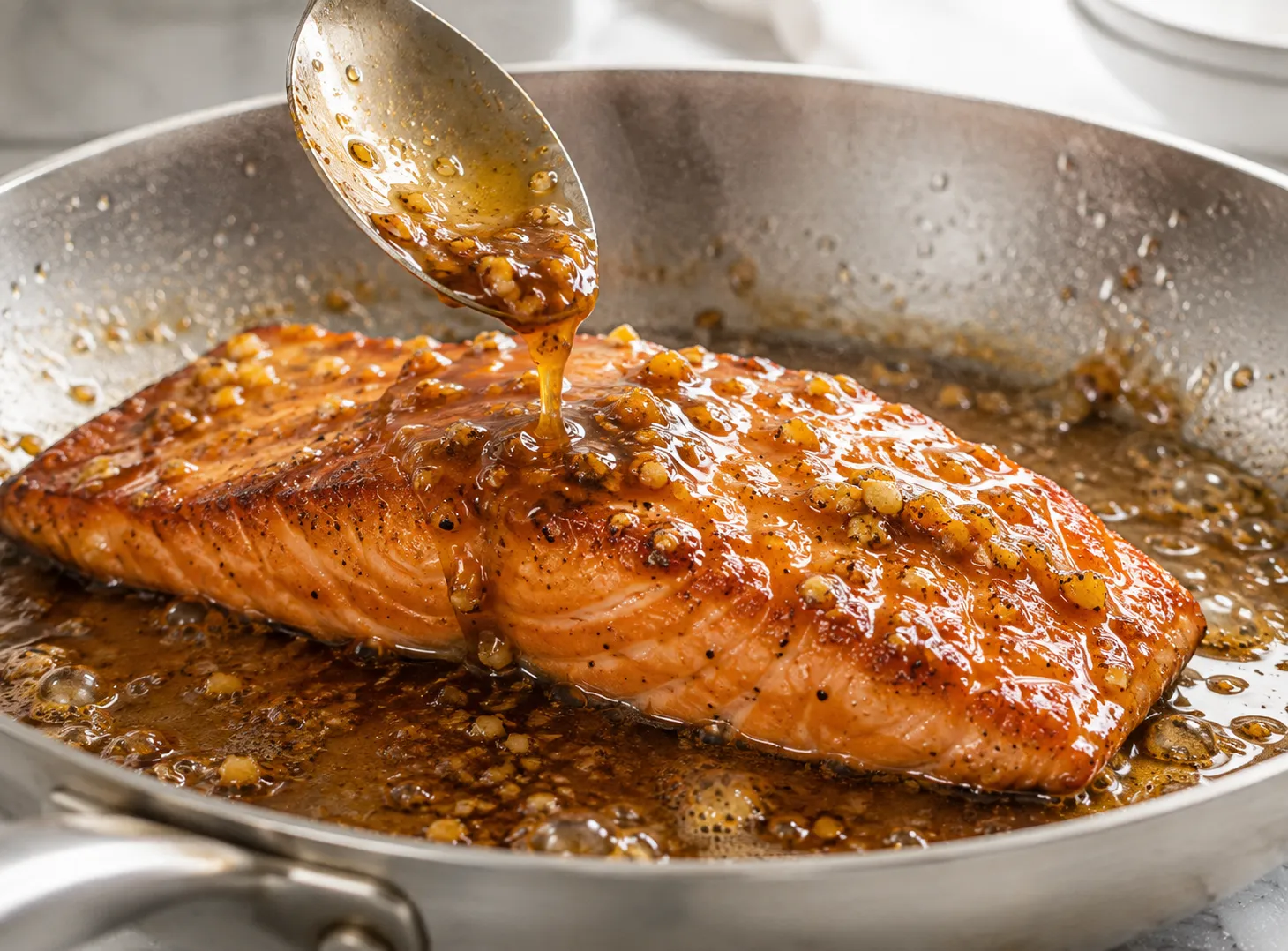
- Turn the heat down to medium, then pour the honey glaze into the pan around the salmon, not directly on top.
- Drop the butter into the glaze and let it melt in, stirring the sauce gently around the fish.
- Spoon the glaze over the salmon again and again for about 3 to 4 minutes. You will see it bubble, reduce, and start clinging to the fish instead of pooling in the pan.
- Check for doneness by inserting a thermometer into the thickest part of a fillet. Aim for 125 to 130°F for a tender, medium finish, or check that the fish flakes easily with a fork.
- Take the pan off the heat and let the salmon sit in the glaze for 2 to 3 minutes before serving.
- Move the fillets to plates, spoon any extra glaze from the pan over the top, and finish with green onions, sesame seeds, and a lemon wedge on the side.
- Dry the salmon thoroughly before it goes into the pan. Moisture on the surface is the main reason people end up with a soggy sear instead of a crisp one.
- Leave the fillets alone once they hit the pan. Moving them too soon tears the crust that is trying to form, and the fish will stick to the pan if you rush it.
- A non stick or well seasoned skillet makes a real difference here, since honey glaze can stick fast to a bare pan and burn onto the surface.
- Keep the heat at medium once the glaze goes in. Honey burns quickly on high heat and turns bitter almost instantly, so lowering the heat right after the flip protects the whole dish.
- Baste often in the final few minutes. That repeated spooning is what builds the glossy, sticky coating people expect from this dish, and it also helps the fillets cook evenly on top.
- Give the salmon a short rest in the pan after cooking so the glaze has a chance to set slightly before it hits the plate.
- Buy fillets that are close to the same thickness when possible. Uneven thickness means some pieces finish cooking before others, and you end up guessing which one to pull first.
- Keep a small bowl of water near the stove. If the glaze reduces too far before the salmon is done, a teaspoon of water loosens it back up without diluting the flavor.
- Cooking salmon straight from the fridge, which leads to a fillet that is cold in the center while the outside overcooks. Let it sit out for 10 minutes first.
- Crowding the pan with too many fillets at once. This drops the pan temperature and the fish ends up steaming instead of browning, and the glaze never reduces properly either.
- Flipping the salmon before a proper crust has built. If it sticks when you try to flip, it usually needs another minute, so wait it out rather than forcing the spatula underneath.
- Letting the glaze boil hard on high heat, which scorches the honey and turns the sauce bitter fast. A gentle simmer is all it needs to thicken properly.
- Pulling the fish off the heat too late. Salmon keeps cooking a bit after it leaves the pan, so slight underdoneness at the moment you remove it is normal and expected.
- Skipping the pat dry step. It sounds minor but it is one of the biggest reasons a sear does not turn out right.
- Using a thin, warped pan. A pan that heats unevenly will scorch the glaze in some spots while leaving other parts of the fish undercooked.
- Walking away during the basting stage. This glaze can go from perfectly sticky to burnt in under a minute once it starts to reduce quickly.
- Swap the honey for maple syrup if you want a slightly earthier sweetness instead of the floral note honey gives.
- Use tamari in place of soy sauce for a gluten free version of the glaze.
- Stir a splash of fresh orange juice into the glaze for a citrus edge that pairs nicely with the ginger.
- Use salmon steaks instead of fillets if that is what your store has that day. The cook time stays roughly the same.
- Add sliced fresh chili instead of red pepper flakes if you want a sharper, fresher heat.
- This same glaze works well on chicken thighs or shrimp if you want to use it on something other than salmon.
- Steamed jasmine rice or garlic fried rice
- Roasted broccoli or asparagus
- A simple cucumber salad with rice vinegar
- Garlic butter noodles
- Stir fried bok choy
- Crusty bread for soaking up leftover glaze
- Store leftover salmon in an airtight container in the fridge for up to 3 days.
- Reheat gently in a skillet over low heat with a small splash of water to loosen the glaze back up.
- A microwave works in a pinch. Use short 20 second bursts so the fish does not turn rubbery.
- Freezing is not recommended for this dish, since the glaze texture changes noticeably once it thaws.
Yes. Thaw it fully in the fridge first and pat it dry before cooking. A wet fillet will not sear properly, so this step matters more than it seems.
Maple syrup or agave both work and give a similar sticky finish, though the flavor leans slightly different from honey.
Not unless you want it to be. The red pepper flakes are optional, so you control how much heat ends up in the glaze.
Yes. Bake at 400°F for about 12 to 15 minutes, brushing the glaze on halfway through and again right before serving.
It usually just needs another minute or two on the heat. Honey glazes thicken as they reduce, so give it a little more time before adding anything else.
Yes. Mix it up to 2 days in advance and keep it in the fridge until you are ready to cook the salmon.
- Wild caught salmon tends to hold up slightly better to high heat compared to farmed salmon, though both work fine here.
- Skin on fillets crisp up nicely and add a bit of texture if you enjoy eating the skin. Skinless fillets work just as well if that is what you prefer.
- A small splash of water can loosen the glaze if it thickens faster than the fish finishes cooking.
- This recipe scales easily for a larger group. Just use a bigger skillet or cook the fillets in two batches so the pan does not get crowded.
- The glaze thickens further as it cools, so do not worry if it looks slightly thin the moment you take the pan off the heat.
- Fresh ginger makes a noticeable difference over the powdered version, so it is worth keeping a small piece in the freezer for recipes like this one.
Honey glazed salmon earns its place in a regular dinner rotation because it delivers real flavor without asking for much time or skill. The glaze does most of the work here, turning a simple seared fillet into something that tastes far more thought out than it actually is. Once the basic method clicks, it becomes one of those recipes you can make from memory, adjusting the glaze slightly depending on what happens to be in the fridge that night. Pair it with rice or a quick vegetable side, and dinner is done in under half an hour, which makes it one of the more reliable meals to fall back on during a busy week.