
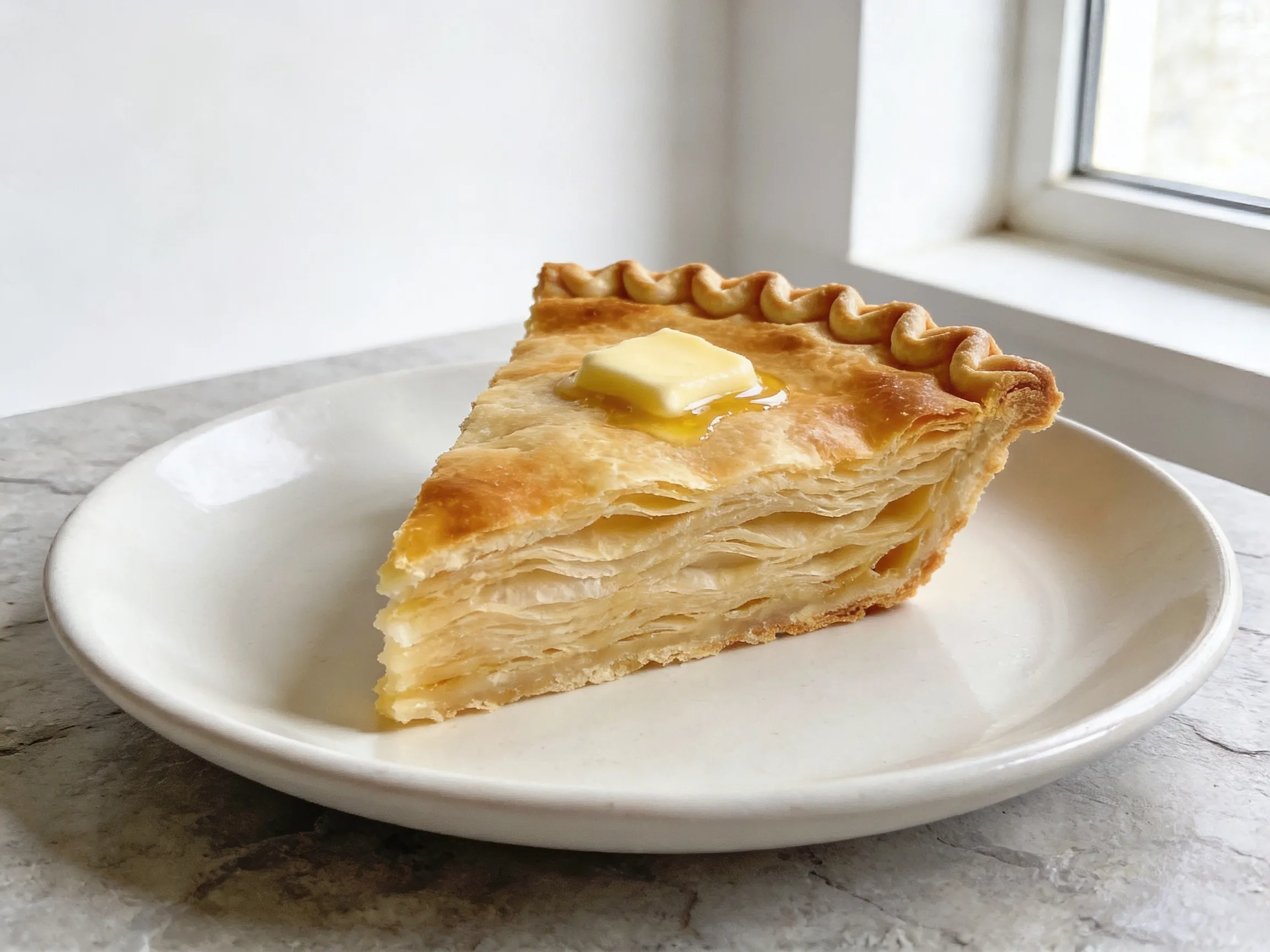
Homemade pie crust sounds harder than it is. With the right technique and cold butter, you get a flaky, golden crust that beats anything from a box. This recipe works for fruit pies, savory tarts, quiche, and pot pies. It takes about 20 minutes of actual work. The rest is just waiting.
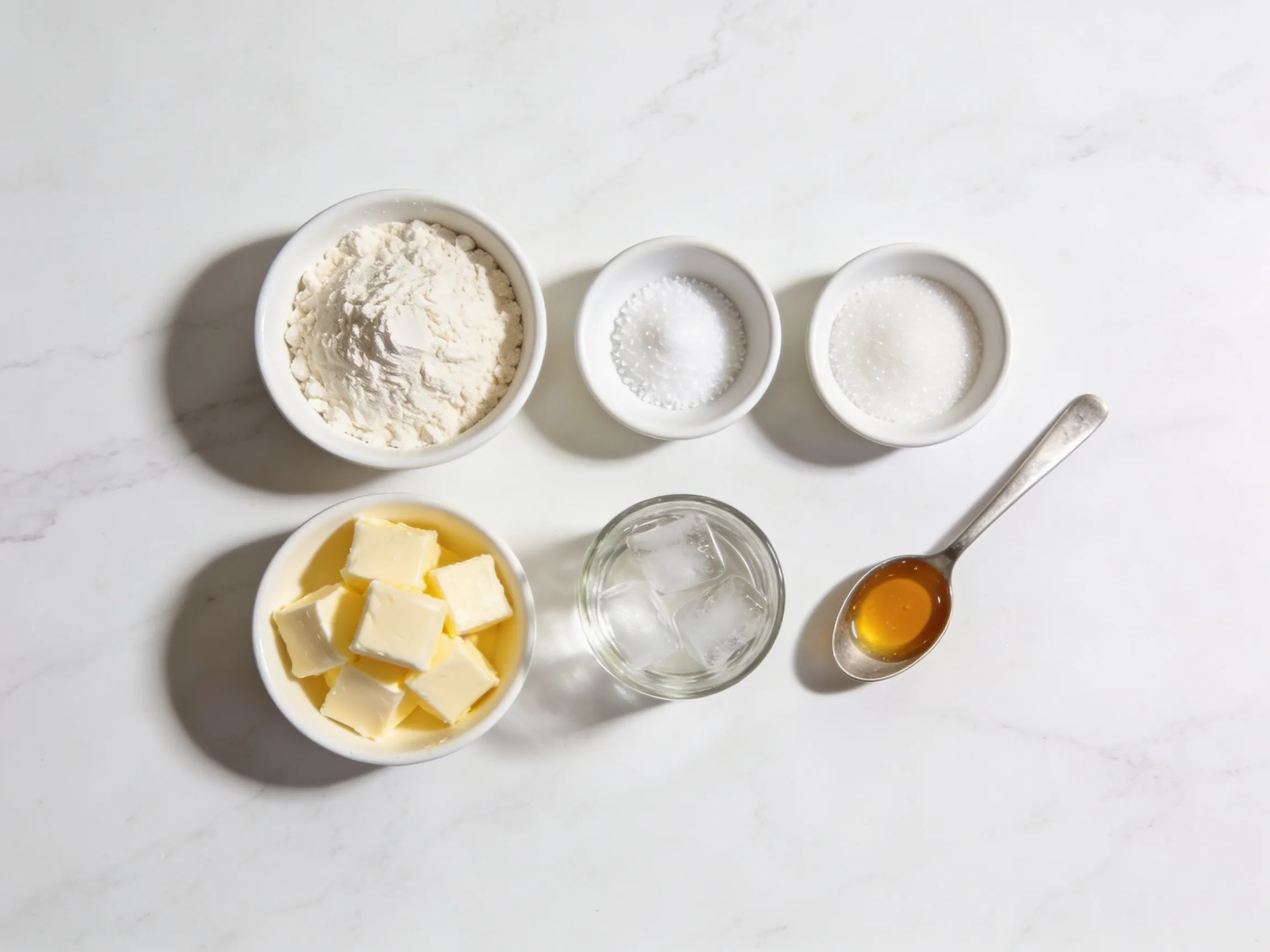
- 2 1/2 cups all-purpose flour
- 1 tsp granulated sugar
- 1 tsp salt
- 1 cup unsalted butter, very cold, cut into small cubes
- 6 tbsp ice water
- 1 tsp apple cider vinegar (optional, improves tenderness)
- Large mixing bowl
- Pastry cutter or two forks
- Box grater (optional, for grating frozen butter)
- Measuring cups and spoons
- Kitchen scale (recommended for flour)
- Plastic wrap
- Rolling pin
- 9-inch pie dish
- Parchment paper
- Pie weights or dried beans
- Small bowl for ice water
- Freeze your butter cubes for 15 minutes before starting.
- Whisk the dry ingredients together, then cut in the cold butter until chunky.
- Add ice water one tablespoon at a time until the dough just holds together.
- Shape into discs, wrap, and chill for at least 1 hour.
- Roll out, fit into your pie dish, and bake as your recipe directs.
- Cut butter into small cubes and spread on a plate. Freeze for 15 minutes.
- In a large bowl, whisk together flour, sugar, and salt.
- Add the cold butter cubes to the flour mixture.
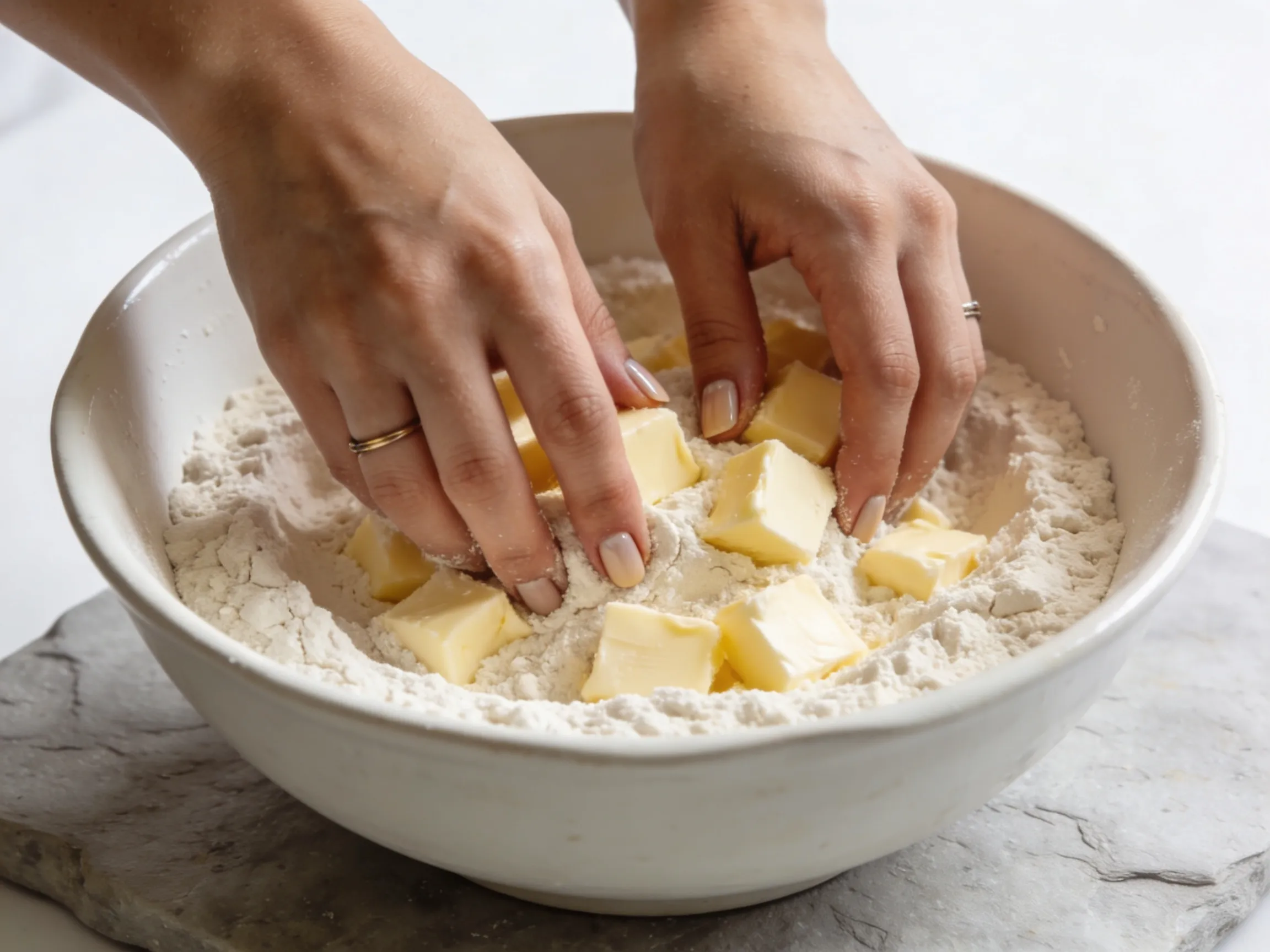
- Using a pastry cutter or your fingertips, press the butter into the flour. You want pea-sized and almond-sized chunks throughout. Stop well before the mixture looks uniform. Those uneven pieces are what create flaky layers.
- Drizzle in ice water one tablespoon at a time, tossing with a fork after each addition.
- If using apple cider vinegar, add it with the first tablespoon of water.
- Keep adding water and tossing until the dough holds together when you squeeze a small handful. It will look shaggy. That is fine.
- Turn the dough out onto a clean surface. Do not knead it.
- Divide into two equal portions and gently press each into a flat disc.
- Wrap each disc tightly in plastic wrap and refrigerate for at least 1 hour.
- When ready to roll, take a disc out and let it sit for 5 minutes at room temperature.
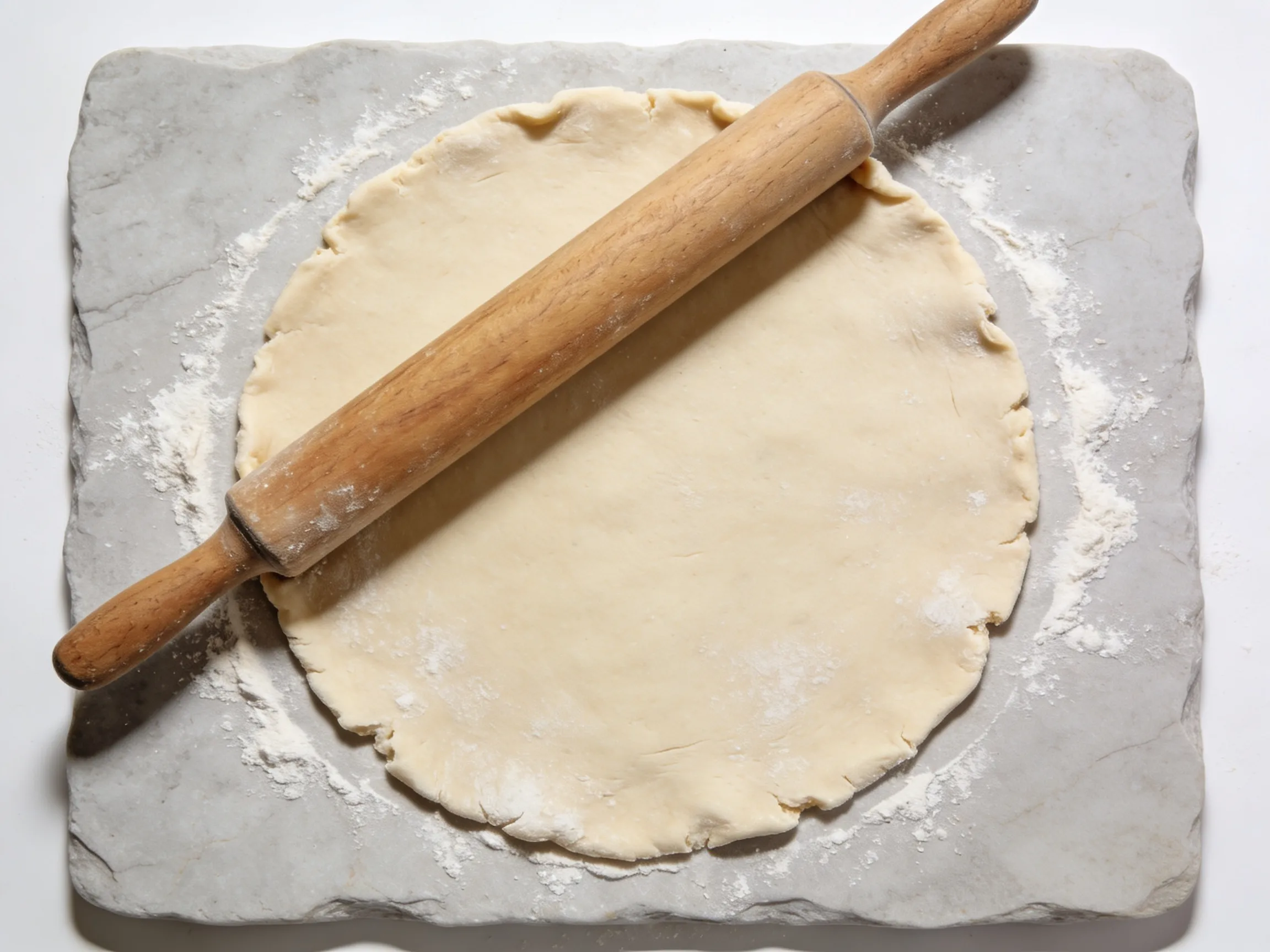
- On a lightly floured surface, roll from the center outward into a circle about 12 inches wide and 1/8 inch thick.
- Rotate the dough a quarter turn every few rolls to keep the shape even and prevent sticking.
- Fold the rolled dough in half, then in half again. Lift into a 9-inch pie dish and unfold carefully.
- Press it gently into the bottom and sides. Do not stretch it to fit.
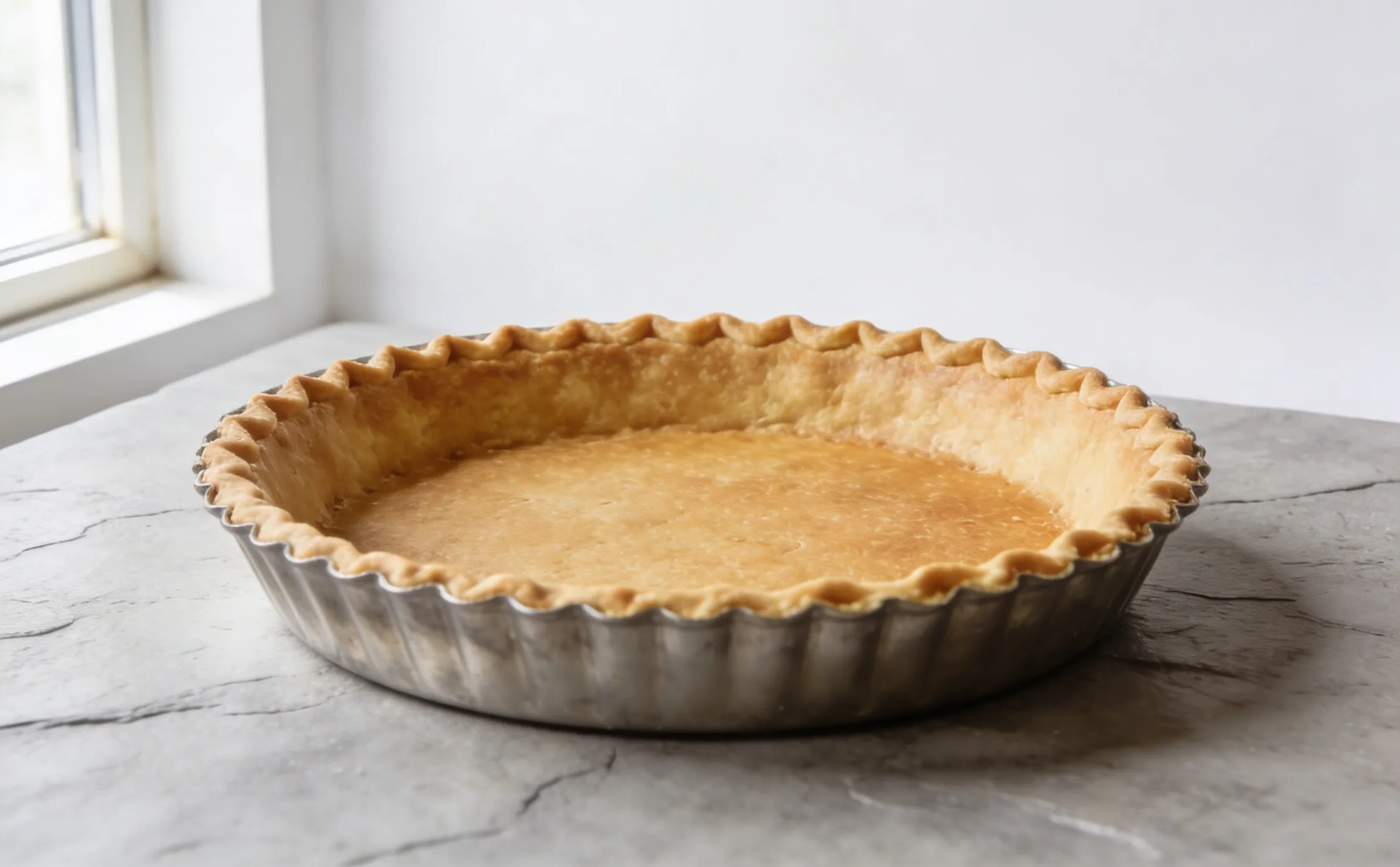
- Trim the overhang to about 1 inch and crimp the edges as you like.
- Refrigerate the prepared crust for 20 to 30 minutes before baking or filling.
- To blind bake: line with parchment paper, add pie weights or dried beans, and bake at 375 F for 20 minutes. Remove the weights and bake another 10 to 15 minutes until the bottom looks dry and lightly golden.
- For filled pies, skip blind baking and follow the baking instructions from your filling recipe.
- Cold butter is the most important part. If it starts to soften while you work, put the whole bowl in the freezer for 10 minutes before continuing.
- Add water slowly. You almost always need less than you think.
- Stop mixing the moment the dough comes together. A few dry bits are better than overworked dough.
- A food processor works, but use short pulses only. It is easy to go too far.
- Replacing 2 tablespoons of ice water with vodka makes the crust noticeably more tender. The alcohol burns off completely during baking.
- Measure flour by spooning it into the cup and leveling off, or weigh it. Scooping packs the flour and throws off the ratio.
- The dough will look rough and uneven before chilling. After resting, it comes together properly.
- Roll in one direction, center to edge, rotating the dough rather than rolling back and forth.
- Using butter that is not cold enough. Even slightly warm butter makes the crust greasy and dense instead of flaky.
- Adding water all at once. Too much liquid makes the dough wet and the baked crust tough.
- Mixing after the dough holds together. The more you work it, the more gluten develops, and the tougher it gets.
- Skipping the refrigerator rest. The dough needs time to relax. Without it, the crust shrinks and cracks in the oven.
- Stretching the dough to fit the dish. It will pull back during baking. Ease it in gently instead.
- Skipping the dock step before blind baking. Use a fork to prick the bottom so steam can escape and the crust stays flat.
- Baking in a dark pan without adjusting. Dark pans conduct heat faster. Lower the oven by 25 F or check a few minutes early.
- For an old-fashioned crust with extra flake, use half cold butter and half cold lard.
- Replace up to half the all-purpose flour with whole wheat pastry flour for a nuttier flavor and slightly denser texture.
- For a sweeter crust that works well under fruit fillings, add 2 tablespoons of sugar to the dry ingredients.
- Going savory? Skip the sugar and stir in a teaspoon of dried thyme or rosemary, or add 2 tablespoons of finely grated parmesan to the flour.
- Cold vegan butter works in place of dairy butter. Use a brand with a high fat content for the best result.
- A 1:1 gluten-free flour blend with xanthan gum can work in this pie crust recipe. Results vary by brand, so use one you already trust for baking.
- Apple, cherry, or blueberry pie filling for a classic double crust pie
- Pumpkin or sweet potato custard for a single crust fall pie
- Lemon curd for a simple tart
- Egg and vegetable quiche filling for a savory option
- Chicken or turkey pot pie filling
- Chocolate ganache for a no-bake chocolate tart that chills in the refrigerator
- Wrapped dough discs keep in the refrigerator for up to 2 days.
- To freeze, wrap each disc in plastic wrap and place in a zip-lock bag. Keeps well for up to 3 months.
- Thaw frozen dough overnight in the refrigerator. Do not thaw at room temperature.
- A fully baked, unfilled crust can sit at room temperature for up to 2 days, covered loosely.
- For filled pies, storage depends on the filling. Custard and cream pies go in the refrigerator. Fruit pies can sit at room temperature for a day.
- To re-crisp a baked crust, place it in a 300 F oven for about 10 minutes. Skip the microwave entirely.
No. Two forks work fine. You can also grate frozen butter directly into the flour using a box grater, which is one of the easiest methods.
Two likely reasons: the dough was stretched to fit the dish, or it did not rest long enough before baking. Always chill the lined crust for at least 20 minutes before it goes in the oven.
Yes, and it is worth doing. The dough keeps in the refrigerator for 2 days and in the freezer for 3 months. Make a double batch and freeze half for next time.
Unsalted butter gives you control over the salt level. European-style butter has a higher fat content and produces a slightly richer, flakier crust, but standard unsalted butter works well too.
Pinch a small piece of dough. If it holds without crumbling, stop. If it falls apart, add one more tablespoon and check again.
Yes, but cut the added salt down to 1/2 teaspoon to keep the crust from tasting overly salty.
- This batch makes one double-crust 9-inch pie or two separate single-crust pies.
- Always use unsalted butter so you control the salt yourself.
- Apple cider vinegar adds a small amount of acid that keeps the crust tender. It does not affect the flavor.
- The dough will look rough and crumbly before chilling. That is expected. Do not add more water to fix it.
- For a shiny finish, brush the top crust with one egg beaten with one tablespoon of milk just before baking.
- If the dough tears when transferring, press it back together gently with your fingers. It patches easily.
Once you make this pie crust recipe two or three times, it stops feeling like a project. Cold butter, gentle handling, and enough rest time in the fridge are really the only things that matter. Get those right and the crust takes care of itself.