
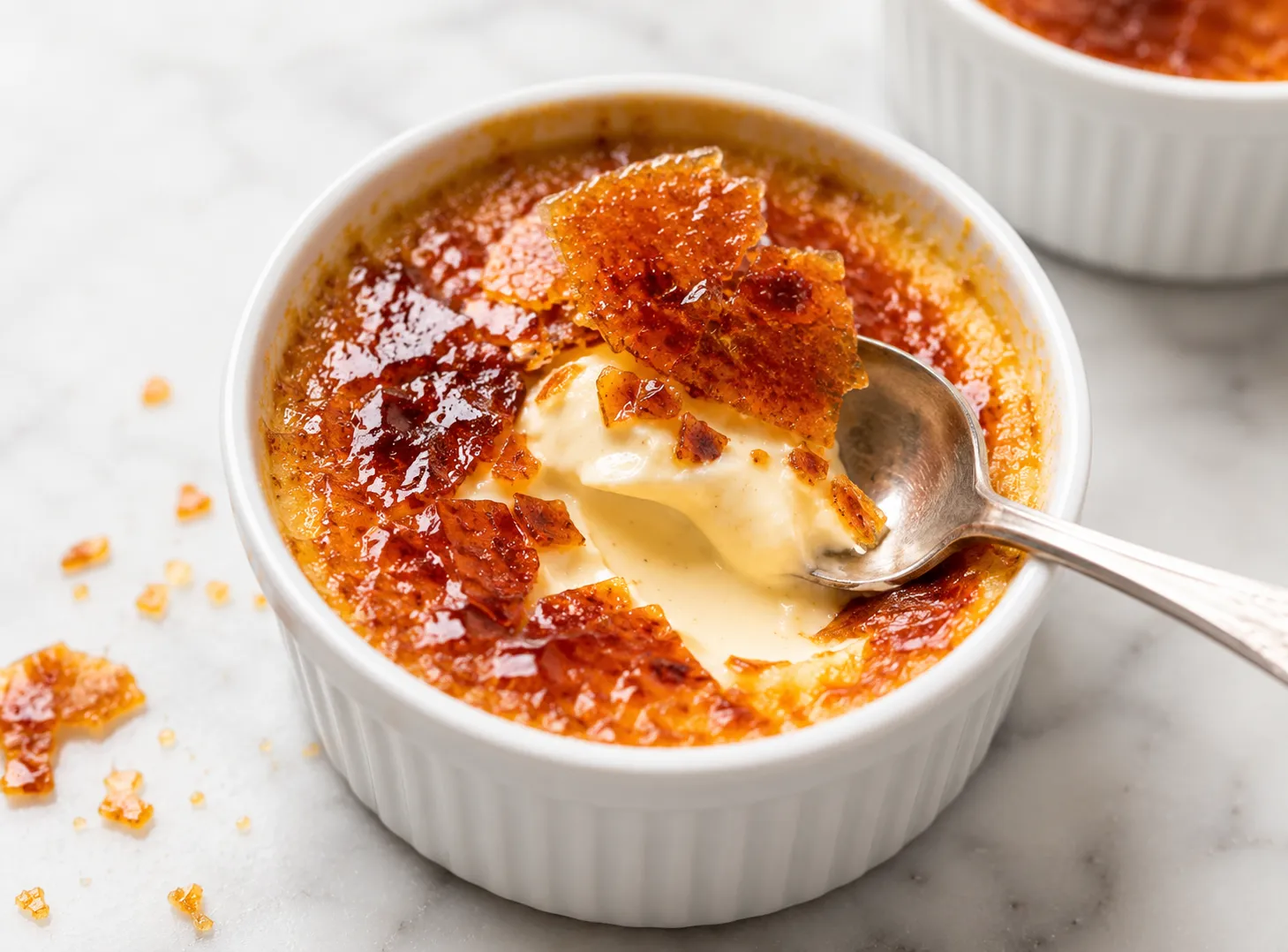
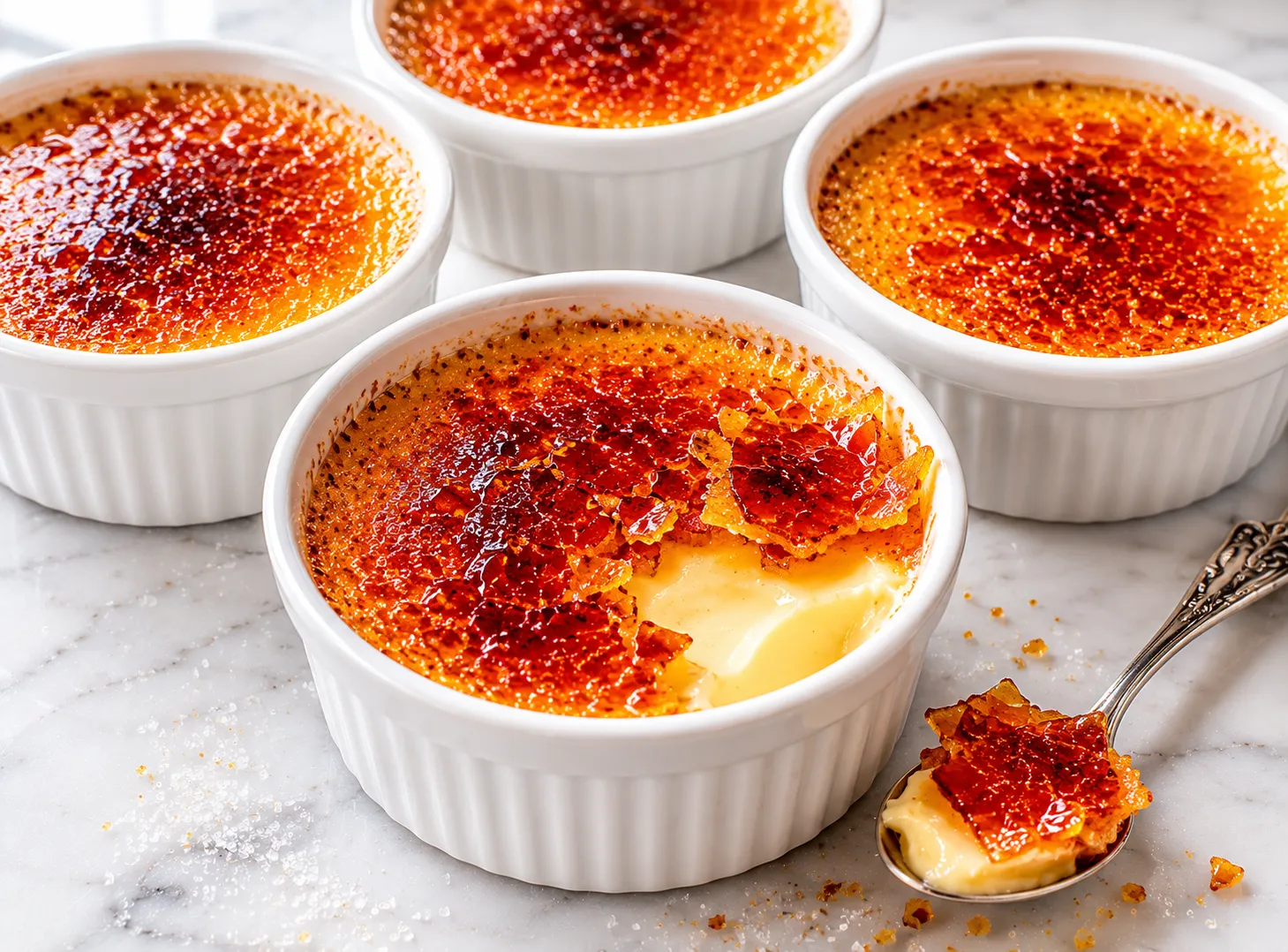
This creme brulee recipe is the kind of dessert that looks like it took serious skill but only needs four ingredients and one technique to pull off. The custard is dense and smooth, made with heavy cream and egg yolks baked low and slow in a water bath. Once chilled, a thin layer of sugar goes on top and gets torched into a crackable amber sheet. The contrast between the cold, silky custard and the warm, brittle caramel is exactly what makes this dessert so satisfying. It is make-ahead friendly, reliable, and genuinely one of the most rewarding things you can make at home with so few components. Whether you are making it for a dinner party or just because you want something worth the effort, this recipe gives you a result that holds up.
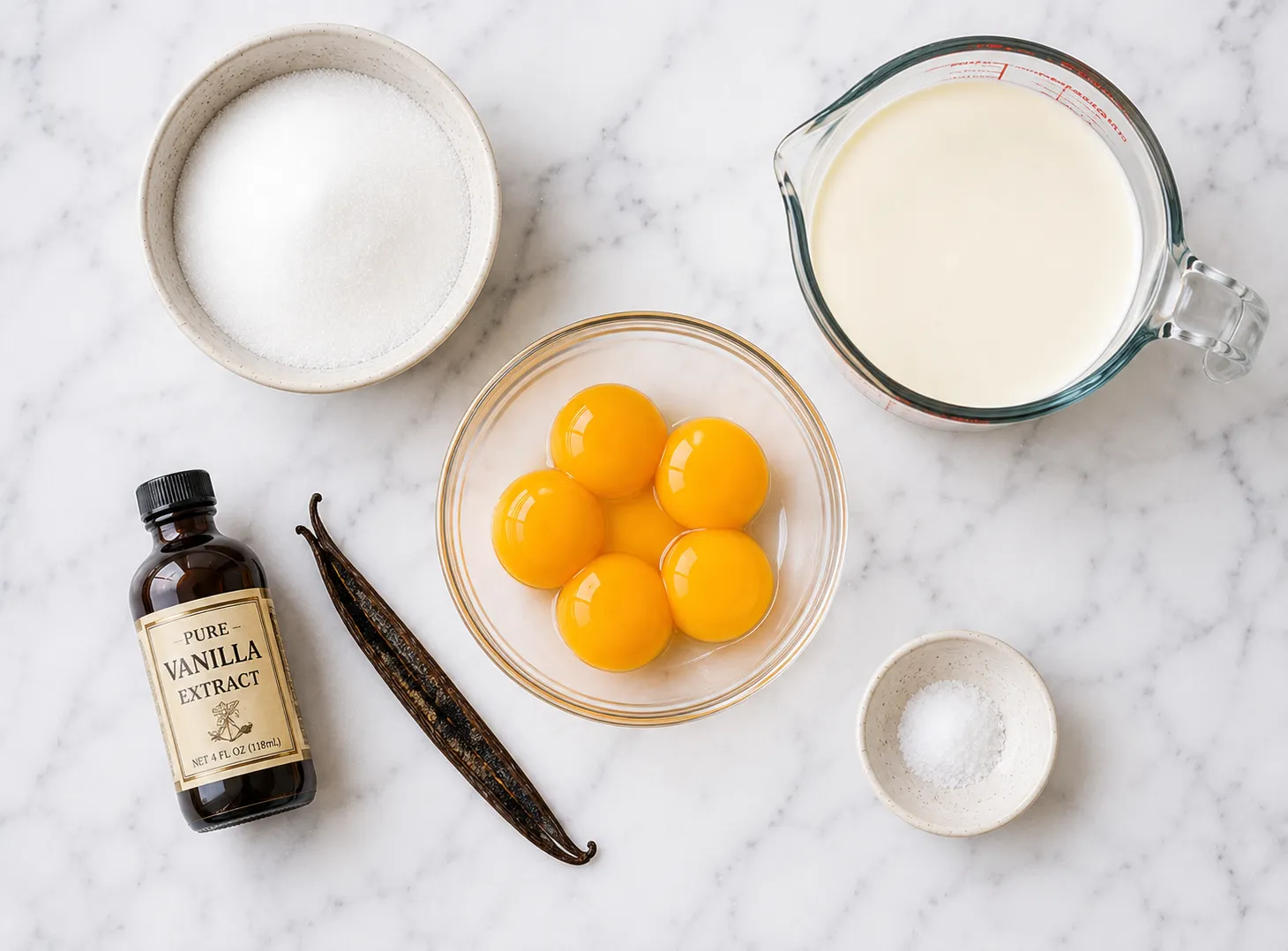
- 2 cups heavy whipping cream , Do not substitute with half-and-half or light cream. Fat content is what gives the custard its structure.
- 5 large egg yolks , Room temperature blends more smoothly. Save the whites for another use.
- 0.33 cup granulated white sugar , About 65 grams.
- 1 teaspoon pure vanilla extract , Or 1 vanilla bean, split and scraped. Vanilla bean paste also works well, 1 teaspoon.
- pinch salt
- 4 teaspoons granulated white sugar , About 1 to 1.5 teaspoons per ramekin. Superfine sugar melts more evenly but regular granulated works fine.
- 4 ramekins, 6 oz each
- Deep baking dish or roasting pan for the water bath
- Medium saucepan
- Large mixing bowl
- Whisk
- Fine mesh strainer
- Ladle or pouring jug
- Kitchen torch
- Measuring cups and spoons
- Plastic wrap
- Heat heavy cream with vanilla until just steaming, then remove from heat.
- Whisk egg yolks with sugar until the mixture turns slightly pale.
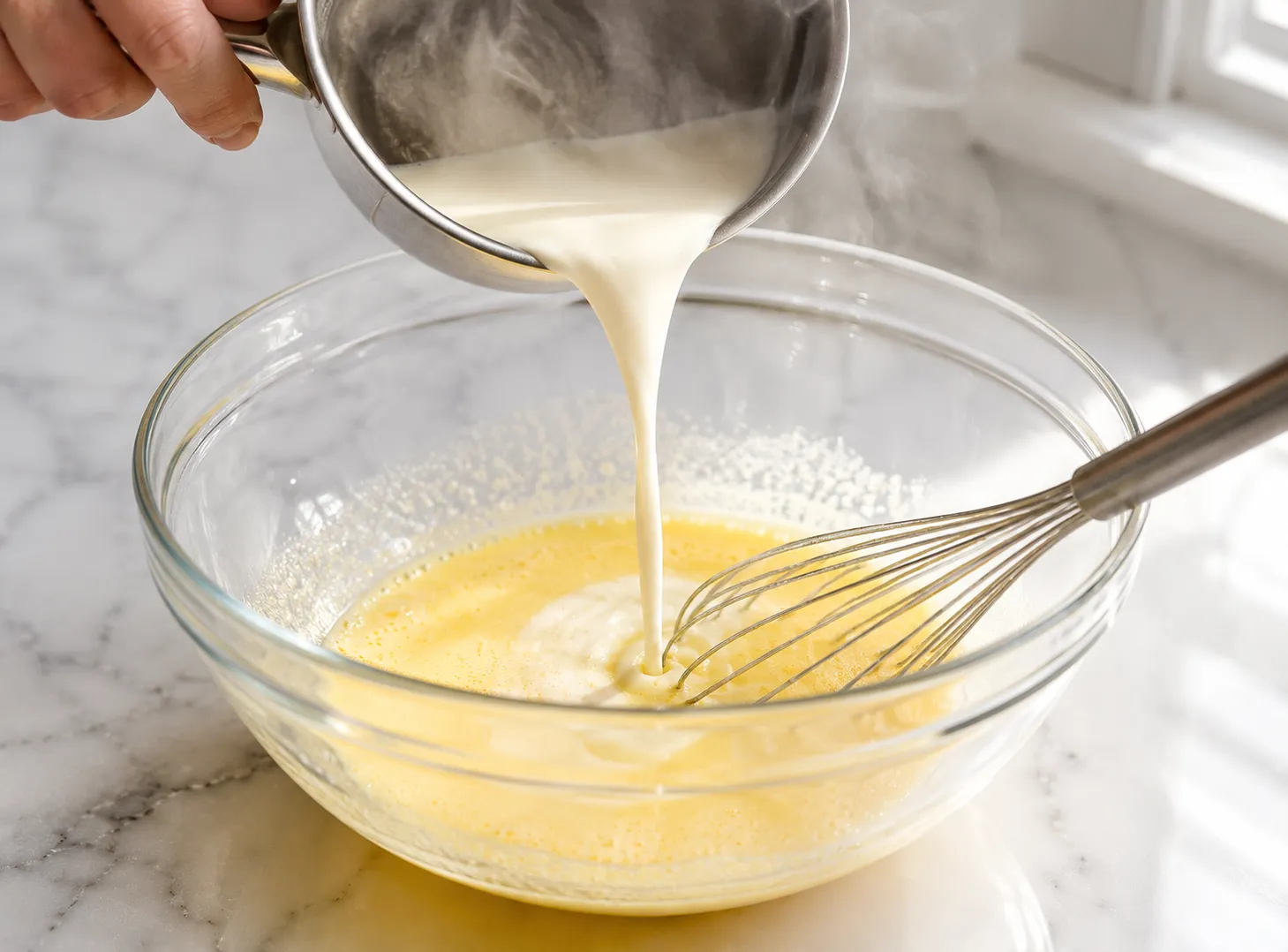
- Slowly pour the warm cream into the egg mixture while whisking constantly.
- Strain the custard through a fine mesh sieve and pour into ramekins.
- Bake in a water bath at 325 degrees F for 35 to 42 minutes until set at the edges with a slight jiggle in the center.
- Cool, then refrigerate for at least 4 hours.
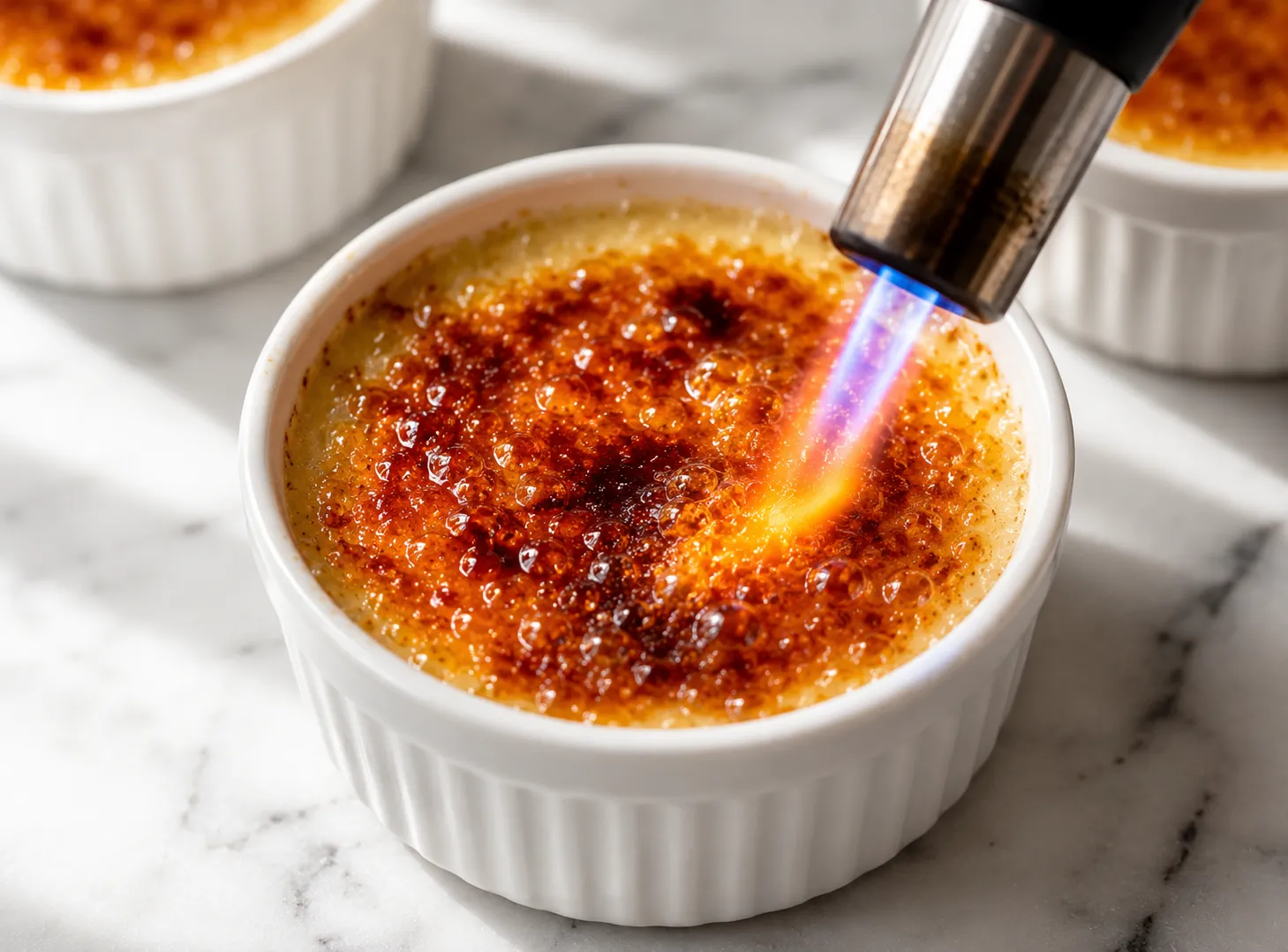
- Sprinkle sugar on top and torch until caramelized. Serve immediately.
- Preheat the oven to 325 degrees F (160 degrees C).
- Pour the heavy cream into a medium saucepan. Add the vanilla extract or scraped vanilla bean seeds.
- Heat over medium-low until the cream just begins to steam and small bubbles form at the edges. Do not let it boil.
- Remove the saucepan from heat and let the cream sit for 5 minutes.
- In a large mixing bowl, whisk together the egg yolks, sugar, and salt for about 2 minutes until the mixture is slightly pale and the sugar starts to dissolve.
- Start pouring the warm cream into the egg mixture in a slow, thin stream. Whisk constantly as you pour. Do not rush this step. Pouring too fast will scramble the eggs.
- Once all the cream is added, pour the custard through a fine mesh strainer into a clean bowl or pouring jug. This removes any cooked egg bits and ensures a smooth texture.
- Set your ramekins in a deep baking dish. Ladle the custard evenly into each ramekin, filling them about three-quarters full.
- Pour hot water into the baking dish until it reaches halfway up the sides of the ramekins.
- Carefully slide the baking dish into the oven. Bake for 35 to 42 minutes. The custard is done when the edges are set and the center still has a gentle jiggle, similar to soft gelatin.
- Remove the ramekins from the water bath. Let them cool at room temperature for 30 minutes.
- Cover each ramekin with plastic wrap and refrigerate for at least 4 hours. Overnight is better.
- When ready to serve, uncover the ramekins. Blot any surface moisture lightly with a paper towel.
- Sprinkle 1 to 1.5 teaspoons of granulated sugar evenly over each custard. Tilt the ramekin to spread it to the edges.
- Hold a kitchen torch 2 to 3 inches above the surface. Move it in small, slow circles. The sugar will melt, bubble, and turn a deep amber color.
- Let the caramel top sit for about 60 seconds to harden before serving.
- Use heavy whipping cream only. Lower-fat options will not set the custard properly.
- Bring egg yolks to room temperature before starting. They blend more smoothly and temper more easily.
- Always strain the custard before pouring it into the ramekins. This one step is the difference between silky and grainy.
- Watch the jiggle, not the clock. When the edges are set and the center moves like soft gelatin, it is done. Liquid movement means more time. Zero movement means it went too far.
- The custard must be fully cold before torching. A warm custard will melt under the flame instead of holding firm.
- Superfine sugar melts more evenly under the torch. If you only have regular granulated, spread it in a thin, even layer and move the torch slowly.
- Keep the torch moving at all times. Holding it in one spot will burn the sugar in that area before the rest even starts to caramelize.
- If you do not have a torch, use the oven broiler on high heat for 2 to 4 minutes. Place the ramekins close to the element and watch closely. It works but requires more attention.
- Pouring the hot cream into the eggs too fast. Always go slow and whisk the whole time.
- Boiling the cream. Steam is all you need. Boiling can scorch the milk solids and affect the flavor.
- Skipping the water bath. The water bath keeps the heat even around the ramekins. Without it, the edges overcook before the center sets.
- Pulling the custard too late. A custard that is fully firm in the oven will turn rubbery once it chills. Trust the jiggle.
- Piling on too much sugar. A thin, even layer caramelizes cleanly. A thick pile burns on the outside while the bottom layer stays raw.
- Torching warm custard. The top layer needs to be cold so the heat only hits the sugar, not the custard underneath.
- Using low-fat dairy. Fat is not optional here. It is what makes the texture work.
- Vanilla bean: Use one split and scraped vanilla bean in place of extract. The flavor is more intense and the specks look good in the finished custard.
- Coffee: Stir 1 tablespoon of espresso powder into the warm cream before tempering. It dissolves cleanly and adds depth.
- Lavender: Steep 1 teaspoon of dried culinary lavender in the hot cream for 10 minutes, then strain it out before proceeding.
- Chocolate: Whisk 2 oz of finely chopped dark chocolate into the warm cream until melted before tempering. The custard sets darker and richer.
- Citrus: Add 1 teaspoon of orange or lemon zest to the cream while heating. Strain before pouring.
- Dairy-free: Full-fat coconut cream from a can works as a substitute for heavy cream. The flavor changes slightly but the texture holds.
- Sugar topping swap: Raw cane sugar or turbinado sugar caramelizes well and adds a faint molasses note to the top.
- Fresh raspberries or strawberries, which cut through the richness nicely
- Shortbread cookies or langues de chat on the side
- A small scoop of vanilla or lavender ice cream for contrast in temperature
- Candied orange peel for a citrus element
- Lightly sweetened whipped cream served separately
- A small glass of Sauternes or late-harvest Riesling if serving at a dinner party
- Unbaked custard: Store covered in the refrigerator for up to 24 hours before baking.
- Baked custard without the sugar top: Cover tightly with plastic wrap and refrigerate for up to 3 days.
- After torching: Serve right away. The caramel top absorbs moisture and softens within 30 to 45 minutes.
- Freezing: Not recommended. The custard texture breaks down after thawing.
- No reheating needed: Serve the custard cold from the refrigerator and torch the sugar top just before eating.
Yes. Place the sugared ramekins under an oven broiler set to high for 2 to 4 minutes. Watch closely and rotate the pan so the sugar caramelizes evenly. It works well but requires more attention than a torch.
This usually means the hot cream was added too fast and started cooking the eggs before they could temper, or the oven temperature was too high. Always pour slowly, whisk constantly, and strain before baking.
Gently shake the baking dish. The outer inch or two should be set and the center should jiggle softly like gelatin. If the whole surface sloshes like liquid, it needs more time.
Yes, and it is actually better that way. Bake and refrigerate the custards up to 3 days in advance. Only add and torch the sugar top right before serving.
Cracking usually happens from overbaking or from a water bath that ran dry during cooking. Check the water level halfway through and pull the ramekins out as soon as the center jiggle looks right.
You can, but the texture will be lighter and less rich. Traditional creme brulee uses only egg yolks, and the higher fat content from the yolks is what creates that dense, creamy consistency.
- This recipe fills four 6 oz ramekins. For larger 8 oz ramekins, increase the bake time by 5 to 8 minutes and check for the jiggle test.
- The custard can also be baked in one large ceramic dish instead of individual ramekins. Increase the bake time to 50 to 60 minutes.
- Vanilla bean paste is a practical option if you want visible specks without dealing with a whole vanilla bean. Use 1 teaspoon in place of extract.
- If you see air bubbles on the surface of the poured custard, pop them with a toothpick before the dish goes into the oven.
- Use hot water, not cold, in the water bath. Cold water extends the bake time and can cause uneven cooking.
- Do not cover the ramekins with foil while baking. Trapped steam affects the surface texture.
- If the sugar briefly catches fire during torching, blow it out and keep going. A small flame is normal and disappears quickly.
This creme brulee recipe proves that a short ingredient list and a straightforward technique can produce something genuinely impressive. There is no complicated equipment required and no advanced pastry skill needed. What matters is understanding the process: temper slowly, bake gently, chill fully, and torch right before serving. Once you do it once, you will have a clear picture of what to look for at each stage and the whole thing becomes second nature. The custard keeps in the refrigerator for days, which makes it one of the most practical make-ahead desserts you can have in your rotation. It is the kind of recipe that earns a permanent spot not because it is trendy but because it is consistently good. The crack of that caramel top, the cold custard underneath, the clean finish with no fuss. That is what makes this worth coming back to every time you want a dessert that delivers without overcomplicating things.