
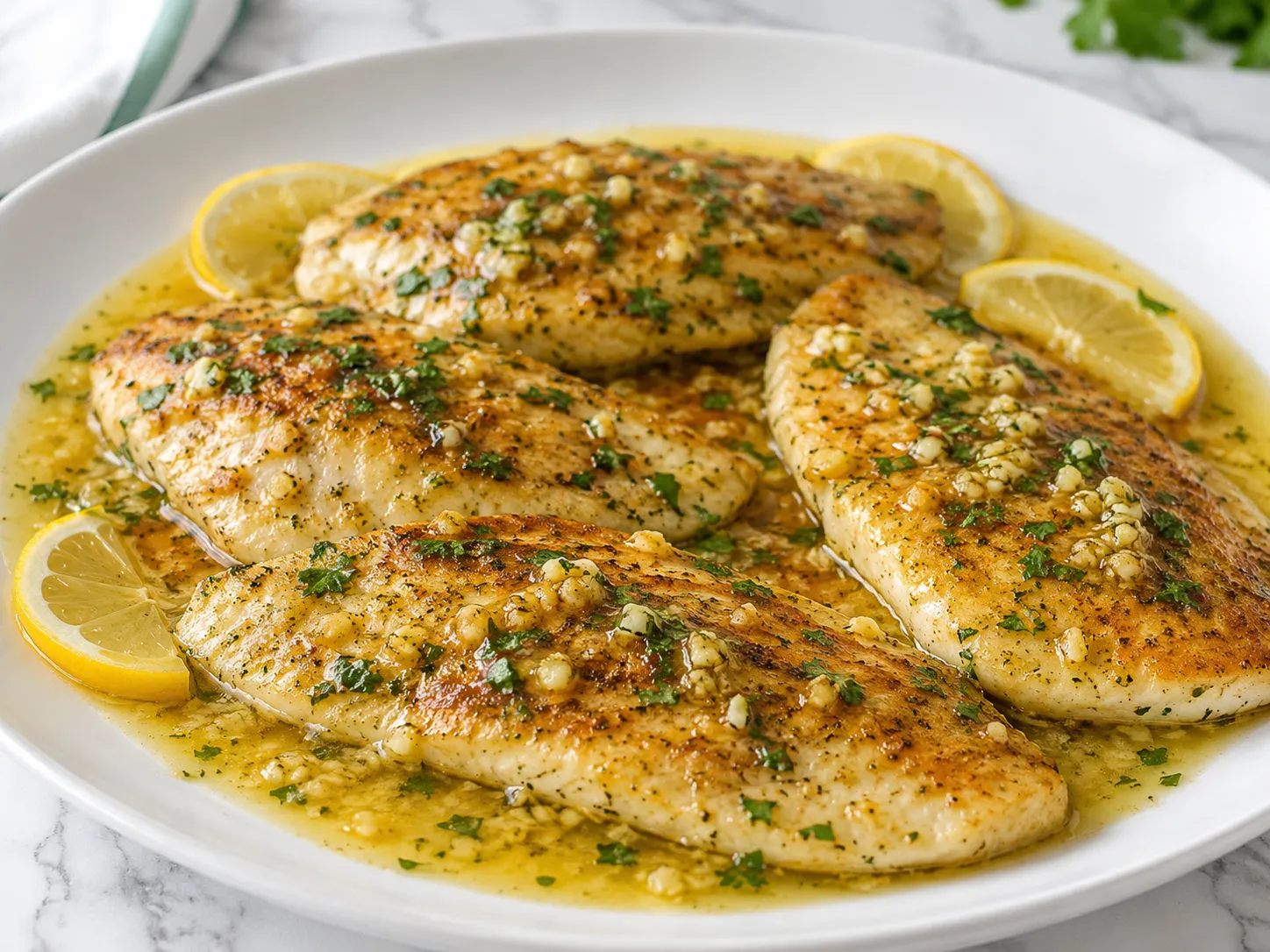
Garlic butter tilapia is the kind of weeknight dinner that earns a permanent spot in your rotation. It is fast, inexpensive, and requires almost no prep. The fish sears golden in a hot skillet, and the garlic butter sauce comes together in the same pan in under two minutes. You get real flavor without a long ingredient list or any complicated technique. Whether you are cooking for one or feeding a family, this garlic butter tilapia recipe delivers a solid seafood dinner on a budget, from start to finish in about twenty minutes.
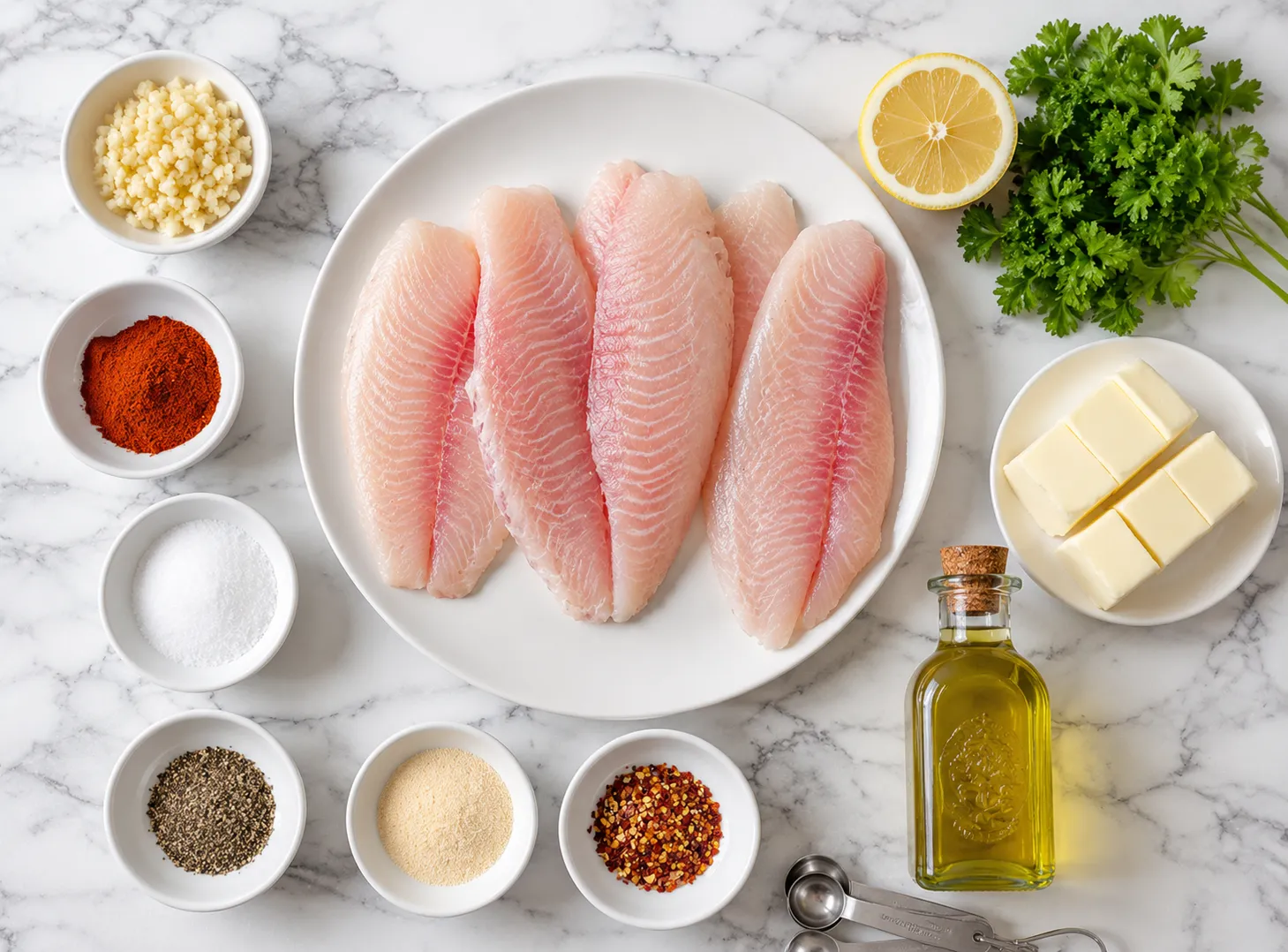
- 4 tilapia fillets , About 6 oz each. Fresh or fully thawed frozen both work.
- 0.5 teaspoon salt
- 0.5 teaspoon black pepper
- 0.5 teaspoon paprika , Smoked or sweet, either works.
- 0.25 teaspoon onion powder
- 2 tablespoons olive oil
- 4 tablespoons unsalted butter , Cut into pieces so it melts evenly.
- 5 cloves garlic , Freshly minced. Do not use jarred pre-minced garlic here.
- 1 tablespoon fresh lemon juice , Bottled lemon juice works in a pinch but fresh is noticeably better.
- 0.5 teaspoon crushed red pepper flakes , Optional. Leave out if you prefer no heat.
- 2 tablespoons fresh parsley , Chopped. Adds color and a clean, herby finish.
- salt , To taste at the end.
- lemon slices
- extra fresh parsley
- Large skillet or non-stick pan, 12-inch recommended
- Fish spatula or wide flat spatula
- Paper towels
- Measuring spoons
- Cutting board and sharp knife
- Small bowl for mixing seasoning
- Tongs (optional but helpful)
- Pat the fillets dry and season both sides.
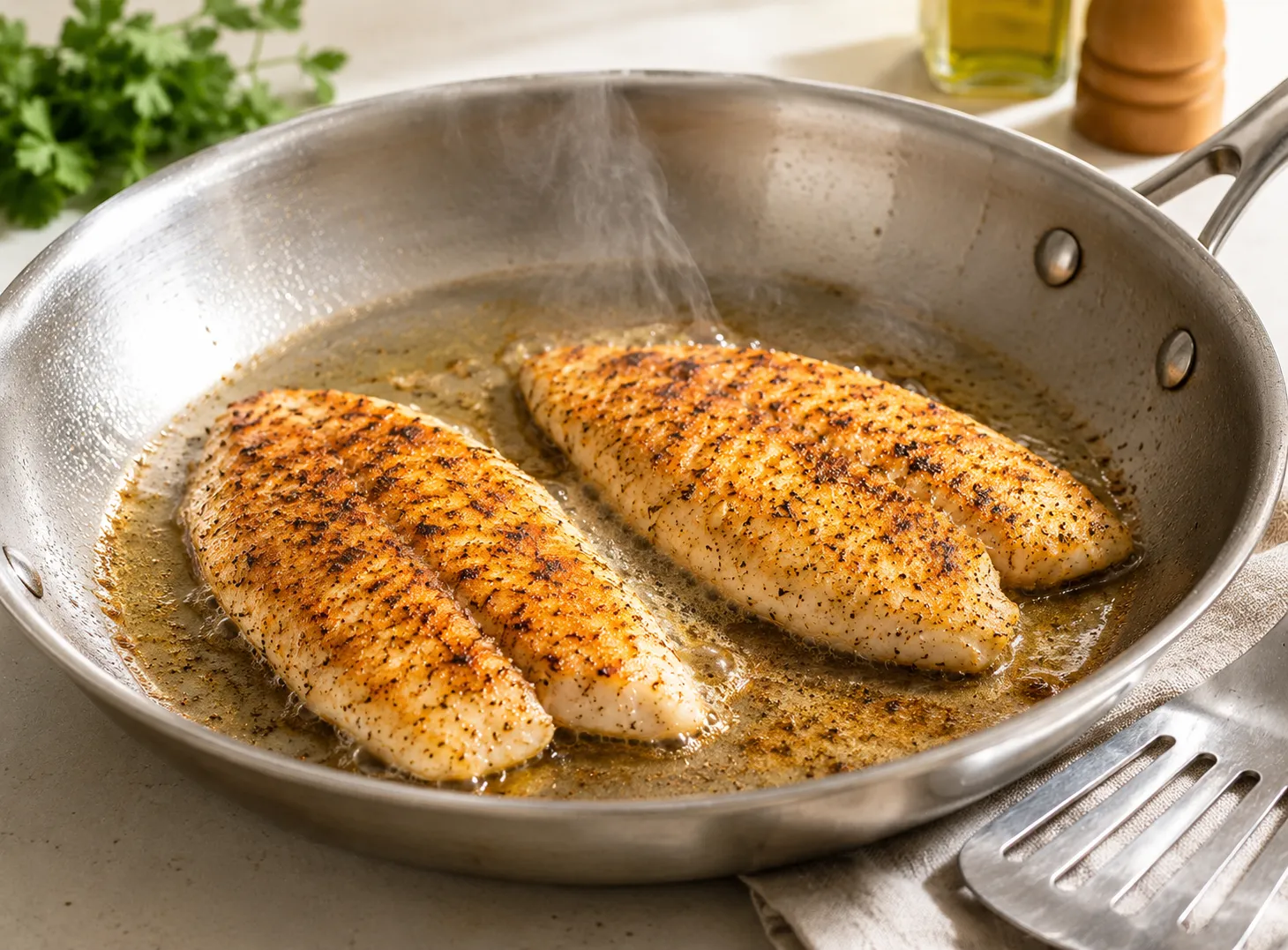
- Heat oil in a skillet and sear the fish until golden, about 3 to 4 minutes per side.
- Remove the fish and set aside.
- Melt butter in the same pan, add garlic, and cook until golden.
- Stir in lemon juice, red pepper flakes, and parsley.
- Spoon the sauce over the fish and serve right away.
- Pull the tilapia out of the fridge about 10 minutes before cooking. Fish at room temperature cooks more evenly than fish straight from the cold.
- Pat each fillet completely dry with paper towels. This step matters more than most people think. Moisture on the surface creates steam and prevents browning.
- Mix the salt, pepper, paprika, and onion powder in a small bowl. Sprinkle it evenly over both sides of the fish and press it in lightly.
- Heat the skillet over medium-high heat. Add the olive oil and give it about 90 seconds to come up to temperature. It should shimmer before the fish goes in.
- Place the fillets in the pan without crowding them. If the pan is not big enough for all four, cook in two batches rather than stacking them.
- Cook for 3 to 4 minutes on the first side without touching or moving the fish. The fish will tell you when it is ready to flip. If it resists, give it another 30 seconds.
- Flip once. The bottom should be golden brown. Cook the second side for 2 to 3 minutes until the fish is opaque all the way through and flakes when pressed.
- Move the fillets to a plate and tent loosely with foil to keep them warm while you make the sauce.
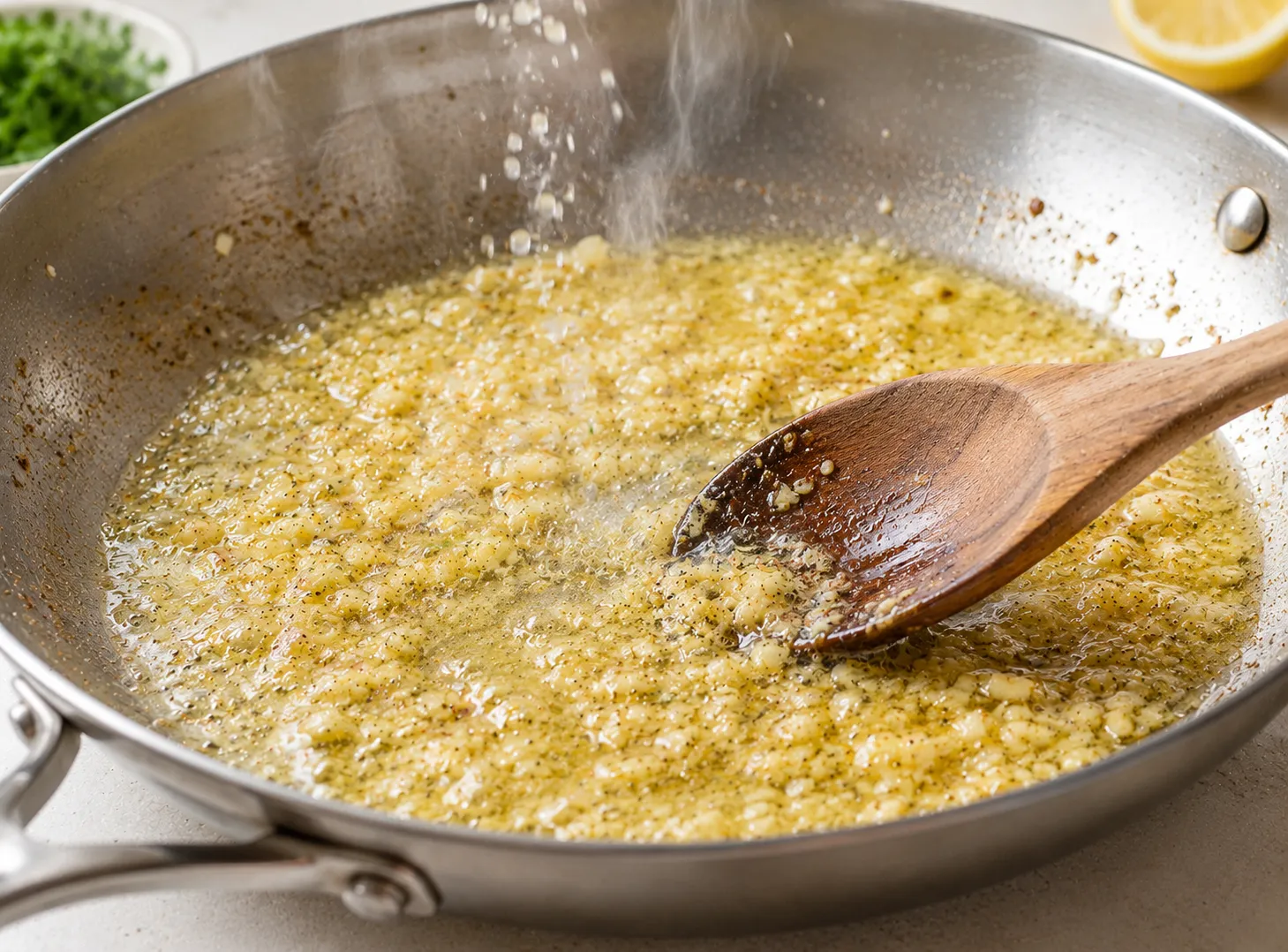
- Turn the heat down to medium. Add the butter to the same pan and let it melt. Add the minced garlic once the butter is melted.
- Stir the garlic constantly for 60 to 90 seconds. You want it golden, not brown. Burnt garlic turns bitter fast, so watch it closely.
- Pour in the lemon juice and add the red pepper flakes if using. Stir and let it cook for about 30 seconds. Scrape up any browned bits from the bottom as you go.
- Take the pan off the heat. Stir in the fresh parsley. Taste the sauce and add a pinch of salt if needed.
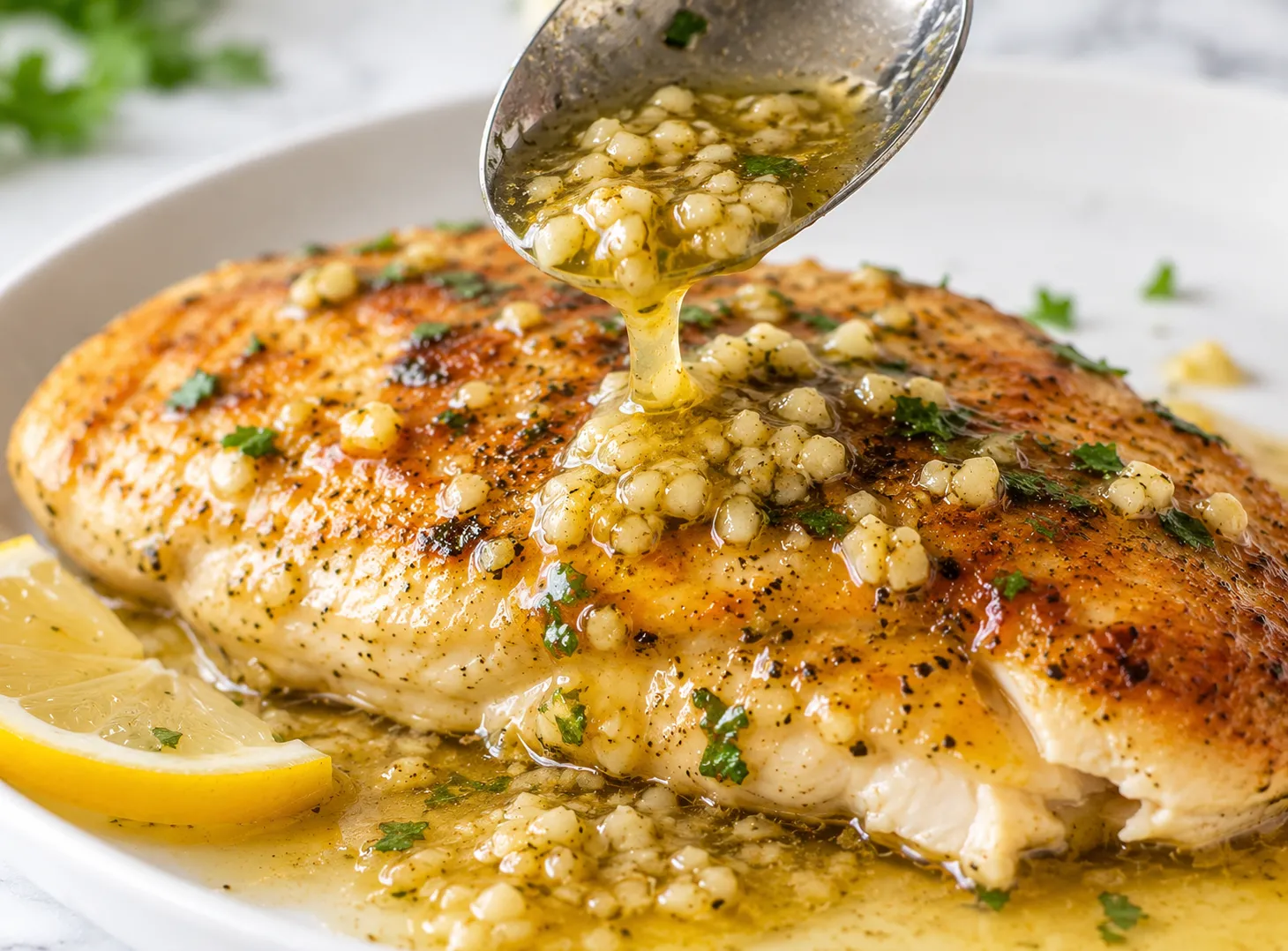
- Spoon the garlic butter sauce generously over the plated fillets. Add lemon slices and extra parsley if you like. Serve immediately.
- Skipping the drying step. Wet fish steams instead of searing and ends up pale and soft.
- Flipping too early. If you force the fillet before it is ready, it tears. Wait until it releases cleanly.
- Cooking too many fillets at once. Crowding drops the pan temperature and you get steam instead of a sear. Two batches beats one crowded pan.
- Cooking the garlic on high heat. It goes from golden to burnt in seconds and the whole sauce picks up a bitter taste.
- Leaving the fish in the pan too long. Tilapia is thin and cooks fast. Once it flakes, it is done. Another minute past that and it dries out.
- Using butter straight from the freezer or adding too much at once. It separates and the sauce looks greasy instead of silky.
- Using bottled lemon juice when you have fresh lemons nearby. The difference in the finished sauce is clear.
- Different fish: Cod, catfish, mahi-mahi, flounder, and snapper all work with the same method and similar cook times. Thicker cuts may need an extra minute or two per side.
- Dairy-free: Swap the butter for vegan butter or use a mix of olive oil and a small amount of coconut oil for richness.
- More heat: Add extra red pepper flakes or a pinch of cayenne to the seasoning mix before you cook the fish.
- Herb swaps: Fresh thyme, dill, or basil all work in place of parsley if that is what you have on hand.
- Creamy version: Stir one tablespoon of heavy cream into the sauce at the end before spooning it over the fish.
- Cajun seasoning: Replace the paprika, onion powder, and pepper with a ready-made Cajun blend for a different flavor profile without extra work.
- Baked version: Season the fillets, place them on a greased baking sheet, pour the prepared garlic butter sauce over the top, and bake at 400 degrees F for 12 to 15 minutes.
- Steamed white or brown rice to catch the extra garlic butter sauce
- Roasted asparagus, green beans, or broccolini
- Mashed potatoes or roasted baby potatoes
- A simple green salad with lemon vinaigrette
- Crusty bread for mopping up the sauce
- Buttered corn on the cob
- Cauliflower rice or roasted cauliflower for a lower carb option
- Couscous or quinoa for something a bit lighter
- Refrigerator: Store leftover tilapia in an airtight container for up to 3 days. Keep the sauce separate if possible so the fish does not get soggy.
- Freezer: Cooked tilapia freezes well for up to 2 months. Wrap each fillet tightly in plastic wrap and then place in a freezer bag.
- Reheating on the stovetop: Warm a small knob of butter or a splash of olive oil in a skillet over low heat. Add the fish, cover with a lid, and heat for 2 to 3 minutes per side.
- Reheating in the oven: Place fillets on a baking sheet, cover loosely with foil, and warm at 275 degrees F for about 10 to 12 minutes.
- Microwave: A last resort. Cover the fish with a damp paper towel and reheat in 30-second intervals on medium power. High heat makes it rubbery.
- Do not reheat tilapia more than once.
Yes, but thaw it completely in the refrigerator the night before. Once thawed, pat it very dry before seasoning or it will not sear properly and the texture will be off.
The fish turns from translucent to fully opaque white and flakes apart easily when pressed with a fork. The safe internal temperature is 145 degrees F if you want to check with a thermometer.
Yes. Make it up to 2 days in advance and keep it in the refrigerator. Reheat it gently in a small saucepan over low heat and stir before pouring. Do not boil it or the butter may separate.
It is lean, low in fat, and provides a solid amount of protein and B vitamins per serving. It is a reasonable choice for anyone looking for a lighter protein option, though it is lower in omega-3 fatty acids compared to fish like salmon or mackerel.
Yes. Season the fillets and place them on a greased baking sheet. Pour the garlic butter sauce over the top and bake at 400 degrees F for 12 to 15 minutes until the fish flakes easily.
The pan was either not hot enough when the fish went in, or the fish was flipped too early. Let it cook without touching it until it releases from the pan on its own. Forcing a flip too soon tears the fillet.
- Tilapia fillets vary in thickness. Thinner pieces may only need 2 minutes per side, so check early rather than going by time alone.
- If cooking for more than 4 people, work in batches and keep finished fillets warm in an oven set to 200 degrees F.
- The garlic butter sauce doubles easily. Make extra and store it in the fridge to drizzle over roasted vegetables or grains later in the week.
- Frozen tilapia is often significantly cheaper than fresh and tastes just as good when thawed and dried properly before cooking.
- A splash of white wine added to the pan after the garlic softens adds depth to the sauce. Let it reduce for about 30 seconds before adding the lemon juice.
- Finely minced garlic incorporates into the butter more evenly than coarsely chopped garlic.
A reliable garlic butter tilapia recipe is worth keeping in your back pocket. It is one of those meals that does not ask much from you, a handful of pantry ingredients, one pan, twenty minutes, and you have dinner done. The technique is simple enough to repeat without thinking, and it transfers to almost any mild white fish you pick up at the store. Once you are comfortable with the sear and the pan sauce, you can adjust the flavors in any direction without needing a new recipe. Get the basics right, keep the fish dry before it hits the pan, watch the garlic closely, and serve it hot. That is really all there is to it. A solid weeknight seafood dinner does not need to be complicated to be worth making again.