
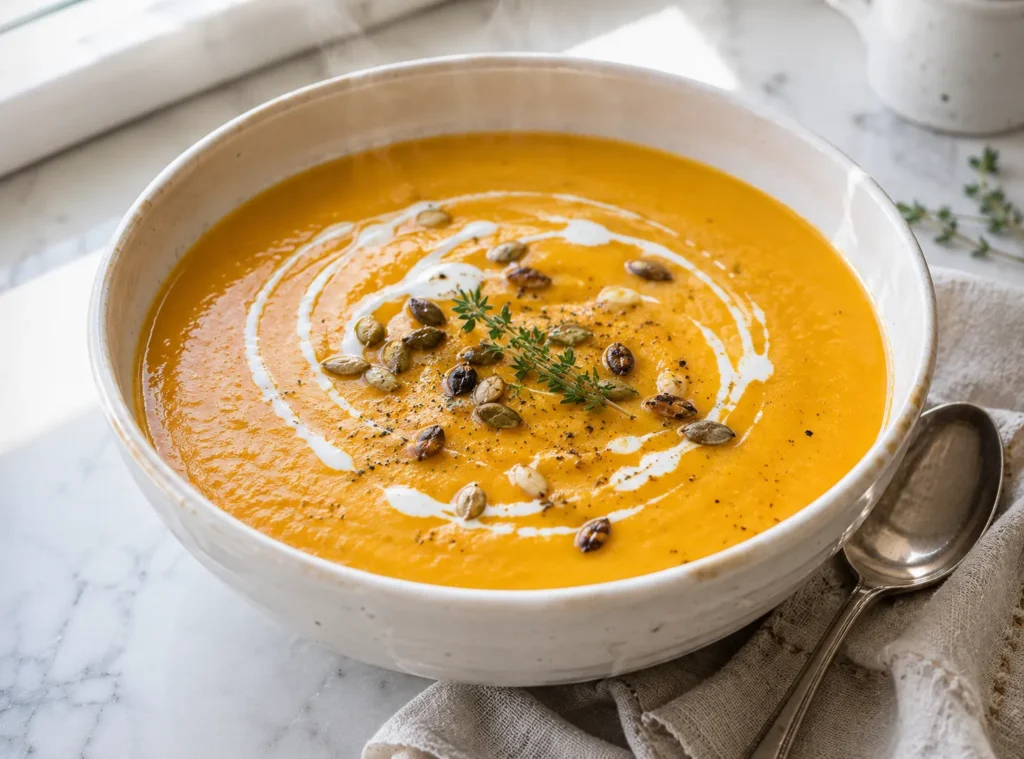
Butternut squash soup gets a real flavor boost once you roast the squash before it goes into the pot. That one step brings out a sweetness that boiling never quite reaches. This version blends roasted squash with sauteed onion, garlic, warm spices, and a small amount of cream for a smooth, cozy bowl that fits right into fall cooking. It comes together in about an hour, works for a weeknight dinner or a starter course, and freezes without losing its texture. Once you taste the roasted version, plain boiled squash soup starts to feel like a downgrade you never want to go back to.
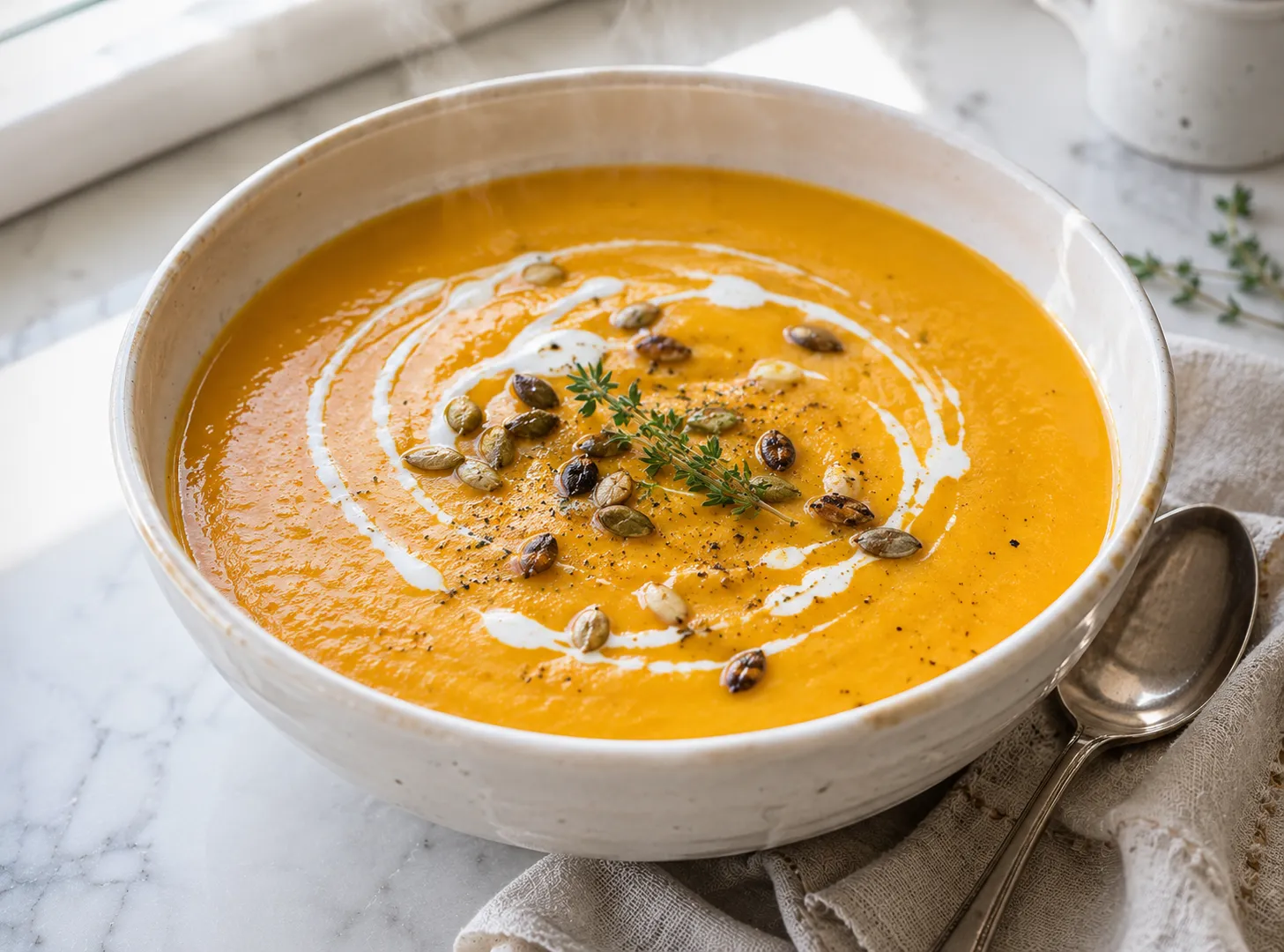
- 1 large butternut squash (about 3 pounds), peeled and cubed
- 2 tablespoons olive oil
- salt and pepper , To taste
- 1 tablespoon butter
- 1 medium yellow onion, chopped
- 3 cloves garlic, minced
- 4 cups vegetable or chicken stock
- 0.5 teaspoon ground nutmeg
- 0.25 teaspoon ground cinnamon
- 0.5 cup heavy cream , Or coconut milk for dairy free
- salt and black pepper , To taste
- toasted pumpkin seeds
- cream , A swirl on top
- fresh thyme leaves
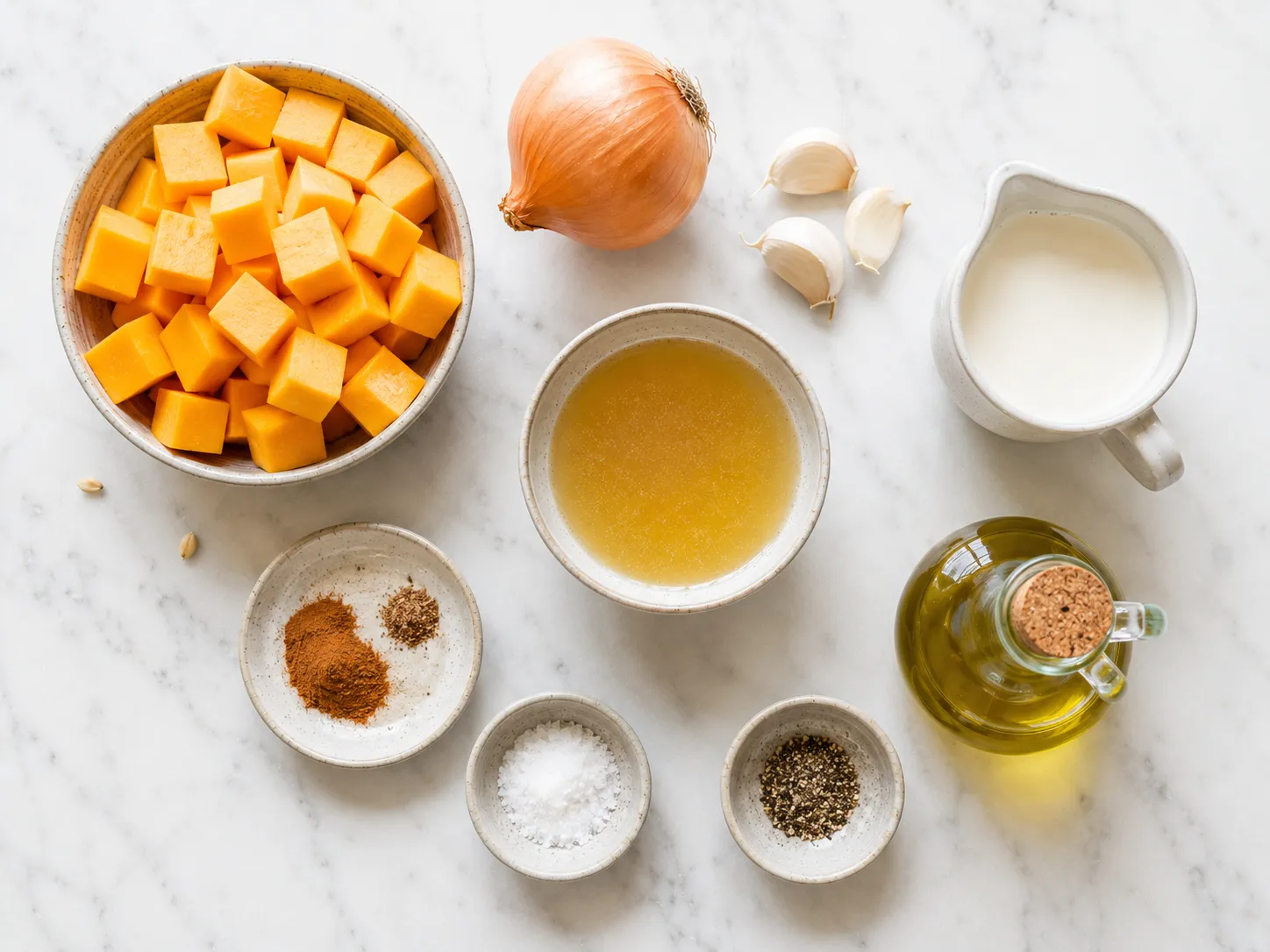
- Roast the squash until soft and caramelized at the edges.
- Saute the onion and garlic until fragrant.
- Simmer everything together with stock and warm spices.
- Blend until smooth.
- Stir in cream and adjust the seasoning.
- Preheat the oven to 400F (200C).
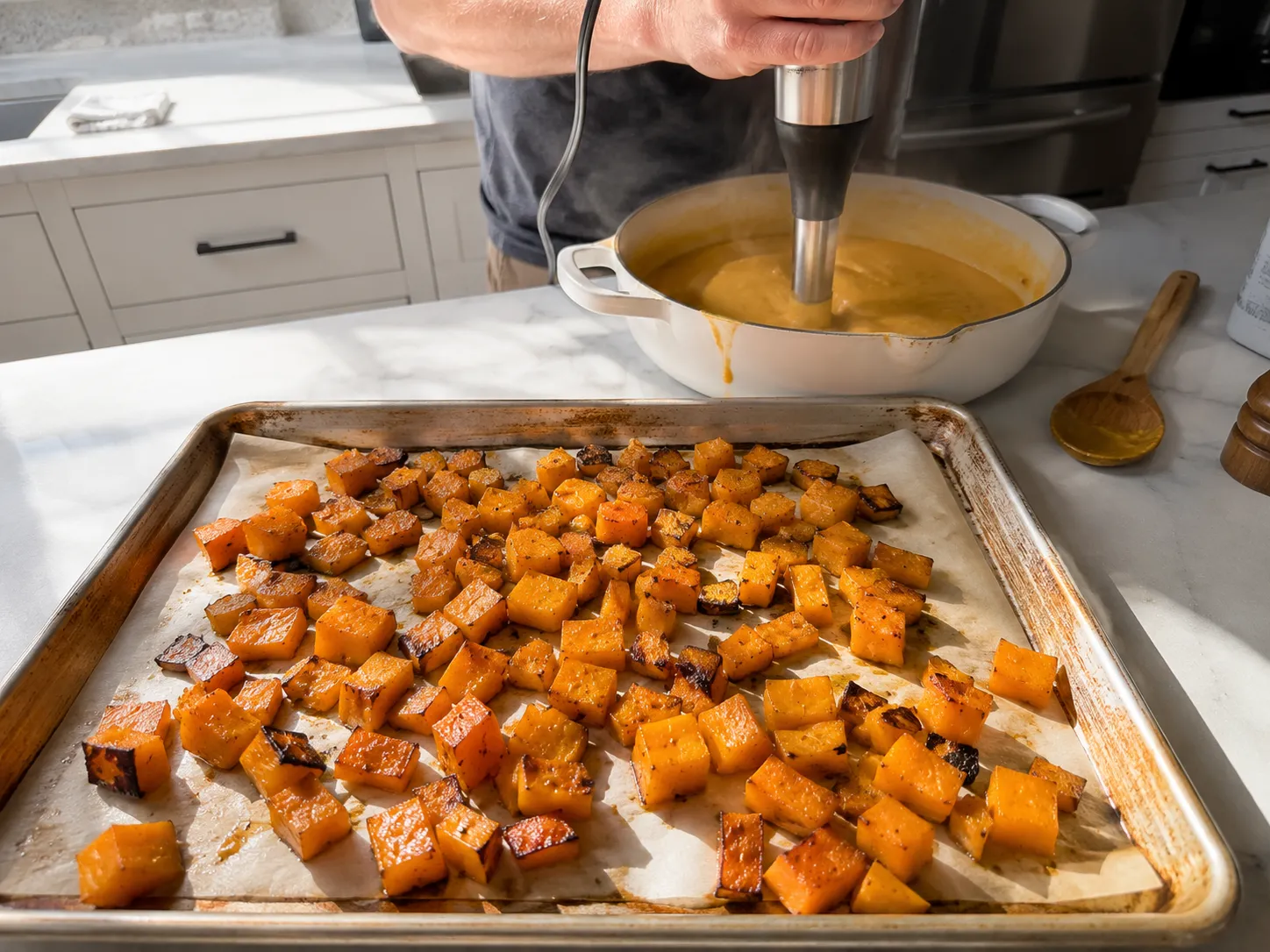
- Toss the cubed squash with olive oil, salt, and pepper on a baking sheet.
- Roast for 25 to 30 minutes, turning halfway, until the edges turn golden and the squash is soft enough to pierce with a fork.
- While the squash roasts, melt the butter in a large pot over medium heat.
- Add the chopped onion and cook for 5 minutes, stirring often, until it turns soft and see through.
- Add the garlic and cook for 30 seconds, just until it smells fragrant.
- Add the roasted squash to the pot along with the stock, nutmeg, and cinnamon.
- Bring the pot to a gentle boil, then lower the heat and simmer for 10 minutes.
- Remove from heat and blend until completely smooth. Use an immersion blender, or work in batches with a countertop blender.
- Return the soup to the pot over low heat and stir in the cream.
- Taste and adjust salt and pepper as needed.
- Let the soup rest for 5 minutes before serving so the flavors settle.
- Ladle into bowls and top with pumpkin seeds, a swirl of cream, or fresh thyme if you are using it.
- Roasting the squash first concentrates its natural sweetness and adds a slight caramelized flavor that boiling simply cannot give you.
- Cut the squash into even sized cubes so every piece roasts at the same rate.
- A powerful blender gets the smoothest texture. If you want it even silkier, strain the soup through a fine sieve.
- Add the cream off the heat, or over very low heat, so it does not curdle.
- Taste before you add more salt. Stock brands vary a lot in sodium, so start light.
- A small splash of apple cider vinegar at the end brightens the whole pot if the soup tastes a bit flat.
- Skipping the roasting step and boiling the squash instead, which leaves you with a thinner, less flavorful soup.
- Cutting the squash pieces unevenly, so some pieces burn while others stay hard.
- Adding cream while the soup is still boiling, which can cause it to separate.
- Blending hot soup in a sealed blender without venting the lid, which can build up pressure and cause a mess.
- Not seasoning the soup enough, since squash needs a fair amount of salt to taste balanced.
- Rushing through the simmer step, which does not give the spices enough time to work into the stock.
- Swap the heavy cream for coconut milk to make the soup dairy free.
- Add a diced apple or pear while roasting for extra natural sweetness.
- Stir in a spoonful of maple syrup if your squash is not very sweet on its own.
- Add a pinch of cayenne or smoked paprika if you want a subtle kick.
- Use pumpkin or sweet potato in place of butternut squash for a similar result.
- Add a splash of orange juice for a citrusy note that works nicely with the nutmeg.
- Crusty sourdough or a warm baguette
- Grilled cheese sandwich cut into strips for dipping
- A simple green salad with vinaigrette
- Crumbled goat cheese or feta on top
- Roasted chickpeas for a bit of crunch
- A glass of dry white wine on the side
- Store leftover soup in an airtight container in the fridge for up to 4 days.
- Freeze in individual portions for up to 3 months.
- Thaw overnight in the fridge before reheating.
- Reheat gently on the stovetop over low heat, stirring every so often.
- Add a splash of stock or water if the soup thickens too much after sitting in the fridge.
- Avoid boiling the soup hard when reheating, since it can change the texture of the cream.

Yes. It actually tastes even better the next day once the flavors have had time to settle.
Yes. The soup will be a bit thinner, but it still holds plenty of flavor without it.
Yes. The skin does not soften enough during roasting to blend in smoothly.
Yes. Just roast it a few minutes longer since it holds more moisture.
Yes, as long as the stock brand you use does not contain any gluten additives.
Yes. Roast the squash first, then add everything to the slow cooker and cook on low for 4 hours before blending.
- This soup thickens as it cools, so thin it with a little extra stock when reheating.
- A neutral tasting stock works best so the squash flavor stays front and center.
- Fresh nutmeg, if you happen to have it, makes a noticeable difference over the already ground kind.
- The soup can be made a day or two ahead, which makes it easier to plan around.
Butternut squash soup earns its place as a fall staple because it feels a bit special without asking much of you in return. The roasting step is really what separates a good bowl from a forgettable one, and once you notice that difference, it is hard to go back to skipping it. This recipe holds up well for meal prep, freezes without losing its texture, and adapts easily if you want to change up the spices or try a different squash altogether. It fits both a quiet weeknight dinner and a table full of guests, which is probably why it keeps showing up on fall menus every single year. Make a full batch, freeze half of it, and you will have a dependable dinner ready on the nights when cooking from scratch feels like too much to take on.