
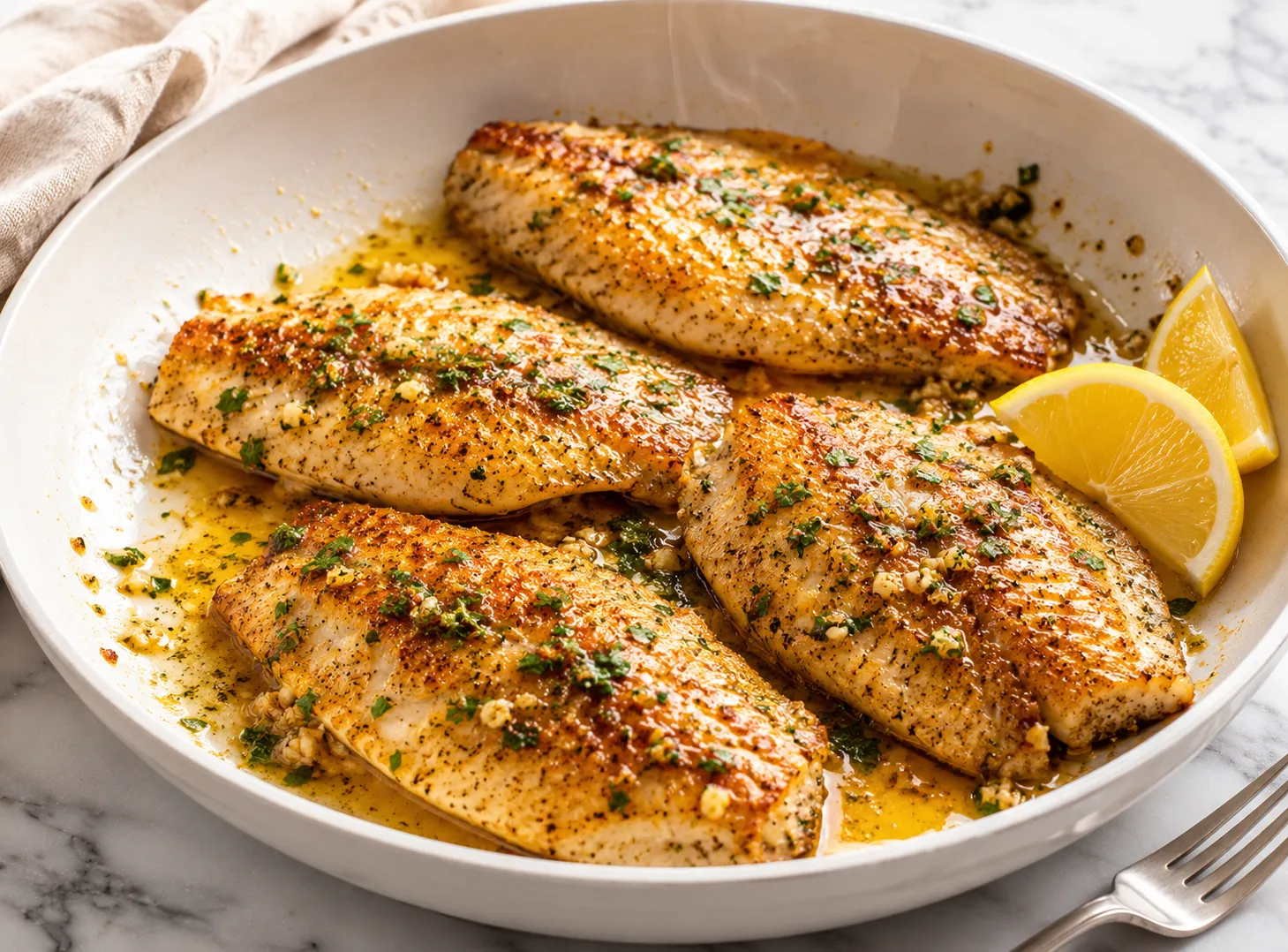
Garlic butter tilapia is one of those recipes that earns its place on a regular weeknight rotation. The fish is mild, affordable, and widely available year round. The sauce comes together in the same pan in under five minutes. You get flaky white fish with a golden sear, coated in a garlicky, buttery pan sauce with a hit of lemon. No fancy technique, no expensive ingredients. If you are cooking for a family or just need a solid seafood dinner on a budget, this garlic butter tilapia recipe delivers without any stress.
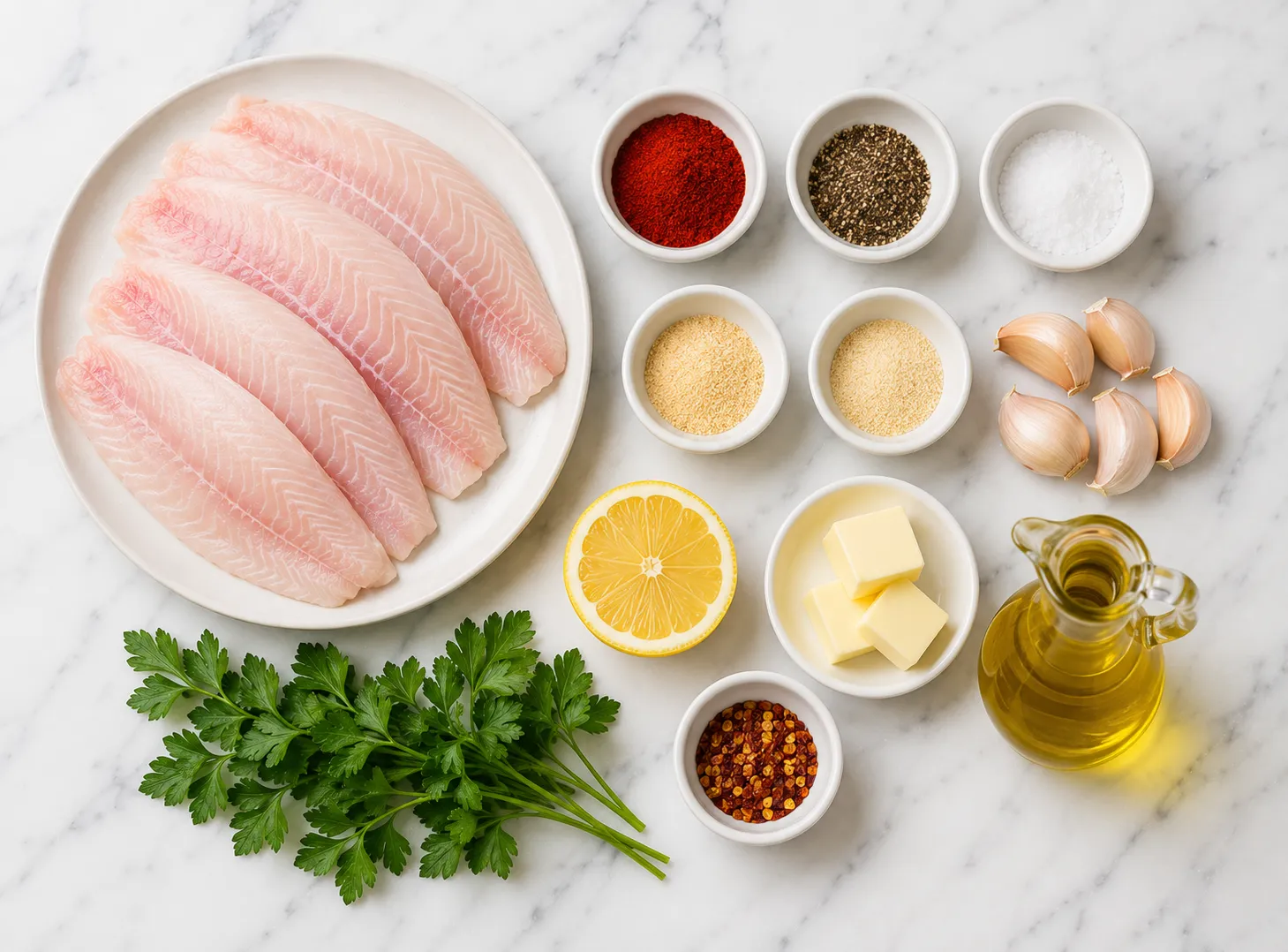
- 4 tilapia fillets , About 6 oz each. Fresh or fully thawed if frozen.
- 0.5 teaspoon salt
- 0.5 teaspoon black pepper
- 0.5 teaspoon paprika , Sweet paprika works well here.
- 0.25 teaspoon garlic powder
- 0.25 teaspoon onion powder
- 2 tablespoons olive oil
- 3 tablespoons unsalted butter , Unsalted gives you control over the final salt level.
- 5 cloves garlic, minced , Fresh garlic only. Pre-minced jarred garlic does not perform the same way.
- 2 tablespoons fresh lemon juice , From about half a lemon.
- 0.25 teaspoon red pepper flakes , Optional. Leave out if you prefer no heat.
- 2 tablespoons fresh parsley, chopped
- salt to taste
- lemon wedges
- extra chopped parsley
- Large skillet or non-stick pan, 12-inch recommended
- Fish spatula or wide flat spatula
- Small bowl for the spice blend
- Measuring spoons
- Paper towels
- Cutting board
- Chef's knife
- Garlic press or microplane (optional)
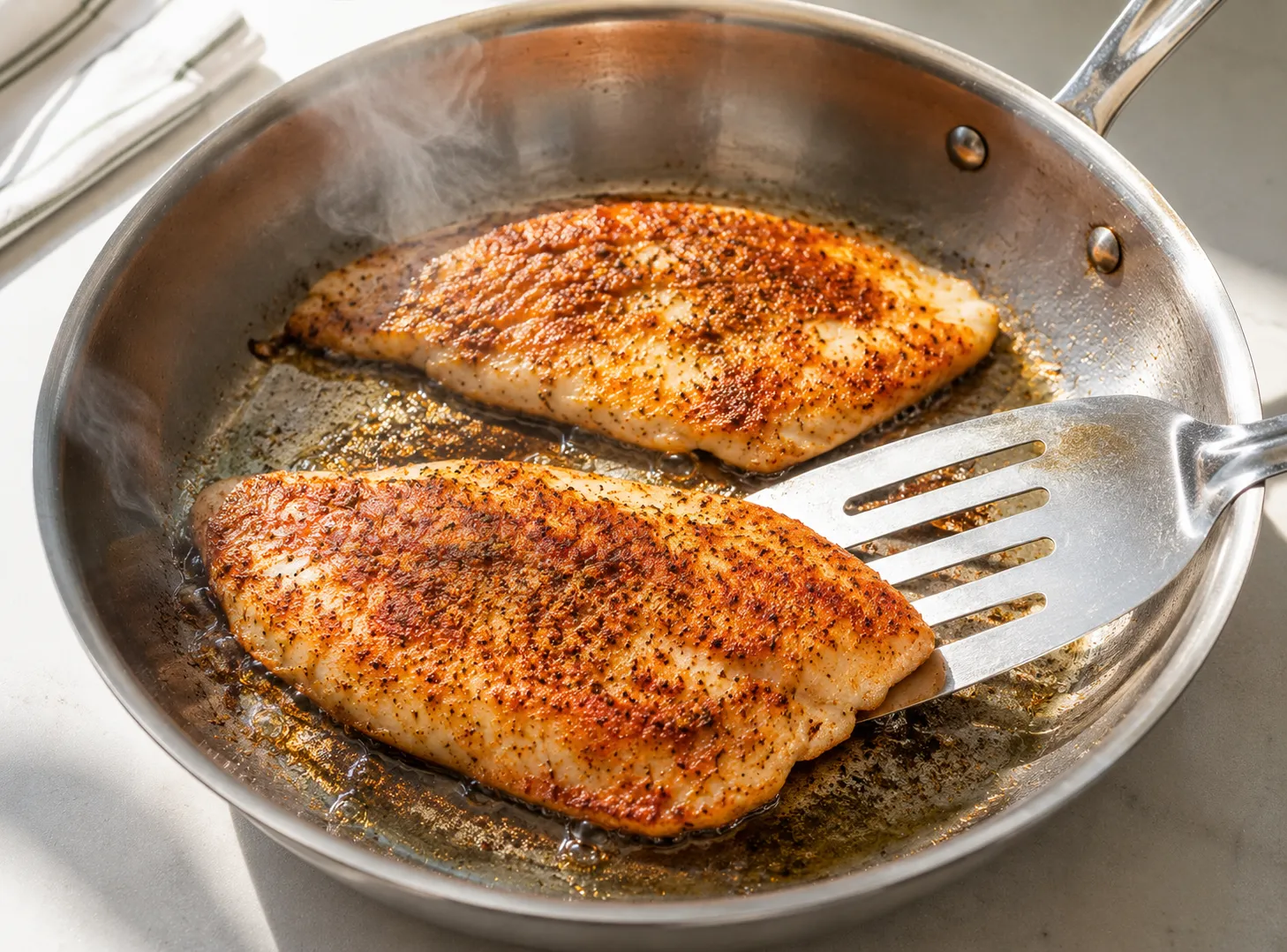
- Pat the fillets dry and coat with the spice blend.
- Sear in hot oil without moving until golden, about 3 to 4 minutes per side.
- Set the fish aside and build the garlic butter sauce in the same pan.
- Spoon the sauce over the fillets, finish with lemon juice and parsley.
- Rest for 2 minutes before serving.
- Take the tilapia fillets out of the refrigerator about 5 minutes before cooking. Pat each one completely dry with paper towels on both sides. Do not skip this step. Any moisture left on the surface will steam the fish instead of searing it.
- Mix the salt, black pepper, paprika, garlic powder, and onion powder together in a small bowl. Season both sides of each fillet evenly with the spice blend.
- Set a large skillet over medium-high heat. Pour in the olive oil and let it heat until it shimmers, about 1 to 2 minutes.
- Place the fillets into the pan in a single layer. If your pan is not large enough, cook in two batches. Crowding drops the heat and you lose the sear.
- Leave the fish alone for 3 to 4 minutes. You will see the edges turn from translucent to opaque white as it cooks from the bottom up. When the edges are about halfway up the fillet, it is ready to flip.
- Flip the fillets gently using a fish spatula. If they stick, wait 30 more seconds. The crust releases on its own when it is ready.
- Cook the second side for 2 to 3 minutes until the fish flakes easily when pressed with a fork. Transfer all fillets to a plate and cover loosely with foil.
- Turn the heat down to medium. Add the butter to the same pan and let it melt completely.
- Add the minced garlic. Stir and cook for 60 to 90 seconds until the garlic smells fragrant. Keep your eye on it. Garlic burns fast and bitter garlic ruins the sauce.
- Add the lemon juice and red pepper flakes if using. Stir everything together and let it cook for another 30 seconds.
- Taste the sauce and add salt if needed.
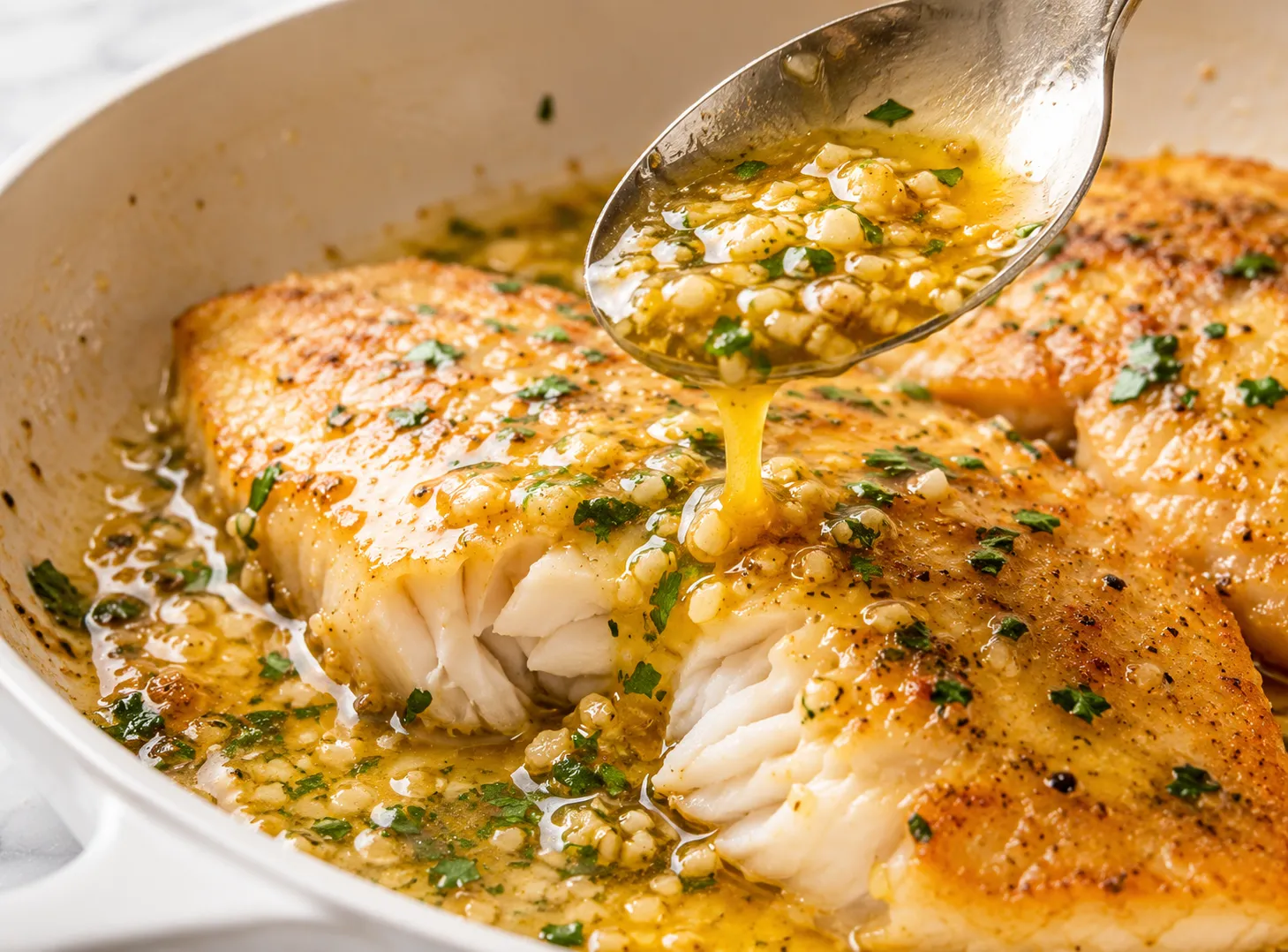
- Return the tilapia to the pan. Spoon the garlic butter sauce over each fillet for about 30 seconds so the fish soaks it up.
- Remove from heat. Scatter the parsley over the top. Let the fish rest for 2 minutes before plating. Serve with lemon wedges on the side.
- Dry the fillets thoroughly before seasoning. Wet fish steams and turns rubbery instead of building a crust.
- Let the oil come to temperature before the fish goes in. You should see it shimmer slightly. This is what creates the sear and prevents sticking.
- Once the fillets are in the pan, leave them alone. Moving fish too early breaks the crust before it forms.
- Use fresh garlic for the sauce. Pre-minced garlic from a jar loses a lot of its punch and does not brown as cleanly.
- Unsalted butter keeps you in control of the final salt level. Taste before adjusting.
- If your fillets are very uneven in thickness, fold the thin tail end under itself. It evens out the cooking and prevents the thin part from drying out while the thick part finishes.
- Cook in batches if you have more than two fillets. A crowded pan lowers the temperature and the fish ends up steaming instead of searing.
- Squeeze the fresh lemon over the finished plate rather than into the sauce while it cooks. The flavor stays brighter.
- Skipping the paper towel step. This is the single most common reason tilapia turns out soggy instead of golden.
- Using low heat. Tilapia needs real heat to build a proper sear. Medium-high is the right starting point.
- Overcooking the fish. Tilapia goes from perfectly flaky to dry and chalky in under a minute. Pull it the moment it flakes.
- Burning the garlic. Keep the heat at medium when you add the garlic to the butter. It only needs 60 to 90 seconds. Go past that and it tastes bitter.
- Flipping before the crust is ready. If the fish sticks when you try to flip it, it is not ready. Give it another 30 seconds and try again.
- Using salted butter without adjusting your seasoning. Always taste the sauce before adding more salt.
- Cooking tilapia straight from frozen. Thaw it completely first. Frozen fish releases too much water and the pan temperature drops.
- Different fish: Cod, flounder, catfish, and sole all work with the same technique and the same sauce. Adjust cook time based on thickness.
- Dairy-free: Use a good vegan butter or swap in extra olive oil. The sauce will be lighter but still works.
- Spicier version: Add half a teaspoon of cayenne to the spice blend and double the red pepper flakes in the sauce.
- Herb swaps: Dill and thyme both pair naturally with white fish. Use either one in place of parsley or combine all three.
- Wine instead of lemon: A small splash of dry white wine in place of lemon juice gives the sauce a richer, more savory note.
- Blackened style: Double the paprika and add a quarter teaspoon each of dried oregano and thyme to the spice blend. Cook on higher heat for a charred, spiced crust.
- Oven version: Season the fillets and bake at 400 F for 12 to 14 minutes, then pour the warm garlic butter sauce over the top before serving.
- Capers: Stir a tablespoon of capers into the butter sauce for a briny, Italian-leaning variation.
- Refrigerator: Store leftover cooked tilapia in an airtight container for up to 3 days.
- Freezer: Wrap each fillet individually and place in a freezer bag. Keeps for up to 1 month.
- Reheating in a skillet: Warm over low heat with a small pat of butter and a tablespoon of water or broth. Cover with a lid for 2 to 3 minutes.
- Reheating in the oven: Place in a covered baking dish at 275 F for 10 to 12 minutes.
- Microwave: Use only as a last resort. Heat in 30-second intervals on medium power to avoid drying out the fish.
- Do not reheat more than once. The texture breaks down noticeably after a second round of heat.
Yes, but thaw it completely first. Run it under cold water to speed things up if needed. Once thawed, pat it very dry before seasoning. Cooking from frozen leads to uneven doneness and too much water in the pan.
The flesh shifts from translucent to opaque white all the way through. Press the thickest part with a fork. It should flake apart with light pressure. If you have a thermometer, the internal temperature should read 145 F.
You can melt the butter with the garlic up to an hour before and hold it warm on low heat. Add the lemon juice and parsley just before spooning it over the fish.
The pan was either not hot enough, or the fish was not ready. A proper sear creates a crust that releases cleanly from the pan on its own. If it sticks, give it another 30 seconds and try again.
You can, but the flavor will be noticeably milder. Fresh garlic is what gives the sauce its depth. If you do substitute, use half a teaspoon of garlic powder stirred into the melted butter.
Tilapia is a lean, low-calorie source of protein. It is lower in fat than salmon but still solid nutritionally. The main calories in this recipe come from the olive oil and butter, so it is easy to adjust if you want a lighter version.
- Tilapia fillets vary in thickness. Thicker pieces need closer to 4 to 5 minutes per side. Thin fillets may only need 2 to 3 minutes. Watch the edges, not the clock.
- Fresh lemon juice is worth using here. Bottled juice works in a pinch but the brightness drops off.
- If you are cooking for two, use 2 fillets and halve the sauce. The spice blend recipe stores well in a sealed jar for future use.
- A cast iron skillet gives you an excellent crust. Non-stick pans are more forgiving if you are newer to cooking fish.
- The garlic butter sauce from this recipe works just as well on shrimp, salmon, and even chicken cutlets if you want to vary the protein.
- If you buy tilapia in bulk, freeze the raw fillets individually on a parchment-lined sheet tray first, then transfer to freezer bags. This stops them from freezing in a solid block.
Garlic butter tilapia is one of the most practical seafood recipes you can keep in your back pocket. The fish is inexpensive, cooks in under 10 minutes, and pairs with almost any side you already have on hand. The garlic butter sauce is the kind of thing that makes a simple weeknight dinner actually taste like something worth sitting down for. Once you get the technique down, meaning a dry fillet, a hot pan, and garlic that does not burn, the results are consistent every time. Keep this garlic butter tilapia recipe saved. You will come back to it more than you expect.