
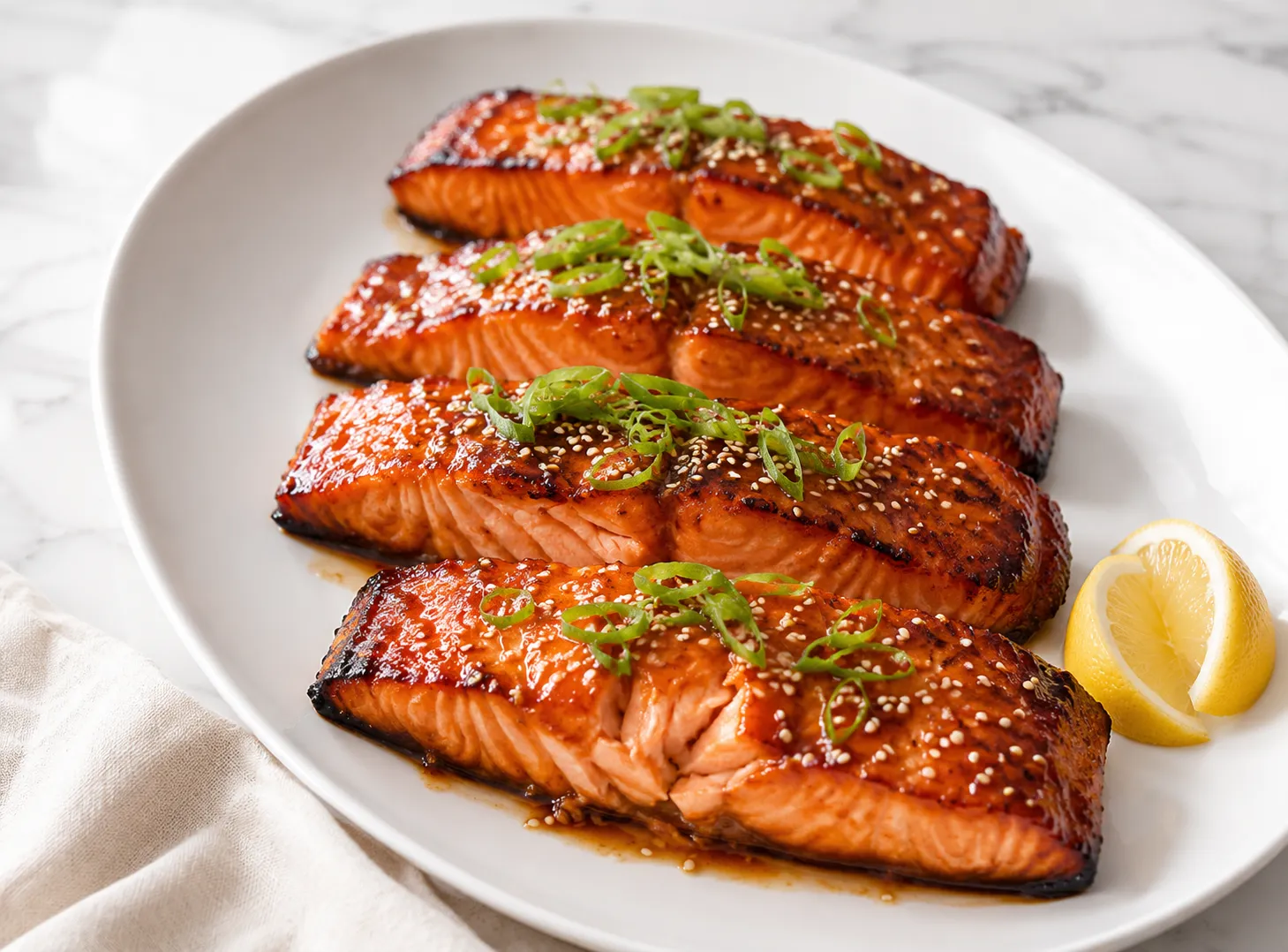
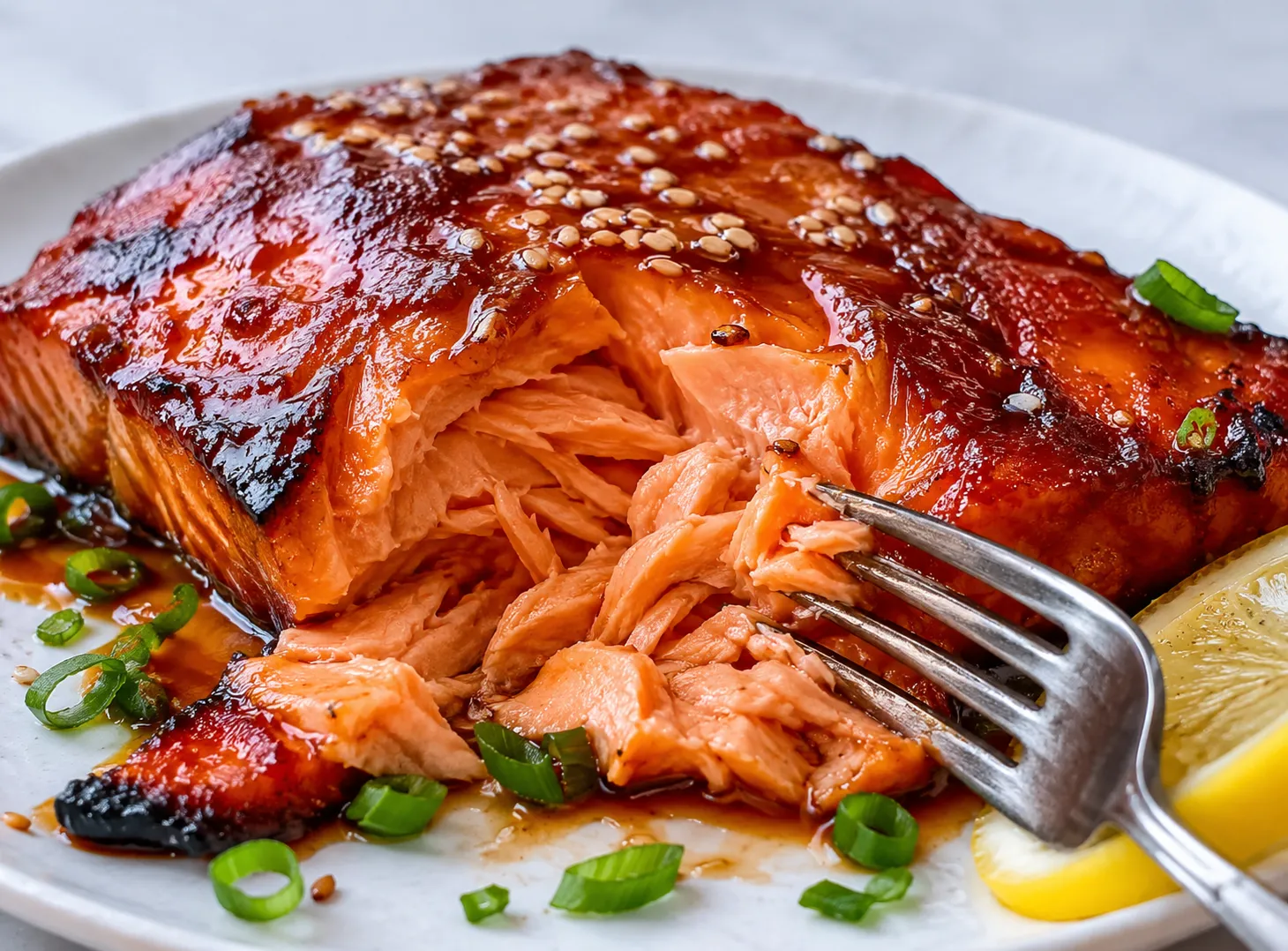
Miso glazed salmon is one of those weeknight recipes that punches way above its effort level. The glaze takes five minutes to mix, the cook time is under fifteen minutes, and the result is tender, flaky salmon with a caramelized crust that tastes like something from a Japanese restaurant. White miso brings a deep, fermented saltiness. Honey balances it with just enough sweetness. A little ginger and garlic round everything out. No specialty equipment, no long ingredient list, and no complicated technique. If you have never worked with miso before, this miso glazed salmon recipe is the best place to start.
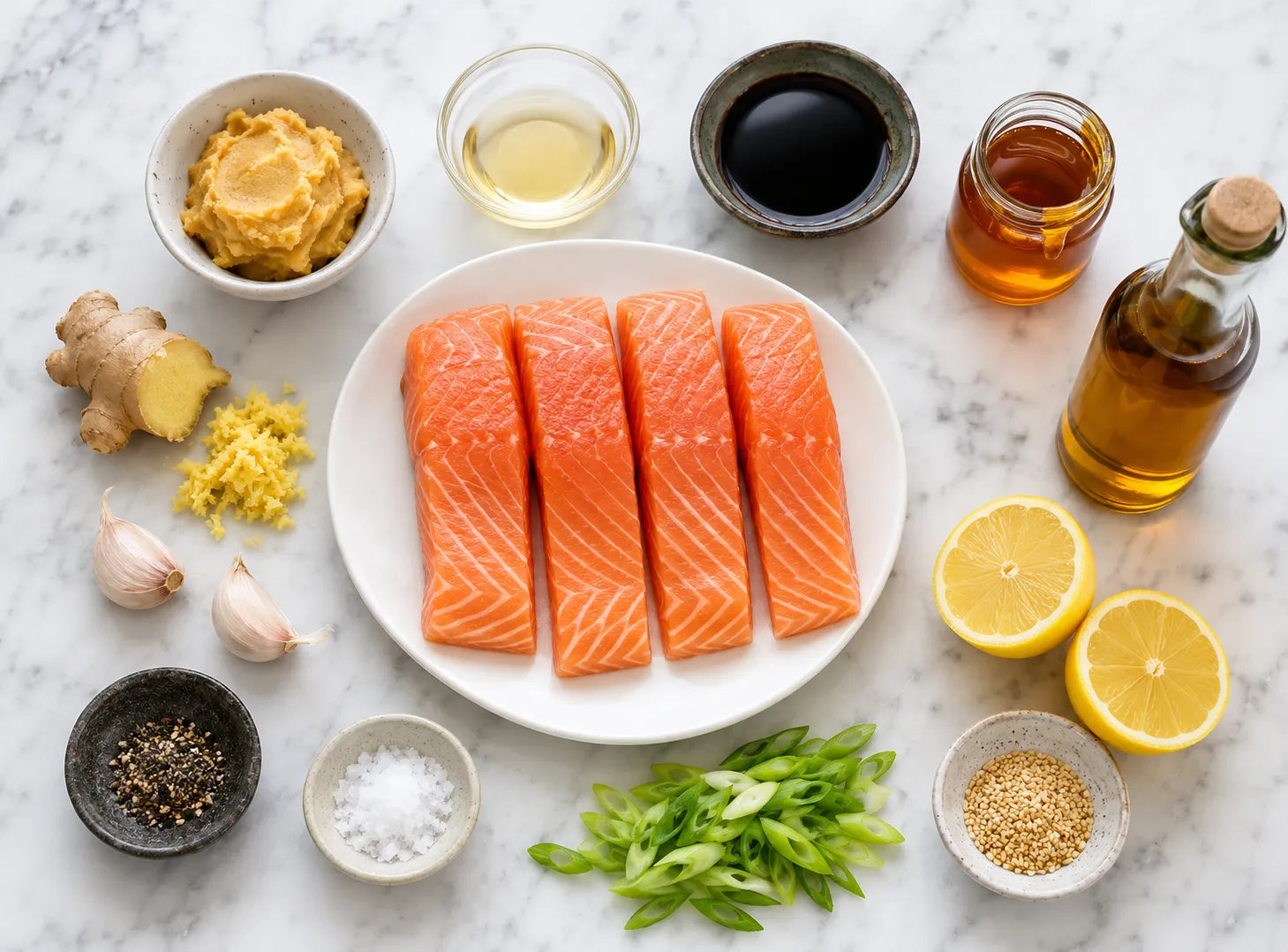
- 4 salmon fillets, 6 oz each , Skin-on or skinless both work. Center-cut fillets cook more evenly than tail pieces.
- 0.5 teaspoon salt
- 0.25 teaspoon black pepper
- 1 teaspoon neutral oil , Avocado or vegetable oil. Avoid olive oil as it smokes at high heat.
- 3 tablespoons white miso paste , White miso is milder and sweeter than red. Do not substitute red miso without reducing the quantity.
- 2 tablespoons mirin , Adds sweetness and gloss. Substitute dry sherry plus a half teaspoon of honey if unavailable.
- 1 tablespoon soy sauce , Use coconut aminos for a soy-free version.
- 1 tablespoon honey , Brown sugar or maple syrup works equally well in the same quantity.
- 1 teaspoon sesame oil , Toasted sesame oil adds the most flavor. Add it at the end of mixing, not during cooking.
- 1 teaspoon fresh ginger, grated , Fresh ginger gives a cleaner, brighter flavor than ground. Do not substitute ground ginger in equal amounts.
- 1 garlic clove, minced
- sesame seeds , As needed.
- green onion, thinly sliced , As needed.
- lemon wedges , As needed.
- Oven-safe skillet or cast iron pan
- Small mixing bowl
- Whisk or fork
- Basting brush or spoon
- Fish spatula or tongs
- Measuring spoons
- Paper towels
- Aluminum foil (optional, for cleanup)
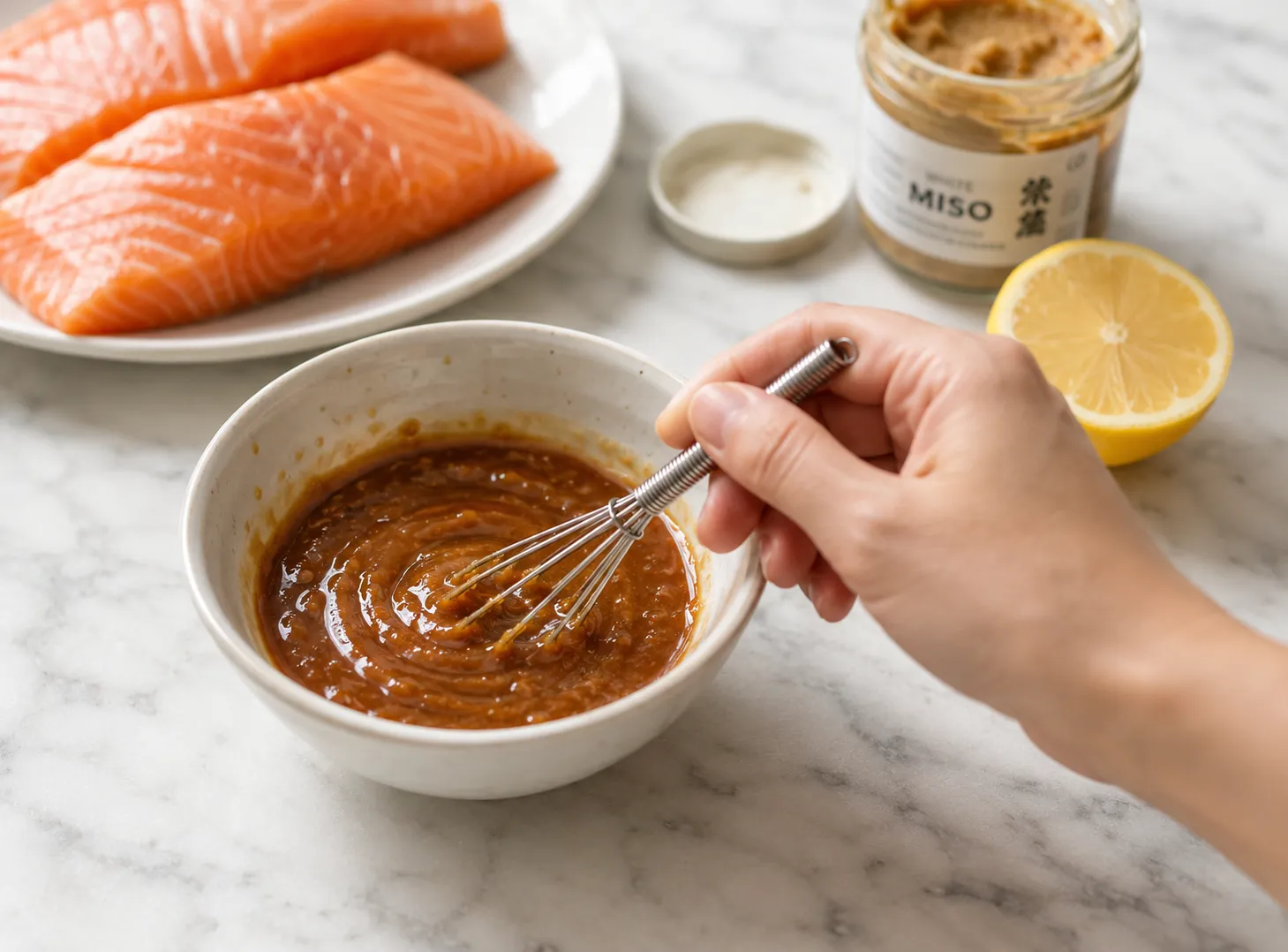
- Mix together all the miso glaze ingredients in a small bowl and set aside.
- Pat the salmon fillets completely dry with paper towels. Season with salt and pepper.
- Coat the top of each fillet with a thin, even layer of miso glaze.
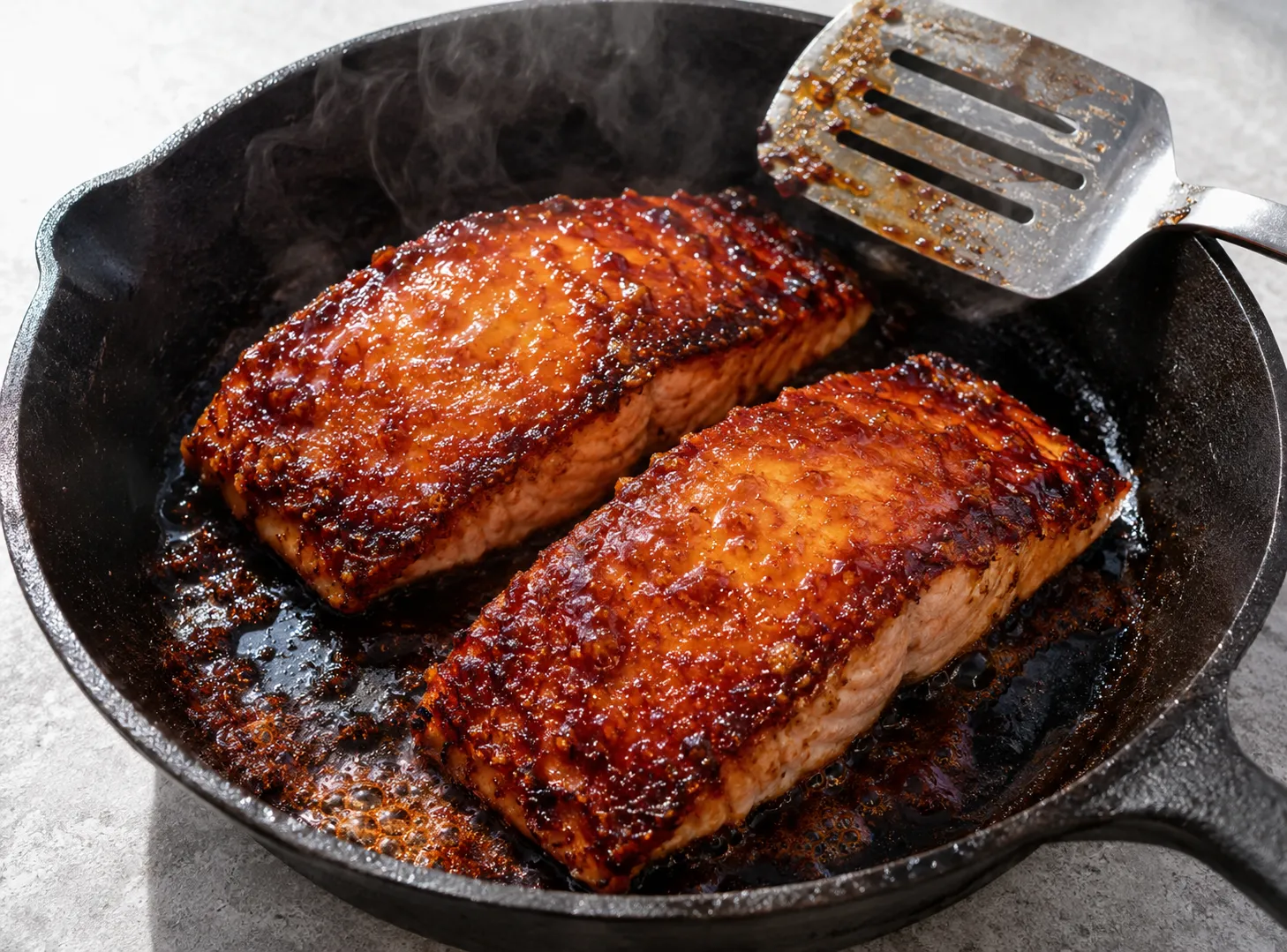
- Sear the salmon glaze-side down in a hot oiled skillet for 2 to 3 minutes.
- Flip, brush with remaining glaze, and broil for 5 to 7 minutes until the top is caramelized.
- Rest for 4 to 5 minutes before serving.
- Preheat your oven broiler to high. Set the rack about 6 inches from the heat element.
- In a small bowl, whisk together the white miso paste, mirin, soy sauce, honey, sesame oil, grated ginger, and minced garlic. Stir until fully combined and smooth. Set aside.
- Take the salmon fillets out of the fridge and let them sit at room temperature for 10 minutes. Cold fish goes into the pan unevenly.
- Pat each fillet dry with paper towels on both sides. Wet fish steams instead of searing.
- Season the fillets lightly with salt and pepper.
- Spoon or brush a thin, even layer of miso glaze over the top of each fillet. Keep a small amount of glaze back for basting after the flip.
- Pour the oil into an oven-safe skillet and heat over medium-high until it just starts to shimmer.
- Place the salmon fillets into the pan glaze-side down. Press them gently so full contact is made with the pan.
- Let them sear without touching for 2 to 3 minutes. You want the glaze to caramelize and release naturally from the pan.
- Flip each fillet carefully using a fish spatula. Apply the reserved miso glaze to the top of each fillet.
- Move the skillet directly into the oven under the broiler.
- Broil for 5 to 7 minutes. Watch the pan during the last 2 minutes. The sugar in the glaze can burn quickly under a broiler.
- The salmon is done when it flakes easily at the thickest part with a fork. Internal temperature should read 125 to 130 degrees F for medium, or 145 degrees F for fully cooked.
- Take the skillet out of the oven and let the salmon rest in the pan for 4 to 5 minutes before plating.
- Garnish with sesame seeds, sliced green onion, and a lemon wedge if using. Serve immediately.
- Use white miso, not red. Red miso is saltier and more intense. It can easily take over the flavor of the fish, especially with a shorter cook time.
- Dry the salmon well before glazing. A dry surface is what gets you a proper sear. Moisture underneath the glaze creates steam, not crust.
- Do not move the salmon once it hits the pan. Let the glaze caramelize and the fish release on its own before you flip.
- Keep the glaze layer thin and even. A thick coat sounds better but it burns before the inside of the fish finishes cooking.
- A cast iron skillet handles the broiler heat better than most pans and gives a more even sear.
- For deeper flavor without extra work, marinate the coated fillets in the fridge for 1 to 2 hours before cooking. Do not go beyond 2 hours. Miso is salty and extended contact starts breaking down the texture of the fish.
- Watch the broiler closely in the final 2 minutes. That caramelized finish is worth it, but it crosses into burnt fast.
- Cooking salmon straight from the fridge. Cold fillets cook unevenly, leaving the outside overdone before the center catches up. A 10-minute rest at room temperature makes a real difference.
- Skipping the dry step. Patting the fish dry is not optional. Wet fish gives you a steamed texture and the glaze will not stick properly.
- Using too much glaze. More glaze does not mean more flavor here. A thin, even coat is all you need. Excess burns under the broiler before the fish is done.
- Moving the salmon too early during the sear. If it sticks when you try to flip, it is not ready. Give it another 30 to 60 seconds.
- Using a pan that is not oven-safe. Moving partially cooked salmon from a skillet to a baking sheet breaks the fillet apart. Start with a pan that can go from stove to oven.
- Broiling without watching. Miso and honey both contain sugar. Under direct broiler heat, the glaze can go from beautifully caramelized to burnt in under a minute.
- No mirin available: Use dry sherry or mix one tablespoon of rice vinegar with half a teaspoon of extra honey. The flavor is slightly different but still works well.
- Prefer it spicier: Add one teaspoon of sriracha or a pinch of red pepper flakes directly into the glaze.
- Soy-free version: Substitute coconut aminos in the same quantity as the soy sauce.
- Different protein: The glaze works equally well on cod, black cod (sablefish), halibut, or firm tofu for a plant-based meal.
- Want it sweeter: Increase honey to two tablespoons and reduce soy sauce to two teaspoons.
- Grill instead of broil: Preheat the grill to medium heat. Brush the glaze on during the last 3 to 4 minutes only. Applying it earlier will cause it to burn before the fish is done.
- Air fryer method: Air fry at 400 degrees F for 8 to 10 minutes. Brush on the glaze halfway through cooking.
- Steamed jasmine rice or short-grain white rice
- Soba noodles with sesame oil and a small splash of soy sauce
- Roasted broccoli or broccolini with garlic
- Simple cucumber salad with rice vinegar and sesame seeds
- Stir-fried bok choy with fresh ginger
- Edamame with flaky sea salt
- Miso soup to round out a full Japanese-style meal
- Pickled ginger on the side to cut through the richness of the glaze
Yes. Mix the glaze up to 5 days in advance and store it in a sealed jar in the refrigerator. Give it a quick stir before using.
Yes, but thaw it completely in the fridge overnight first. After thawing, pat the fillets very dry before glazing. Frozen fish holds more water and you need that moisture gone before it hits the pan.
Miso paste is a fermented soybean paste used widely in Japanese cooking. White miso is the mildest variety. You can find it in the refrigerated section of Asian grocery stores and in many regular supermarkets near the produce or specialty foods area.
Sear the salmon in any skillet, then use a wide spatula to transfer the fillets onto a foil-lined baking sheet before broiling. Move carefully to keep the fillets intact.
The flesh should flake easily at the thickest point when pressed with a fork and look opaque throughout. If you use a thermometer, 130 degrees F is medium doneness. 145 degrees F is fully cooked through.
It is better to keep the marinade time to 2 hours maximum. Miso contains a significant amount of salt, and longer contact begins to cure the surface of the fish, which changes the texture after cooking.
- White miso paste is sold in the refrigerated section of most Asian grocery stores and many mainstream supermarkets. It is the same miso used for miso soup.
- Mirin is a sweet Japanese rice wine found in the Asian foods aisle. If you cannot find it, the substitution in the variations section works fine.
- Skin-on fillets hold together better during the sear and the skin peels off cleanly after cooking if you prefer not to eat it.
- Center-cut fillets are more uniform in thickness and cook evenly. Tail pieces taper toward one end and tend to overcook there before the rest is done.
- The glaze recipe in this miso glazed salmon recipe makes enough for 4 fillets with a small amount left over for basting after the flip.
- If you are using a gas broiler, leave the oven door slightly ajar. Gas broilers cycle off when the oven gets too hot, and a closed door speeds that up.
- For a richer glaze, stir in one teaspoon of toasted sesame paste or tahini when mixing the other glaze ingredients.
Once you make this miso glazed salmon recipe a couple of times, it becomes one of those dinners you stop thinking about and just cook. The glaze takes five minutes to put together, the whole meal is on the table in under thirty minutes, and the result is consistently good without requiring much attention. Miso is worth keeping in your fridge for exactly this reason. It adds depth to a dish in a way that salt and soy sauce alone cannot replicate. If your fillets are different sizes week to week, just adjust the broil time slightly and use the fork test to check for doneness. The recipe holds up across all those small variables, which is what makes it worth coming back to.