
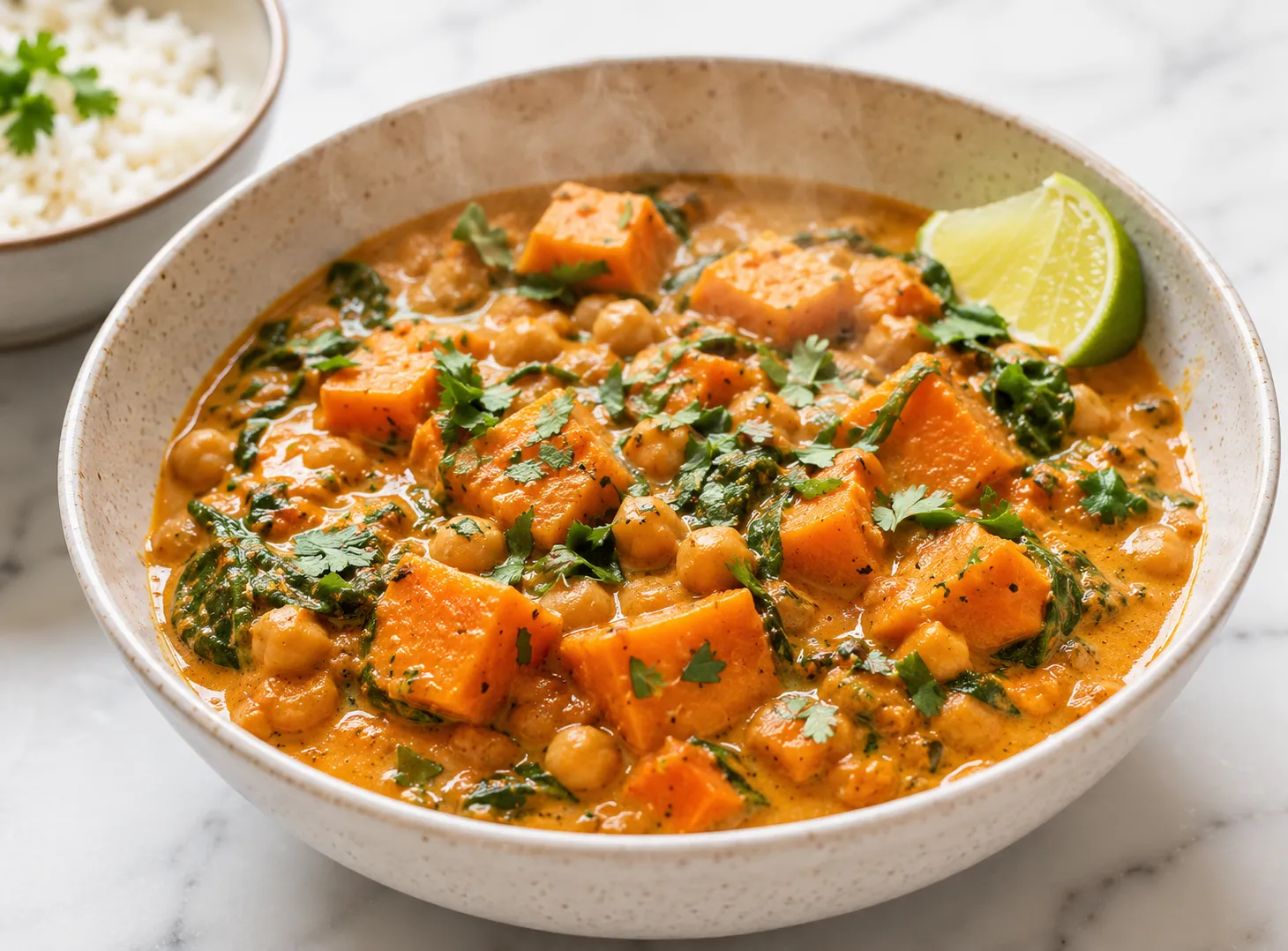
Sweet potato curry is the dinner you reach for when you want something warm and filling without turning the kitchen upside down. Cubes of sweet potato go soft and almost buttery once they simmer in coconut milk, chickpeas bring protein and a bit of bite, and a mix of curry spices builds gentle heat in the background rather than taking over the whole pot. Everything cooks together in one pan, uses pantry staples most people already have, and tastes even better the next day once the spices settle into the sauce. This version stays mild on purpose, which makes it easy to serve to a mixed table, including people who do not eat meat or who are cooking for kids. Spoon it over rice, add a piece of warm bread on the side, and dinner is done in well under an hour, with very little cleanup after.
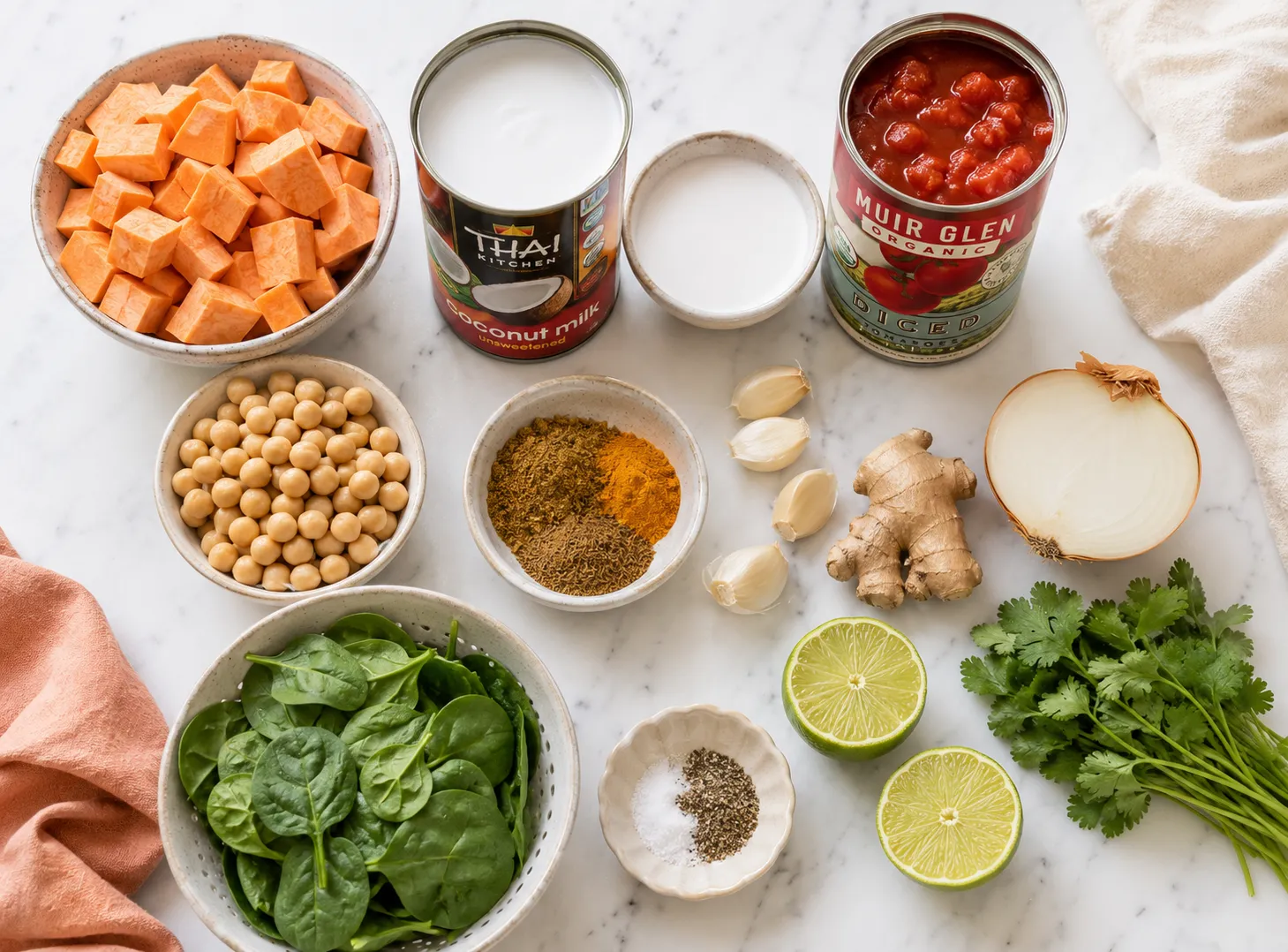
- 2 tablespoons coconut oil , A neutral oil works too if that is what you have.
- 1 medium onion, diced
- 3 cloves garlic, minced
- 1 tablespoon fresh ginger, grated
- 2 tablespoons curry powder
- 1 teaspoon ground cumin
- 0.5 teaspoon turmeric
- 0.25 teaspoon cayenne pepper , Optional. Leave it out for a milder curry.
- 2 large sweet potatoes, peeled and cubed
- 14 oz can coconut milk , Full fat gives the creamiest sauce.
- 14 oz can diced tomatoes
- 1 cup vegetable broth
- 15 oz can chickpeas, drained and rinsed
- 2 cups baby spinach
- salt , To taste.
- 0.5 lime, juiced
- fresh cilantro, chopped , For garnish.
- cooked rice , For serving.
- Large pot or deep skillet with a lid
- Wooden spoon
- Cutting board
- Sharp knife
- Measuring cups and spoons
- Cook the onion, garlic, and ginger until soft.
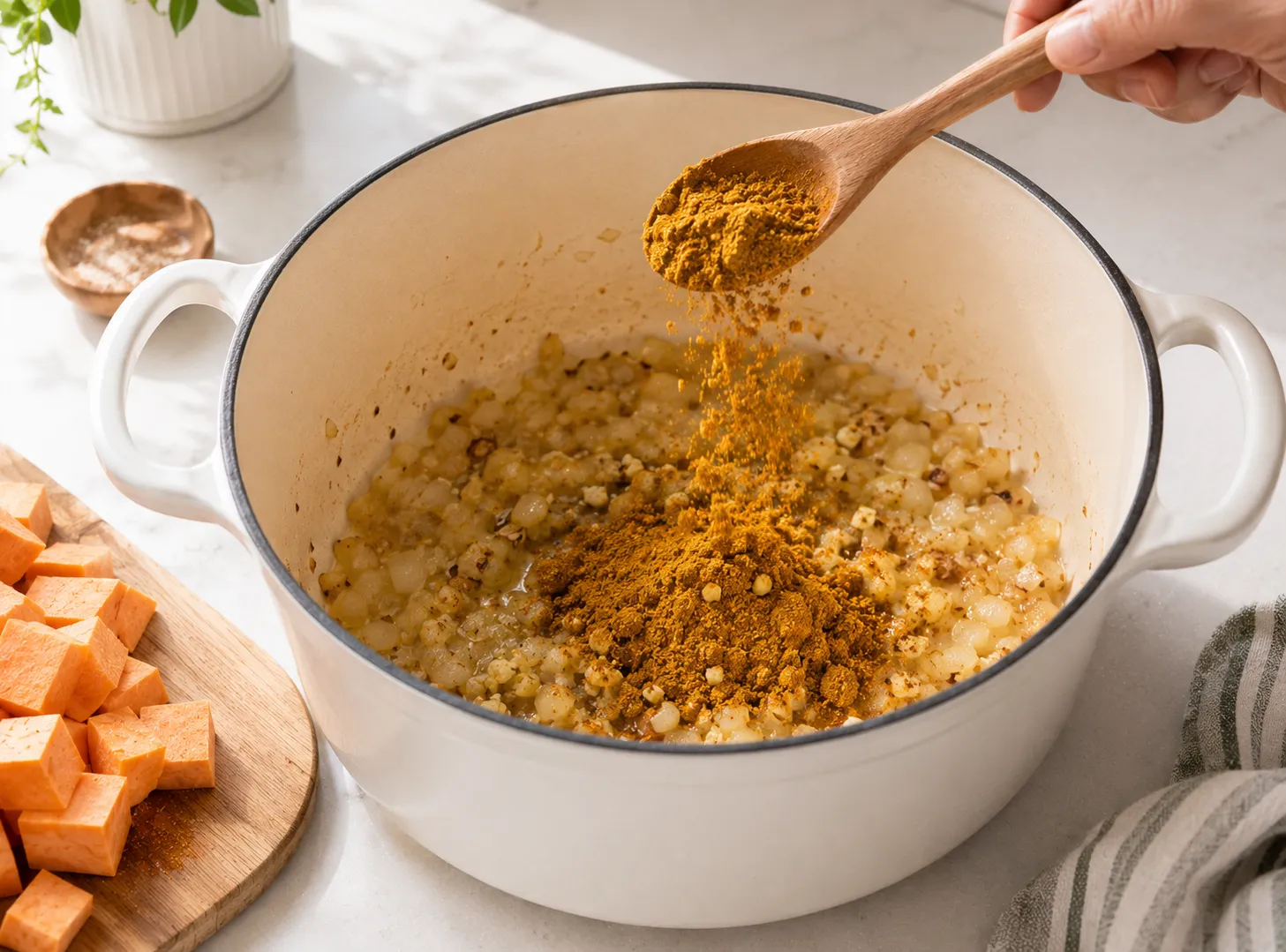
- Toast the spices in the pan for about a minute.
- Add the sweet potatoes, coconut milk, tomatoes, and broth.
- Simmer until the sweet potatoes are tender.
- Stir in the chickpeas and spinach, then finish with lime juice.

- Heat the coconut oil in a large pot over medium heat.
- Add the diced onion and cook for 4 to 5 minutes, until it turns soft and translucent.
- Stir in the garlic and ginger and cook for about a minute, until fragrant.
- Add the curry powder, cumin, turmeric, and cayenne. Stir constantly for 30 seconds so the spices toast instead of burning.
- Add the cubed sweet potatoes and stir until every piece is coated in the spice mixture.
- Pour in the coconut milk, diced tomatoes, and vegetable broth. Stir everything together well.
- Bring the pot to a gentle boil, then lower the heat and cover it.
- Simmer for 20 to 25 minutes, stirring now and then, until the sweet potatoes are tender enough to pierce easily with a fork.
- Stir in the chickpeas and let them warm through for about 3 minutes.
- Add the spinach and stir until it wilts, which takes about 2 minutes.
- Take the pot off the heat and stir in the lime juice.
- Taste the curry and add more salt if it needs it.
- Let the curry sit for 5 minutes before serving so the sauce can settle and thicken slightly.
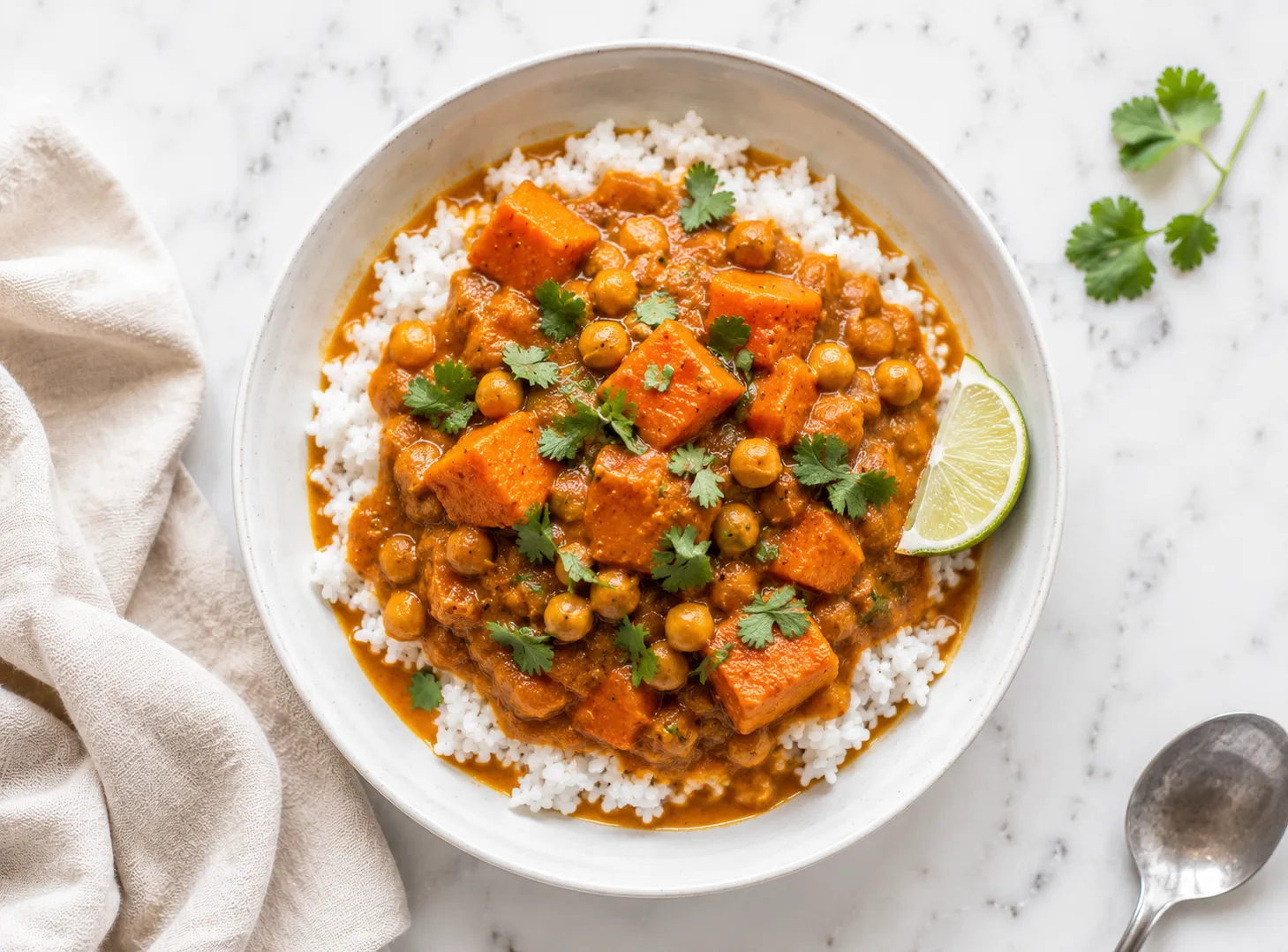
- Spoon over rice and top with fresh cilantro before serving.
- Cut the sweet potato into even cubes so every piece finishes cooking at the same time. Uneven pieces mean some will be mushy while others are still firm.
- Toast the spices in the oil before adding any liquid. This single step makes a noticeable difference in how deep the flavor tastes, since dry spices bloom more fully in hot oil than they do once liquid goes into the pot.
- Use full fat coconut milk if you want a rich, creamy sauce. Light coconut milk works in a pinch, but the sauce comes out thinner and less rich.
- Add the spinach at the very end of cooking. If it sits in the pot too long it turns limp and loses its bright color.
- Give the curry a few minutes to rest once it is off the heat. The sauce thickens slightly and the flavors have time to come together.
- If you want a thicker curry, mash a few pieces of sweet potato against the side of the pot before serving.
- Taste your curry powder before you use it. Brands vary a lot in strength, so what tastes right in one bottle might be too mild or too strong in another.
- Cube the sweet potato while the onion is cooking instead of doing all the prep up front. It keeps things moving and shortens the total time you spend in the kitchen.
- Keep a bit of hot water nearby in case the curry looks too thick while it simmers. A splash of hot water blends in more smoothly than cold water straight from the tap.
- Cutting the sweet potato pieces too large, which leaves some undercooked while others turn mushy by the time the rest catch up.
- Skipping the step of toasting the spices, which results in a curry that tastes flat instead of layered.
- Letting the pot boil hard instead of keeping it at a gentle simmer, which can cause the coconut milk to separate and look curdled.
- Adding the spinach too early, so it overcooks and turns into a dull, wilted mess instead of staying bright and tender.
- Not salting in stages. Sweet potato and coconut milk both need a fair amount of salt to taste balanced, so season as you go and taste again at the end.
- Using a small pot that is too shallow, which makes it easy for the curry to bubble over once the coconut milk starts to thicken.
- Rushing the onion. A soft, translucent onion is the base of the whole dish, and cooking it too fast over high heat leaves it raw tasting in the finished curry.
- Forgetting to stir while the curry simmers. The bottom of the pot is where sugars from the sweet potato and tomato can catch and scorch if left unattended for too long.
- Swap the chickpeas for red lentils or cubed firm tofu if you want to switch up the protein.
- Use chopped kale instead of spinach for more texture and a slightly earthier taste.
- Add a diced red bell pepper along with the onion for extra color and a bit of crunch.
- Make it spicier with extra cayenne or a chopped fresh chili added in with the garlic and ginger.
- Use chicken broth instead of vegetable broth if the dish does not need to stay vegetarian.
- Replace the sweet potato with pumpkin or butternut squash when it is in season, using the same amount by weight.
- Stir in a spoonful of peanut butter at the end for a richer, slightly nutty sauce.
- Add a can of green beans or a cup of cauliflower florets in the last 10 minutes of simmering to bulk up the vegetables without changing the base flavor.
- Use a red curry paste instead of curry powder for a different, slightly deeper flavor profile, starting with about 2 tablespoons and adjusting to taste.
- Steamed basmati or jasmine rice
- Warm naan or roti
- A simple cucumber salad with lime and salt
- Plain yogurt on the side to cool down the spice
- Quick pickled red onions for a bit of tang
- A green salad with a light vinaigrette if you want something fresh alongside it
- Toasted pita or flatbread if naan is not available, torn into pieces for scooping up the sauce
- Store leftovers in an airtight container in the fridge for up to 4 days.
- Freeze in a freezer safe container for up to 3 months, leaving a little room at the top since the curry expands slightly as it freezes.
- Reheat on the stovetop over medium low heat, stirring now and then, until warmed through.
- If the curry has thickened too much in the fridge, add a splash of water or broth while reheating to loosen it back up.
- Thaw frozen curry in the fridge overnight before reheating for the best texture, rather than thawing it on the counter.
- Avoid reheating in the microwave on high, since it tends to overcook the sweet potato around the edges before the middle warms through. If you do use a microwave, reheat in short bursts and stir between each one.
- Portion leftovers into single serving containers before refrigerating if you plan to grab lunch on the go during the week.
Yes. It actually tastes better the next day once the spices have had time to settle into the sauce, which makes it a good option for meal prep.
No, it is mild as written. The cayenne is optional and easy to leave out, or you can add extra if you want more heat.
Butternut squash and pumpkin both work well as substitutes and cook in about the same amount of time, so the rest of the recipe stays the same.
Canned coconut milk gives the best texture for this recipe. Coconut milk sold in a carton is usually too thin and will make the sauce watery.
Yes. Cook the onion, garlic, and ginger on the stove first, then transfer everything except the spinach to a slow cooker and cook on low for 4 to 5 hours. Stir in the spinach near the end so it does not overcook.
Yes, as written it is fully plant based, as long as you serve it with rice or bread that does not contain dairy or eggs.
This usually happens when the lid stays on for the entire simmer time. Remove the lid for the last 5 to 10 minutes so some of the liquid can cook off, or mash a few pieces of sweet potato into the sauce to help it thicken naturally.
- This curry thickens as it sits, so add a little broth or water when reheating leftovers.
- Fresh ginger makes a bigger difference here than ground ginger, so use fresh if you have it on hand.
- Curry powder brands vary quite a bit in strength, so taste yours before relying on the full amount listed.
- Any canned bean can stand in for the chickpeas if that is what you have in the pantry.
- This recipe scales well. Double the batch and freeze half for a night when you do not feel like cooking.
- A squeeze of lime right before serving wakes up the flavor more than adding it earlier in the cooking process.
- Leftover curry makes a good filling for wraps or a topping for baked potatoes if you want to use it a different way.
- If you are cooking for kids or anyone sensitive to spice, leave the cayenne out entirely and let people add hot sauce at the table instead.
Sweet potato curry earns a permanent spot in a weekly dinner rotation because it asks so little of you once you get the hang of it. It holds up well in the fridge, freezes without losing texture, and tastes just as good, if not better, on the second day. The recipe is simple enough to make on a weeknight but flexible enough to adjust as you go, whether that means swapping vegetables, changing the protein, or turning up the heat with extra chili. Once you have made it a couple of times, you will likely start tweaking it to fit your own taste, and that is exactly how a good curry recipe is supposed to work over time.